


The best cactus fertilizer is a low-dose, low-nitrogen formula used only during active growth at half to one-quarter of the label strength. In many collections, feeding only a couple of times per year is more effective than treating a cactus like a hungry tropical houseplant.
That sounds conservative because it is. Cacti store water, grow in pulses, and often live in gritty containers where salts can accumulate quickly. The decision isn't which bottle has the most impressive label. It's how the fertilizer interacts with your substrate, watering pattern, light, and dormancy cycle.
| Growing situation | Better fertilizer format | Starting approach | Main risk |
|---|---|---|---|
| Soil-free mineral mix | Diluted water-soluble feed | Feed with watering during active growth, cautiously | Nutrients can wash through quickly, encouraging frequent dosing |
| Mix containing 10% to 50% soil | Low-nitrogen liquid or carefully measured slow-release product | Feed every 2nd to 4th watering during growth | Retained nutrients can accumulate |
| Beginner with an inconsistent routine | Diluted liquid fertilizer | Apply only when the plant is actively growing | Forgetting dilution or feeding dormant plants |
| Grower wanting convenience | Slow-release product | Apply early in the season according to the label | Less control if conditions change |
| Small pot with visible salt residue | Plain water first, then a very mild liquid feed after recovery | Flush the pot periodically | Root-zone salt stress |
The strongest guidance from university extension services points in the same direction: restraint, low nitrogen, and seasonal timing matter more than brand loyalty. A formula that works in a nearly mineral mix can be excessive in a soil-heavy pot, so the “best cactus fertilizer” is always conditional.
Why Most Cactus Fertilizers Fail
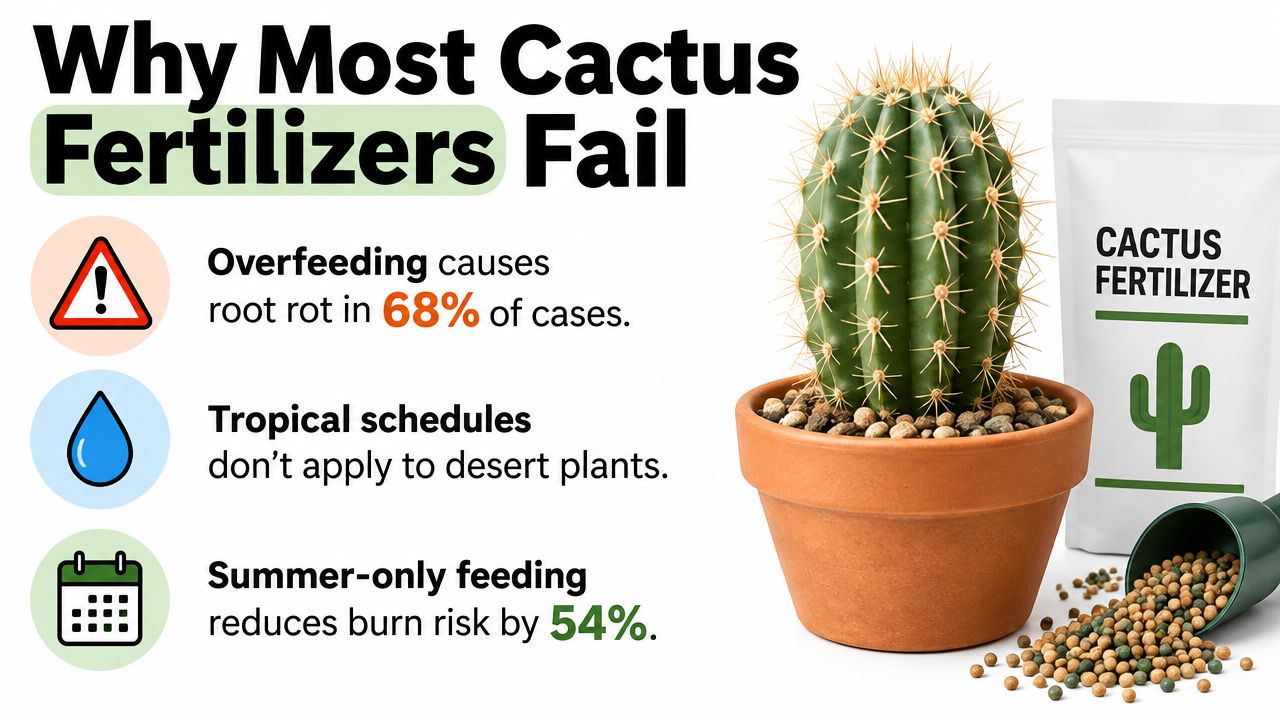
Cacti don't fail because they aren't being fed enough. They often fail because growers assume fertilizer equals faster, healthier growth. That assumption works poorly for desert plants, which can respond to rich feeding with soft, inflated growth rather than the firm structure and compact form most growers want.
University extension guidance consistently recommends only occasional feeding. West Virginia University Extension guidance advises fertilizing succulents only a couple of times during warmer months and diluting household fertilizer to half the recommended rate. Iowa State University recommends feeding most succulents in spring and summer at one-half to one-quarter of the label rate, while Montana State University advises a low-nitrogen fertilizer only once or twice during active growth.
The rich-houseplant mistake
Tropical foliage plants often tolerate regular feeding because they produce leaves continuously and grow in richer, moisture-retentive media. A desert cactus follows a different rhythm. Its roots are adapted to brief periods of water availability, and a container can hold fertilizer salts around those roots long after the plant has stopped actively growing.
High nitrogen creates a particularly misleading result. The cactus may appear to be growing, but the new tissue can be soft, elongated, and less resilient. That growth may also be harder to support in low light or during a seasonal slowdown. A larger plant isn't automatically a stronger plant.
Practical rule: Buy the fertilizer that makes conservative dosing easy, not the one promising the fastest visible response.
How overfeeding shows up
The common warning signs include yellowing, soft tissue, stalled growth, and a white crust on the potting mix or container rim. These symptoms can have other causes, especially poor light or wet roots, but fertilizer becomes a prime suspect when decline follows repeated feeding.
The correction is usually less fertilizer, not a different stimulant. Stop feeding, improve drainage and light, and use plain water to flush a well-draining container when salt buildup is suspected. For a useful companion checklist, compare these fertilizing mistakes that silently damage plants.
Understanding NPK Ratios for Cacti
The three numbers on a fertilizer label show the relative analysis of nitrogen, phosphorus, and potassium. For cacti, nitrogen deserves the closest scrutiny because too much can push lush, weak growth. Phosphorus and potassium still matter, but a high phosphorus number doesn't rescue a formula that delivers more nitrogen than the plant can use.
Montana State University Extension recommends low-nitrogen fertilizer during active spring and summer growth, and Iowa State University recommends applying fertilizer at one-half to one-quarter of the normal rate, as outlined in its extension guidance on growing succulents indoors. A 2021 paper on prickly pear cactus found good in vitro development at fertilizer concentrations of 0.5 to 1.0 g/L, while a research summary discussed in the Montana guidance reports a nitrogen application rate of 40 kg/ha for cactus productivity. Those findings reinforce a modest nutritional strategy rather than heavy feeding.
Read the ratio, then read the instructions
A practical target is a low-nitrogen ratio such as 1-2-2 or 2-7-7. A formulation near an NPK ceiling of 3-5-5 can also fit a precision cactus routine, especially when diluted. The exact ratio matters less than the amount that reaches the roots and the frequency of application.
| Ratio type | Best for | Application notes |
|---|---|---|
| 1-2-2 | Slow-growing desert cacti | A restrained baseline for active growth |
| 2-7-7 | Growers prioritizing modest nitrogen with more phosphorus and potassium | Dilute carefully and avoid treating the ratio as permission to feed often |
| Similar low-nitrogen formula | Mixed cactus and succulent collections | Check the nitrogen source and follow a conservative schedule |
| Around 3-5-5 | Precision liquid feeding | Keep the delivered dose low, especially in small pots |
The label's nitrogen source also matters. A domain-specific fertilizer guide recommends nitrate- or ammonium-based nitrogen and advises avoiding urea for this use case. It also cautions against slow-release polymer-coated granules, which can make nutrient delivery harder to control in containers. Use plant fertilizer numbers to decode the label before judging the product by its marketing name.
Micronutrients can be useful, but they aren't the first buying criterion. If the substrate stays wet, the plant is dormant, or the dose is excessive, added micronutrients won't correct the underlying problem. Start with low nitrogen and controllable delivery, then consider the rest of the label.
Slow-Release Pellets vs Liquid Fertilizers
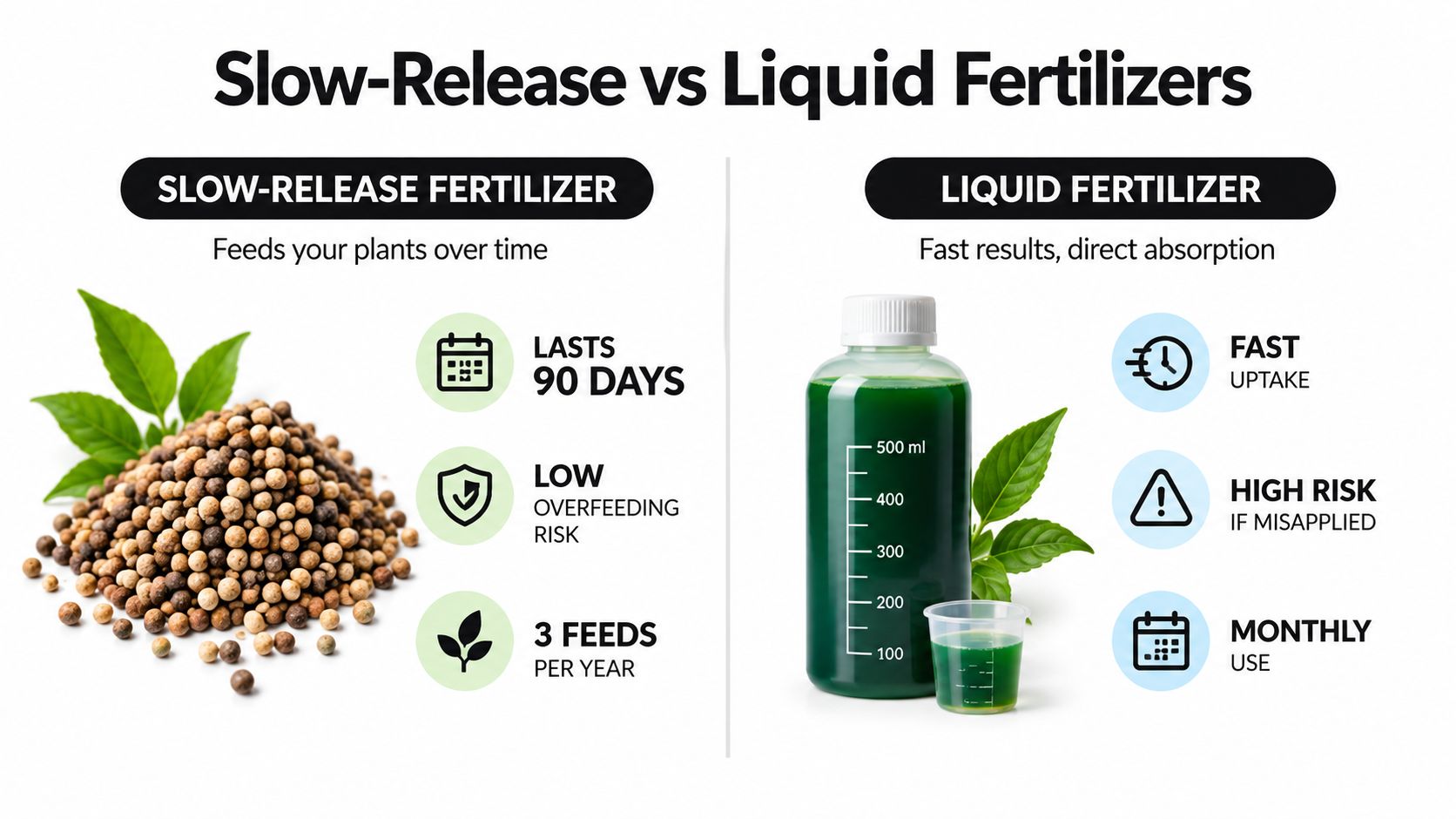
Liquid fertilizer gives you control. Pellets give you convenience. Neither format is automatically safer, because the substrate and watering routine determine how much nutrition remains available around the roots.
Iowa State Extension recommends water-soluble fertilizer every 3 to 4 waterings during active growth or a slow-release product early in the season, while advising growers to avoid winter feeding. That makes liquid fertilizer especially useful when you can observe growth and adjust the routine. A pellet can be practical when you want fewer decisions, but it can be less forgiving when light, temperature, or watering changes.
Liquid gives better feedback
A low-nitrogen, water-soluble fertilizer lets you change the concentration according to the pot. You can use a weaker solution for a small cactus, a recently repotted plant, or a mix that retains moisture, then reassess during the growing season.
The safer application is a root-zone drench after watering the cactus first. Pre-wetting reduces the chance that concentrated salts will contact dry, sensitive roots. The same science-backed guidance recommends flushing the pot with plain water 7 to 10 days later to reduce salt residue.
| Format | Precision | Frequency | Best for |
|---|---|---|---|
| Liquid concentrate | High, because you control dilution | Every 3 to 4 waterings during active growth when conditions suit it | Experienced growers and variable substrates |
| Slow-release pellets | Moderate to low once applied | Early in the growing season, according to the label | Consistent routines and convenience-focused beginners |
Pellets trade precision for simplicity
Slow-release products can work when the plant has a stable growing season and the pot drains freely. They remove the need to mix feed at every application, but they continue releasing nutrients according to the product design rather than your plant's changing condition.
That limitation matters in climates with a clear dormant period. A cactus that receives pellets before growth slows may keep encountering nutrients when it no longer needs them. Polymer-coated granules are specifically discouraged by one domain-focused guide for cactus use, so don't assume every slow-release product is interchangeable. If you're comparing this format for container plants, this guide to slow-release fertilizer for potted plants offers useful context, but the cactus-specific label and your substrate should decide.
For most growers, liquid fertilizer has the wider safety margin because you can stop immediately. Pellets make sense when convenience outweighs fine control and your growing conditions remain predictable.
Proper Dilution and Application Timing
A fertilizer label is written for a broad group of plants. Cacti need you to turn that instruction into a smaller delivered dose. The reliable starting point is one-half to one-quarter of the label strength, using a low-nitrogen ratio such as 1-2-2, 2-7-7, or a similarly modest formulation.
Don't guess at “half strength” by pouring a quick splash into the watering can. Read the label's full-strength volume, divide that amount by two or by four, and measure the reduced quantity with a marked syringe or measuring tool. The container volume must stay consistent, because the same fertilizer amount becomes a different concentration in a different volume of water.
A safer feeding sequence
- Confirm active growth. Feed in the warmer, brighter growing period when the cactus is producing new tissue. Skip winter feeding, particularly when low light or cool conditions have slowed the plant.
- Water first. Give the plant plain water so the root ball isn't completely dry when fertilizer arrives.
- Mix the reduced dose. Start at one-quarter strength when the plant, pot, or substrate is unfamiliar.
- Drench the root zone. Apply evenly and allow excess water to drain from the pot.
- Inspect rather than repeat automatically. Look for firm, proportionate growth before another application.
- Flush with plain water. A plain-water flush 7 to 10 days later can help limit residue in a free-draining container, according to the succulent fertilizing guidance.
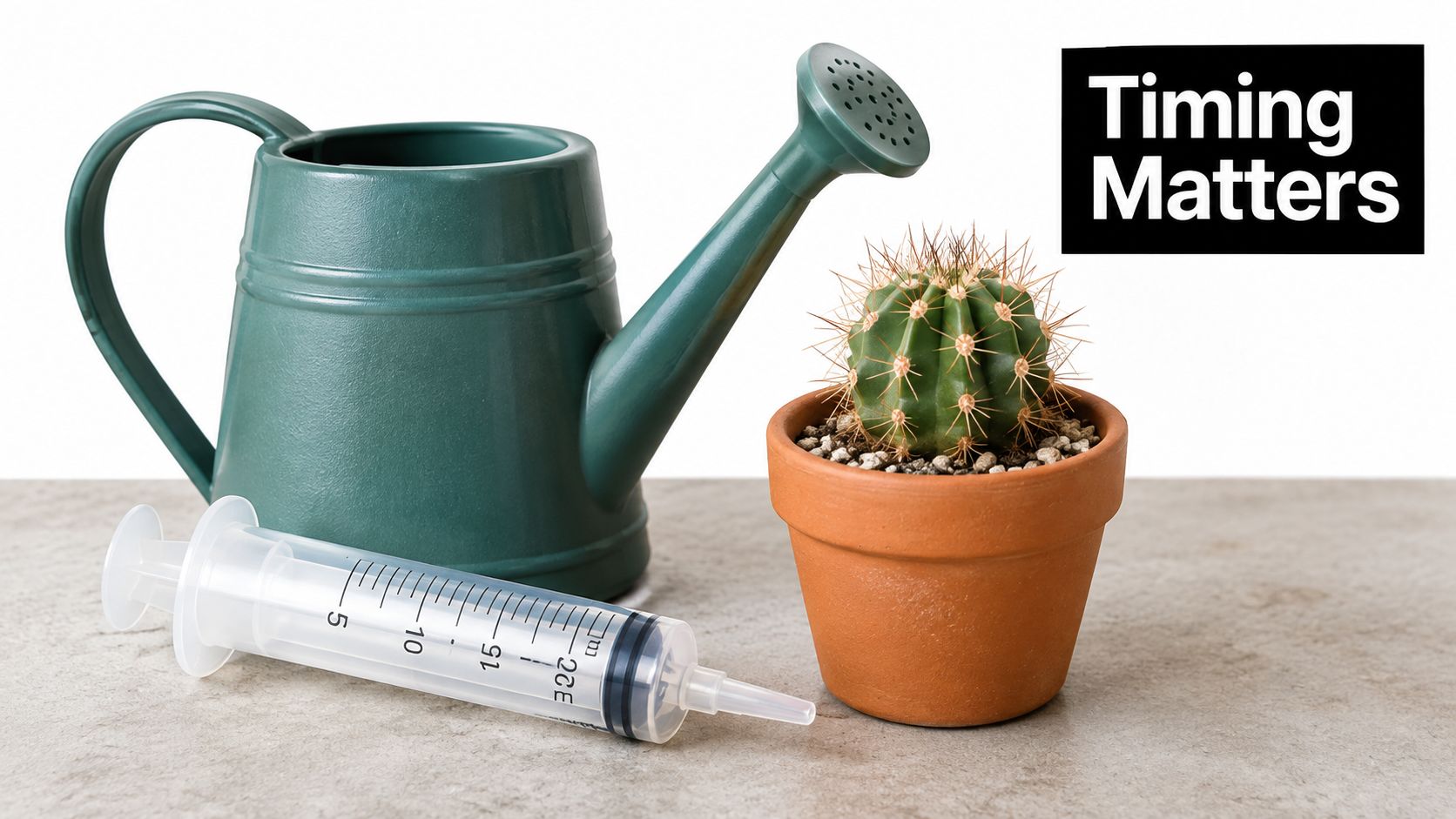
Stop when the plant tells you to stop
A pale cactus isn't automatically hungry, and a stalled cactus isn't automatically underfed. Low light, root damage, cold conditions, and poor drainage can all create similar symptoms. Salt crust, soft tissue, or decline after feeding are reasons to pause fertilizer and investigate the root environment first.
Moderate underfeeding is usually easier to correct than excess fertilizer. Cacti don't need a forced growth response. They need enough nutrition to support steady development without overwhelming the roots.
Matching Fertilizer to Substrate and Watering Style
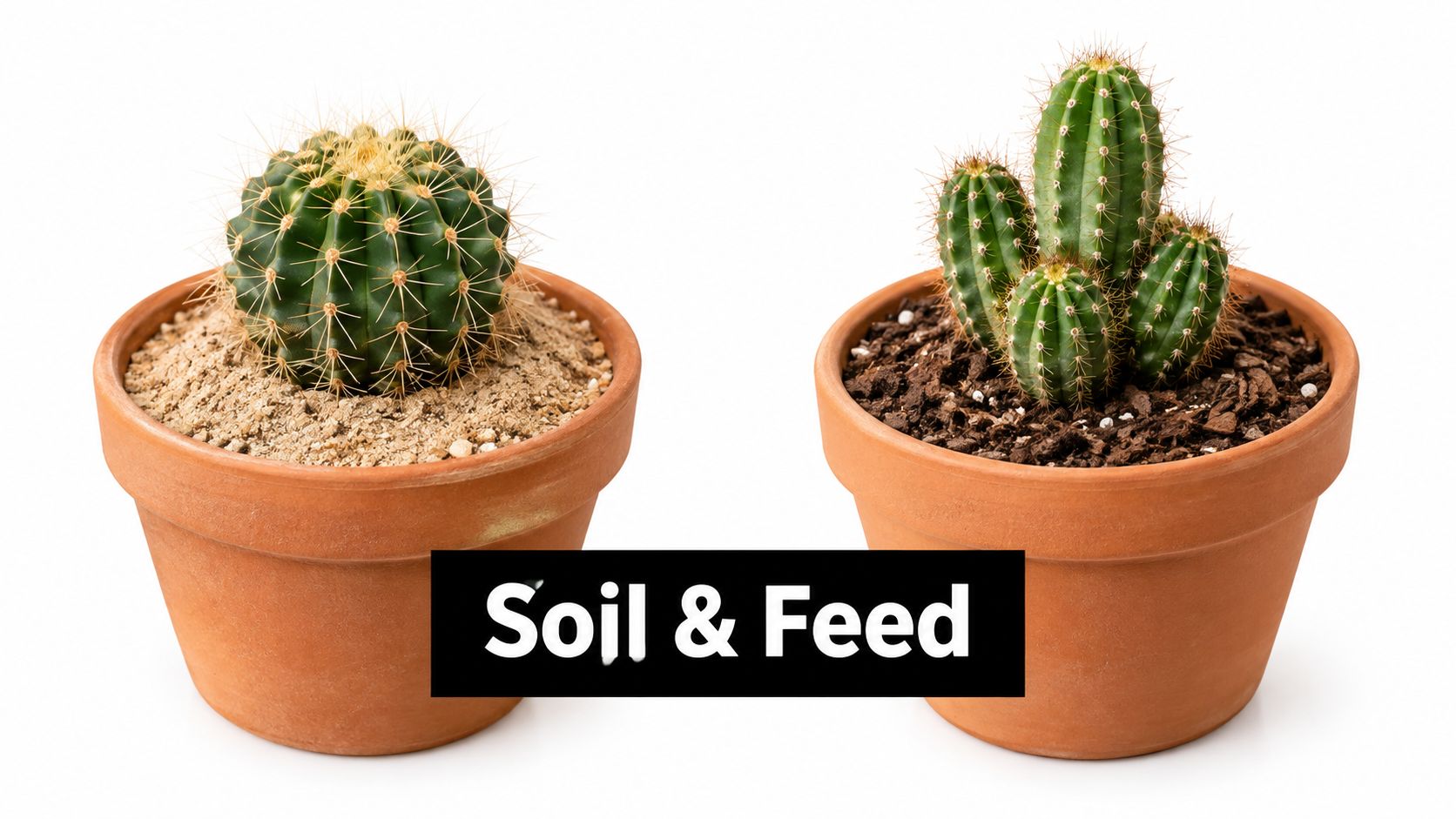
The potting mix changes the feeding schedule more than the brand on the bottle. A nearly soil-free mineral mix drains quickly and holds fewer nutrients, while a mix containing organic soil retains moisture and fertilizer for longer. Applying the same formula at the same frequency to both mixes is a reliable way to overfeed one of them.
One independent cacti source recommends feeding plants in nearly soil-free mineral mixes with every watering during active growth. For mixes containing 10% to 50% soil, it recommends feeding every 2nd to 4th watering, with a yearly flush to limit salt accumulation. Treat those intervals as a framework, not a command. Plant size, container material, evaporation, light, and local climate still matter.
Mineral mixes need a different rhythm
In a gritty, fast-draining mix, nutrients may pass through quickly. A very dilute feed can therefore fit more naturally into regular watering, provided the plant is actively growing and the grower watches for residue. The goal isn't to increase the total dose casually. It's to deliver a controlled amount alongside a watering pattern that already suits the substrate.
In a soil-heavy mix, the opposite problem appears. Nutrients and moisture remain available longer, so repeated feeding can create a concentrated root zone. Use a longer interval between applications and be especially cautious with slow-release products.
The same fertilizer can be mild in one pot and excessive in another because the mix controls how long the nutrients remain available.
Watering style is the missing variable
A grower who waters thoroughly and then allows the mix to dry may manage nutrients differently from someone who gives frequent small drinks. Small, repeated watering can leave salts behind because there isn't enough drainage to move them out. A thorough watering routine with proper drainage gives you more opportunity to monitor runoff and flush the container.
For broader background on how the growing medium affects planting success, this resource on preparing desert soil for planting is useful when evaluating drainage and soil structure. Indoors, lower evaporation and weaker seasonal light usually call for more caution. Outdoors, bright active growth may support more regular feeding, but only while the plant is actively growing and the pot drains freely.
Recommended Cactus Fertilizer Options
The best option depends on what you want to control. If your priority is precision, choose a dilute liquid with low nitrogen. If your priority is convenience, choose a cactus-labeled slow-release product only after checking whether your substrate and growing season can handle a continuing nutrient supply.
For precise dosing
A low-nitrogen water-soluble fertilizer is the strongest general choice for growers who inspect their plants regularly. Look for a modest ratio such as 1-2-2 or 2-7-7, or a formula around the 3-5-5 ceiling described in domain-specific guidance. Nitrate- or ammonium-based nitrogen is preferable to urea for this use case, and the product should allow you to dilute below the label rate.
This format suits collections with mixed pot sizes because you can adjust the dose rather than applying a fixed amount to every container. It also suits climates with a distinct dormant period because you can stop feeding as soon as growth slows.
For convenience
A cactus or succulent slow-release pellet can suit a grower with a stable watering routine, free-draining media, and a predictable active season. The advantage is fewer mixing decisions. The drawback is reduced control when a plant enters dormancy early, receives less light, or moves indoors.
Leaves & Soul offers Succulent Fertilizer Pellets | 13-11-11 Slow Release, described for cactus and succulent use with release lasting up to 180 days. Because that product has more nitrogen than the low-nitrogen examples above, use its label as a starting point rather than treating the pellet as universally suitable. A soil-heavy mix or a dormant plant calls for particular caution.
For collections with different climates
A tropical indoor grower may see active growth outside the usual seasonal pattern, while a grower with a cool, dim winter may need to stop feeding entirely. That difference makes a universal calendar unreliable.
Use this decision sequence:
- Choose low-nitrogen liquid fertilizer when you want to adjust the dose by pot and season.
- Choose slow-release pellets only when the plant remains active and the substrate drains reliably.
- Prioritize micronutrients later, after you have solved light, drainage, dilution, and timing.
- Avoid high-nitrogen general plant food unless you can dilute it substantially and have a clear reason to use it.
A product is doing its job when the cactus produces firm, proportionate growth without salt crust or soft tissue. Start conservatively, record when you feed, and change one variable at a time.
Leaves & Soul carries purpose-built soils, liquid plant foods, spray formulas, and slow-release nutrients for indoor and outdoor growers, including cactus and succulent options. Visit Leaves & Soul to compare the available formats, then choose the one that matches your substrate, watering style, and active-growth schedule rather than picking the strongest label.