


You've repotted your cactus in what looked like perfectly ordinary soil. Days later, the pot still feels heavy, the surface stays dark, and the plant begins to soften at the base. Low light and pests may contribute, but a dense, moisture-holding mix is often the primary problem.
The best cactus soil mix is built around airflow, rapid drainage, and controlled organic content. A widely cited guideline recommends roughly 67–70% mineral material and 30–33% organic matter for cactus and succulent substrates, helping recreate the quick-draining conditions of arid habitats (horticultural guidance on cactus substrates). The right balance still depends on the cactus, your climate, the pot, and how much light the plant receives.
Understanding Key Ingredients
Quick-draining cactus soil isn't merely ordinary potting soil with a handful of sand. The structure must leave open spaces around the roots after watering, because compacted particles reduce airflow and create a longer-lasting wet zone.
Mineral ingredients build the structure
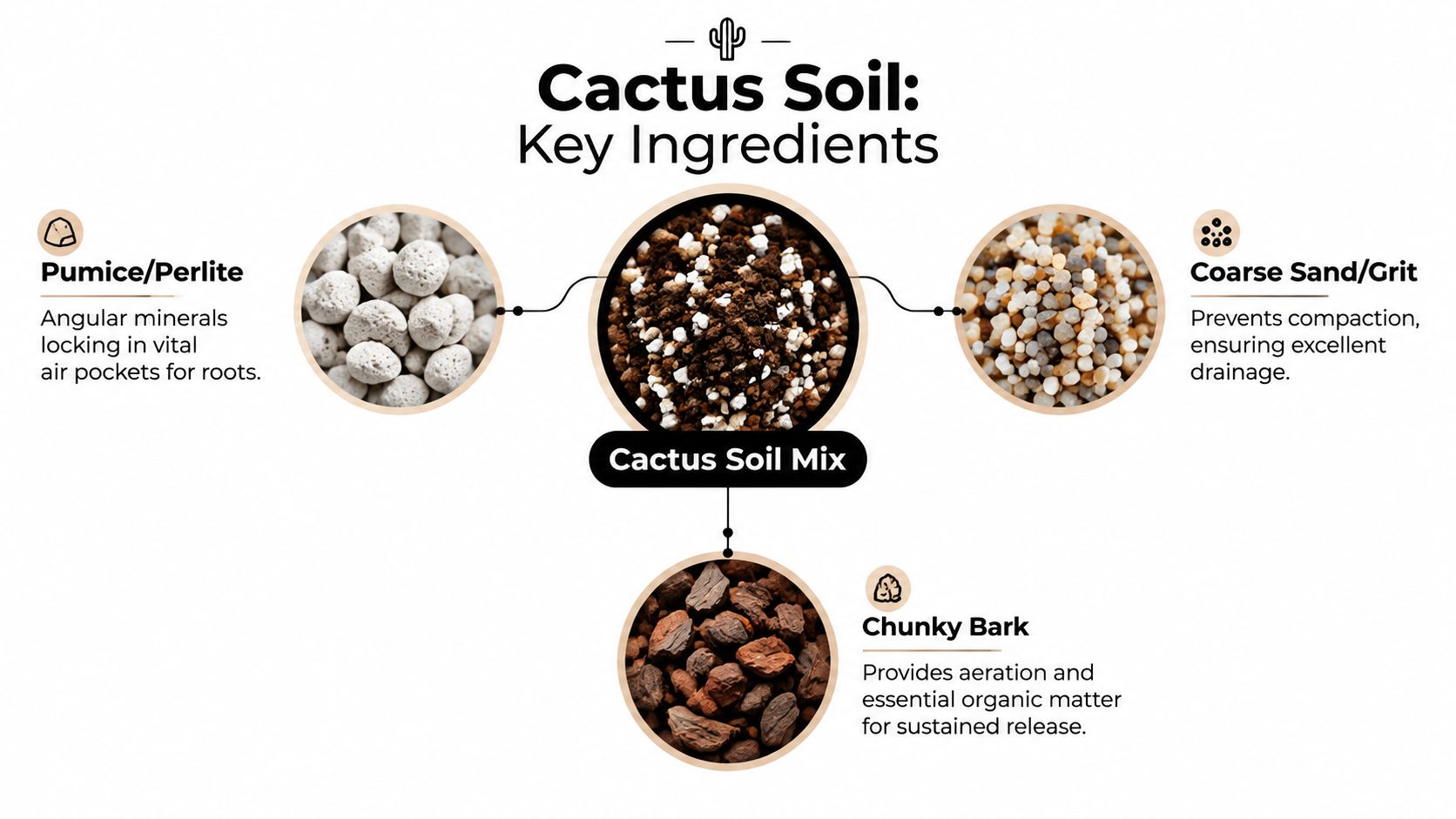
Pumice is a strong foundation for long-term container culture. Its porous, irregular pieces create air pockets while retaining limited moisture inside the stone. Pumice also adds useful weight to a pot and generally remains structurally stable rather than breaking down quickly.
Perlite is lighter and highly effective at opening a dense mix. It helps resist compaction and supports moisture and temperature management, according to comparative growing-media research (research comparing perlite, cocopeat, and soil). Its main drawback is handling. Very light particles can rise or separate during watering, particularly in shallow containers.
Coarse sand and grit add weight and fill some of the larger gaps between mineral particles. Use angular, horticultural-grade material rather than fine sand. Fine particles can settle into the spaces between larger pieces and create a dense layer, which works against drainage.
Historical cactus recipes show how growers have long adjusted texture rather than relying on one commercial formula. One documented blend uses 50% coarse sand, 30% sandy loam, and 20% grit, while another uses equal parts pumice, lapillus, and sand with particles around 2–4 mm (New Mexico Cactus and Succulent Society recipe).
Organic matter should support, not dominate
A modest amount of coco coir, peat, fine bark, or a light potting medium gives roots limited moisture access and a small nutritional buffer. Chunky bark is especially useful when you want organic material without turning the entire pot into a fine, sponge-like mass.
Compost-heavy mixes usually fail for desert cacti because their fine particles hold water and collapse as they decompose. If a mix feels muddy when wet, forms a firm ball when squeezed, or stays damp well after watering, add more coarse mineral material rather than watering less.
For a useful comparison of how mineral and organic components work together, see this practical guide to a succulent soil mix.
Tailoring Mix Ratios to Cactus Types
A desert cactus and a jungle cactus may share a family name, but they don't share the same root-zone conditions. Species, humidity, light, pot material, and watering habits all affect how quickly the mix should release water.
Independent guidance places some species near 90% mineral and 10% organic, while other growing situations may tolerate as much as 60% organic material, particularly where conditions are hot and dry (advanced cactus soil guidance). Treat those figures as starting points, not fixed laws.
Recommended Ratios by Cactus Type
| Cactus Type | Mineral % | Organic % |
|---|---|---|
| Desert species such as Ferocactus | 90 | 10 |
| General container cacti | 70 | 30 |
| Moisture-tolerant or jungle cacti | 40 | 60 |
For Ferocactus and other strongly desert-adapted plants, use a very gritty mix dominated by pumice, lava rock, coarse grit, or perlite. Keep the organic portion modest, especially if the cactus sits indoors near a window where evaporation is slower than it would be outdoors.
A general collection of desert cacti can start with the mineral-heavy guideline cited earlier. Adjust the texture if your pot remains wet for too long. More pumice or grit improves the air space, while less coir, peat, or compost reduces moisture retention.
Jungle cacti, including epiphytic types, need a different structure. A larger organic fraction made from bark, coir, or a light potting medium can provide the moisture buffer they prefer, but retain enough pumice or perlite to stop the roots from sitting in stagnant water.
Adjust for the room, not just the label
In a humid coastal home, increase mineral content and use an unglazed pot when practical. In a hot, dry outdoor setting with strong airflow, a little more organic material may be appropriate. Low indoor light calls for a grittier blend because the plant and soil will dry more slowly.
Test the mix after potting. If the plant looks thirsty but the soil remains wet, improve drainage and light rather than increasing watering.
Shopping Shortcuts and Ready Mixes
DIY mixing makes sense when you're potting several plants, already have clean mineral amendments, or need a recipe suited for an unusual species. It also lets you change the texture immediately. A humid-room collection may need extra pumice, while a dry outdoor bench may benefit from a slightly greater organic component.
A ready blend is more practical when you're repotting one plant, don't have storage space for several amendments, or want consistent particle distribution. Inspect the bag before using it. Look for visible mineral particles, a loose texture, and no heavy layer of fine compost at the bottom.
Leaves & Soul's Professional Cactus Soil is one ready-to-use option, formulated with peat moss, coco coir, perlite, and dolomite. Because the blend includes moisture-retaining organic materials as well as mineral amendment, check how it behaves in your own pot and environment before using it for humidity-sensitive desert species.
Perlite and coco peat also serve different purposes. Research comparing growing media found that perlite performed best for moisture and temperature management, while coco peat retained the most water (comparative growing-media research). That trade-off matters more than the ingredient name on the label.
Buying rule: Choose a ready mix for convenience, then customize it with coarse pumice or grit if your light, humidity, or watering routine demands faster drying.
Avoid judging a product by the word “cactus” alone. Two bags can behave very differently because particle size, organic content, and storage conditions change how quickly water moves through the root zone.
Sterilizing and Testing Soil
Fresh, clean commercial ingredients usually need less intervention than garden soil, reused potting mix, or homemade compost. Soil collected outdoors can contain weed seeds, insects, or pathogens, so sterilization is sensible before it enters a small indoor collection.
Choose a practical sterilization method
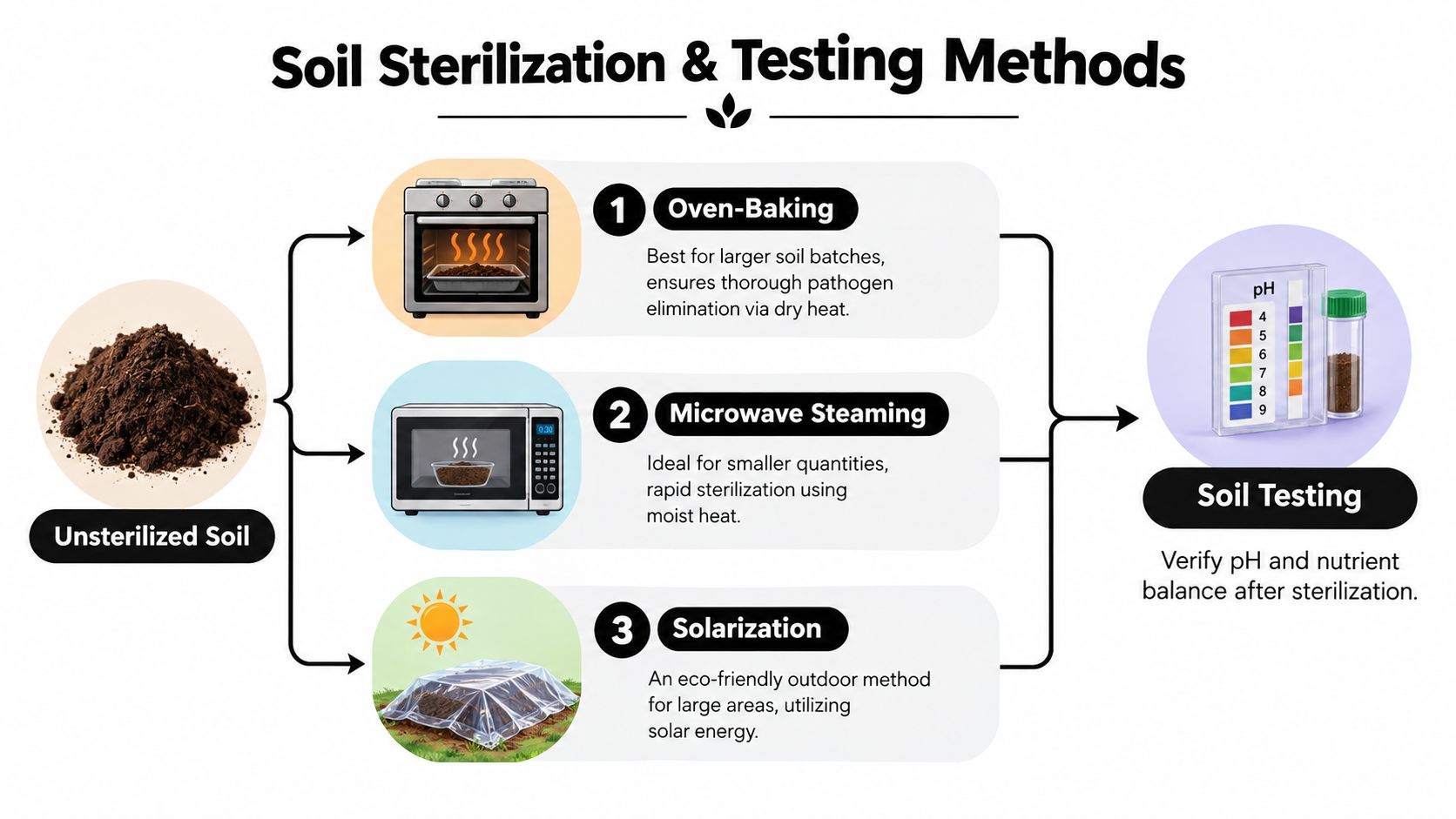
Oven-baking suits a larger batch. Spread damp soil evenly in a heat-safe tray and monitor it carefully. Avoid overheating, and ventilate the room because heated organic material can smell strong.
Microwave steaming works better for a small quantity. Moisture creates steam, which heats the mix quickly, but use a microwave-safe container and allow the material to cool fully before handling.
Solarization uses clear plastic and direct sun outdoors. It takes more planning and depends on weather, but it avoids using kitchen appliances for a sizeable batch.
Test drainage before planting
Put a sample of the cooled mix into a pot with a drainage hole. Pour water slowly over the surface and observe whether it travels through the mix or pools above it. A good cactus substrate should release water readily without forming a muddy plug.
For a more controlled check, weigh or measure the sample before wetting it, then assess its moisture after it has rested. One comparative report found that a mix containing 60% pumice dried 40% faster than an equivalent perlite mix and retained 12% moisture after 24 hours (pumice and perlite comparison). Use that result as a reference point, not a universal target, because pot size, airflow, temperature, and organic ingredients change the outcome.
If water stands on the surface, add coarse mineral material. If the mix repels water after drying, blend in a small amount of organic binder and moisten it gradually. For additional background on preparation, consult this guide to sterilizing potting soil.
Potting and Watering Best Practices
Even a carefully blended substrate can fail in a pot without a drainage hole. Choose a container that lets excess water escape and is only moderately larger than the root ball. An oversized pot contains more unused mix, so it can stay wet around the roots for longer.
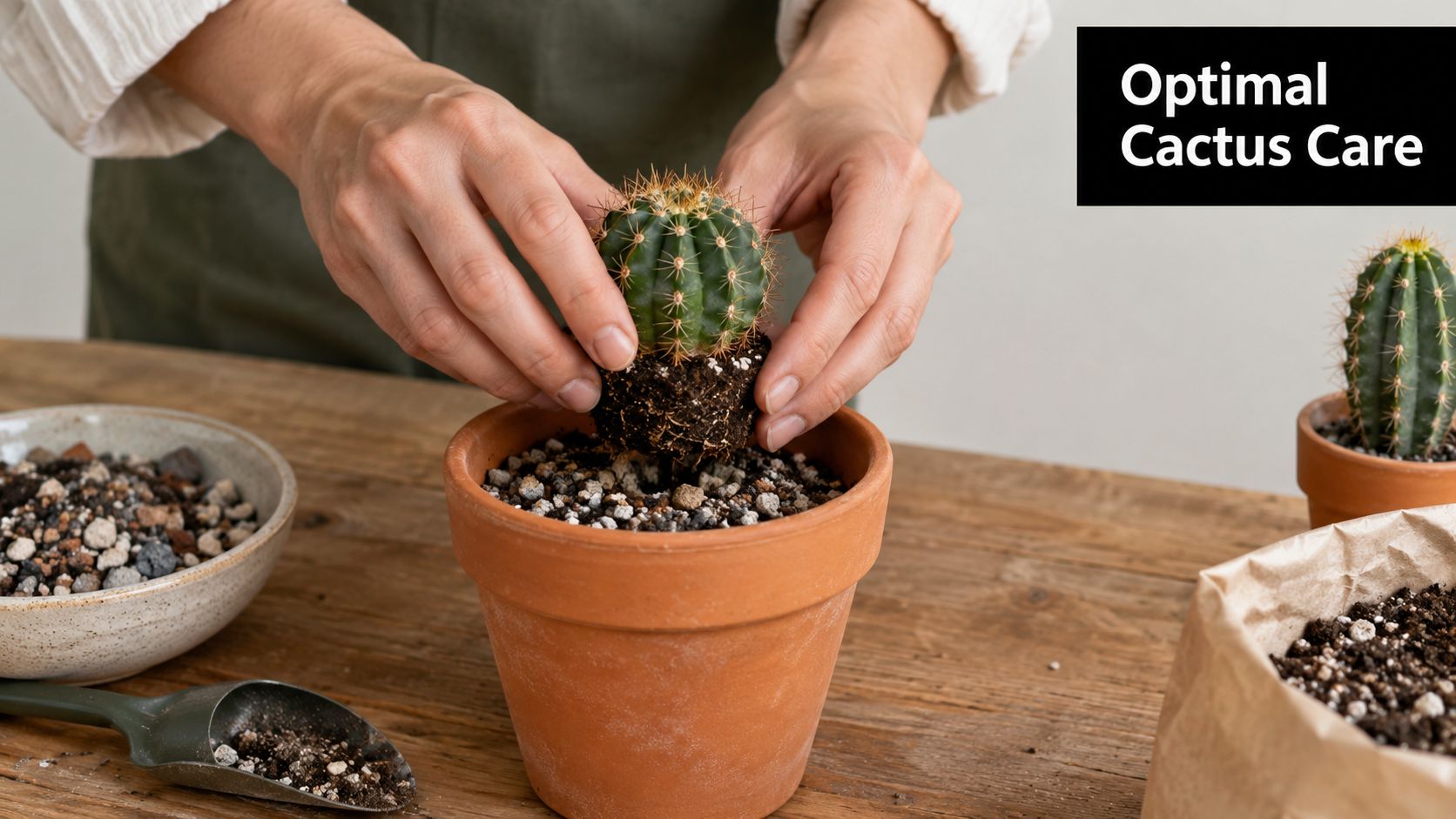
Unglazed terracotta is useful in humid rooms because the porous wall can support evaporation from the sides. Plastic and glazed ceramic can work too, but they require closer attention to drying conditions. Set the cactus at the same depth it occupied before repotting, and keep the stem above the soil surface.
Use the soak-and-dry method
Water thoroughly enough to wet the entire root zone, then let excess water drain completely from the pot. Don't leave the container standing in a saucer of runoff. Wait until the mix has dried substantially before watering again, and judge that condition by lifting the pot, checking below the surface, and considering recent light and humidity.
Indoor cacti near weak light need less frequent watering than plants outdoors in bright, moving air. Seasonal changes matter too. During cool, dim periods, extend the dry interval. During active growth in warm conditions, inspect the mix more often, but don't follow a calendar blindly.
Fertilizer should complement the substrate, not compensate for poor drainage. A slow-release cactus fertilizer, such as a product from Leaves & Soul's plant nutrition range, can provide controlled feeding when used according to its label. Don't add extra nutrients to a plant with damaged roots until the root system has recovered.
A simple watering aid can help households where several plants need careful, measured moisture. For those situations, Discover Loyaltie's houseplant solutions offers a slow-drip option designed for small houseplant pots. It shouldn't replace the soak-and-dry cycle for a cactus, but it can be useful for controlled watering while you learn how quickly a particular container dries.
This short visual guide shows the planting process and the relationship between soil, pot, and root placement.
Troubleshooting Common Issues and Next Steps
Soft tissue, a sour smell, or dark roots points to excess moisture and possible rot. Remove the plant, cut away damaged roots with a clean tool, and repot into a drier, coarser mix. Use this guide to treat cactus root rot when the problem has progressed.
If water runs straight through a hydrophobic mix, rehydrate it gradually and break up compacted material. Yellowing can reflect root stress, poor light, or nutrient imbalance, so change one factor at a time and monitor the plant. Recheck drainage after seasonal humidity changes, and reserve finer, more organic substrates for species that can use their moisture.
Leaves & Soul offers ready-to-use cactus and succulent soil blends, targeted amendments, and plant fertilizers for growers who want a consistent starting point before customizing texture. Visit Leaves & Soul to choose a purpose-built mix, then test and adjust it for your cactus, pot, and growing environment.