


Most advice about the best houseplant soil mix is too simple. “Use well-draining soil” sounds helpful, but it doesn't tell you why one plant rots in a chunky mix while another struggles in a peat-heavy one. It also skips the part that matters in real homes: your light, your temperature, your watering habits, and even the kind of water coming from your tap.
A better way to think about potting mix is to treat it like a cake recipe. The ingredients matter, but the ratio matters more. Too much flour and the cake turns dense. Too much liquid and it collapses. Houseplant soil works the same way. You're balancing air, moisture, structure, and nutrition so roots can breathe, anchor, and feed.
The good news is you don't need to become a chemist. You just need a little soil intuition. Once you understand what each ingredient does, recipes stop feeling mysterious and start feeling adjustable.
Why Garden Soil Is the Enemy of Houseplants
Good old-fashioned dirt is often the wrong choice for a houseplant.
That sounds backward at first. After all, plants grow in soil outdoors. But a flower bed and a six-inch pot are completely different root environments. In the ground, roots have a wide, connected system around them, and excess water can spread out through a large volume of earth. Inside a container, the same garden soil gets squeezed into a small space, settles fast, and holds less oxygen than most indoor roots can tolerate.
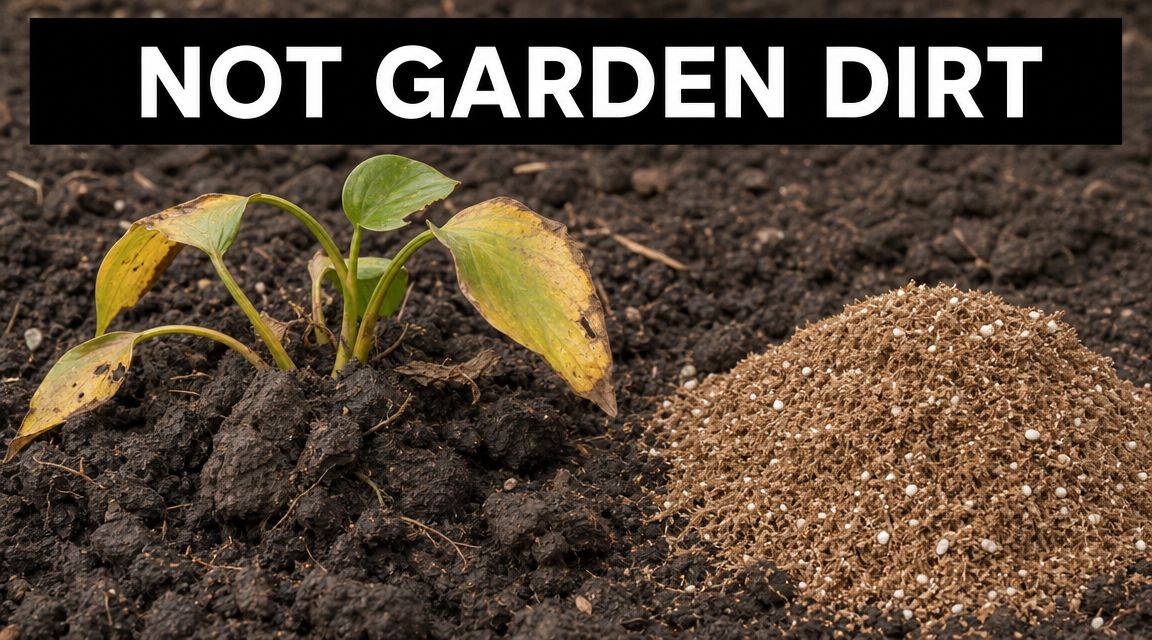
Pots need a root environment, not backyard dirt
A houseplant container is closer to a controlled baking pan than an open field. Once the ingredients go in, there is very little room for error. If the mix is too fine, roots sit in a heavy, wet mass. If it is too coarse, water races through before the plant can use enough of it. The goal is balance.
That is why potting mix is really a designed growing medium. It has a job to do in a confined space. It must hold enough moisture for the plant between waterings, keep enough air around the roots, support the plant physically, and carry nutrients without collapsing into sludge.
If you want a simple way to judge a mix, squeeze a slightly damp handful. Garden soil often clumps into a dense lump. A good houseplant mix usually feels lighter and more springy, with visible texture and air spaces.
What goes wrong with garden soil indoors
The trouble starts with particle size. Garden soil often contains many fine particles, and in a pot those particles pack tightly together. Water fills the small spaces between them, and roots lose access to oxygen. That is the part many beginner guides skip. Roots need water, but they also need air at the same time.
A cake analogy helps here. If your batter is all flour and no lift, the cake bakes up dense and gummy. Garden soil does something similar in a container. It removes the fluff. Potting ingredients such as bark, perlite, and coarse fibers create the root-zone equivalent of air pockets, which is why ingredient ratios matter so much. If you want a clearer breakdown of those roles, this guide to common potting mix ingredients and what each one actually does is a useful reference.
Dense soil also creates practical indoor problems:
- Compaction: The mix settles into a tighter mass over time.
- Slow drainage: Water stays around the roots longer than you expect.
- Reduced gas exchange: Roots struggle because stale, wet conditions push out oxygen.
- Pests and pathogens: Outdoor soil can bring in fungus gnats, weed seeds, or disease organisms.
- Unpredictable drying: The top may look dry while the lower half of the pot stays soggy.
This is where soil intuition starts to matter. Two people can use the same plant and the same pot, but the person who waters heavily or lives in a cooler, darker apartment will run into trouble much faster with a dense mix than someone in bright light who lets pots dry more between waterings.
Why recipes fail without context
A bag of “indoor potting soil” is not automatically right for every home. The better question is not “Is this soil good?” It is “Will this texture match my conditions and habits?”
If you tend to overwater, you usually need more aeration. If your home is hot, bright, or dry, you may need a mix that holds moisture a bit longer. That is why copying a recipe without understanding the reason behind it often leads to frustration. The same basic ingredients can behave very differently depending on your room, your pot choice, and your watering style.
For outdoor beds, organic matter and mulch can improve soil structure over time, and good composting practices help turn tree waste into garden gold. Potted houseplants are less forgiving. In a container, you cannot count on a living soil ecosystem and a huge volume of earth to buffer your mistakes. The mix has to do the buffering itself.
The better way to frame the problem
Start by asking what kind of root zone your plant needs. Loose and fast-drying for a cactus. Moist but airy for many tropicals. Chunky and quick to breathe for an aroid.
That shift matters. You stop treating potting mix like generic dirt and start treating it like a recipe you can adjust with purpose.
And sometimes the smartest choice is not DIY at all. If your home conditions are tricky or you want consistency, a professionally formulated mix can save a lot of trial and error.
The Building Blocks of a Perfect Potting Mix
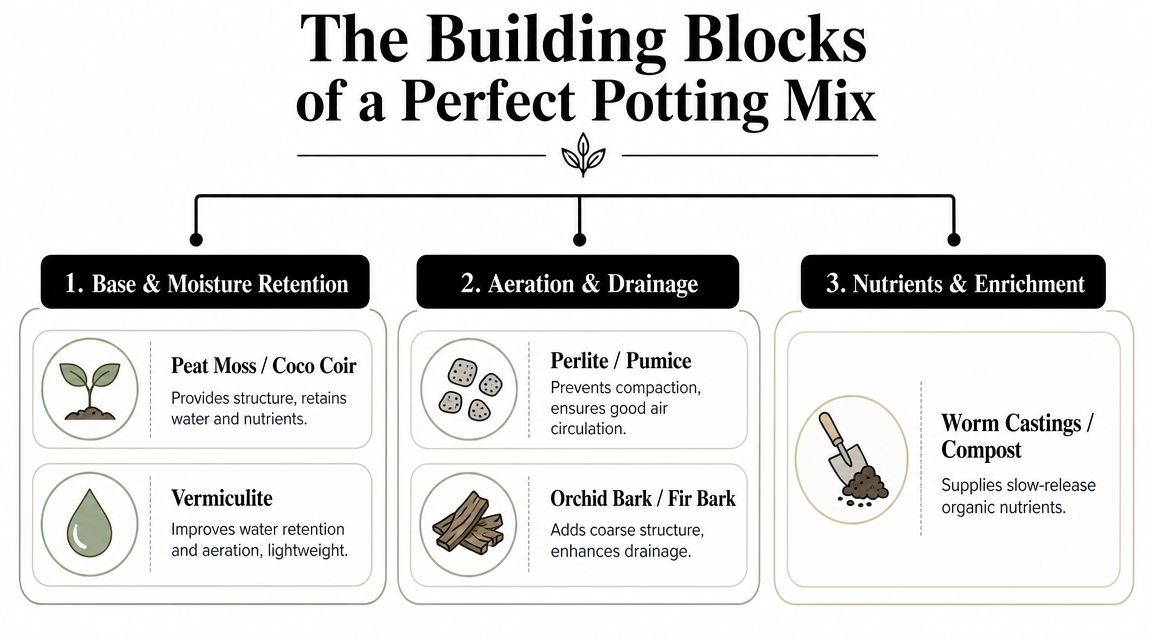
A good mix works like a pantry recipe. One ingredient holds water. Another creates air pockets. A third adds body or nutrition. Once you know the job of each piece, you can adjust your blend without guessing.
The visual below shows the core ingredient families at a glance.
Base ingredients that hold moisture
Peat moss is one of the classic base ingredients in indoor mixes. It helps hold water and nutrients, and it gives a blend a soft, fine texture that fills in around roots. The tradeoff is chemical, not just physical. Peat-based mixes are naturally acidic, so growers often need to correct pH with dolomitic limestone, which also adds calcium and magnesium. That matters even more if you water with soft tap water, rainwater, or reverse-osmosis water because the mix may not get much mineral buffering over time.
Coco coir plays a similar structural role in many modern blends. It helps with moisture retention and texture, and many growers like it as an alternative base. In practice, beginners can think of peat or coir as the “cake batter” portion of a mix. They bind the recipe together.
Vermiculite is often grouped here too. It's lightweight and helps with moisture retention while still keeping the mix looser than plain fine-textured media.
For a deeper ingredient-by-ingredient explanation, this Leaves & Soul guide on common potting mix ingredients and what each one actually does is a useful companion when you're deciding what to buy.
Ingredients that create air space
A lot of the “best houseplant soil mix” advice gets both useful and misleading. Yes, roots need oxygen. But not every home needs the chunkiest possible blend.
Neil Sperry wrote in 2021 that his preferred potting blend had evolved toward more aeration, with roughly 50% sphagnum peat, 25% finely ground pine bark mulch, 15% perlite, and 10% expanded shale, and he warned that “heavy” soils are risky because they deprive roots of oxygen in his article on picking the best potting soil. That's a useful modern benchmark. It shows how experienced growers moved away from dense mixes and toward blends with deliberate pore space.
Perlite is the familiar white, lightweight amendment most gardeners recognize. It keeps mixes open and reduces compaction. Pumice does a similar job with a bit more weight. Bark, often sold as orchid bark or pine bark, adds coarse structure that creates larger air channels and slows the collapse of the mix over time.
Heavy potting media don't just hold water. They hold it in the wrong places, where roots need oxygen most.
If you make your own bark-rich compost or mulch inputs, learning how to turn tree waste into garden gold can help you understand why woody material changes texture so dramatically in a planting medium.
A short visual demo helps many beginners see these components in action:
Ingredients that add body and enrichment
Some mixes also include compost, worm castings, or a modest amount of sand. These don't all play the same role.
- Compost and worm castings: Add organic matter and a gentle nutrient contribution.
- Coarse sand: Adds weight and texture, especially in older or more traditional formulas.
- Charcoal: Some growers use it for structure and blend texture, though it's usually a secondary ingredient rather than the foundation.
The trick is restraint. Beginners often assume more ingredients means a better mix. Usually, it means more variables. A base ingredient plus one or two structural amendments is often easier to manage than a “kitchen sink” recipe.
Tested DIY Soil Recipes for Popular Houseplants
A recipe is only useful if you know what it is trying to do.
Plenty of houseplant guides hand you a ratio and stop there. That is like giving someone a cake recipe without explaining what the eggs, flour, and baking powder do. If your kitchen runs hot, your oven is unreliable, or you swap one ingredient, the result changes. Potting mix works the same way. The best ratio for your plant also depends on your light, indoor humidity, pot choice, and how often you water.
Use the mixes below as starting points. Then adjust them based on how the pot behaves in your home. “Parts” can mean a scoop, a cup, or a small container, as long as you stay consistent.
A general mix for most leafy houseplants
For peace lilies, spider plants, dracaenas, prayer plants, and many common foliage plants, start with a middle-of-the-road mix that holds moisture but still leaves room for air.
A reliable beginner ratio is:
- 2 parts peat or coco coir
- 1 part perlite
- 1 part coarse sand or fine bark
That balance works like a cake with enough flour to hold together and enough baking powder to keep it from turning dense. The peat or coir stores moisture. The perlite opens up the mix so roots can breathe. The sand or bark adds structure and helps the pot avoid turning into a soggy block after repeated watering.
If your home is dry or you miss waterings, lean slightly toward more moisture retention. If your rooms stay cool and the soil stays damp for days, reduce the fine material and increase the chunky part.
Chunkier mixes for aroids and similar tropicals
Pothos, philodendrons, monsteras, syngoniums, and many hoyas usually prefer a mix with more texture. In nature, many of these plants root through leaf litter, bark, and loose organic debris rather than dense ground soil. Their roots often perform better when water passes through quickly but some moisture still clings to the particles.
A useful starting mix is:
- 2 parts peat or coir-based potting mix
- 1 part bark
- 1 part perlite or pumice
Each ingredient has a job. The base mix holds the water reserve. Bark creates larger gaps, which helps the root zone stay open over time. Perlite or pumice keeps the blend from compacting and adds extra air space.
This is also where “soil intuition” starts to matter. A chunky aroid mix that works beautifully for a frequent waterer in a bright room may be frustrating for someone who waters once and forgets for ten days. If that sounds like you, keep the bark but use a little more base mix so the plant has a longer moisture buffer.
If you often forget to water, skip the ultra-chunky social media versions and build a mix with a bit more water-holding material.
Faster-draining mixes for succulents and cacti
Succulents and cacti need a different balance. Their roots can handle brief drinks, but they struggle when moisture lingers around them in fine, heavy material.
Start here:
- 1 part base potting mix
- 1 part coarse mineral amendment such as pumice, perlite, or coarse sand
That gives you a leaner mix with fewer wet pockets. If you water generously, push the ratio further toward mineral material. If you tend to underwater or your home is very warm and dry, keep a little more potting mix in the blend so the roots are not going bone dry too fast.
A quick check helps. Water the pot thoroughly, then lift it the next day and again a few days later. You are learning its drying rhythm. That matters more than copying a cactus recipe word for word.
Orchid and bonsai mixes need a different mindset
Orchids and bonsai are better treated as separate systems, not just special houseplants.
Orchids often grow best in mostly bark-based media because many common indoor orchids want fast airflow around their roots. A fine, peat-heavy mix usually stays too wet for them.
Bonsai mixes are built around drainage, particle size, and root control. Species, pot depth, and climate matter so much that a standard houseplant formula is rarely the right shortcut. Use a bonsai-specific blend instead of trying to adapt a foliage mix.
DIY houseplant soil mix ratios
| Plant Type | Base (Moisture) | Aeration | Nutrition/Other |
|---|---|---|---|
| General leafy houseplants | 2 parts peat or coir | 1 part perlite, 1 part coarse sand or fine bark | Keep enrichment light |
| Aroids and tropical climbers | 2 parts base mix | 1 part bark, 1 part perlite or pumice | Small amount of worm castings if desired |
| Succulents and cacti | 1 part base potting mix | 1 part coarse mineral amendment | Minimal organic enrichment |
| Orchids | Small amount of moisture-holding material if needed | Mostly bark-based structure | Feed lightly and consistently |
| Bonsai | Depends on species and climate | Strong drainage and stable particles | Use bonsai-specific ingredients |
One more practical note. Fresh ingredients matter. Old potting materials can break down, stay wetter than expected, or develop odors and poor texture. If you are unsure whether your supplies are still usable, this guide on how to tell if potting mix has gone bad is worth checking before you mix a new batch.
The first batch is rarely the final version. Mix, water, observe, and adjust. That is how you stop following recipes blindly and start reading what your plant and your home are telling you.
Troubleshooting Common Houseplant Soil Problems
A plant's leaves get the blame, but the root zone usually started the argument. Yellowing, drooping, gnats, stale smells, and weak growth often trace back to a mix that holds the wrong amount of water for your conditions.
The key is to read symptoms as feedback about air and moisture balance.
When the mix stays wet for too long
If the pot feels heavy for days and the top barely dries, the blend probably has too many fine particles for your home. The roots may be sitting in a low-oxygen environment, even if you aren't watering constantly.
Try these fixes:
- Add more structure: Mix in more perlite, bark, or pumice next time you repot.
- Check the container: A pot without strong drainage can make a decent mix behave badly.
- Scale watering to conditions: Low light and cool rooms slow drying.
Surface mold and fungus gnats often tag along in these setups because the top layer stays moist longer than it should.
When the mix dries too fast
This is the problem many trendy guides underplay. One indoor-plant guide warns that if you tend to under-water, adding too many amendments can make the mix dry too quickly and lead to inconsistent hydration and plant stress in its article on growth medium basics for indoor plants.
That explains why some growers move a plant into an ultra-airy mix and then wonder why leaves curl or crisp. The mix drains beautifully, but the root ball never stays evenly moist long enough.
A few corrections help:
- Increase the base material: Add more peat or coir relative to bark and perlite.
- Water more thoroughly: Very airy mixes need complete saturation when you do water.
- Match the mix to your habits: If you miss watering windows, use fewer coarse amendments.
If you suspect your current medium has degraded or become unstable, this guide on how to tell if potting mix has gone bad can help you decide whether to amend or replace it.
When soil turns hydrophobic or lifeless
Sometimes an old mix starts shrinking from the sides of the pot or resists wetting. Water runs down the gap and out the drainage hole while the root ball stays partly dry.
That usually means the medium has broken down, dried excessively, or lost its original structure. At that point, correction is often easier than rescue. Fresh mix restores both texture and water absorption.
Soil problems rarely need dramatic solutions. They usually need a ratio change.
DIY Mix vs Professional Blends
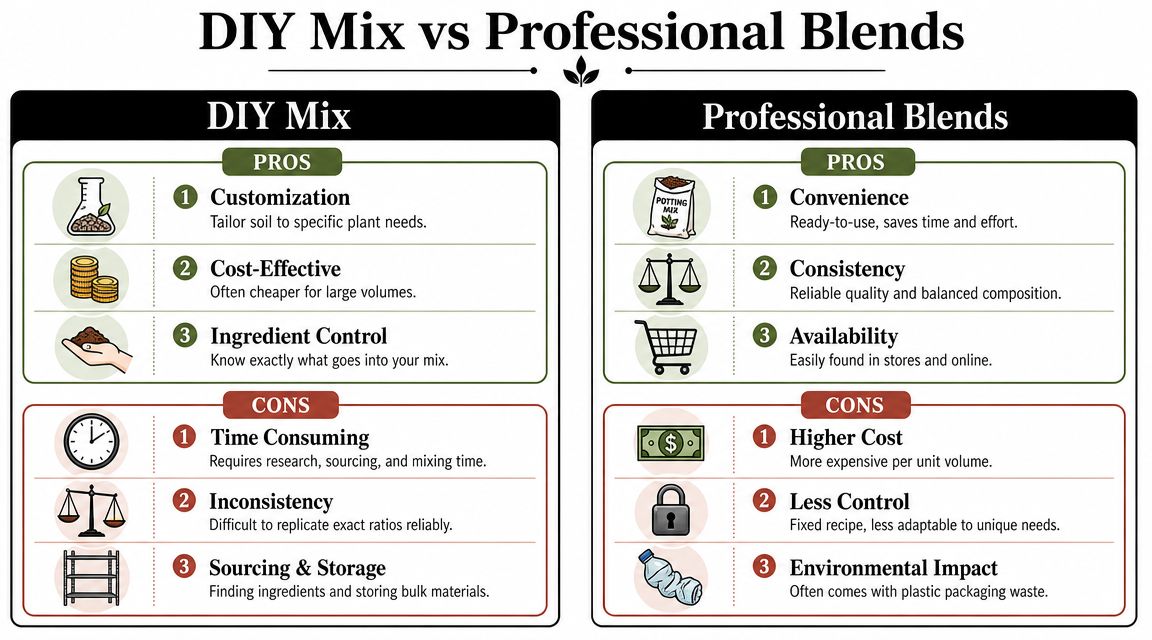
Making your own mix can be satisfying. Buying a professionally formulated blend can be smarter. Both are valid choices, and the better option depends on how many plants you have, how much variation you want, and whether you enjoy tinkering.
When DIY makes sense
DIY is great if you like control. You can make a moister blend for ferns, a barkier one for aroids, and a leaner version for succulents. You also get to adjust ingredients based on your home rather than someone else's greenhouse or warehouse assumptions.
The downside is consistency. Ingredients vary by brand, storage conditions, and even how long an open bag has been sitting in your shed or laundry room. A “same recipe” mix can behave differently from batch to batch.
When professional blends make sense
A professional blend is useful when you want fewer variables. That's especially true when pH and mineral balance enter the picture. Peat-based mixes are naturally acidic and often need dolomitic limestone for pH correction while also supplying calcium and magnesium, a useful point discussed in this horticulture video about pH stability and watering routine. That kind of balancing act is easy to overlook in DIY mixing.
This is one reason many growers choose a ready-made product for everyday repotting and reserve DIY tweaking for specialty plants. If you want a closer look at that logic, Leaves & Soul has a helpful article on why professional soil formulated for plant species matters.
One factual example from the publisher's catalog fits here. Leaves & Soul sells an indoor plant soil blend formulated with peat, coco coir, perlite, and dolomite. That ingredient combination reflects the same balancing principles discussed above: water retention, aeration, and mineral buffering in one ready-to-use mix.
A simple decision filter
Choose DIY if these sound like you:
- You enjoy experimentation: Mixing and adjusting sounds fun, not tedious.
- You grow many plant types: Custom ratios solve different needs.
- You have storage space: Extra bags of bark, perlite, and base mix won't be a hassle.
Choose a professional blend if this sounds more like your situation:
- You want repeatability: You'd rather remove guesswork.
- You have a smaller collection: Convenience matters more than bulk flexibility.
- You don't want to manage chemistry: pH and mineral balance are easier when already built into the product.
Neither route is more “serious.” The best one is the one you'll use correctly and consistently.
Creating the Perfect Foundation for Your Plants
Chasing a single “best” houseplant soil mix is a little like hunting for one perfect cake recipe for every oven. The ingredients matter, but the result also depends on heat, humidity, timing, and the person doing the baking. Potting mix works the same way. A blend that suits a warm, bright apartment and a light-handed waterer can stay soggy in a cooler room or dry too fast for someone who forgets to water.
That is why learning the reason behind the ratio matters more than copying one. Bark and perlite create air pockets, which roots need the way lungs need oxygen. Coir, peat, or compost hold moisture like a sponge. Mineral components and fertilizer help cover nutrition and pH balance. Once you understand what each part does, you can adjust the recipe with much more confidence.
Start with one small batch and treat it like a test bake. Water it. Lift the pot a day later. Check the surface, then check deeper with a finger or chopstick. At repotting time, look at the roots. Firm, pale roots usually point to a mix with a good balance of air and moisture. Brown, mushy, or sparse roots usually mean the balance is off.
That observation process builds soil intuition. It helps you match the mix to your home, your schedule, and the plant in front of you instead of relying on a generic formula written for someone else's conditions.
Healthy roots make watering easier to judge, feeding easier to manage, and growth easier to predict.
If you want a reliable starting point without mixing ingredients yourself, Leaves & Soul offers professional-grade soils, fertilizers, and plant care supplies for indoor growers. You can use a ready-to-use blend as your baseline, then make small adjustments later as you learn how your plants respond.