


A healthy indoor fiddle leaf fig typically grows 1 to 2 feet per year under optimal conditions. That pace depends heavily on its environment, especially light, which is the biggest driver of faster leaf flushes and vertical growth.
If your plant has been sitting in the same corner for months without a single new leaf, you're not imagining the stall. Fiddle leaf figs are famous for looking dramatic while doing absolutely nothing for long stretches, and most of the time the problem isn't mystery or bad luck. It's a care mismatch.
I've seen the same pattern over and over. A plant looks healthy enough to survive, but not well enough to grow. The leaves stay on, the stem doesn't move, and the owner keeps waiting for a breakthrough that never comes. Once you treat growth like a response to conditions instead of a personality trait, the plant gets much easier to read.
A lot of struggling plants don't need heroic intervention. They need brighter placement, steadier watering, a root check, and a routine that matches the season. If you want a stronger baseline before making changes, these fiddle leaf fig care tips are a useful companion to the growth-focused approach here.
Why Is My Fiddle Leaf Fig Not Growing
The most common complaint is simple. "It hasn't done anything in months."
That usually means the plant is maintaining itself, not building new tissue. Survival and growth are different jobs. A fiddle leaf fig can hold onto older leaves in mediocre conditions for quite a while, which tricks people into thinking everything is fine.
Growth stalls when one or more basic needs are off just enough to slow the plant down. Light is often the first problem, but it isn't the only one. A cramped root ball, compacted soil, inconsistent watering, weak feeding, dry air, or pest pressure can all keep a plant in neutral.
Practical rule: If your fiddle leaf fig isn't making new leaves during its active season, assume something in the environment is limiting it.
What makes this plant frustrating is that the limiting factor isn't always the one you notice first. Brown spots might make you focus on watering. Leaning might make you focus on pruning. But the actual issue could be that the plant is too far from the window and doesn't have enough energy to use the water or nutrients you're giving it.
That's why random fixes don't work well with fiddle leaf figs. More water won't solve low light. More fertilizer won't solve soggy roots. A bigger pot won't help if the soil stays wet too long. You get better results when you diagnose the whole setup, then make a few targeted changes that support actual growth instead of just keeping the plant alive.
Decoding the Fiddle Leaf Fig Growth Rate
A lot of owners get discouraged at the same point. The plant looks healthy enough, but week after week nothing seems to happen.
That pause does not automatically mean something is wrong. Fiddle leaf figs are moderate growers indoors. University of Florida IFAS guidance on Ficus lyrata describes the species that way and notes that it becomes a large evergreen tree outdoors. Indoors, you are managing a tree that is adapting to a pot, a ceiling, and filtered light. That alone resets expectations.
What normal indoor growth looks like
Healthy indoor growth usually comes in flushes, not in a steady weekly climb. A plant may sit still for a while, then push several leaves from the top in one active stretch. Height gain follows the same pattern. You often notice progress all at once rather than inch by inch.
In practical terms, good growth means the plant produces new leaves during its active season, those leaves size up well, and the stem extends over time instead of staying frozen for months. A stronger setup usually gives you bigger leaves, tighter spacing between setbacks, and more reliable seasonal flushes.
I tell people to judge momentum, not daily movement.
Why growth feels slow indoors
Indoor conditions ask the plant to conserve energy. Light is weaker than it would be outside. Root space is limited. Potting mix quality matters more than people expect, because roots need both moisture and air to keep building new tissue. If your mix stays heavy and wet, growth slows even if the plant is getting enough water. A well-draining fiddle leaf fig soil mix supports faster root function, which gives you better odds of seeing new leaves and measurable height gain.
This is also why two fiddle leaf figs in the same house can grow at very different speeds. One may be close to a bright window in a loose soil mix and push regular top growth. The other may survive in a dim corner and barely change.
| Setting | What to expect |
|---|---|
| Native or outdoor form | Tree-sized growth habit with much greater long-term potential |
| Typical indoor setup | Moderate growth, often in spurts instead of a constant climb |
| Optimized indoor setup | Better height gain, stronger leaf size, and more consistent flushes |
The useful question is not, "Why isn't it growing every day?" The useful question is, "Is my setup strong enough to support the next flush this season?"
That season-based view helps. Spring and summer are usually your best window for measurable gains in height and leaf count. Fall and winter are often slower, so care should shift toward maintaining root health and light exposure rather than pushing hard with extra fertilizer. Grow the plant in rhythm with the season, and its growth rate starts to make a lot more sense.
The 8 Key Factors That Fuel or Stall Growth
Fiddle leaf fig growth works like a recipe. Miss one ingredient badly enough and the whole result changes. You can have great fertilizer and still get no new leaves if the light is weak. You can have bright light and still stall growth if the roots are sitting in dense, soggy soil.
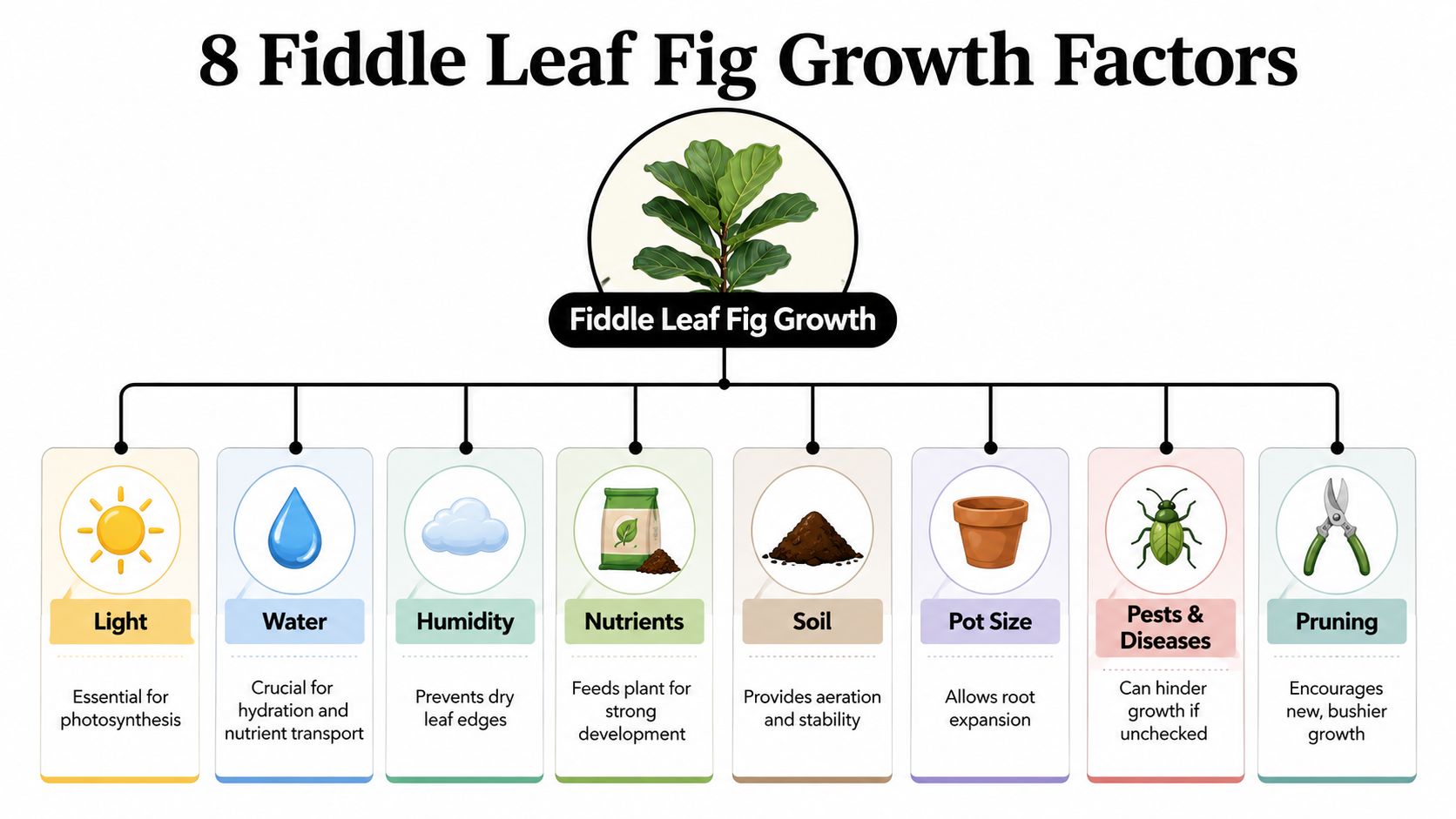
Light drives the whole system
If you change only one thing, change light first.
Expert guidance consistently identifies light as the primary growth driver. Plants kept in very bright conditions, such as directly in front of a window or under a grow light, produce faster leaf flushes, while low-light placement slows expansion and can suppress new leaf production according to this fiddle leaf fig growth guide focused on brighter placement.
A fiddle leaf fig in the middle of a room may survive. It usually won't thrive. The strongest growers are almost always the ones positioned right in front of the best natural light available.
Water has to match the light
Watering mistakes stall growth from both sides. Too little water interrupts normal leaf development. Too much water deprives roots of air and makes the plant defensive instead of productive.
What works best is a soak-and-dry rhythm. Water thoroughly, let excess drain, then wait until the soil has dried enough before watering again. Don't reward yourself for sticking to a calendar. The plant doesn't care what day it is.
Soil and aeration decide root health
A fiddle leaf fig can't grow well in stale, compacted media. Roots need oxygen as much as moisture.
If your mix stays dense or muddy, growth often slows even when everything above the soil looks acceptable. That's why a chunky, well-draining mix matters. If you're unsure what texture and drainage profile to aim for, this guide to choosing the right fiddle leaf fig soil type helps clarify what supports stronger roots.
Pot size can help or hurt
A root-bound plant may slow down because it has no room left to expand. But moving into an oversized pot can also backfire if the extra soil stays wet too long.
Use the plant's root system as your guide, not your impatience. If roots are circling densely and water runs straight through or the plant dries unusually fast, it may be ready for a new container. If the root ball is still modest, keep it where it is.
Fertilizer supports leaf size and momentum
Large leaves require energy and nutrients. Without regular feeding during active growth, many fiddle leaf figs stay alive but produce small, weak flushes or none at all.
Think of fertilizer as a balanced diet, not a stimulant. The goal isn't to push the plant past its limits. The goal is to avoid making nutrition the bottleneck.
Humidity reduces stress at the margins
These plants don't need a jungle to grow indoors, but very dry air often shows up first in crispy edges, stalled tender growth, or leaves that harden off poorly. Humidity won't overcome weak light, yet it can make an otherwise decent setup more forgiving.
Temperature consistency matters more than perfection
Fiddle leaf figs hate repeated stress. Cold drafts, hot blasts from vents, and big temperature swings can all interrupt growth. A stable room usually performs better than a "perfect" room that keeps changing.
Pests and pruning change the growth pattern
Spider mites, scale, mealybugs, and aphids steal energy from new growth first. If the top growth looks distorted or stalled, inspect the undersides of leaves and the stem junctions.
Pruning also changes how the plant allocates energy. If you cut the top, the plant often responds by redirecting growth into new branches rather than only height. That's useful if you want a fuller shape, but it can temporarily change what "progress" looks like.
A Proactive Care Routine for Faster Growth
Most fiddle leaf fig owners don't need more tips. They need a repeatable routine.
Spring through fall routine
During active growth, keep the plant in the brightest spot that suits it, water thoroughly when the mix has dried enough, and feed consistently rather than in random bursts. This is the stretch when the plant is most likely to reward you with visible movement.
For feeding, I prefer a steady approach over aggressive correction. A balanced slow-release option is easier to manage because it reduces the feast-or-famine cycle that often leads to weak growth or fertilizer burn. If you're comparing options, this guide to the best fertilizer for fiddle leaf fig care is a practical starting point.
Use this checklist during the growing season:
- Morning light check: Move the plant as close to your brightest window as your space allows.
- Watering check: Saturate the soil fully, then let excess water drain away. Never leave the pot sitting in runoff.
- Feeding check: Use a consistent fertilizer plan during active growth instead of occasional heavy doses.
- Leaf inspection: Wipe dust from leaves so the plant can use the light it's getting.
- Rotation check: Turn the pot periodically if the plant leans hard toward one side.
If a fiddle leaf fig gets bright light, stable moisture, and usable nutrients at the same time, growth usually follows.
Winter routine
Winter is when many owners create problems by treating the plant like it's still in peak season. Growth often slows. Water use drops. Soil stays wet longer.
Your winter job is simpler:
- Keep light high: Don't move it deeper into the room just because holiday decor needs the window.
- Water more carefully: Check the soil before every watering.
- Pause the urge to repot: Unless the plant is clearly struggling from root crowding, wait for active growth to return.
- Protect from drafts: Cold air at the window or heat from vents can stall the plant even when other care is decent.
Later in the season, a visual demo can help dial in your routine:
What this routine should produce
You're not trying to micromanage the plant into perfection. You're trying to remove the common bottlenecks. When that happens, you usually see better leaf size, cleaner new growth, and a more predictable rhythm during the active season.
How to Measure and Track Your Fig's Progress
Underestimating growth is common because plants are observed daily. Consistent observation makes it difficult to perceive gradual improvement.
Use three simple markers
Track progress with the same three data points every time:
- Height from soil line to the top growing point
- New leaves since the last check
- Overall form in a photo from the same angle
You don't need a spreadsheet unless you enjoy one. A note in your phone works fine.
Build a monthly record
Pick one day each month. Measure the plant, count any new leaves, and take a photo in the same spot against the same wall. If you want a cleaner visual reference, put a small piece of painter's tape on the wall behind the pot so your camera position stays consistent.
A simple log might look like this:
| Checkpoint | What to record |
|---|---|
| Height | Soil line to top leaf |
| Leaf flush | Number of new leaves since last check |
| Condition | Any browning, droop, pests, or leaning |
| Environment change | Moved closer to window, repotted, started feeding, added grow light |
The photo record matters more than most people expect. A plant that looks "the same" often looks obviously fuller when you compare monthly images side by side.
Watch for pattern, not perfection
One slow month doesn't mean your routine failed. What matters is the trend. If the plant is gradually getting taller, producing leaves in spurts, and holding its older foliage well, you're moving in the right direction.
Tracking also keeps you from making too many changes at once. That's one of the biggest reasons fiddle leaf figs decline. Owners panic, then repot, prune, fertilize, and move the plant all in the same week.
Troubleshooting Common Growth Problems
When a fiddle leaf fig struggles, the symptom usually points to the category of problem. Not always the exact cause, but the category.
No new leaves for a long time
Start with placement. A plant in weak light often freezes in place. If it's also underfed or packed into old soil, the stall gets worse.
Corrective action:
- Move it brighter: Put it much closer to your best window.
- Check the root zone: If the mix is compacted or the roots are crowded, address that before adding more fertilizer.
- Feed during active growth: Support the plant when it's capable of responding.
Long bare stem with leaves only at the top
That shape usually means the plant has been reaching for light. The stem stretches, the spacing between leaves increases, and the plant starts to look sparse.
Do this next:
- Increase light immediately: New growth should be produced under brighter conditions.
- Rotate less randomly: Frequent small changes in direction can create awkward form.
- Prune strategically if needed: Once the plant is healthy, topping can encourage branching rather than more height alone.
Small, weak, or misshapen new leaves
This points to stress during development. Water inconsistency is a frequent cause. So are poor nutrition, pest pressure, and low energy from dim placement.
Inspect the newest growth first. Tender leaves are where problems show up fastest.
If you spot aphids or suspect they may be part of the issue, BugMD's non-toxic aphid solutions are worth reviewing because gentle pest control is often the better fit for an indoor plant sitting in your living space.
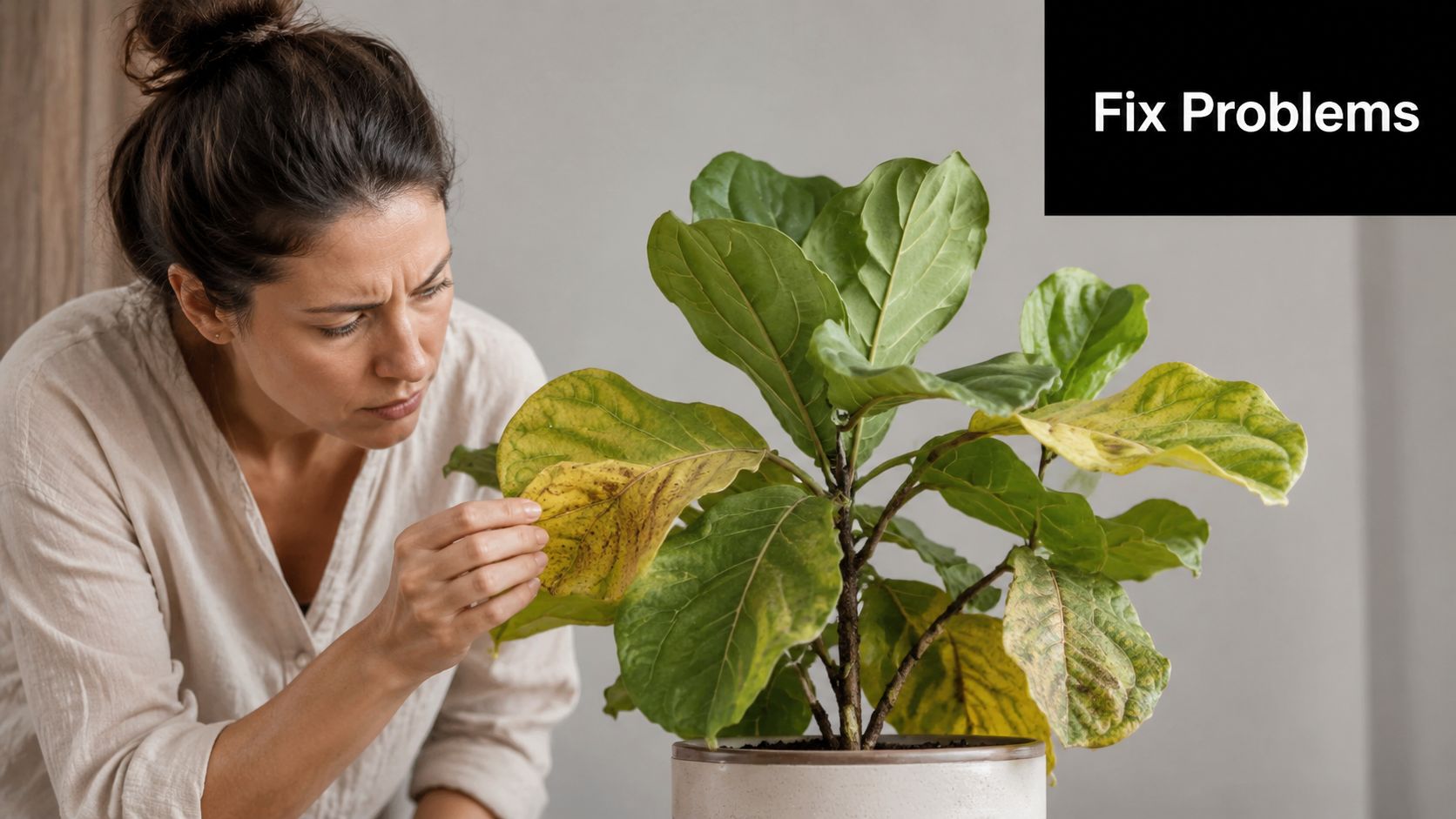
Brown edges, spots, or general decline
Don't diagnose from one damaged leaf alone. Look for patterns.
| Symptom pattern | More likely issue |
|---|---|
| Crispy edges | Dry air, inconsistent watering, or salt buildup |
| Yellowing with poor vigor | Root stress, overwatering, or low light |
| Distorted fresh growth | Pests or uneven moisture during leaf formation |
| Leaning and sparse growth | Inadequate light |
The fix is usually less dramatic than people fear. Remove the stress that keeps repeating, and the next flush often comes in cleaner.
Realistic Growth Timelines from Sapling to Tree
You bring home a healthy-looking nursery fiddle leaf fig, place it in the brightest corner you have, water carefully, and then nothing seems to happen for weeks. That slow start is normal. Early progress often shows up as leaf retention, firmer posture, and a cleaner new flush rather than obvious height.
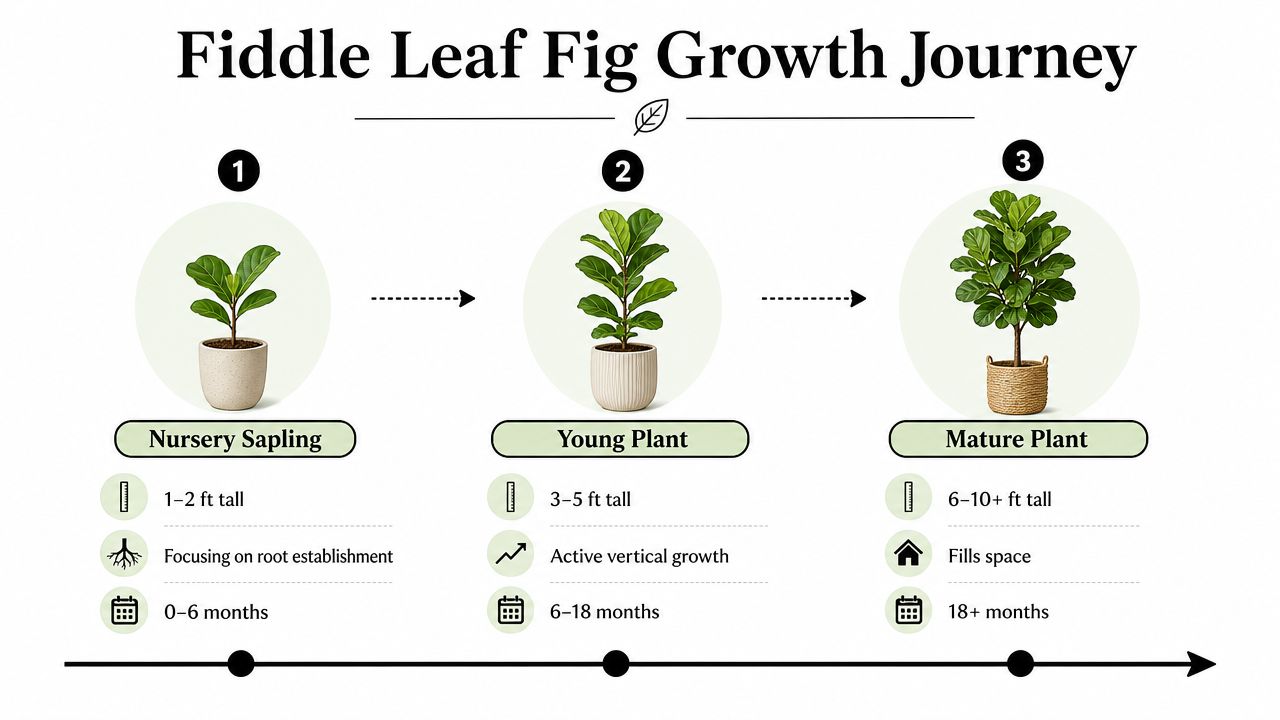
Small nursery plant
A newly purchased plant is usually focused on adjusting to new light, humidity, and watering patterns. I expect an establishment phase first. During that period, signs of success are steady leaves, healthy roots, and one strong flush of new growth.
This is also the stage where growers get impatient and start changing too many variables at once. Resist that urge. A fiddle leaf fig settles faster with stable conditions than with constant tinkering.
Young indoor tree
Once the plant is rooted in and getting enough light, growth becomes easier to read. You will usually see it in flushes instead of a constant upward climb. A healthy plant adds height over time, but the better marker is repeatable growth cycles: new leaves emerge, harden off, and then the plant rests before the next push.
That rhythm matters because it gives you a practical way to judge progress by season. In spring and summer, a well-cared-for plant should look more active. In fall and winter, slower growth is common indoors, and sometimes the right goal is maintaining leaf quality and structure until stronger light returns.
A compact plant can become a substantial indoor tree, but it happens through consistent care over several growing seasons. Proper feeding during active growth, enough light to support larger leaves, and timely repotting all show up later in height, trunk thickness, and leaf count.
Mature houseplant presence
A mature indoor fiddle leaf fig changes your job. Early on, the goal is getting reliable growth. Later, the goal is shaping that growth so the plant stays balanced, full, and proportionate to the room.
The trunk gets thicker. Branching matters more. Uneven light becomes more obvious because the plant has enough size to lean, stretch, or thin out on one side.
A great indoor fiddle leaf fig looks impressive because it grew steadily.
If your plant is still small, compare it to where it was last season, not to a styled showroom specimen. That season-by-season view is how experienced growers stay realistic and make better care decisions.
If you want to give your fiddle leaf fig a better shot at steady, healthy growth, Leaves & Soul offers purpose-built soils, fertilizers, and plant care supplies designed for indoor growers who want fewer guesses and stronger results.