


You walk past your fiddle leaf fig, glance at the lower canopy, and there it is. One yellow leaf. Maybe two. If you're like most plant owners, your brain goes straight to the worst-case scenario. Too much water, not enough water, bad light, pests, fertilizer burn, root rot. Suddenly a plant that looked fine last week feels like an emergency.
That reaction is understandable. Fiddle leaf figs have a reputation for drama, and yellow leaves feel like a warning siren. The good news is that yellowing usually isn't random. Your plant is giving you a clue. The job is to read the clue correctly, because the wrong fix often makes the problem worse.
I've seen the same mistake over and over. A leaf turns yellow, the owner assumes hunger, and fertilizer goes in. Or they panic about dryness and water again. Sometimes the underlying issue sits lower, in the root zone, where the soil has stayed too wet or drifted out of balance. Once you know how to separate those causes, the situation becomes much more manageable.
That First Yellow Leaf and What It Means
The first yellow leaf doesn't always mean your fiddle leaf fig is in collapse. Sometimes it's a stressed plant asking for help. Sometimes it's an older leaf on its way out. The difference matters.
A healthy fiddle leaf fig can shed an occasional lower leaf as it redirects energy into fresh growth. That's not the same as multiple leaves yellowing at once, or new leaves coming in pale, or lower leaves turning soft and blotchy. The pattern tells you whether you're dealing with routine turnover or a care issue that needs correction.
Practical rule: One old bottom leaf is observation. Several yellow leaves appearing together is diagnosis time.
Most owners lose time by reacting too fast and too broadly. They move the plant, change the watering schedule, add fertilizer, and repot all in one weekend. That creates more variables and more stress. A better approach is slower and more precise. Check what changed. Feel the soil. Look at where the yellowing started. Inspect the pot and roots before you assume anything.
If your fiddle leaf fig leaves yellow, start with this mindset. The plant isn't being mysterious. It's communicating through patterns, timing, and root health.
Decoding the Yellowing Pattern
Yellow leaves rarely happen at random. A fiddle leaf fig usually shows the problem in a pattern first, then in a color change. Where the yellowing starts, how fast it spreads, and what the leaf feels like will narrow your diagnosis much faster than guessing from color alone.
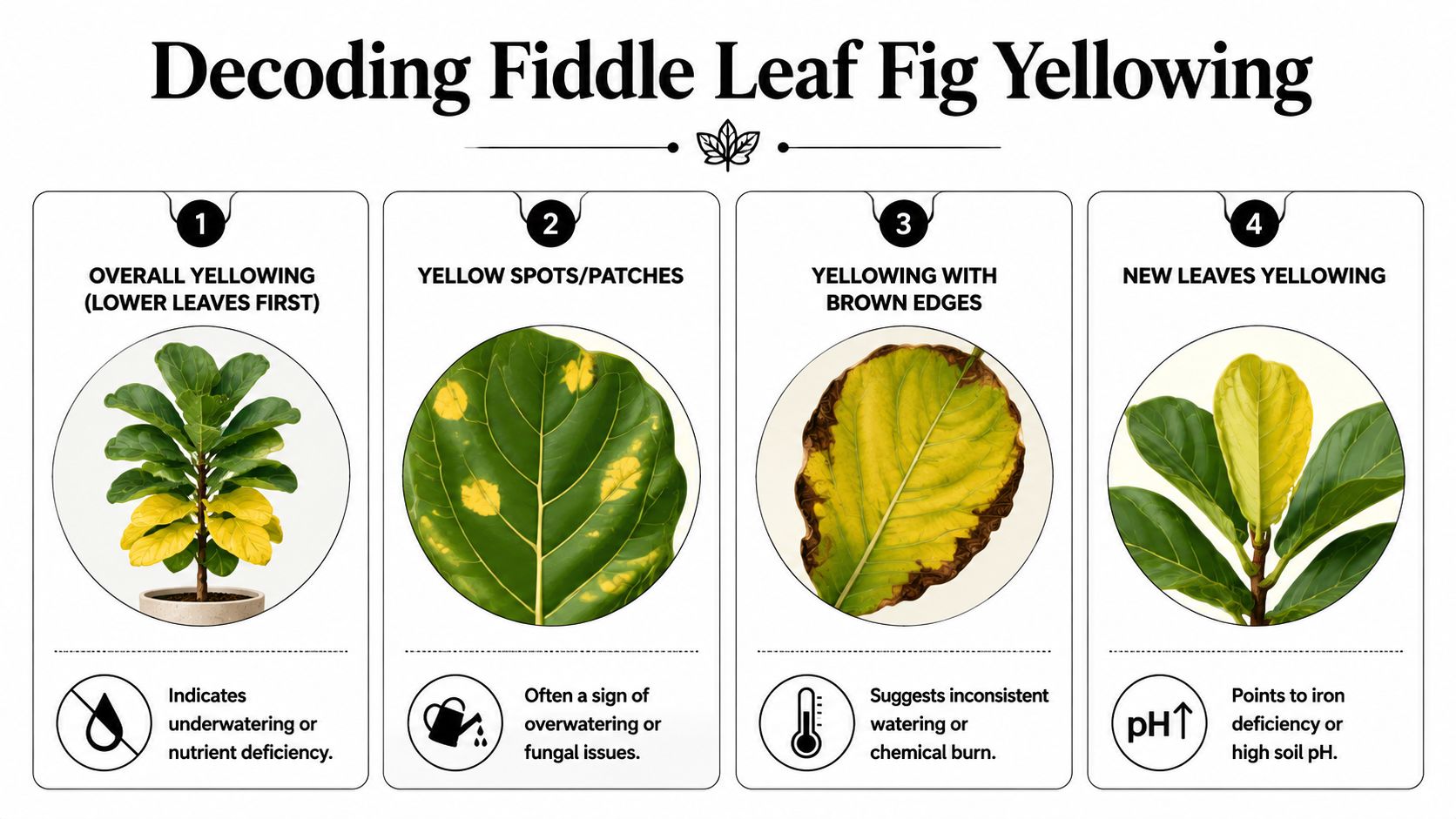
What the pattern usually tells you
Start with three observations. Check whether the yellowing is on older leaves or new growth. Check whether the tissue feels dry and crisp or soft and thin. Then check whether you are seeing one leaf, a small cluster, or a whole side of the plant.
| Fiddle Leaf Fig Yellow Leaf Diagnostic Chart | ||
|---|---|---|
| Symptom: Where and How the Leaves are Yellowing | Likely Cause | First Action to Take |
| Lower leaves yellowing first, especially if the plant otherwise looks thirsty | Underwatering, light feeding issues, or normal aging | Check the soil depth by hand and review your recent watering consistency |
| Several leaves yellowing at once, often with browning near the center or along veins | Overwatering and possible root rot | Stop watering, inspect drainage, and check the root zone |
| Yellowing with brown, crispy edges or brown tips | Underwatering or uneven watering | Rehydrate thoroughly, then stabilize your routine |
| Pale yellowing with weak growth despite regular care | Soil pH imbalance causing nutrient lockout | Test soil pH before adding more fertilizer |
| Bottom leaves slowly yellowing over time while upper growth continues | Natural senescence or low light | Assess light first, then decide whether this is simply an older leaf cycling out |
The fourth clue is often missed. Shade, water, and fertilizer get blamed first, but pale yellowing on a plant that is otherwise getting decent care often points back to the root zone chemistry. If the soil pH has drifted out of range, the plant can sit in a pot full of nutrients and still act hungry because it cannot access them properly.
Similar symptoms, opposite fixes
Overwatering and underwatering can both turn leaves yellow. The fix depends on texture and timing.
Overwatered leaves usually yellow in groups. They often feel limp or slightly swollen before they drop, and the browning tends to show up toward the center of the leaf or along the veins. Underwatered leaves usually look tighter, drier, and more curled, with crisp edges or browning at the tips, a distinction described by the University of Florida IFAS Extension in its guidance on fiddle-leaf fig care.
If you want to sharpen your eye for these details, this guide to reading plant leaves like a pro gives a useful visual framework.
Yellow is a symptom. The pattern gives you the cause.
One more pattern deserves attention. Slow yellowing on the oldest, lowest leaves can be normal leaf retirement, especially if the top of the plant is still pushing healthy growth. I see owners get into trouble when they answer that kind of yellowing with extra fertilizer. If the actual issue is low light or aging foliage, more feed will not solve it. If the underlying issue is pH drift, extra feed can make the potting mix harsher while the plant still cannot use what is already there.
That is why I treat pale, persistent yellowing differently from a simple watering miss. A fiddle leaf fig with weak color, stalled growth, and no clear watering error deserves a closer look at the soil itself, especially pH.
Mastering the Basics of Water and Light
Most yellowing cases still come back to water management and light placement. Start there before you start chasing obscure explanations.
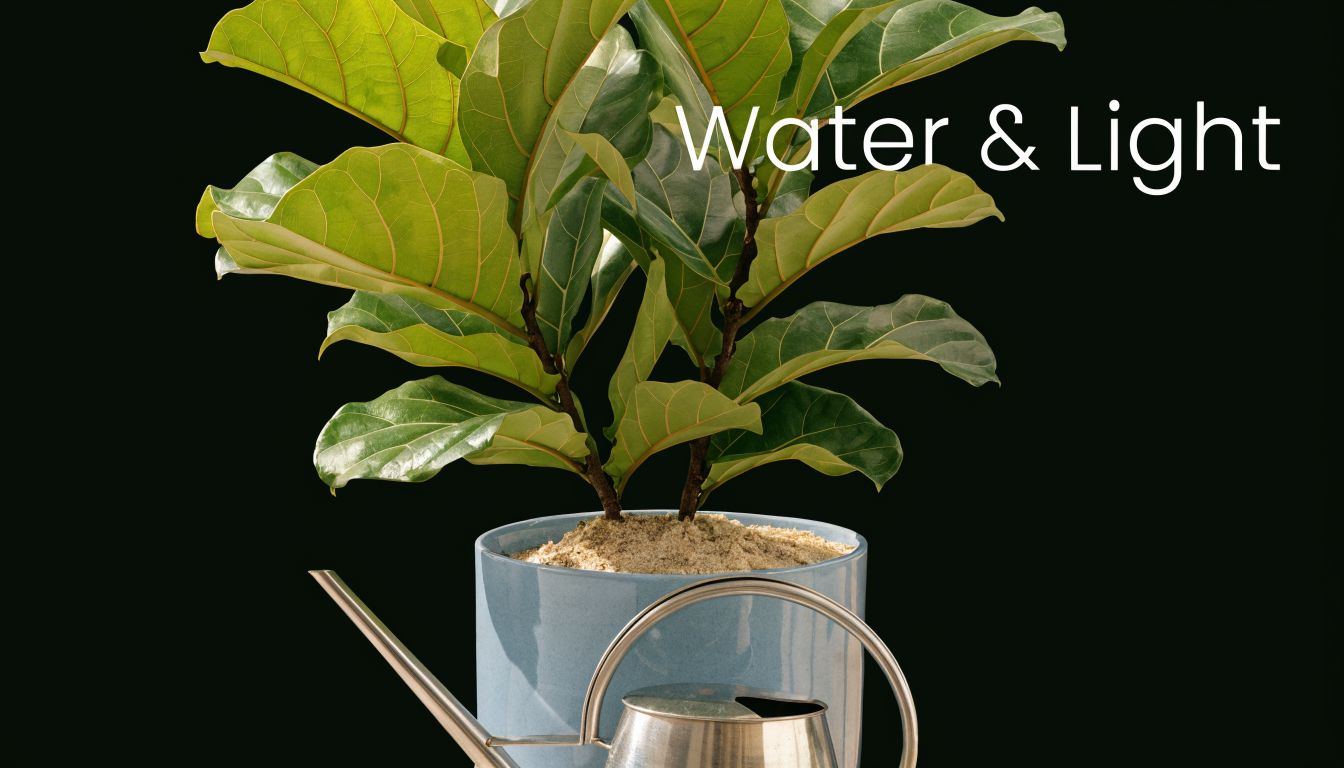
Watering without guesswork
According to horticultural guidance from Rogers Gardens on solving common fiddle leaf fig issues, overwatering stands as the primary cause of yellowing leaves in fiddle leaf figs, and the recommended approach is to check soil moisture daily and water only when the soil is dry up to the second knuckle.
That second-knuckle test works because it forces you to respond to the soil, not the calendar. A weekly watering habit sounds disciplined, but it often causes trouble when the plant's actual needs shift with season, temperature, and light.
Here is the practical version:
- Use your finger first: Push into the soil to the second knuckle. If it's still damp there, wait.
- Check the pot weight: Dry pots feel noticeably lighter. Wet pots stay heavy longer than many owners expect.
- Watch drainage: If water can't leave, correct frequency won't save you. A blocked hole turns every watering into overwatering.
- Water thoroughly when you do water: Tiny sips keep the top layer deceptive and the root ball unevenly moist.
What bright indirect light actually looks like
A fiddle leaf fig needs strong light to use water properly. Plants sitting too far from a window often stay damp too long, then owners read the yellowing as thirst and water again.
Good indoor placement usually means close to a bright window with plenty of ambient daylight, but not shoved into a dim corner because it "looks better there." If your plant gets soft yellowing and sluggish growth, inspect the room before you inspect the fertilizer shelf. Light drives everything else.
A watering problem is often a light problem wearing a disguise.
If your tap water is very mineral-heavy, that can complicate care over time. Leaf spotting and soil buildup don't always come from fertilizer. This plain-English hard water filtration guide from Praz Pure Water, Inc. is useful if you're trying to understand whether your water quality is contributing to stress.
What works and what doesn't
Consistency is the key to success. Check the moisture level using the same method every time. Water the soil thoroughly, then wait until the plant is ready for more. Keep the tree in a stable, bright spot.
What doesn't work is panic watering, ice cubes, vague "once a week" schedules, or rotating the plant through different rooms because you're trying to troubleshoot three variables at once. Fiddle leaf figs can recover from a bad spell. They don't recover faster when their environment keeps changing.
Investigating Hidden Issues in Soil and Nutrients
When owners say, "I've watered correctly and fertilized, and it's still yellow," I start thinking below the surface. Not just nutrients. Soil chemistry.
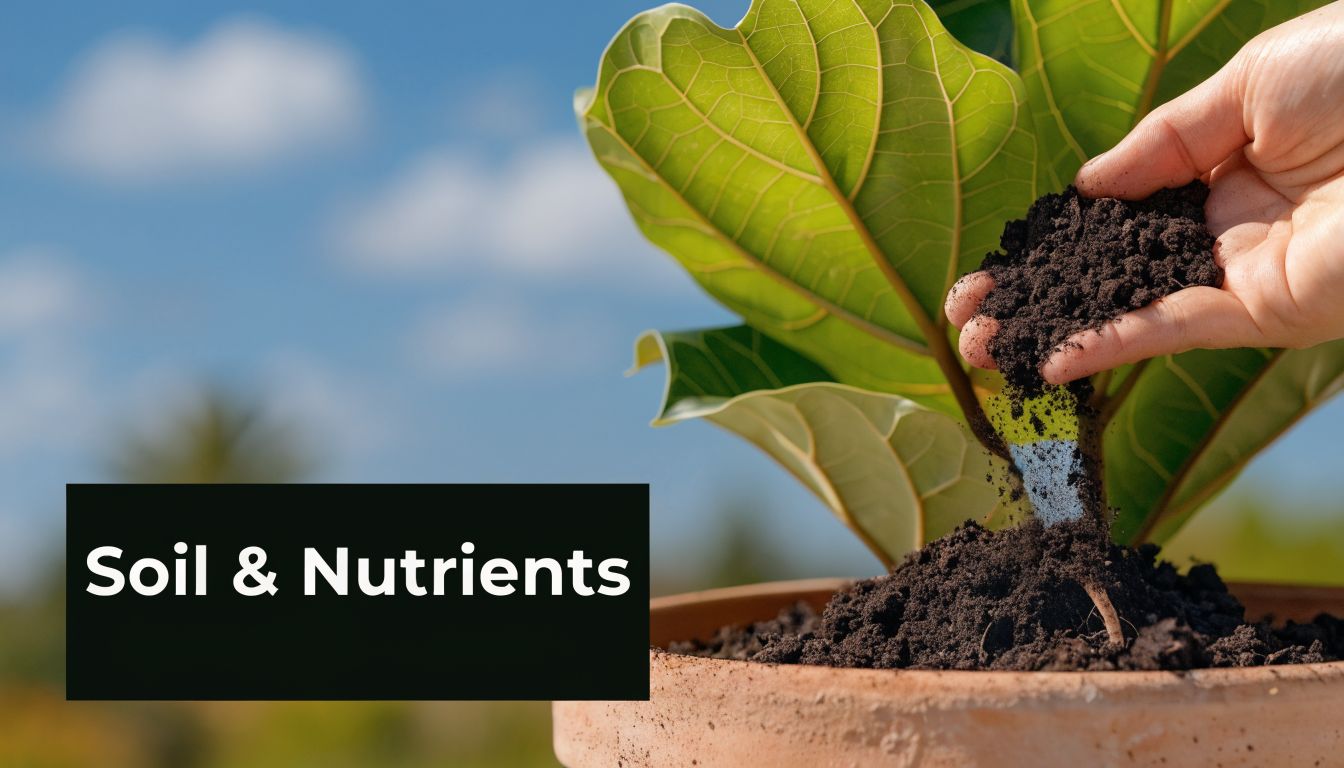
The hidden problem most guides rush past
The important number for fiddle leaf figs is soil pH between 6.5 and 7.0, and when the pH drops below 6.0, the roots can no longer absorb essential nutrients properly, even when those nutrients are present, according to Mary Stone's article on when fiddle leaf figs turn yellow.
That changes the diagnosis completely. A plant can sit in fertilized soil and still act deficient because the roots are locked out. The leaves yellow, growth stalls, and the owner assumes the solution is more plant food. In acidic soil, that often makes the situation worse.
Why fertilizer sometimes fails
This is the trade-off many people don't see. Feeding a healthy root zone can help. Feeding a root zone with the wrong pH can pile salts into a problem that isn't really about lack of nutrients.
During spring and summer, fiddle leaf figs need fertilization at least every other week in active growth, based on the care guidance summarized in the verified data. But frequency only matters if the roots can access what you're giving them. If the plant is yellowing despite stable watering and decent light, test pH before you assume deficiency.
A few signs push me toward pH trouble:
- Regular feeding with weak response: The plant isn't greening up or pushing stronger growth.
- Stunted growth with yellowing: The issue looks nutritional, but basic care hasn't changed it.
- Old soil: Potting mixes can drift over time, especially in containers that have been watered repeatedly for a long stretch.
The smarter root-zone reset
If this sounds like your plant, focus on the soil system, not just the fertilizer label. A fresh, well-structured mix designed for fiddle leaf figs gives you a cleaner baseline. This overview of fiddle leaf fig soil type is helpful if you want to understand what the mix should do for drainage, aeration, and pH balance.
Root-zone insight: Yellow leaves can come from a plant that's fed but unable to eat.
This is why soil pH deserves more attention than it gets. Watering mistakes are common, yes. But pH is the reason some plants keep yellowing even after the owner "fixes" watering and starts fertilizing faithfully.
Your Step-by-Step Recovery Plan
Yellow leaves make people want to act fast. Fast is fine. Random is not.
Start with the roots and damaged leaves
Begin at the root ball, because recovery lives or dies below the soil line. Slide the plant out just far enough to inspect without ripping fine roots. Healthy roots are light-colored and firm. Damaged roots are brown or black, soft, and may smell sour. The University of Minnesota Extension has a useful guide to root rot in houseplants, including what compromised roots look like and why recovery takes time even after conditions improve.
Then clean up what the plant cannot repair. A fully yellow leaf will not turn green again. Remove leaves that are spent, collapsing, or badly spotted with clean pruners. Keep any leaf that still has a meaningful amount of green, since the plant can still use it.
Work in this order:
- Fix drainage first: Clear blocked drainage holes or move the plant out of a decorative pot that traps runoff.
- Inspect the root zone: Check for firm, pale roots versus soft, dark ones.
- Trim only what is gone: Remove rotted roots and fully yellow leaves, but avoid heavy pruning on a stressed plant.
- Recheck the soil itself: If it smells stale, stays wet too long, or has likely drifted out of a usable pH range, plan a root-zone reset.
- Pause before watering again: Water on soil condition, not on the urge to do something.
Repot only when the root zone needs a reset
Repotting makes sense when the mix is compacted, chronically soggy, or chemically off enough that the roots are sitting in a pot full of nutrition they still cannot use. That last point gets missed all the time. I see owners blame fertilizer, then light, then watering frequency, while the actual issue is a tired root zone with poor structure and pH drift.
Use a pot with drainage and keep the size increase modest. Too much extra soil stays wet longer, which slows root recovery. Use a fresh mix formulated for fiddle leaf figs so you reset drainage, air space, and pH together instead of solving one problem and leaving two behind. Leaves & Soul's purpose-built soils are useful here because they address the hidden pH problem along with the physical texture of the mix.
For a visual walkthrough, this short video is worth watching before you start handling the root ball.
Rebuild with a simple routine
After cleanup or repotting, give the plant a stable run of care. Put it back in bright light, keep temperature swings low, and let the top layer of soil guide watering. If roots were damaged, expect the canopy to lag behind. The plant has to rebuild uptake before it looks better.
Hold fertilizer until you see signs the root system is functioning again, then feed with control and consistency. If you want a product comparison, this guide to the best fertilizer for fiddle leaf fig explains what to look for without overfeeding a stressed plant.
The same diagnostic mindset shows up in other kinds of plant care. Turf managers know yellowing can come from more than one cause, which is why correcting yellow grass with iron treatments only works when the diagnosis is right.
Good recovery is specific. Fix the root zone, restore usable soil conditions, and let the plant catch up.
How to Prevent Yellow Leaves in the Future
Prevention is less about doing more and more about doing the same important things reliably. Fiddle leaf figs like stable conditions, consistent observation, and a root zone that stays usable.
The easiest maintenance rhythm is simple:
- Weekly: Check soil moisture by hand, inspect lower leaves, and confirm the pot is draining freely.
- Monthly: Wipe dust from leaves so the plant can use available light more effectively, and look for any buildup on the soil surface.
- Seasonally: Reassess light as the sun shifts, and feed during active growth instead of feeding on autopilot year-round.
Keep one idea in mind when you see an older yellow leaf. Not every yellow leaf is a crisis. As noted earlier, natural senescence can be the plant's way of repurposing nutrients from older foliage, and that often lines up with light insufficiency more than fertilizer shortage. If the plant is otherwise growing, don't let one aging leaf push you into overcorrecting.
The best long-term growers aren't the people who react fastest. They're the ones who notice patterns early, change one variable at a time, and respect the root zone as much as the leaves. That's how you stop the cycle where fiddle leaf fig leaves yellow, recover briefly, then yellow again a month later.
If your fiddle leaf fig needs a cleaner reset, Leaves & Soul offers purpose-built soils and fertilizers designed for houseplants that need the right balance at the root zone, not just another generic feeding attempt. If you've been stuck in the cycle of yellow leaves, random fixes, and inconsistent results, starting with the right soil and a plant-specific fertilizer can make care much more predictable.