


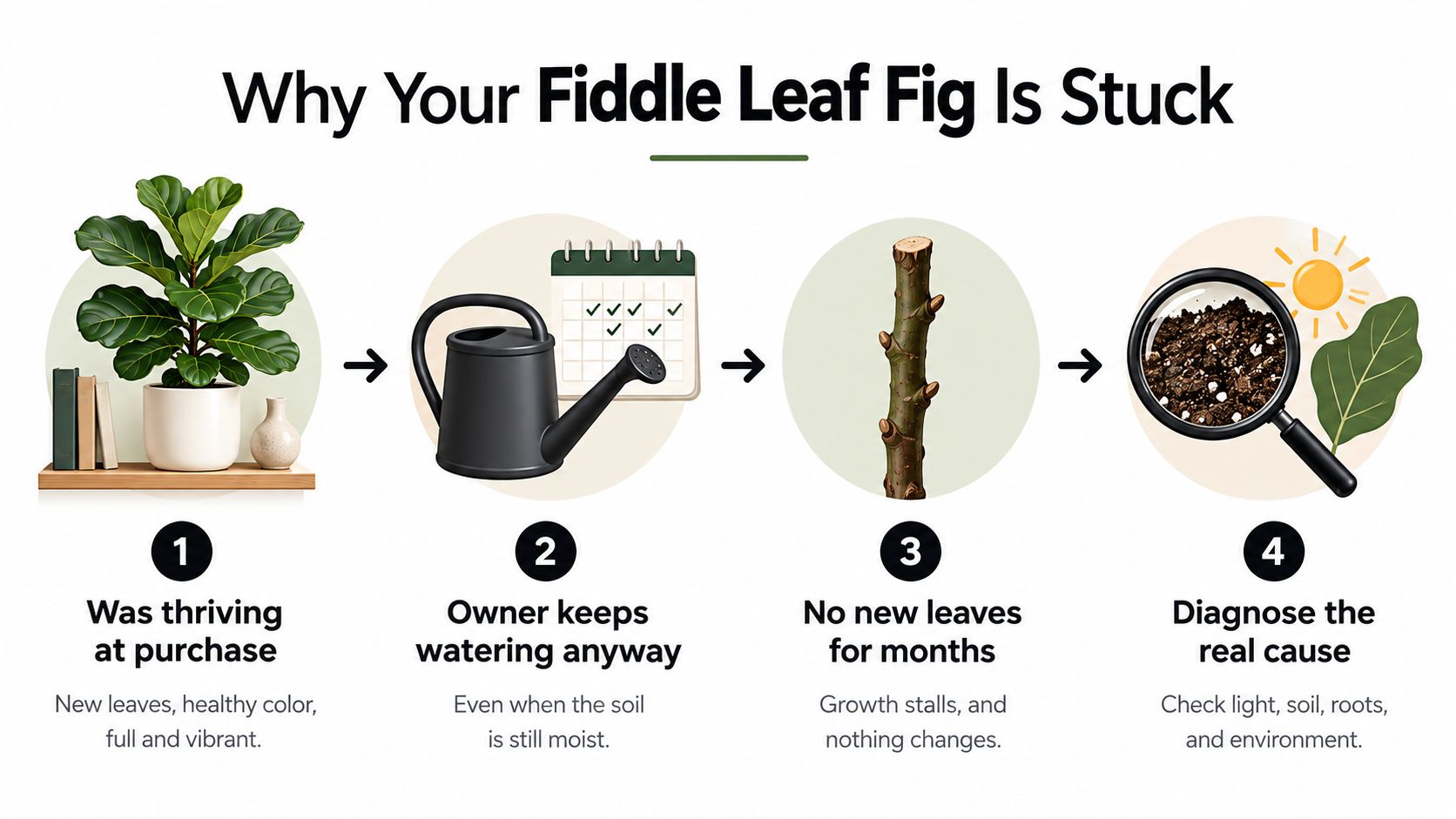
You bought a fiddle leaf fig that looked healthy, upright, and full of promise. Then it settled into your home, stopped producing leaves, and stayed that way while you continued watering it on schedule. The plant isn't necessarily dying. More often, it's waiting for one basic condition to improve.
A fiddle leaf fig (Ficus lyrata) grows at a moderate to fast rate in the right conditions, but indoor plants can remain relatively small. North Carolina State University lists a typical houseplant height of 2 to 10 feet for fiddle leaf fig, while outdoor trees can eventually reach 60 to 100 feet under suitable conditions. North Carolina State University's fiddle leaf fig profile also makes the important distinction between the species' potential and the limits of an indoor environment.
Why Your Fiddle Leaf Fig Is Stuck and How to Figure It Out
The most likely cause of a fiddle leaf fig not growing is insufficient light. The second most likely is inconsistent moisture, usually caused by watering according to a calendar instead of checking the soil. Start there before you blame fertilizer, repotting, or an exotic pest.
A stalled plant usually falls into one of five categories:
- Light: The leaves stay alive, but the plant lacks the energy to produce new growth.
- Water: The roots are either repeatedly dry or trapped in wet soil.
- Soil and nutrients: The mix has become compacted, depleted, or difficult to drain.
- Root health: Rot or severe crowding prevents the roots from supporting fresh leaves.
- Pests and disease: Sap-sucking insects or damaged roots steadily drain the plant's energy.
Run the fast triage
First, look at the whole plant. Is it leaning toward a window? Are the newest leaves smaller or paler than older leaves? Does the pot feel heavy long after watering? Those observations tell you more than a fixed care schedule.
Next, check the light and the soil moisture. Put your hand near the brightest window in the room and compare that spot with the plant's current position. Then test the mix with a finger or wooden stick rather than watering automatically. If the room is dim or the soil stays wet, you already have a strong working diagnosis.
Only inspect roots, nutrients, pests, or disease if those first checks don't explain the stall. A fiddle leaf fig prefers filtered light and even moisture, and WVU Extension notes that it can tolerate being somewhat rootbound. That means a plant may survive for a long time while making little visible progress when its conditions are merely adequate rather than suitable.
Practical rule: Don't change five things at once. Correct the most obvious problem, then watch how the plant responds.
If the plant is pale or stretching, go to the light section. If the leaves are soft, yellowing, or the soil stays wet, start with water. If the plant has brown patches, sticky leaves, webbing, or bumps, inspect for pests and disease. If the roots circle densely or smell sour, focus on root health.
Reading the Plant for Clues
Your fiddle leaf fig is already showing you what is wrong. Read the leaves before you move the pot, add fertilizer, or reach for pruning shears.
Leaf position is the first clue. Soft, limp leaves commonly point to thirst or roots damaged by excess moisture. Stiff leaves that hang downward or curl can indicate weak light, relocation shock, or general stress. Don't diagnose from posture alone. Touch the leaves and check the soil together, because a drooping plant in wet soil has a different problem from a drooping plant in dry soil.
Use color as evidence
Pale new growth suggests that the plant may not be receiving enough nutrition or that its roots aren't absorbing nutrients properly. Dark green leaves with no new growth usually shift suspicion toward light or the root environment. Brown edges often accompany inconsistent moisture or dry indoor air. Yellowing lower leaves can signal excess moisture, although an older leaf may also be reaching the end of its useful life.
New growth gives you the clearest information. A tightly furled leaf that remains closed may need brighter light or more humidity. A growing tip that stays dormant while the existing leaves look healthy often indicates that the plant is conserving energy rather than actively expanding.
For a practical visual reference, use this guide on how to read your plant's leaves like a pro. Then perform this quick inspection:
- Feel the leaves: Healthy leaves should have substance, not feel limp and waterlogged.
- Check the undersides: Look for webbing, small bumps, clusters of insects, or sticky residue.
- Test the soil: Push a finger or wooden stick into the mix and note whether it feels wet, cool, dry, or compacted.
- Assess the window: Note whether the plant sits close to a bright window or several feet into a dim room.
Map the evidence before acting. Soft leaves plus wet soil suggest a root problem. Pale growth plus a distant window suggests inadequate light. Sticky leaves plus dark residue suggest sap-sucking pests. A firm plant with clean leaves but no active tip growth points back to light, roots, or nutrition.
Light and Water The Two Things to Check First
Light comes first. A fiddle leaf fig can remain alive in a dim room, but survival isn't the same as active growth. Florida IFAS describes its growth rate as moderate and notes that it grows faster in full sun or partial shade outdoors on well-drained soil. Indoors, give it the brightest filtered light you can provide, ideally near a bright window where direct exposure can be introduced gradually.
Use a shadow test. Hold your hand between the plant and the main light source. A clear, defined shadow indicates stronger light. A faint, blurry shadow means the plant is probably receiving too little energy. If the plant came from a bright nursery and now sits in a darker corner, stalling is a predictable response.
Test the watering pattern
Stop watering on a fixed day. Water thoroughly when the upper layer of mix has dried, allowing excess water to leave through the drainage holes. Test with your finger or a wooden chopstick. Push it into the soil, then inspect what comes out. A pot that still feels saturated needs more time, not more water.
The pot's weight also helps. Lift it after watering, then lift it again as the mix dries. Over time, you'll learn the difference between a heavy pot full of moisture and a lighter pot that needs a drink. Never let the container sit in collected water inside a decorative cover.
If your household water contains chloramine and you suspect the water is contributing to leaf stress, this explanation of treating chloramine in home water gives useful background on the issue and possible treatment approaches. Don't change water quality before fixing a dim location or permanently wet soil, though. Those are more common explanations for stalled growth.
| Sign you see | Likely cause | Action to take today |
|---|---|---|
| Long gaps between leaves and leaning toward glass | Insufficient light | Move the plant closer to its brightest filtered window |
| Soil remains wet for a long time | Poor drainage or overwatering | Stop using the calendar and inspect the mix and drainage holes |
| Leaves are limp and the pot feels light | Thirst | Water thoroughly, then let excess drain away |
| Yellowing leaves with heavy, wet soil | Root stress from excess moisture | Pause watering and inspect the roots if the condition persists |
| Crisp patches after a sudden move | Light shock or sun stress | Return the plant to bright filtered light and change conditions gradually |
If wet soil and root damage are already obvious, follow this guide on how to save an overwatered fiddle leaf fig plant. Correct one variable at a time, keep the plant in its brighter position, and wait for evidence of renewed activity before adding fertilizer or pruning.
Soil Nutrients and Root Health
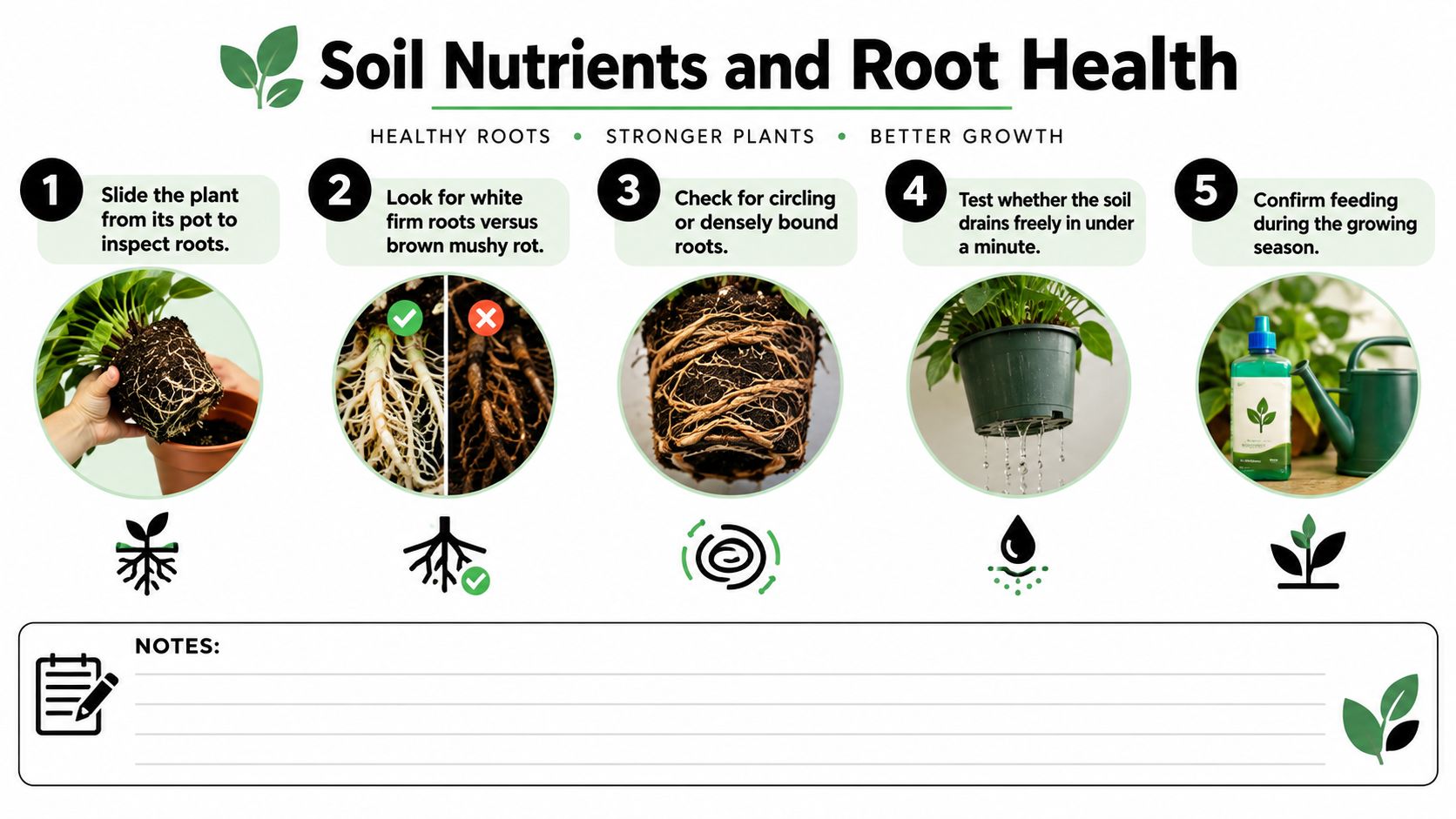
Once light and watering look reasonable, investigate below the soil line. A fiddle leaf fig may have healthy-looking leaves while damaged or crowded roots prevent it from producing new ones.
Slide the plant out of its container carefully, supporting the root ball rather than pulling on the trunk. Healthy roots are generally pale, firm, and earthy-smelling. Dark, soft roots or a sour odor indicate decay, usually associated with soil that stays wet for too long.
Decide whether the plant needs new soil
A rootbound plant has a dense network of roots circling the outside of the root ball, with little loose mix remaining. Water may run around the edges or straight through without evenly wetting the soil. In that case, gently loosen only the outer roots and move the plant into a container just slightly larger, with a drainage hole.
Don't overpot. A much larger container holds more unused soil, and that soil can stay wet around a relatively small root system. Choose a chunky, free-draining mix that holds some moisture without becoming dense and airless. This guide to the best potting mix for fiddle leaf fig can help you compare suitable mix characteristics before repotting.
Feed carefully
Old, depleted soil can limit new growth even after you improve the light. If the plant has occupied the same mix for a long time, use a balanced houseplant fertilizer according to the product label during active growth. Apply it only to already-moist soil, never to a bone-dry root ball.
The plant's leaves should guide your decision. A pale new leaf and otherwise sound roots support a feeding trial. A plant with dark green leaves, wet soil, or damaged roots doesn't need more fertilizer first. Extra nutrients won't repair rotten roots and may add further stress.
After repotting, return the plant to stable bright filtered light. Don't combine repotting, heavy feeding, aggressive pruning, and a new location in one day. The roots need a calm environment to recover and resume normal absorption.
Pests Disease and Recovery After Stress
Pests can suppress growth before they create dramatic damage. Inspect the undersides of leaves, the joints where leaves meet the stem, and the newest growth. Spider mites may leave fine webbing. Scale appears as small brown bumps that can often be scraped away. Aphids gather in clusters, while sticky residue or black sooty mold points to sap-feeding activity somewhere above the affected surface.
Use a cotton swab or soft cloth to test suspicious bumps. Check several leaves rather than assuming one mark represents an infestation. Isolate the plant from nearby houseplants while you investigate, because moving insects can spread before the original plant looks seriously ill.
Treat the cause, not just the appearance
For a manageable infestation, apply insecticidal soap or neem oil according to the label, covering the undersides of leaves and the stem joints. Repeated treatment matters because one application may miss insects hidden in crevices or newly emerged pests. Test any spray on a small area first, especially if the plant receives strong light.
If fungus gnats are circling the pot, the adults are a symptom of persistently damp organic mix. This resource on how to eliminate fungus gnats naturally offers additional nonchemical control ideas. Drying the mix appropriately and improving drainage matters more than chasing every adult insect.
Dark, soft leaf patches with yellow halos deserve a different response. Remove badly affected tissue with clean tools, keep leaves from staying wet, and replace soggy soil when the roots are compromised. Improve air movement without placing the plant in a harsh draft.
After a setback, consistency is treatment. Don't respond to stress by adding extra water, fertilizer, or repeated moves.
A plant recovering from pests, root damage, or disease may remain quiet after the original issue is corrected. Continue providing the appropriate light and moisture, remove only clearly damaged material, and look for firm new buds rather than expecting an immediate flush of leaves.
Pruning and Repotting to Restart Growth
Pruning can restart a leggy fiddle leaf fig, but it isn't a substitute for light. If the plant is healthy enough to support growth and has a long bare stem or an awkward single branch, make a clean cut just above a node. That cut can encourage dormant buds below it to activate and create a fuller structure.
Use sharp, clean pruners. Remove damaged leaves first, then decide whether the remaining shape needs a structural cut. Never strip the plant of a large share of its foliage in one session. Leaves provide the energy the roots and dormant buds need, so aggressive pruning can deepen a stall.
Choose the right intervention
Repot when the root ball is severely crowded, the mix has collapsed, or drainage has become unreliable. Do it while the plant is actively growing, use fresh well-draining mix, and choose a container only modestly larger than the current one. A decorative cover should not replace a functional drainage pot.
Pruning and repotting should be separate decisions. If the plant has damaged roots, repair the root environment first. If the roots are healthy but the stem is sparse, pruning may be enough. If you do both, keep the aftercare simple: stable light, steady moisture, and no sudden feeding while the plant adjusts.
Watch the cut sites and growing tip for firm buds. Keep the plant in one suitable location rather than repeatedly moving it to chase faster results.
A Simple Care Routine to Keep It Growing
A fiddle leaf fig stays productive when care becomes observation rather than ritual. Use a repeating monthly rhythm, but let the plant and soil decide when you water or adjust its position.
First pass
Check the light reaching the leaves and rotate the pot a quarter turn so one side doesn't remain permanently shaded. Examine the newest leaf for color, firmness, and signs of distortion. If growth consistently leans toward the window, move the plant closer to that light source instead of compensating with more fertilizer.
Second pass
Test the soil before watering. Water only when the upper portion of the mix has dried, then allow the container to drain fully. If indoor air is dry, increase humidity around the plant without leaving the leaves constantly wet. A humidifier nearby is more reliable than repeated misting.
Third pass
Inspect leaf undersides, stem joints, and the growing tip for webbing, scale, mealybugs, or sticky residue. Check that water can leave through the bottom holes and that the root zone isn't staying soggy. Wipe broad leaves with a damp cloth so dust doesn't block the light reaching the surface.
Fourth pass
Feed with a diluted houseplant fertilizer during active growth, following the label. Hold fertilizer when the plant is resting in the darker, cooler part of the year. Keep it away from cold drafts and maintain a stable room environment rather than making abrupt changes.
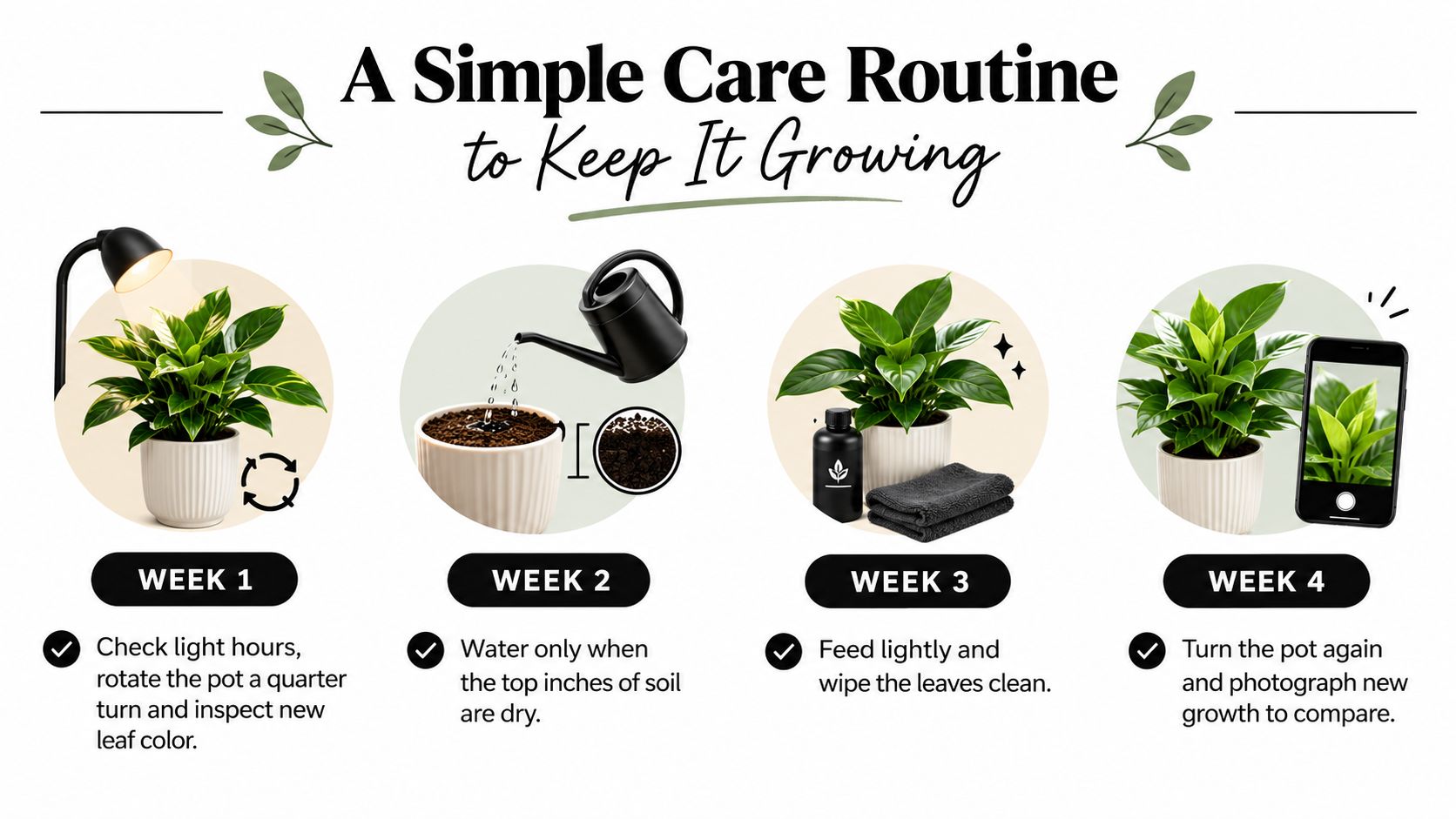
Keep a note on your phone whenever a new leaf appears. Photograph the plant from the same position each month. Those records reveal changes in spacing, color, and shape that are easy to miss when you see the plant every day.
Leaves & Soul offers purpose-built soils, liquid fertilizers, slow-release pellets, and plant-care products for fiddle leaf figs and other indoor plants. Visit Leaves & Soul to choose a suitable soil or fertilizer option, then use it alongside the light, moisture, and root checks that keep stalled growth from returning.