


You walk over to your fiddle leaf fig, notice one bright yellow leaf, and your stomach drops. Then you spot a second one. Maybe the soil still feels damp from the last watering, or maybe you’re suddenly replaying every care decision from the past month.
Take a breath. Fiddle leaf fig yellow leaves are common, and most cases are fixable. The mistake I see most often isn’t bad intent. It’s panic. People fertilize too soon, repot too aggressively, move the plant three times in a week, or start treating for pests before checking the soil.
A better approach is to diagnose in order. Start with the most likely cause, rule out the obvious, and only then make changes. That’s how you avoid turning one yellow leaf into a full-plant setback.
Why Your Fiddle Leaf Fig Has Yellow Leaves
A yellow leaf feels dramatic because fiddle leaf figs look so solid when they’re healthy. Big leaves, thick stems, strong shape. So when one leaf turns soft yellow or starts dropping, it seems like the whole plant is failing.
Usually, it isn’t.
Yellowing is your plant’s signal that something is off in its care or environment. The important part is where the yellowing starts, how fast it spreads, and what the soil and roots are doing at the same time. A lower leaf turning yellow after a watering issue means something different from pale new leaves on a plant that has been in the same soil for a long time.
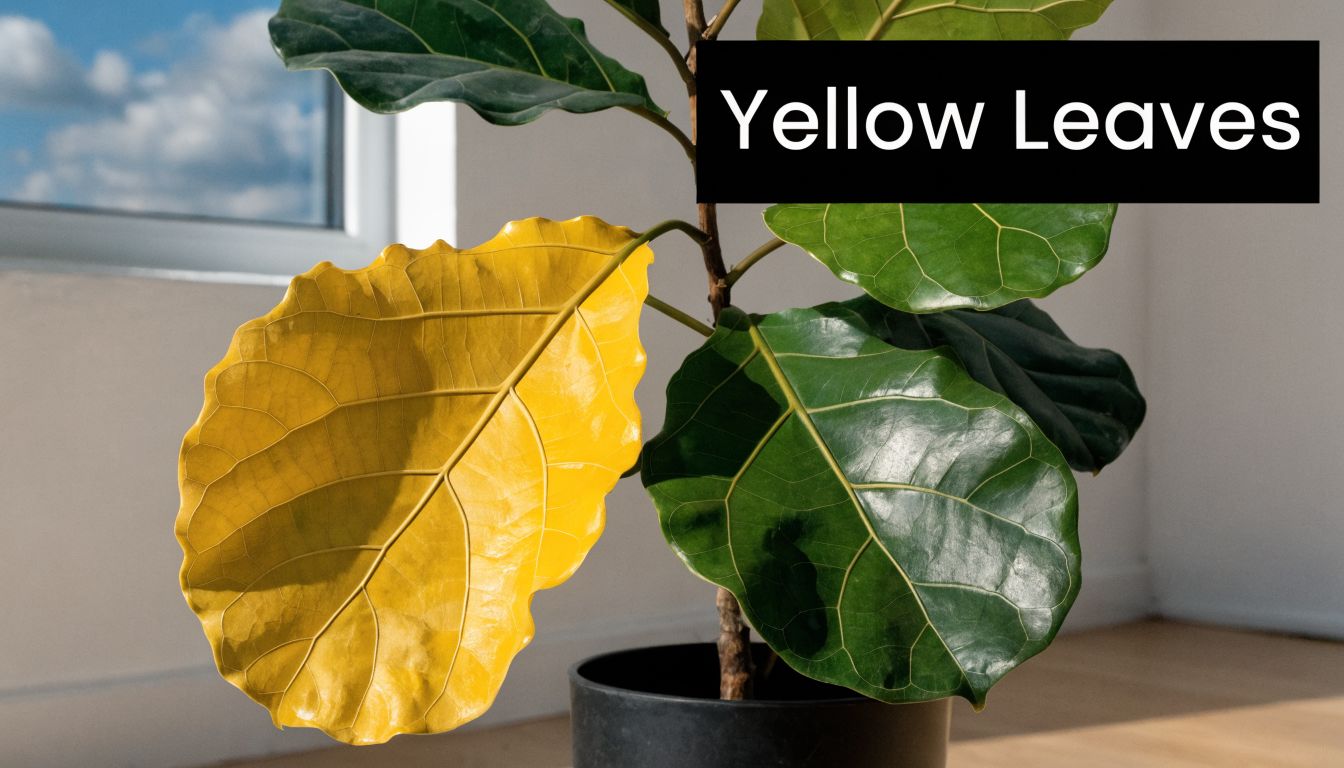
What yellow leaves usually mean
Most yellowing falls into a few buckets:
- Water stress. Too much water is the big one. Too little water can also yellow leaves, but the texture and pattern usually look different.
- Low or poorly matched light. A plant in dim light uses water slowly, which often turns a watering habit into an overwatering problem.
- Soil problems. Old, compacted, or poorly balanced soil can keep roots too wet or interfere with nutrient uptake.
- Pests or environmental stress. Less common, but worth checking once the basics are covered.
Practical rule: Don’t diagnose a fiddle leaf fig from the leaf color alone. Check the soil, the light, and the roots before you decide on a fix.
Why a step-by-step diagnosis matters
A lot of care advice dumps every possible cause into one long list. That sounds thorough, but it pushes people toward random treatment. The faster route is to start with the most common failure point and work downward.
That’s what I’d do standing in front of the plant. I’d look at the pot, touch the soil, check the position in the room, inspect the lowest leaves first, and only then consider feeding or repotting. Calm beats urgency every time with this plant.
First Things First A Quick Diagnostic Checklist
If your fiddle leaf fig has yellow leaves, start with the checks that solve the highest share of cases.
The first question is simple. Is the soil staying wet too long? Overwatering is the leading trigger for yellowing leaves in fiddle leaf figs, accounting for about 70 to 80% of reported cases among indoor growers, and a review of 1,247 user-submitted plant distress reports found that 62% of yellow leaf incidents were directly linked to excessive soil moisture, according to Roger's Gardens on solving common fiddle leaf fig problems.
Start with the pot and soil
Don’t begin by looking for exotic diseases. Begin here:
- Touch the soil Stick a finger into the mix. If the top feels dry but deeper soil feels cool and wet, don’t water yet. Fiddle leaf figs often fool people this way.
- Check the pot A decorative pot without drainage can turn routine watering into a root problem fast. Heavy soil plus poor drainage is one of the most common combinations behind yellow leaves.
- Notice the pattern Bottom leaves that yellow first often point to root stress, watering stress, or natural aging. Widespread pale yellowing across multiple leaves may point elsewhere.
Then check the location
Light affects nearly every other diagnosis. A plant in a dim corner can’t use water efficiently, so even a reasonable watering schedule becomes too much. On the other hand, harsh direct sun can stress leaves, especially after a sudden move.
Ask yourself:
- Is it getting bright, indirect light?
- Did it recently move from one room to another?
- Is it near a heater, drafty window, or air vent?
If the plant sits in low light, I treat watering as suspect until proven otherwise.
Inspect the leaves closely
Now look at the leaf surfaces, both top and bottom.
- Tiny webbing or fine speckling can suggest spider mites.
- Raised brown bumps can suggest scale.
- Sticky residue can point to sap-sucking pests.
Pests can cause yellowing, but they usually leave more clues than color alone. If the leaves are clean and the soil is wet, I’d still prioritize root stress over pest treatment.
Use the symptom pattern to narrow it down
| Symptom | Most Likely Cause | Quick Check |
|---|---|---|
| Lower leaves turning yellow and soft | Overwatering | Feel deeper soil and inspect drainage |
| Yellowing with droop in dim light | Water sitting too long because of low light | Move closer to bright indirect light |
| Pale or mottled yellowing across several leaves | Soil or nutrient issue | Check age and condition of potting mix |
| One or two oldest bottom leaves yellowing gradually | Natural shedding | Look for healthy new growth above |
| Yellowing with visible residue, bumps, or webbing | Pests | Inspect leaf undersides and stems |
Don’t treat all yellow leaves the same. Soft yellow with damp soil is a different problem from pale yellow in tired soil.
A calm order of operations
If you want the shortest path to an answer, use this order:
- First, rule out overwatering
- Second, correct obvious light mismatch
- Third, inspect for pests
- Fourth, consider soil age or nutrient lockout
- Last, decide whether the yellowing is old leaf drop
That order saves plants because it keeps you from applying the wrong fix to the right symptom.
Creating Your Fiddle Leaf Fig Recovery Plan
Once you have a likely cause, act with restraint. A stressed fiddle leaf fig does better with targeted correction than with a full reset.
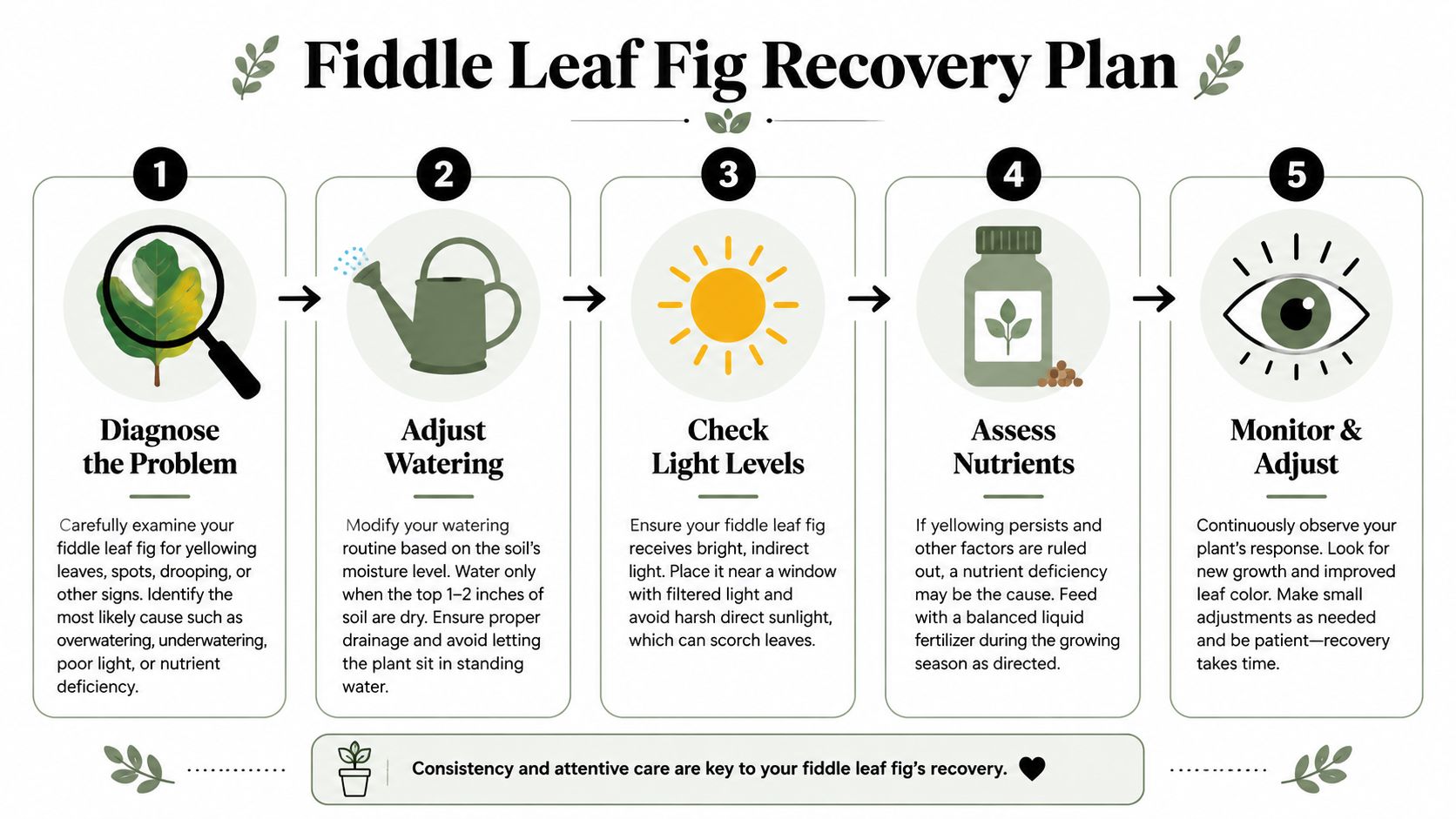
If overwatering is the problem
This is the recovery path I take most seriously, because delays matter. For root-rot cases tied to overwatering, a proven protocol is to unpot the plant, rinse roots in a diluted 3% hydrogen peroxide solution, trim away mushy black roots, and repot into a sterile, well-draining mix. With early intervention, survival rates are 75 to 88%, compared with 15% if more than half the roots are rotted, according to this root rot recovery guide for yellowing fiddle leaf figs.
Use that approach when the plant shows the classic signs: yellowing lower leaves, sour-smelling soil, droop that doesn’t improve, and roots that look dark and soft instead of firm and pale.
A practical sequence looks like this:
- Stop watering immediately if the soil is still wet.
- Lift the root ball out of the pot and inspect the roots.
- Cut off black, mushy roots with sterile scissors or pruners.
- Repot into fresh, airy mix in a pot with drainage.
- Hold off on watering again until the upper layer of soil has dried.
If the roots are white or tan and firm, the plant may be overwatered without severe rot. In that case, better drying conditions can be enough.
Here’s a visual walkthrough if you want to see the process in action:
If the issue is light, not roots
A fiddle leaf fig in weak light often looks like it has a watering problem because the soil stays wet too long. The fix is simpler than people expect. Move it to bright, indirect light and leave it there long enough to respond.
Don’t swing from one extreme to the other. A plant that has been living in a darker corner can scorch if placed straight into intense direct sun.
If pests are involved
Isolate the plant first. Then clean the leaves and treat the pest you've identified. Broad spraying without identification usually creates more stress than progress.
Focus on consistency:
- Wipe leaves thoroughly
- Check undersides and stem joints
- Repeat treatment on schedule
- Keep the plant away from your other houseplants until clean
If you suspect nutrient depletion after recovery
Don’t rush to fertilize a plant with soggy soil or compromised roots. Root function comes first. Once the plant is stable and actively growing again, feeding makes more sense. If you want a deeper look at fertilizer timing and product types, this guide to the best fertilizer for fiddle leaf fig care is a useful reference.
One more hard truth: fully yellow leaves won’t turn green again. Remove them once they’re fully spent so the plant can direct resources to healthy tissue and root recovery.
The Role of Soil and Nutrients in Preventing Yellow Leaves
A lot of recurring yellow-leaf problems aren’t really watering problems by the time they show up. They’re soil structure problems first, and nutrient uptake problems second.
A fiddle leaf fig can only perform as well as the root zone allows. If the mix stays dense, compact, and wet, roots struggle to breathe. If the pH drifts low, the plant can sit in a pot full of nutrients and still behave as if it’s starving.
Why old or poorly balanced soil causes trouble
Soil pH imbalances and nutrient deficiencies contribute to 20 to 30% of fiddle leaf fig yellow leaf episodes, and the ideal pH range for Ficus lyrata is 6.5 to 7.0. When pH drops to 5.5 or lower, iron and nitrogen lockout can trigger chlorosis, with leaves fading from light green to full yellow within 2 to 4 weeks, according to this analysis of dying fiddle leaf fig symptoms.
That’s why two plants can receive the same fertilizer and respond completely differently. One has a root zone that can use it. The other doesn’t.
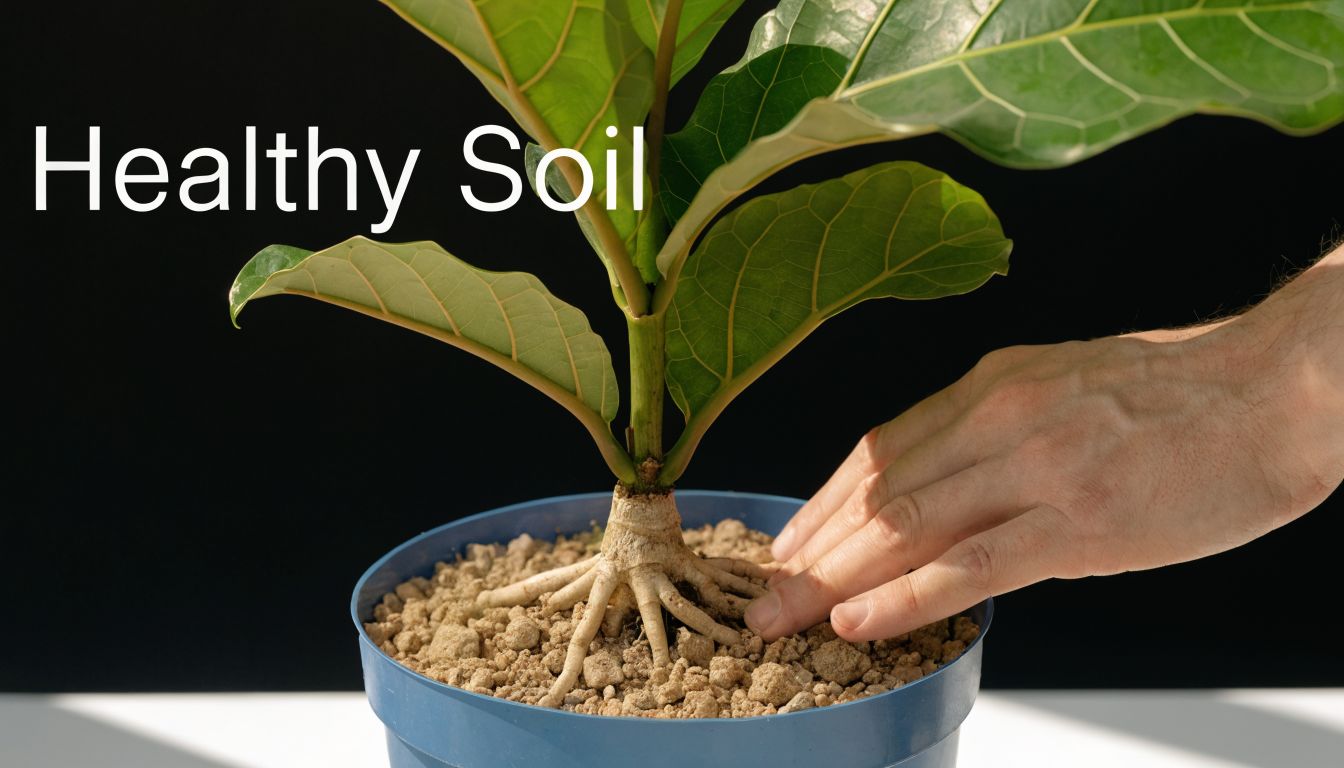
What a good mix needs to do
The right soil for a fiddle leaf fig should do three things well:
- Drain fast enough that roots don’t sit in stagnant moisture
- Hold enough moisture that the plant doesn’t swing from soggy to bone dry
- Stay open over time instead of collapsing into a heavy mass
That balance is why generic indoor potting soil often disappoints with this plant. It may work for softer, thirstier houseplants, but fiddle leaf figs need a mix with more air around the roots.
If you’re evaluating blends, this breakdown of fiddle leaf fig soil type explains the traits to look for in a more suitable medium.
When fertilizer helps and when it doesn’t
Fertilizer helps when the plant is rooted, actively growing, and sitting in usable soil. It doesn’t rescue a plant that is drowning in compacted mix.
Look for signs that point more toward soil and nutrition than raw watering error:
- Pale yellowing instead of soft, soggy yellowing
- Older soil that hasn’t been refreshed in a long time
- Weak new growth
- Yellowing that doesn’t line up with recent watering mistakes
Correcting yellow leaves long term usually means improving the root environment, not just changing what you pour on top of it.
That’s the trade-off many owners miss. Repotting into a better mix takes more effort today, but it usually reduces future emergencies far more than trying to rescue the same heavy soil over and over.
Your Weekly and Monthly Fiddle Leaf Fig Care Schedule
The easiest way to stop fiddle leaf fig yellow leaves from becoming a repeat problem is to switch from reactive care to rhythm. You don’t need a complicated routine. You need a reliable one.
Weekly checks that actually matter
Once every several days, or roughly within your normal watering window, do the same short inspection.
- Check soil depth, not just the surface. Push a finger down into the top layer. If it still feels moist deeper down, wait.
- Look at the newest leaves first. They tell you whether the plant is still progressing.
- Rotate the pot slightly so growth stays balanced and the plant doesn’t lean hard toward the window.
- Inspect the undersides of leaves for pests before an outbreak gets established.
This takes a few minutes, and it catches most problems before the plant starts dropping leaves.
Monthly upkeep that prevents bigger problems
Once a month during active growth, give the plant a more deliberate check.
- Wipe dust from the leaves Clean leaves capture light more effectively and make pest issues easier to spot.
- Review the pot and drainage If water is draining strangely, pooling, or taking too long to pass through, the mix may be compacting.
- Feed only if the plant is in active growth A healthy, rooted plant can use nutrition. A stressed plant in cold, dim conditions usually can’t.
What consistency looks like in practice
The goal isn’t to water on autopilot. It’s to build a repeatable process that stops guesswork.
A good routine sounds like this: check moisture, water only when warranted, observe leaf pattern, and leave the plant alone when nothing is wrong. That last part matters. Fiddle leaf figs often recover better from one smart correction than from five anxious ones.
Advanced Fiddle Leaf Fig Troubleshooting
Not every yellow leaf means you need a rescue operation. People often overreact in these situations.
Healthy fiddle leaf figs can shed 1 to 2 older, lower leaves monthly as part of natural abscission, especially during seasonal light changes. The same source notes that maintaining 40 to 60% relative humidity can prevent 50% of misdiagnosed yellowing cases, which is a useful reminder that not every bottom yellow leaf is a crisis. That guidance appears in this discussion of yellow bottom leaves and normal shedding.
When yellowing is probably normal
If the plant is pushing healthy new growth and only the oldest, lowest leaf turns yellow gradually, watch before you intervene. A single aging leaf on an otherwise stable plant usually doesn’t justify repotting, feeding, or aggressive pruning.
That’s especially true in a season with lower light. The plant may be reallocating resources.
One yellow bottom leaf on a growing plant is information, not an emergency.
Can a yellow leaf turn green again
No. Once a leaf has lost enough chlorophyll to turn fully yellow, it won’t return to full green. Keep it if it’s only lightly affected and still contributing, or remove it if it’s fully yellow and declining.
When to rescue and when to replace
Some plants are salvageable. Some are technically alive but no longer worth forcing back if the root system is mostly gone and the trunk is declining.
If you’re unsure how to judge that line, these root rot signs and fixes can help you decide whether you’re looking at a manageable setback or a near-total root failure.
The key is to be honest about the root system and the stem. If both are compromised, replacing the plant may be the cleaner path. That’s not failure. It’s plant care with clear eyes.
If your fiddle leaf fig is yellowing because the soil, drainage, or feeding routine isn’t working, Leaves & Soul offers purpose-built soils and fertilizers designed for houseplants that need a more precise root environment. If you want to make care simpler and more consistent, it’s a practical place to start.