


You've just brought home a cactus that looked fine in the shop, and now its pot won't dry out. You poke the surface, it feels damp days later, and you're not sure whether the problem's your watering, your light, or what's in the pot. That uncertainty is exactly where a bagged mix can help or mislead you. The Hoffman Cactus Succulent Soil Mix sounds straightforward, but you still need to know what it holds, how fast it dries, and when you should change it to fit your plant.
Hoffman Cactus Succulent Soil Mix at a Glance
At the shelf, the choice is practical: will you repot one small collection, or several containers over the year? The Hoffman Cactus Succulent Soil Mix is a ready-to-use, peat-based medium for cacti and succulents. It can go straight into pots without a separate blending step. Retail listings show 4-quart and 10-quart sizes, a 2.5-to-1 volume choice as shown in the Amazon listing for Hoffman sizes.
The Two Bag Sizes
The smaller bag suits a modest windowsill collection. If you repot only occasionally, 4 quarts leaves less open soil to store and gives you a chance to check the mix's texture before buying more. That can be a sensible first choice.
The larger bag fits a different routine. The 10-quart package weighs approximately 8 pounds and contains 150% more growing medium than the smaller option, according to the same Hoffman retail listing. If you care for several containers or repot through the year, the extra volume can reduce repeat purchases.
| Size | Listed weight | Reference price | Best fit |
|---|---|---|---|
| 4 quart | Not listed separately | Check current listing | Small collection and occasional indoor repotting |
| 10 quart | About 8 lb | $18.80 for Hoffman 10410 in GardenBeast's 2025 potting soil review | Several cactus or succulent containers and repeated repotting |
Prices change, so check the current listing before comparing costs. The 2025 figure is a reference to what one reviewer found at that time, not a current price guarantee.
Retail descriptions position the mix for both jungle and desert cacti, with drainage as its stated purpose: reducing waterlogging and supporting root development. That broad description does not mean every cactus needs the same drying speed. A jungle cactus and a desert cactus can have different watering needs, so treat the bag as a starting medium rather than a one-size-fits-all answer.
Estimate how much soil your usual repotting requires. Add the amounts for the pots you expect to refresh, then choose a bag with a little room for top-ups or spills. A grower with three small pots may finish the smaller bag; someone refreshing a shelf of containers may find the larger one more practical.
What Goes Into the Bag and Why It Matters
Think of the mix as a damp sponge with popcorn packed between its cells. The sponge holds water. The popcorn keeps spaces open so air can stay in the pot after watering. That simple image explains why the Hoffman Cactus Succulent Soil Mix contains materials that seem to pull in opposite directions.
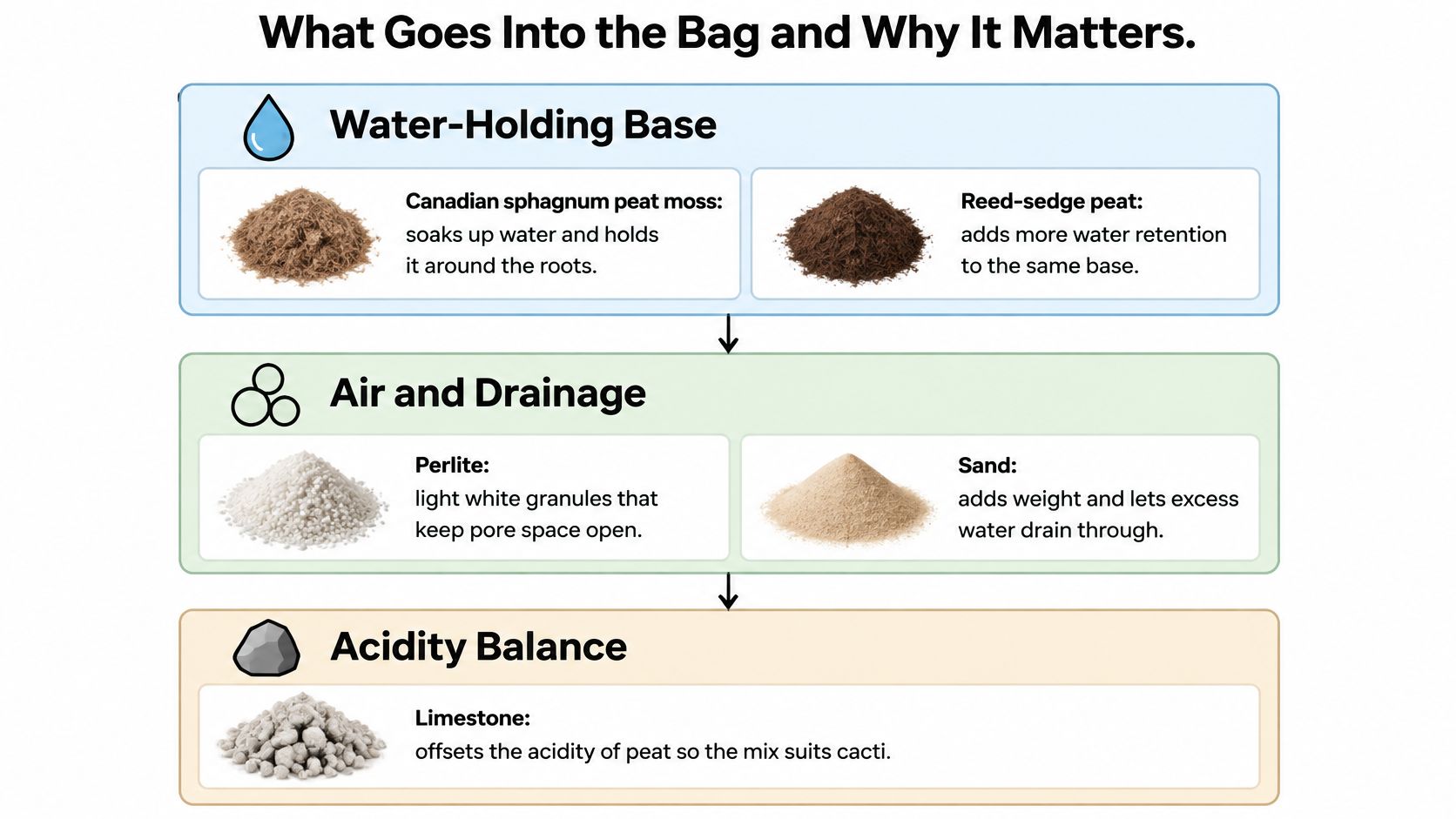
The documented ingredients are Canadian sphagnum peat moss, reed-sedge peat, perlite, sand, and limestone listed in the Indoor Garden product description for Hoffman's mix. You're getting moisture-retaining organic material plus mineral and coarse components intended to improve aeration and drainage. Neither group works well alone for most potted succulents. Roots need moisture, but they also need oxygen around them.
The Water-Holding Base
Canadian sphagnum peat moss soaks up water and holds it near the roots. Reed-sedge peat adds more of that retention. Together, they form the part of the mix that prevents a small pot from drying almost immediately after you water.
That retention is helpful, but it's also the part you must watch. Fine, peat-based material can stay wet in a dim or humid room. If you squeeze a handful and it stays clumped and muddy, the base is dominating the pot's behavior.
Air, Drainage, and Acidity
Perlite is the light white material you may recognize from potting mixes. It creates lightweight pore space, like the popcorn in the analogy. Those pores let excess water pass and allow air back in as the mix dries.
Sand contributes weight and drainage, but particle size matters. Coarse material can support open pathways, while fine sand may pack into gaps instead. Don't judge sand only by the word on a label. Look at whether the particles feel coarse rather than powdery.
Limestone moderates acidity. That matters because acidity affects how roots interact with nutrients in the medium. The product is described as pH-balanced, but that phrase doesn't tell you the exact result in your water or pot.
| Ingredient | Main role | What to notice |
|---|---|---|
| Canadian sphagnum peat moss | Holds water around roots | Helps prevent instant drying |
| Reed-sedge peat | Adds water retention | Reinforces the moist base |
| Perlite | Creates pore space | Supports aeration and drainage |
| Sand | Adds weight and drainage | Coarseness affects performance |
| Limestone | Moderates acidity | Included for pH balance |
One gap matters throughout your decision. Available retail descriptions don't provide exact percentages for these ingredients. That means you can't make a reliable component-ratio claim from the label, and you can't know the precise peat share just by reading the bag.
Judge this mix by texture and drying behavior instead. Its ingredient list separates it from ordinary moisture-retentive houseplant soil, which may remain wet too long for many succulents. You should now be able to name what each part is doing before you decide whether to use it unchanged.
How Cactus Mix Balances Water and Air
A pot of Hoffman mix can dry at different rates in two spots in the same home. On a dim windowsill, weak light slows evaporation and the surface may stay damp for days. Near a bright window with warm air moving past, the same mix can dry much sooner. Light, airflow, temperature, and pot material all affect how quickly water leaves.
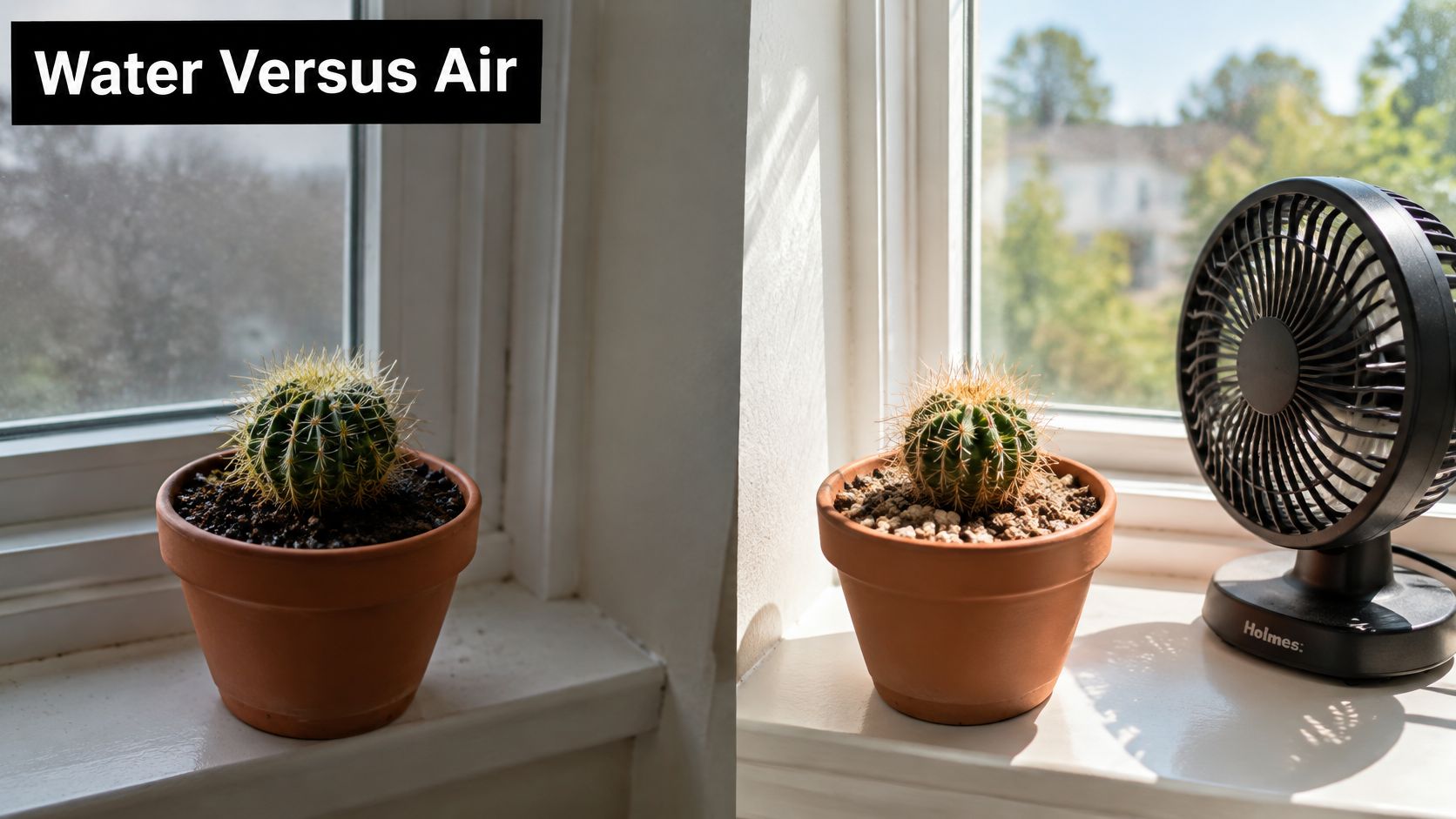
Particle size helps explain why. Water drains through larger pores, then air refills those spaces; fine particles pack more closely, leaving smaller pores that can hold water longer. A mix's behavior comes from the size and arrangement of its particles, as well as the conditions around the pot. This guide to soil particle size and drainage explains how particle size influences pore space and water movement.
The target is water first, then air as excess moisture leaves. University of Minnesota Extension guidance on cacti and succulents notes that excess water held in a container can cause root rot and decay. Roots need moisture they can take up, followed by access to air as the medium drains.
Many cacti and succulents store water in their stems or leaves, so their roots can tolerate a drying period between waterings. Constantly wet conditions can leave roots short of oxygen. How quickly the mix reaches that drier stage depends on the pot and its location, not just the product in the bag.
Water thoroughly when the substrate has dried to the plant's tolerance, rather than following a fixed calendar. Let the pot drain completely, and don't leave it standing in water in a saucer.
Tune the mix to what you observe in the pot. If it stays wet under your conditions, try increasing the mineral share; if it dries too quickly where the plant sits, keep more of the original mix. The product page does not disclose exact ingredient percentages, so use the pot's drying behavior, rather than an assumed formula, to guide adjustments.
Choosing a Mix Ratio for Each Plant Type
A Schlumbergera in a dry desert-style blend can lose roots if its mix dries too fast. Start with the plant's growth habit, then adjust for the room and pot. University of Minnesota Extension recommends approximately one part potting soil to one part coarse sand for a porous indoor medium. Applied to Hoffman, a similar 1:1 blend of Hoffman and coarse perlite or pumice is a practical starting point for small indoor pots, humid rooms, or other slow-drying conditions. The amendment adds mineral material and opens the mix, serving a similar drainage role to coarse sand.
That starting blend has about half mineral material by volume, leaving less of the peat-based fine material in the pot. Use the ratios below as starting points. Jungle cacti, recently repotted plants, and different growing conditions may call for a different balance.
| Plant type or condition | Starting ratio (Hoffman : mineral) | Why this ratio |
|---|---|---|
| Desert cacti and fast-drying succulents (Echeveria, Haworthia, agave) | 1:1 with coarse perlite or pumice | Air-filled pores help the mix dry between waterings |
| Jungle cacti (Schlumbergera, Epiphyllum) | 3:1 with perlite | A larger Hoffman share supports steadier moisture |
| Any plant in a small pot or humid room | 1:1 with coarse perlite or pumice | Slow evaporation can keep the mix wet longer |
| Bright light, warm airflow or terracotta pots | Mix as-is, or 2:1 with pumice | These conditions dry the pot faster |
| Newly repotted or thin-rooted plants | Mix as-is for the first few weeks | A little moisture continuity can support root recovery |
Reading the Ratio Rows
For Echeveria, Haworthia, agave, and desert cacti, begin with 1:1 Hoffman to coarse perlite or pumice. These plants generally suit a mix that dries more decisively between thorough waterings. The mineral amendment reduces the share of peat-based material, so the original mix is less likely to stay saturated.
Schlumbergera and Epiphyllum are jungle cacti, so start with 3:1 Hoffman to perlite. Their growth habit suits steadier moisture than a desert-style blend provides. Placing a Schlumbergera in a desert mix at 1:1 is a common error that can leave its roots without enough moisture.
The room and container matter too. In a small pot or humid room, 1:1 can help counter slow evaporation. Bright light, warm airflow, and porous terracotta dry the pot faster, so use Hoffman as-is or start with 2:1 Hoffman to pumice.
Give thin-rooted or newly repotted plants time to re-establish. Keep the mix as-is for the first few weeks, then adjust at the next repot if your drying observations point to a need.
If the mix stays wet for several days, compacts after watering, or fails the squeeze test described in the next section, add more mineral amendment. If the pot dries quickly under its current conditions, retain more Hoffman. Avoid fine construction or play sand: small particles can fill pore spaces and make the mix denser, even when it looks gritty.
Amend, Test and Repot Your First Pot
Your first pot is a test, not a final verdict on the bag. Work with one plant, measure the materials, and record how long the finished mix takes to dry. That gives you evidence for the second pot instead of a guess based on how dry the surface looks.
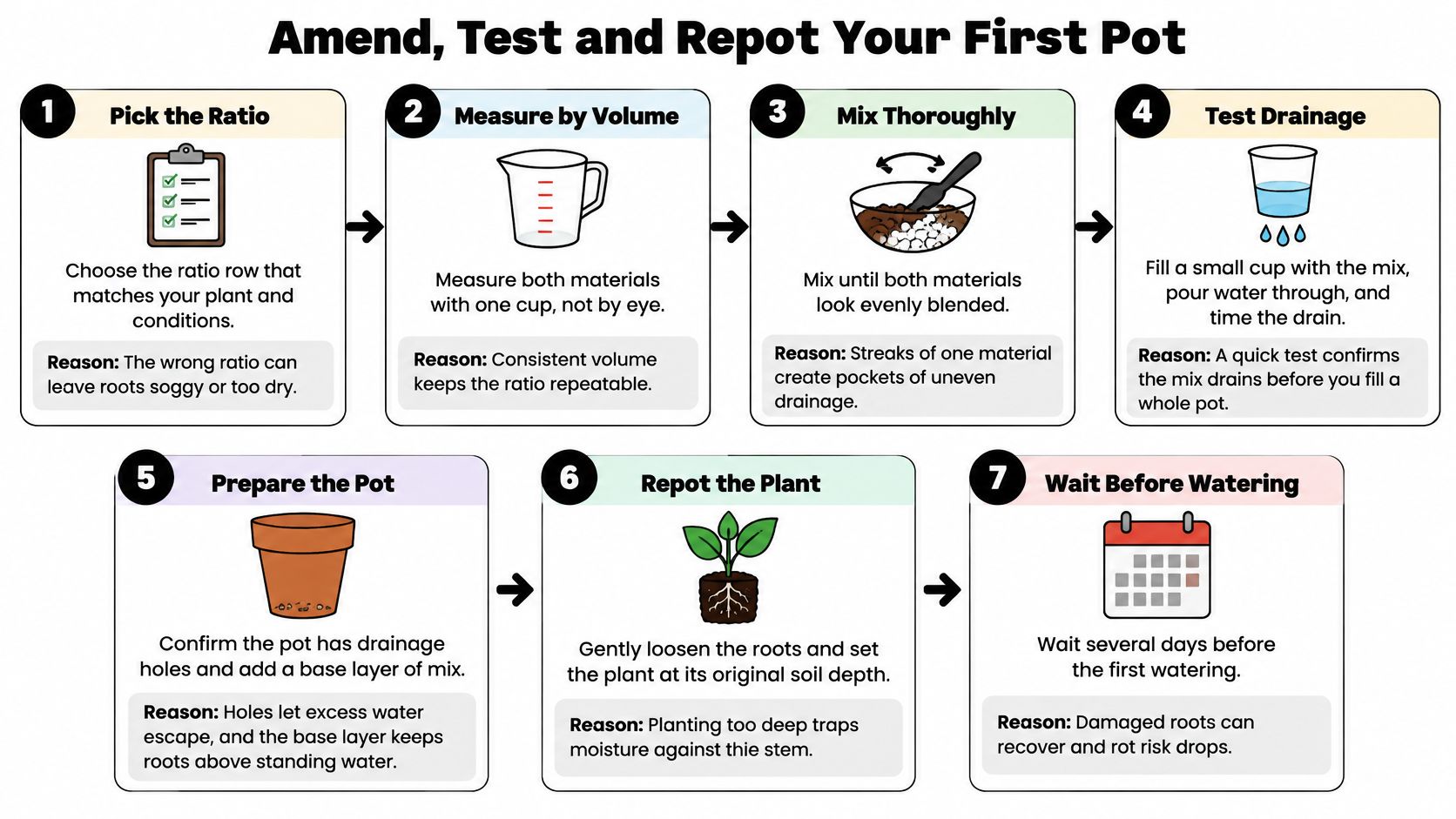
Seven Steps for the First Pot
- Pick the ratio. Choose the table row that matches your plant and conditions, not the row that sounds most serious. A jungle cactus in bright light and a desert cactus in a humid room sit at different starting points. Writing the ratio on the pot label helps you remember what you tested.
- Measure by volume. Use the same cup for Hoffman mix and mineral amendment, then combine them in a clean tub. Measuring by eye is unreliable because light perlite and denser mix occupy space differently. Volume gives you a repeatable blend you can adjust next time.
- Moisten lightly before potting. Dry peat can resist taking up water at first, leaving the center of the pot unexpectedly dry. Lightly moisten and mix again until it feels evenly damp rather than dusty in one area and muddy in another. You're preparing the material, not watering the plant yet.
- Run the squeeze test. Take a handful of the moistened blend and squeeze it gently. It should hold together briefly, then crumble when poked. If it drips or stays muddy, add more coarse perlite or pumice. If it falls apart immediately and won't hold briefly, add a little more base mix.
- Fill without packing. Add mix around the roots and firm gently with your thumbs so the plant stands at its original depth. Don't press hard, because compaction closes the pores you just created. Keep the stem at its previous level rather than burying it deeper where moisture can sit against it.
- Rest before watering. Let a freshly repotted cactus or succulent rest several days before the first thorough watering. Small root breaks need time to heal, and watering immediately gives moisture access to damaged tissue. Place it in suitable light without treating repotting day as feeding or soaking day.
- Water, drain, and observe. When the mix has dried to the plant's tolerance, water thoroughly, let excess water leave the pot, and empty the saucer. Note the date and check the moisture below the surface over the following days. Your notes reveal whether this ratio suits the room.
Repeatable rule: Change one variable at a time, then record drying time before changing the next pot.
Hoffman is sold ready to use, so amendment isn't automatically required. If the unamended mix passes the squeeze test and dries at a suitable pace in a sample pot, you can repot with the bag as bought. The test matters because your room may already provide strong light and airflow.
A Two-Week First Test
Repot one plant this week instead of converting the whole collection. Log how many days the mix takes to dry over about two weeks, using finger depth or pot weight consistently. Set the next pot's ratio from that record. A slow result points toward more mineral, while a rapid result suggests the current blend or one with more base mix may be better.
Don't react to the surface alone. Peat at the top can look pale while lower material remains wet, especially in taller pots. Lift the pot before and after watering to learn its weight change. That habit makes drying comparisons more reliable than color alone.
Troubleshooting After Repotting
- Soft stems or a sour smell: The root zone is staying wet too long, so inspect drainage and add mineral in the next blend.
- Wrinkled leaves with bone-dry mix: Water sooner and consider using less mineral next time, provided the roots are healthy.
- Water runs straight through: The peat may not have moistened evenly, so soak and drain carefully, then reassess before adding material.
- White perlite gathers at the top: Light particles can migrate during watering, so top-water gently and mix the next batch thoroughly.
Wait to fertilize until you see signs that roots have recovered, usually new growth. Then use a dilute feed separately rather than treating the repotting mix as if it contains a meal. The first test answers a physical question about drainage. Feeding is a separate decision that works best after the plant has settled.
Nutrients, pH and Sand Mistakes to Avoid
A newly repotted cactus may sit in fresh mix and still need feeding later. The Hoffman Cactus Succulent Soil Mix has no added plant food, so nutrients are a separate part of care. Cactus and succulent needs vary, and Bob Vila's 2025 potting soil coverage discusses why some mixes leave feeding to the grower.
Wait until roots have recovered before applying fertilizer. New growth is a useful sign that the plant is active. Then use a dilute, separately applied fertilizer rather than feeding on repotting day, when disturbed roots are still settling.
Drainage Is Not Nutrition
The ingredients in the bag affect how water moves and how much air remains around roots. Fertilizer supplies nutrients; pumice changes pore space and drying speed. Each addresses a different need, so use the plant's growth and the mix's drying behavior to decide which adjustment makes sense.
Sand needs care, too. Fine play or construction sand can settle into gaps and reduce air space instead of improving drainage. Perlite may float or shift toward the surface during watering, while pumice has a different texture and weight. Observe how an amendment behaves after watering before deciding whether it is helping.
Test Before Adjusting pH
Limestone affects alkalinity, so adding more without testing can move the mix away from the range your plant needs. Test a moistened sample with a pH kit or meter first. Adjust only when the result and the plant's needs give you a clear reason.
For context on how pH affects nutrient availability, read this explanation of soil pH and nutrient availability. The result matters because pH influences which nutrients roots can take up. A test gives you a basis for action; guessing may create an imbalance.
The product page lists peat-based ingredients, including peat moss and reed-sedge peat. It does not establish the mix's lifecycle impact, so avoid making broad environmental claims from the ingredient list alone. If peat sourcing matters to your choice, look for product information that addresses it directly.
- Feeding a freshly repotted plant: Wait for recovery and new growth before using dilute fertilizer.
- Adding play or construction sand: Fine particles can fill pores rather than create useful air space.
- Adjusting pH without a test: Limestone affects alkalinity, so test a moistened sample first.
- Relying on a drainage claim alone: Pot holes, room humidity and watering habits also affect how long roots stay wet.
Hoffman Mix Versus Leaves & Soul Blends
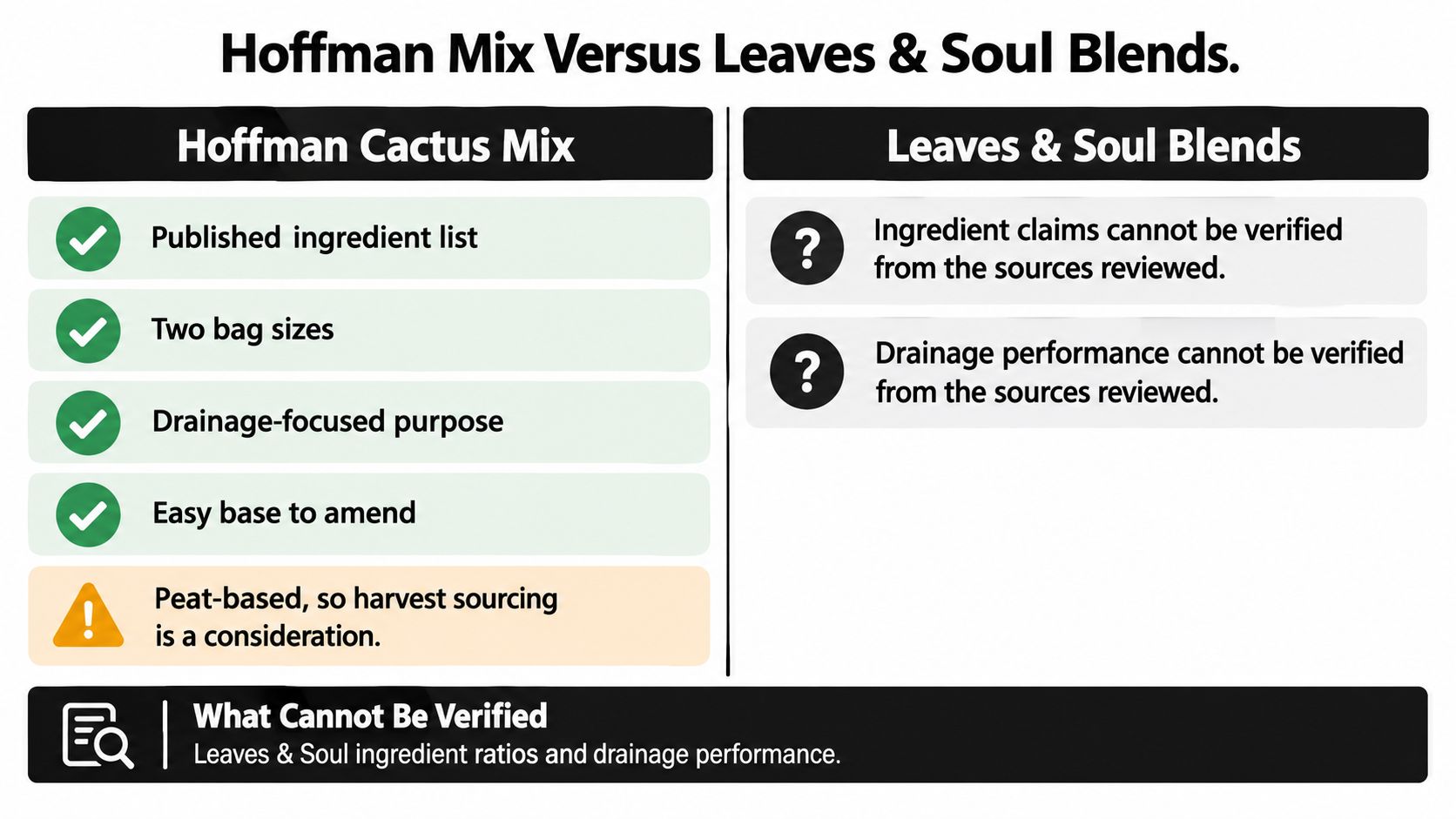
Pick the bag based on what you need to verify. Hoffman gives you a published ingredient list and a base you can adjust; Leaves & Soul lists purpose-built blends and feeding products in the same shop. For either option, check the current product page before relying on details it does not disclose.
| Criterion | Hoffman cactus and succulent mix | Leaves & Soul succulent and cactus blends |
|---|---|---|
| Ingredient percentages | Not disclosed | Check product page |
| Built-in plant food | None | None stated; fertilizers sold separately |
| Feeding products in the same shop | Not applicable | Liquid feeds, sprays and slow-release pellets |
What Hoffman Makes Clear
Hoffman is a starting point you can tune. The ingredients describe the broad mix, while the lack of percentages means you cannot tell from the label exactly how much water-holding material or air space each bag provides. A squeeze test and a record of how quickly your pot dries help answer what the label leaves open.
The limitation matters if you need details the product page does not confirm, such as a peat-free formulation or built-in food. Your watering conditions and the mix's drying behavior remain part of the decision.
What to Check Before Choosing the Alternative
Leaves & Soul describes its blends as purpose-built for succulents and cacti, and sells liquid feeds, spray formulas, and slow-release pellets. That can help if you are placing one order for potting mix and a first feed to use after repotting roots recover. Keep the fertilizer separate from the immediate repotting step; newly disturbed roots need time to recover before feeding.
The store information does not confirm the blends' exact composition, pH, pack sizes, or drainage performance. Check the current product page for the specifications that matter to your plant and growing conditions. A product described for cacti may still need adjustment if it stays wet too long in your room.
Choose Hoffman when you want a tunable base and can assess its drying behavior yourself. Consider a Leaves & Soul blend when you want a purpose-built mix and feeding products available from the same shop, after confirming the blend details you need. The choice comes down to the information you can verify and how much control you want over the drainage system.
If testing and tuning show that drainage and feeding work best as a planned pair, Leaves & Soul offers succulent and cactus blends alongside liquid foods, sprays, and slow-release pellets. Check the current blend specifications against your plant and room, then plan to feed only after the repotted plant has recovered.