


You bring home a healthy plant, set it near a bright window, water it because that seems like the caring thing to do, and then a week later it looks worse than when you bought it. The leaves droop. A few turn yellow. The soil seems either suspiciously wet or bone dry, and somehow both feel equally alarming.
That frustration is normal. New plant owners usually aren't failing because they care too little. They're struggling because watering advice is often too vague. “Water once a week” sounds simple, but it skips the part that matters most: a plant doesn't drink on your schedule. It responds to its pot, its soil, the room, and its roots.
Most watering problems aren't really about the water itself. They start with the setup. A thirsty plant in terracotta and chunky bark behaves very differently from the same-sized plant in a plastic pot filled with peat-heavy mix. If you learn to read that system, watering gets easier fast.
That Feeling When Your New Plant Looks Sad
A lot of us start the same way. We see a glossy pothos, a sculptural bonsai, a fiddle leaf fig with perfect leaves, or a tiny cactus that looks impossible to mess up. We bring it home, give it a nice spot, and try to be attentive. Then the plant slumps, spots appear, or leaves drop, and suddenly watering feels like a test you didn't study for.
The confusing part is that overwatered and underwatered plants can both look unhappy. A droopy plant doesn't always mean “give me water.” Yellowing leaves don't always mean neglect. Sometimes the plant is stressed because the roots are sitting in stale, soggy mix. Other times the water is rushing straight through a dry root ball and never soaking in.
Plants rarely need perfect care. They do need care that matches their container and growing medium.
That shift in thinking helps. Instead of asking, “What day should I water?” ask, “What is happening inside this pot right now?” That question leads to better decisions than any calendar reminder.
A beginner with a fern in a glazed pot may keep it too wet without realizing it. A succulent owner may sprinkle a little water every few days and think they're being careful, but the roots remain shallow and weak. An orchid in bark may dry much faster than a peace lily in standard houseplant mix, even when both sit on the same shelf.
Watering is observation, not routine
The people who seem naturally good at houseplants usually aren't guessing less. They're checking more. They notice weight, texture, drainage, and leaf feel. They learn that one plant's “just moist enough” is another plant's “about to rot.”
Once you stop treating all pots and all soils the same, watering becomes far less mysterious.
Master the Fundamentals of Plant Thirst
The biggest mistake in indoor plant care is watering by habit instead of by need. A large percentage of houseplants are lost to overwatering and underwatering, and the University of Maryland Extension watering guidance recommends checking the soil to about 2 inches deep before watering, then watering thoroughly until it drains from the bottom, using water between 62 and 72 °F.
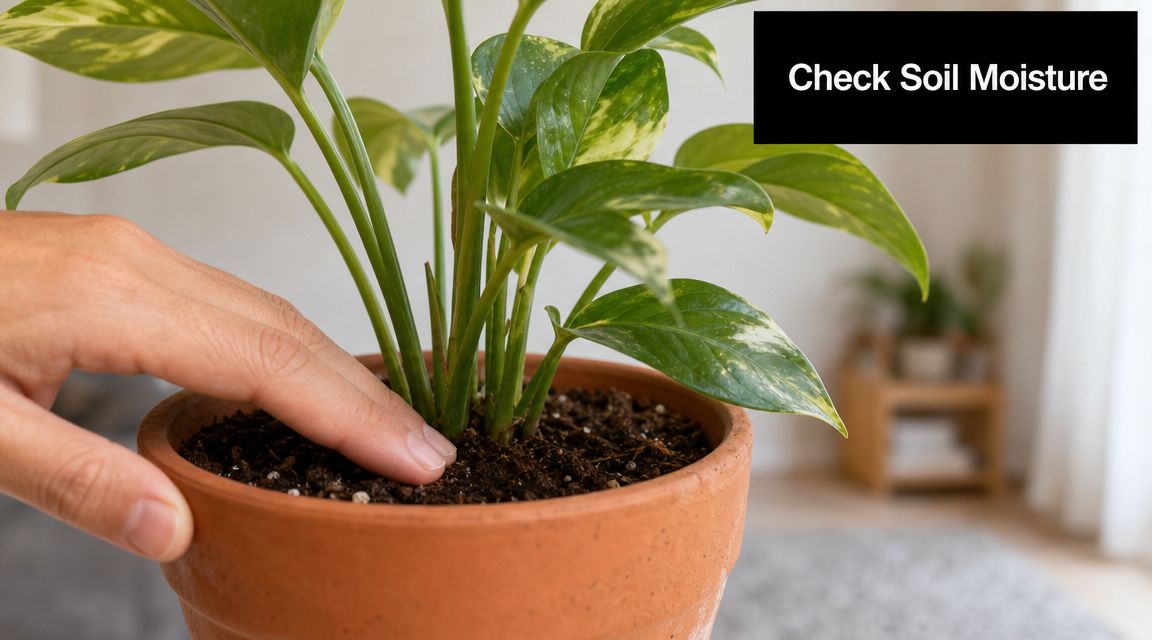
That advice works because roots need two things at the same time. They need moisture, and they need oxygen. When soil stays constantly saturated, air space disappears. When soil gets too dry for too long, the roots can't move water into the plant efficiently. Healthy watering is a cycle between those two extremes.
Check first, then water
If you only keep one rule from this article, keep this one: don't water on a fixed calendar without checking the soil first.
Use any of these simple methods:
- Finger test. Push a finger into the potting mix to about 2 inches. If it still feels moist, wait.
- Wooden skewer or dowel. Insert it into the root zone, then pull it out. Damp particles sticking to it usually mean there's still moisture lower down.
- Lift the pot. Dry pots feel lighter. Wet pots feel heavier. This gets easier with practice and is one of the best habits you can build.
If you want another beginner-friendly breakdown, this roundup of expert watering advice from Little Green Leaf is useful because it reinforces the same core idea. Check moisture before you pour.
How to water once the plant actually needs it
When the plant is ready, water thoroughly. Don't just dampen the top layer.
A proper watering usually looks like this:
- Pour slowly so the soil has time to absorb moisture.
- Cover the whole surface, not just one side of the pot.
- Keep going until water drains out the bottom.
- Let excess water leave the pot so the roots aren't left sitting in it.
Practical rule: A deep soak followed by drainage is far better than frequent tiny splashes.
Those little “just in case” sips are one of the most common ways people keep the top inch wet while the lower root zone stays unevenly hydrated. The plant never gets a full drink, and the soil never gets a proper dry-down.
Why a weekly reminder still helps
A calendar isn't useless. It's just being used for the wrong job.
Use reminders to check your plants, not automatically water them. That distinction matters. A warm, bright room can dry one pot quickly while another plant right beside it stays moist because the pot is larger, the mix is denser, or the foliage is using less water.
That's the heart of how to water indoor plants well. You respond to the condition of the root zone, not to the date.
Choose Your Watering Method Top-Down vs Bottom-Up
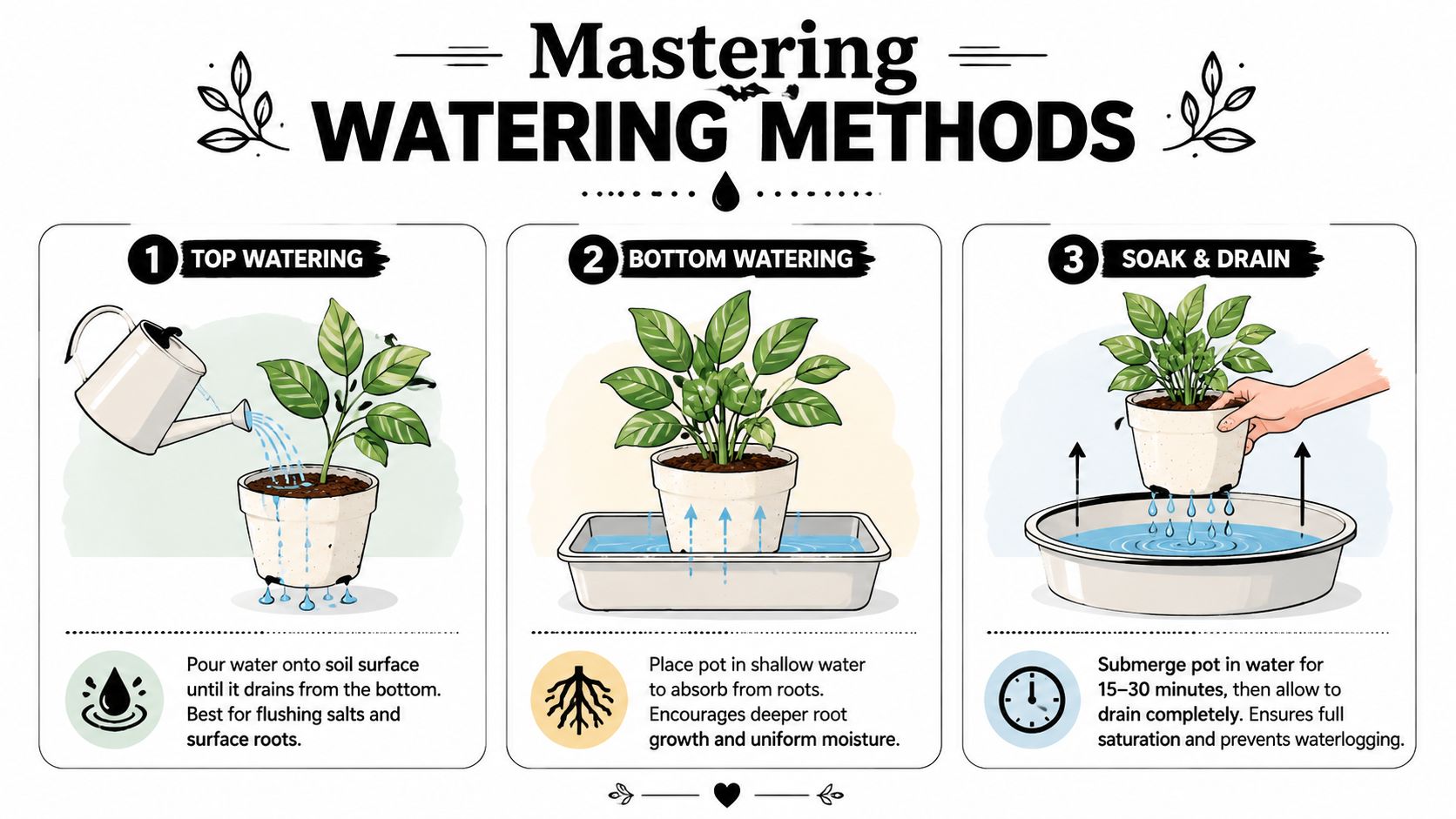
Once you know when to water, the next question is how. Most indoor plants do well with standard top watering, but bottom watering and full soak-and-drain each solve specific problems. These aren't competing philosophies. They're tools.
Top watering for regular care
Top watering is the default method for a reason. It's simple, fast, and effective for most houseplants in pots with drainage.
Pour slowly over the soil surface until excess exits the drainage holes. This helps wet the upper root zone and flushes leftover fertilizer residue or mineral buildup downward and out of the pot. It also lets you see immediately whether the soil is absorbing water normally or repelling it.
Top watering works best when:
- Your mix still absorbs water easily
- The pot has drainage holes
- You want to water and flush in one step
The downside is that badly dried-out soil can become water repellent. In that case, water may run straight down the sides and out the bottom before the root ball rehydrates.
Bottom watering for stubborn dry mix
Bottom watering is useful when the top of the soil has become hard, shrunken, or unevenly dry. You set the pot in shallow water and let moisture move up through the drainage holes into the mix.
That makes it especially handy for plants in very dry media and for growers who want more even moisture through the root ball. If you want a practical walkthrough, this bottom watering guide from Leaves & Soul explains the setup clearly.
Use bottom watering when:
- The soil has gone hydrophobic
- Top watering keeps channeling through too fast
- You want to avoid splashing leaves or the crown
A drawback is that it doesn't flush the pot the way top watering does. I treat it as a targeted technique, not the only method forever.
If a plant has been dry for too long, bottom watering often succeeds where a quick pour from above fails.
Soak and drain for rescue jobs
A full soak-and-drain is intensive care. This is the method for a root ball that has become so dry it won't rewet evenly any other way.
Set the pot into a basin or sink of water long enough for the mix to absorb moisture fully, then lift it out and let it drain completely. This can restore uniform moisture through the pot, but it only works well if you allow thorough drainage afterward.
Here's a quick comparison:
| Method | Best use | Main strength | Main caution |
|---|---|---|---|
| Top watering | Routine watering | Flushes salts and wets from above | Can bypass very dry soil |
| Bottom watering | Dry, water-repellent mix | Rehydrates more evenly from below | Doesn't flush buildup well |
| Soak and drain | Severely dehydrated root ball | Fully saturates stubborn dry media | Must drain completely afterward |
The best growers switch methods based on what the pot needs that day. That's a lot more reliable than treating every plant exactly the same.
Why Your Pot and Soil Matter More Than You Think
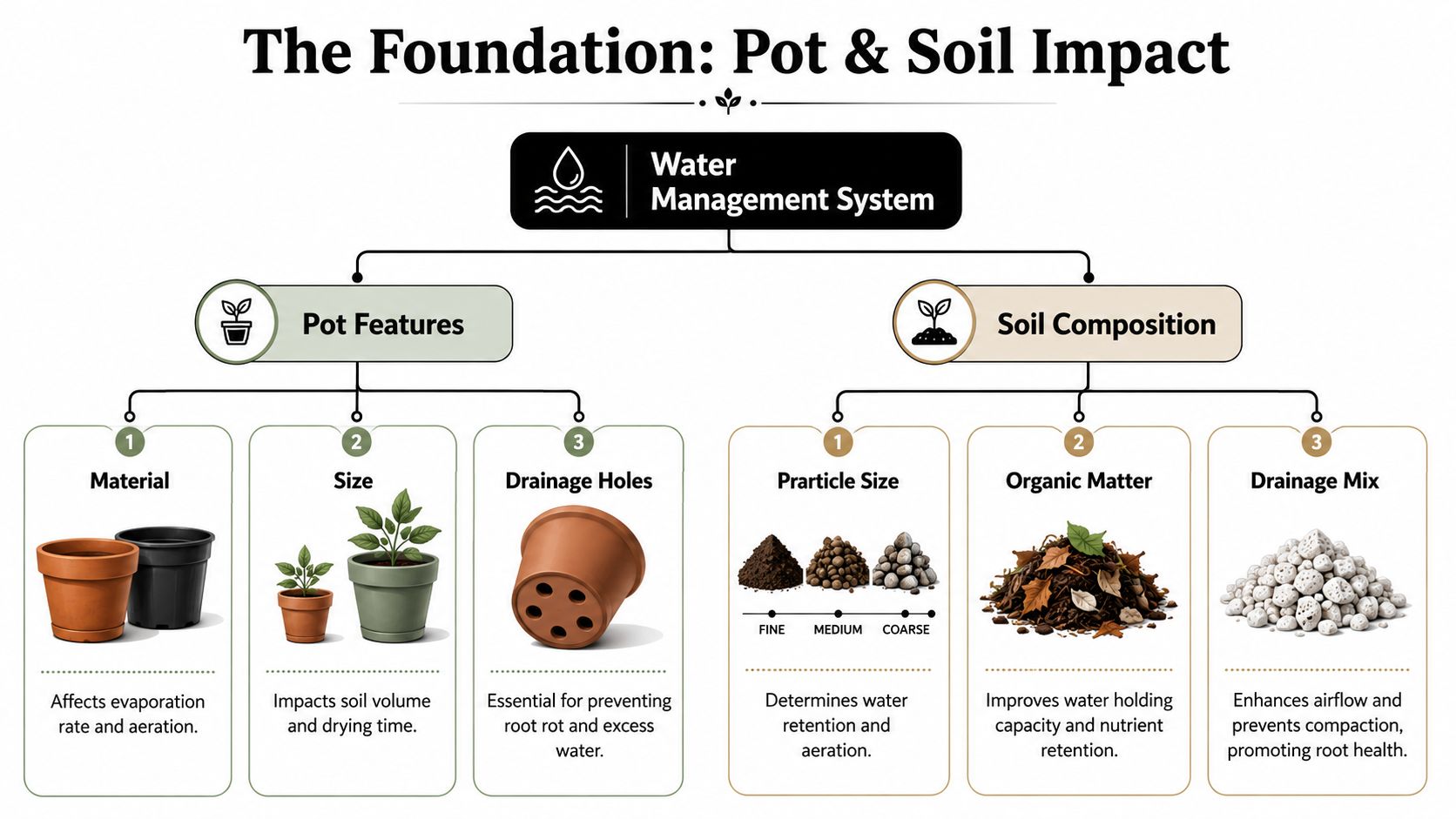
This is where indoor watering finally starts to make sense. The pot and the soil aren't passive. Together, they form the plant's water management system.
A plant in terracotta dries differently from a plant in plastic. A plant in bark behaves differently from one in peat-heavy mix. If you ignore those differences, you'll keep getting mixed results even when your watering habits seem careful.
Pot material changes drying speed
Terracotta is porous. It releases moisture through the pot walls, so the root zone tends to dry faster. That can be helpful for plants that hate sitting wet, but it also means you need to check moisture more often.
Plastic and glazed ceramic hold moisture longer because the sides don't breathe the same way. That longer moisture retention can be helpful for thirsty tropicals, but it raises the stakes if the mix is dense or drainage is poor.
Drainage holes matter even more than material. Without them, there's no reliable exit for excess water. That means you can't use runoff as your cue that the pot has been saturated and drained properly.
Soil mix decides how much water stays behind
This is the piece most beginner advice skips. According to Houseplant Journal's explanation of water retention in different growing media, peat moss can hold about half its volume in water, standard potting mixes about a third, and airy orchid bark or cactus soil about a quarter. That difference is critical, especially in pots without drainage.
That single fact explains a lot of common confusion.
- Peat-heavy mix stays wetter longer and can trap too much moisture in a nonporous pot.
- Standard houseplant mix is more forgiving but still holds substantial water.
- Orchid bark or cactus mix drains faster and leaves more air around roots.
If you're comparing soil options for different plant types, the Leaves & Soul guide to the best soil for indoor plants is a useful reference because it looks at mixes by plant need rather than treating all indoor plants alike.
A thorough watering doesn't mean every pot gets the same amount. It means the entire root zone gets evenly moistened for that specific mix, then allowed to drain or dry at the right pace.
What to do with pots that lack drainage
Decorative cachepots are everywhere, but they complicate watering. If you keep a nursery pot inside a decorative outer pot, take the inner pot out to water, let it drain fully, then return it. That's the safest approach.
If a plant is directly planted into a pot without drainage, you need to be much more conservative and much more observant. In those setups, pot size, soil type, and pot weight become your main clues, because you've lost the visual cue of runoff.
How to Read the Signs of Watering Stress
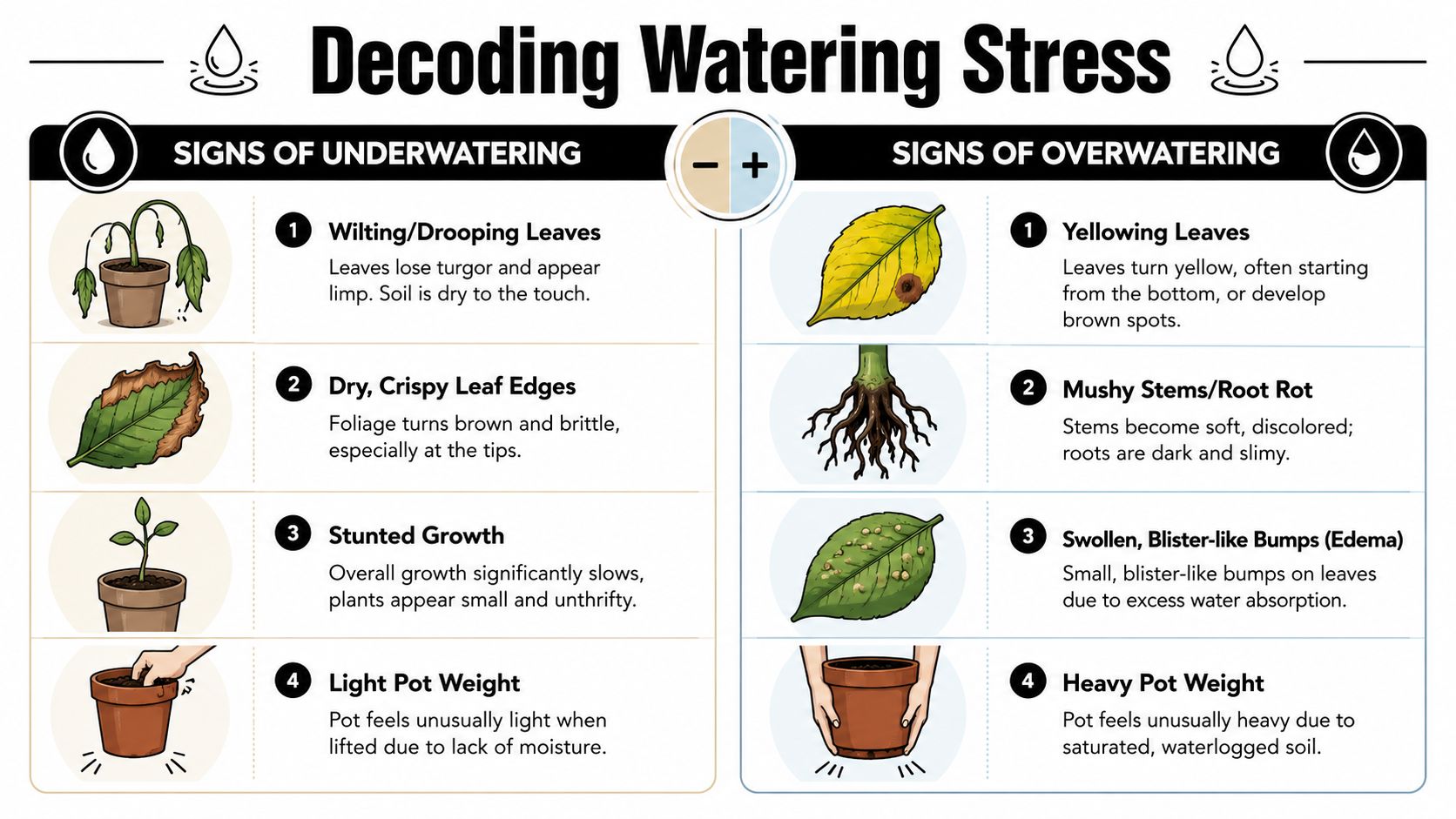
Leaves are helpful, but they don't tell the full story on their own. To diagnose watering stress, look at the whole plant. Check the foliage, the stems, the soil surface, the smell of the pot, and how heavy the container feels in your hand.
Signs the plant is too dry
Underwatered plants often look tired rather than rotten.
- Drooping leaves that feel limp, not mushy
- Brown, crispy edges or tips
- Soil pulling away from the pot sides
- A very light pot when lifted
- Slow, stalled growth
These plants often improve noticeably after a proper watering, especially if the root ball rehydrates evenly.
Signs the plant is staying too wet
Overwatered plants often show stress that feels softer and heavier.
- Yellowing leaves that may drop easily
- Soft stems near the base
- Persistently wet soil
- A sour or foul smell from the root zone
- Surface mold
If mold is showing up around the pot, you're dealing with excess moisture plus stale conditions. For household cleanup around plant areas, That Cleaning Crew's mould guide is a practical companion read, especially when you want to clean the environment while also correcting the watering problem itself.
This short visual walkthrough pairs well with leaf-reading practice:
For a broader diagnostic mindset, this guide to reading your plant's leaves helps connect leaf symptoms to likely care issues without jumping to conclusions too fast.
Don't diagnose from one yellow leaf alone. Diagnose from the pattern, the soil condition, and the weight of the pot together.
The fastest way to tell the difference
If the plant is drooping and the pot is heavy, think excess moisture first. If the plant is drooping and the pot is feather-light, think dry root zone first.
That habit saves people from the classic mistake of watering a struggling plant that's already drowning.
Watering Guides for Your Favorite Plants
General rules help, but some plants punish generic watering faster than others. Succulents, orchids, fiddle leaf figs, and bonsai all need a slightly different approach because their roots live in very different conditions.
Succulents and cacti
These aren't plants for frequent sips. For succulents and cacti, water only after the potting medium is almost completely dry, then water deeply. Indoor intervals can be 2 to 4 weeks in many settings according to this succulent and cactus watering guide. It also warns against “hit-and-run” watering, meaning tiny doses every few days, because that encourages shallow roots and raises rot risk.
A good routine looks like this:
- Check deeper than the surface. The top can look dry while the lower root zone still holds moisture.
- Drench the mix thoroughly when it's time.
- Let the plant return close to dry before watering again.
If a succulent is in a dense decorative potting mix instead of a gritty, airy one, the watering rhythm must get even more cautious.
Orchids
Most common indoor orchids are grown in bark, not regular potting soil. That means the roots get more air and the pot drains much faster. The mistake here is treating orchid bark like standard houseplant mix and expecting it to stay evenly moist for long stretches.
What works better:
- Water the bark and roots, not the leaves or crown.
- Let the medium approach dryness before watering again.
- Avoid leaving water pooled in the crown, where rot can begin.
Orchids often benefit from deliberate soaking followed by full drainage because bark can dry quickly and unevenly.
Fiddle leaf figs
Fiddle leaf figs don't like extremes. They struggle when the root zone swings from soggy to bone dry, and they also dislike constantly wet soil. The sweet spot is consistency.
Keep these points in mind:
- Check the mix before watering rather than following a fixed day.
- Use a pot with drainage.
- Water evenly through the pot, then let the excess leave.
If your fiddle leaf fig drops older leaves after a period of irregular care, that's often your cue to tighten up your moisture checks rather than add more random water.
Bonsai
Bonsai teach good watering habits because they make you pay attention. Shallow pots, exposed soil surfaces, and coarse mixes can dry differently from standard nursery pots. At the same time, many bonsai soils are designed to hold moisture and air in balance, not stay soggy.
With bonsai, watch closely for:
- Rapid surface drying on warm, bright days
- Uneven drying in shallow containers
- The effect of pot size and tree species on water use
A bonsai in a glazed ceramic pot with a fine, moisture-retentive mix behaves very differently from one in a shallow unglazed pot with a coarse blend. That's why bonsai growers tend to rely on daily observation rather than habit.
Quick watering guide for popular plants
| Plant Type | Watering Frequency | Ideal Soil | Key Tip |
|---|---|---|---|
| Succulents and cacti | Water only when the medium is almost completely dry. Indoors, this can be as long as 2 to 4 weeks in many settings | Fast-draining cactus or succulent mix | Drench fully, then let dry deeply |
| Orchids | Water when the bark and roots are nearing dryness | Chunky orchid bark | Wet the medium thoroughly, then drain completely |
| Fiddle leaf figs | Water after checking the root zone, not by calendar | Well-aerated indoor plant mix | Avoid big swings between soggy and bone dry |
| Bonsai | Check often because shallow pots can change quickly | Bonsai-specific, airy mix | Use pot weight and surface observation together |
If you remember one thing, make it this: how to water indoor plants depends less on a schedule and more on the relationship between roots, soil, and pot. Once you start watering the setup instead of the label, your decisions get clearer and your plants get steadier.
If you want to build that kind of consistency, Leaves & Soul offers purpose-built soils, fertilizers, and bonsai supplies that match different indoor plant needs, including mixes and accessories for houseplants, orchids, succulents, and bonsai.