


Slow-release fertilizer is better when you want steady feeding over time, because coated products can delay more than 80% nitrogen release until 56, 84, or 98 days depending on the coating, instead of dumping nutrients fast. It isn't better when a plant needs an immediate correction, because conventional materials can release 85% to 100% within 30 days, and pristine urea has been shown to release almost 99.6% in under 24 hours.
A lot of plant advice online treats slow release like an automatic upgrade. That's too simple. If your goal is fewer feedings, steadier growth, and lower risk from overdoing a strong liquid mix, slow release is often the better tool. If your fiddle leaf fig is chlorotic, your bonsai is pushing hard in warm weather, or your potting mix keeps drying down for long stretches, slow release can be the wrong tool.
That's the answer to is slow release fertilizer better. Sometimes yes. Sometimes clearly no. The difference comes down to plant type, temperature, moisture, and whether you're feeding for maintenance or trying to solve a problem fast.
Why Slow Release Is Not Always the Upgrade It Seems
“One application feeds for 6 months” sounds better than “mix fertilizer regularly.” On a label, slow release looks like the clear upgrade. On an actual bench, it is more limited than that.
The useful question is not which fertilizer is best in general. The useful question is what job needs doing.
Slow release earns its place when the goal is maintenance. It gives established plants a steadier nutrient supply and lowers the odds of a harsh overfeed compared with a strong liquid mix. That matters for growers who want less week-to-week fluctuation and fewer chances to make a measuring mistake.
It falls short in three common situations.
First, a plant with a real deficiency usually needs available nutrients now. Slow release can support recovery later, but it is not the tool I rely on when leaves are already yellowing and I need to change the plant's trajectory fast.
Second, some plants eat faster than a mild background feed can keep up with. Fast-growing foliage plants in active growth, summer containers, and bonsai during a strong push often respond better to liquid or quick-release programs because the timing is easier to adjust. If growth rate changes, the feed program can change with it.
Cool root zones are another weak spot. Indoors, that shows up more often than many growers expect. A plant sitting in a cool room or near a cold window can stay in low gear, and slow release tends to feel even slower under those conditions, especially if watering is also inconsistent.
Practical rule: If the plant is struggling and you need a visible response this week, start with a fertilizer you can control immediately.
Indoor growers also get tripped up by the promise of predictability. A top-dressing does not release the same way in every pot. A chunky aroid mix dries differently from a peat-heavy mix. A shallow bonsai pot swings from wet to dry much faster than a deeper nursery container. Two growers can use the same product and get different results because their media, temperatures, and watering habits are different.
That is why slow release is not a universal upgrade. It is a maintenance tool.
- Best use case: Established plants in active growth that benefit from steady feeding without constant mixing.
- Poor use case: Deficiency correction, cold media, stalled roots, or crops you are trying to push hard on schedule.
- Most misleading promise: “One application does everything.” It does not.
Good results usually come from matching the fertilizer to the plant and the moment. Slow release handles baseline feeding well. Quick-release and liquid feeding still win when speed, correction, or tighter control matter more than convenience.
How Slow Release Fertilizers Work and Where They Came From
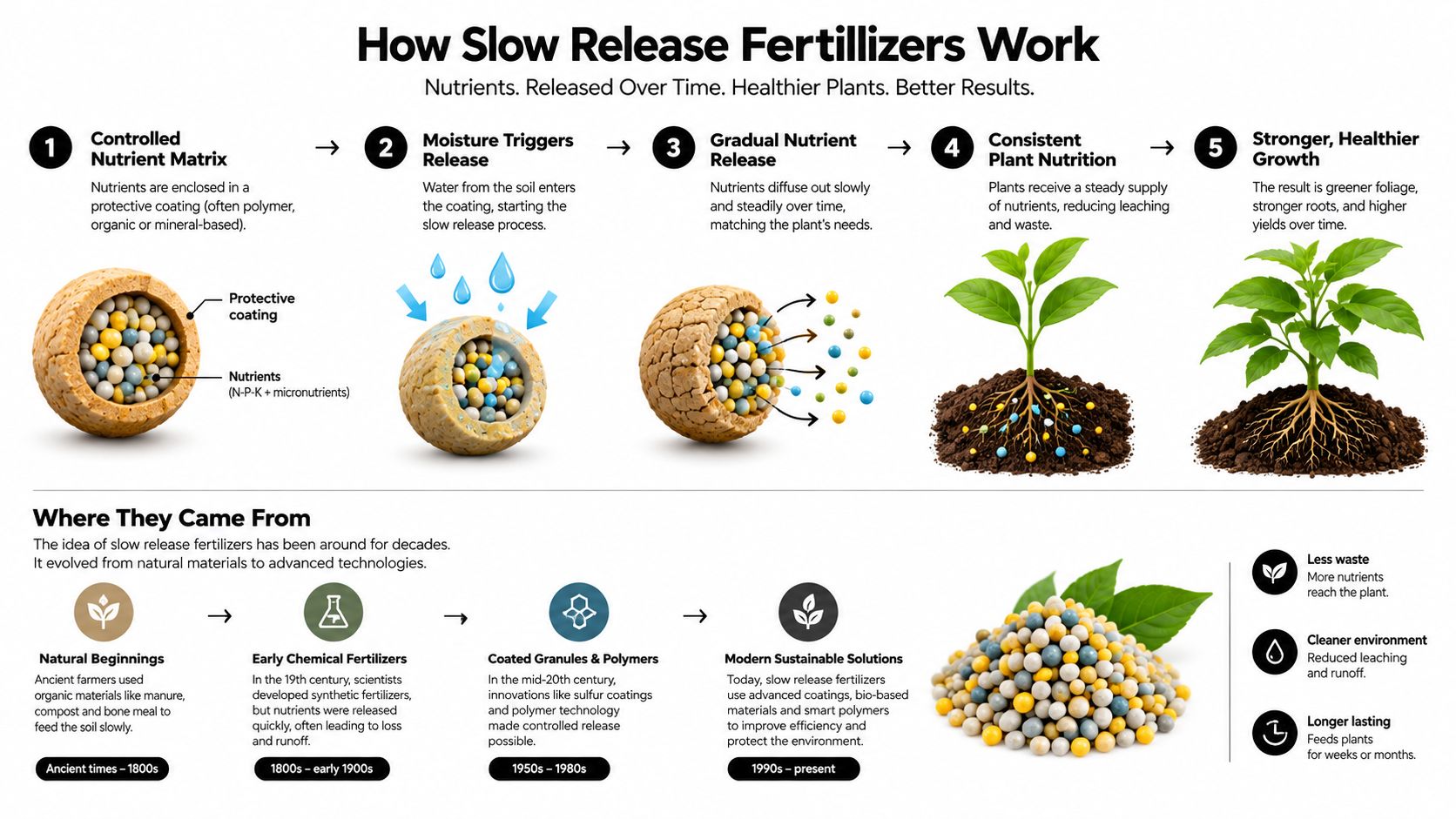
Slow-release fertilizers work by delaying nutrient availability, not by changing what nutrients are. The plant still needs nitrogen, phosphorus, and potassium. The difference is how fast those nutrients leave the granule and become available in the pot.
What actually releases the nutrients
With polymer-coated prills, moisture moves through the coating and nutrients diffuse out over time. With sulfur-coated or otherwise coated urea, the coating slows contact with water. Organic slow-release inputs behave differently again. Materials such as composted manure, feather meal, and bone meal depend more on breakdown in the substrate than on a factory-made coating.
For a houseplant grower, the practical takeaway is simple: these products don't feed on command. They respond to moisture, warmth, and in some cases microbial activity. Dry pot, slow release. Cool pot, slower release. Erratic watering, erratic feeding.
If you want a plain-language primer on product types and label terms, this guide on what slow-release fertilizer is is useful before you compare formulas.
The research-backed reason growers use them
The key advantage is measurable control over timing. A 2020 study on polymer-coated urea found that more than 80% of applied nitrogen was only released after 56 days, 84 days, or 98 days depending on coating formulation, while still following a controlled pattern under fluctuating day-night temperatures. The same research notes that a 180-day incubation method is used to characterize release constants, which tells you these products are evaluated over months because timing matters as much as total nutrient content in this polymer-coated urea study.
That's the whole point of the category. Slow release isn't magic fertilizer. It's fertilizer with a slower delivery schedule.
A short origin story that matters
Controlled-release fertilizers grew out of agricultural attempts to reduce waste and improve timing. Over time, the same idea moved into nursery production, ornamentals, bonsai culture, and hobby houseplant use. That history matters because the products were designed to solve a timing problem, not to replace every other feeding method.
Slow release makes the most sense when your biggest problem is nutrient timing, not when your biggest problem is nutrient shortage right now.
For indoor growers, that vocabulary helps. If you see terms like coated, controlled release, timed release, or organic slow release, think about the mechanism first. Then think about your pot conditions. That predicts performance better than the marketing copy.
What the Research Says About Release Speed and Efficiency
Release speed matters, but speed alone does not decide whether a fertilizer is the better tool. What matters is whether the nutrient arrives when the plant can use it.
Nutrient Release Comparison by Fertilizer Type
| Fertilizer Type | Release Within 30 Days | Release Within 60 Days | Best Soil Temp Range |
|---|---|---|---|
| Slow-release blends | In one incubation experiment, nutrient release was moderate rather than immediate, based on this slow-release fertilizer review | No single 60-day figure applies across products. Release depends on coating and conditions. | Warm, consistently moist media generally favors predictable release. Cool or dry media can slow it. |
| Polymer-coated controlled-release urea | One coated design released only about 45% of total nitrogen over 8 to 17 days in a lab comparison, from this controlled-release fertilizer study | Longer-release products can continue feeding for months, depending on coating thickness and temperature response | Stable warmth helps maintain the intended release pattern. |
| Conventional quick-release granular | Conventional materials in the same comparison moved nutrients into solution much faster than coated products | Often much earlier than 60 days, depending on material | Less dependent on long warm periods because nutrients dissolve rapidly once applied |
| Pristine urea | As noted earlier, release was effectively immediate under lab conditions | Not relevant. Most release occurred right away. | Works when fast nutrient availability is the goal |
| Liquid concentrate | No verified percentage data provided here, but liquids are used when immediate availability and fast correction matter | Not applicable in the same way | Useful across a wider range of indoor conditions when you control dilution and timing |
What those release patterns mean in practice
On real benches, slower release usually improves pacing, not plant response speed.
That distinction gets missed all the time. If a pothos, philodendron, or established ficus just needs steady background feeding through active growth, a coated product can do that well. If a brugmansia, canna, hungry annual, or fast-growing tropical is trying to put on mass quickly, the same slow curve can feel like the plant is always waiting on its next meal.
The research supports that trade-off. Coated fertilizers reduce the early nutrient surge. That can lower loss and stretch feeding over a longer window. It can also leave less immediately available nitrogen in the root zone during the period when a heavy feeder is trying to grow hard.
Efficiency is real, but it is not automatic
Slow release can improve nutrient-use efficiency when the crop cycle, temperature, and watering pattern line up. That is a real advantage, especially in outdoor production and longer nursery runs where leaching and labor both matter.
A bell pepper field trial is a good example. A slow-release granular program at 200 lb/acre N produced the highest marketable yield, better canopy quality, and an early marketable yield share of 46% of total yield, while slow-release treatments also delivered higher nitrogen use efficiency than conventional programs in this bell pepper comparison. The same trial found that a lower slow-release rate could match conventional yield, which is exactly why growers use these materials when timing and retention are the main problem.
Indoor growers should read that carefully. Higher efficiency does not mean faster correction, and it does not mean every plant will look better on pellets alone. In cool potting mix, in low-light winter growth, or on plants that burn through nutrients quickly, the efficient option can still be the slower and less responsive one.
Comparing Slow Release Versus Liquid and Quick Release Fertilizers
On an actual plant shelf, the choice is usually less about ideology and more about what kind of control you want. Houseplant growers, bonsai keepers, and orchid hobbyists all run into different feeding problems. One format won't solve all of them.
Slow Release vs. Liquid vs. Quick Release Fertilizer
| Criterion | Slow Release | Quick Release Granular | Liquid Concentrate |
|---|---|---|---|
| Nutrient timing | Gradual. Best for background feeding. | Faster than slow release. Better for a stronger nutrient push. | Fastest practical response for most home growers. |
| Burn risk | Usually lower when applied correctly. | Moderate to high if overapplied in pots. | Depends heavily on dilution and frequency. |
| Application frequency | Low. Good for growers who want fewer feeding events. | Moderate. | Higher. Best for growers who don't mind routine mixing. |
| Mid-season adjustment | Weak for rapid course correction. | Better than slow release, but less flexible than liquid. | Strong. Easy to increase, decrease, or pause. |
| Performance in dry media | Can stall if granules don't stay active. | Less dependent on long-term moisture pattern. | Easier to deliver when you water. |
| Best fit | Established foliage plants, many bonsai phases, steady seasonal feeding | Outdoor containers, heavy feeders, situations needing quicker soil delivery | Orchids, recovery work, visible deficiencies, precision feeding |
What this looks like by plant type
On a bonsai bench, slow-release pellets often make sense as a base feed during active growth because they keep nutrition available without forcing constant mixing. But when you're refining internode length, responding to stress, or steering growth after pruning, liquid feeding gives more control.
Fiddle leaf figs and similar foliage houseplants usually do well on a steady background feed if the plant is established and the mix stays moderately moist. That's one place where a pellet product such as Leaves & Soul 16-5-11 Fiddle Leaf Fig and House Plant Fertilizer Pellets fits logically as one slow-release option among many. If the plant is pale or stalled, liquid usually gives a cleaner correction path than adding more pellets.
Where liquid clearly wins
Orchids are the classic example. Most hobby growers get better predictability from light, regular liquid feeding during active growth than from top-dressed slow-release granules sitting in chunky bark that dries unevenly.
Succulents and cacti are another category where restraint matters more than raw feeding power. Many growers overfeed them. A low-dose pellet can work in a stable, warm growing period, but a conservative liquid approach often gives better control. If you're deciding between those styles for desert plants, this succulent fertilizer guide is a useful outside reference because it frames feeding around low demand rather than around maximum growth.
For growers comparing weekly liquids against pellets for general houseplants, this overview of liquid fertilizer for house plants helps clarify when liquid feeding is the better fit.
A mature plant and a struggling plant shouldn't get the same fertilizer strategy, even if they live in the same room.
Which Plant Types Actually Prefer Each Fertilizer Type
The cleanest way to answer the question is plant by plant. Different categories respond to different feeding styles because their roots, media, and growth rhythm aren't the same.
Bonsai and woody plants
Many bonsai growers like slow-release pellets during the main growing season because they provide a steady baseline without dramatic flushes. That can be especially useful on trees that are already healthy and growing in warm conditions.
Liquid feed still matters in bonsai. It's better when you're trying to respond to a weak tree, support recovery after repotting once roots are functioning again, or fine-tune growth in refinement work. Shallow pots dry quickly, though, so pellet performance can become uneven if moisture swings hard between waterings.
Fiddle leaf figs and leafy houseplants
Broadleaf tropicals often respond well to a slow-release base program when they're established and actively growing. You get steadier color and fewer feeding chores. For people who forget weekly fertilizer routines, that alone can improve outcomes.
But these plants also show deficiencies clearly. If new growth is small, older leaves yellow quickly, or the plant has been sitting cold and wet, liquid feeding is usually the more useful response. A slow-release top-dress won't fix a timing problem fast enough.
- Use slow release when: the plant is stable, rooted in a conventional potting mix, and growing under warm bright conditions.
- Use liquid when: you're trying to reverse a stall, correct a visible deficiency, or feed through a controlled routine.
- Use quick-release granular with caution: it's workable, but easier to overdo in indoor containers.
Succulents, cacti, and orchids
Succulents and cacti generally prefer lighter feeding than leafy tropicals. A mild slow-release application can work during active growth, especially if the plant stays warm and the container doesn't stay bone dry for long stretches. In very mineral, fast-drying mixes, liquids are often easier to dose precisely.
Orchids are usually the least convincing candidates for slow release in hobby conditions. Bark-based media dry unevenly, and many orchid growers already water on a rhythm that makes weak liquid feeding simple. That gives better control over when nutrients are present and when they're flushed out.
For orchids, predictable routine usually beats theoretical longevity.
Organic slow release versus coated pellets
Organic slow-release inputs have a place, especially for growers who want gentler feeding and some added substrate benefits. But they're less predictable in indoor containers because microbial activity, temperature, and moisture vary so much from pot to pot.
Coated pellets are usually more consistent in timing than organic meals. They're not always better. They're just easier to predict when the pot environment is stable. For most home growers, predictability matters more than philosophy.
When Slow Release Underperforms and Practical Trade Offs
Slow release gets sold as the safer, simpler upgrade. In practice, it is a maintenance tool with limits. I use it plenty, but I do not expect it to solve timing problems, rescue weak plants, or keep up with every crop on its own.
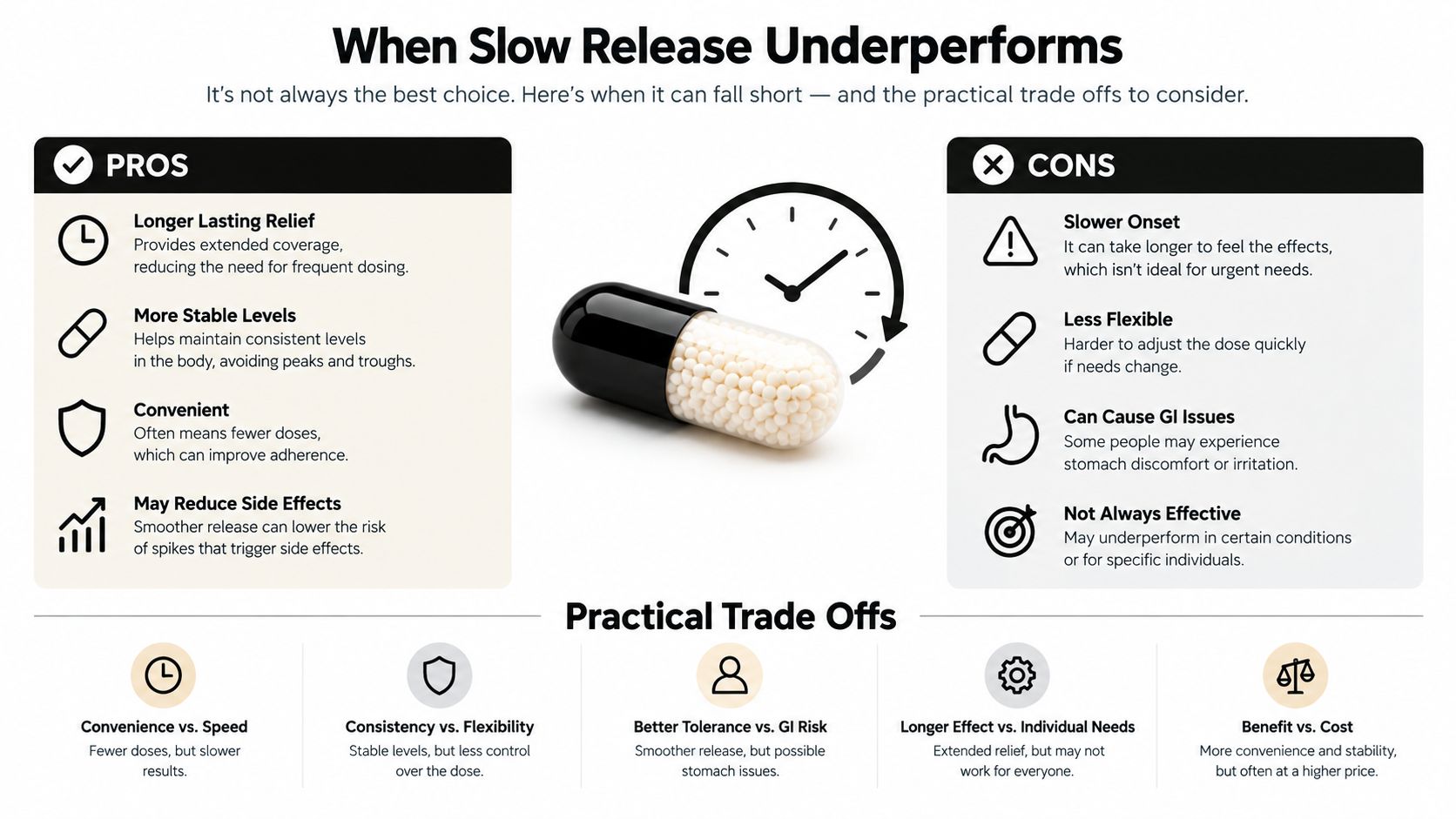
The earlier section covered the familiar weak spots: slow response in less favorable root-zone conditions, poor fit for urgent correction, and cases where fast growers outpace a background feed. The bigger question is whether the trade-off is still worth it once you factor in cost, cleanup, and what is left behind in the pot.
The trade-offs most labels skip
The first trade-off is price. Coated slow-release products usually cost more up front than a basic liquid or quick-release program. That can be a fair exchange if you are feeding a steady crop and want fewer labor steps. It is harder to justify if you still end up supplementing with liquid during active growth, because then you are paying for convenience and buying a second tool anyway.
The second trade-off is residue. Some coated prills do not disappear cleanly by the time the feed is spent. If you repot often, sift bonsai media, or reuse potting mix, you will notice the leftover shells. They are mostly a nuisance issue for hobby growers, but they matter more if you care about media cleanliness or want a substrate that breaks down predictably.
Then there is the environmental side. Slow release can reduce early nutrient loss when conditions are right, which is a real advantage. But the sustainability picture depends on the coating material, how completely it breaks down, and how the product is used. That is less tidy than marketing copy suggests.
This short video gives a useful visual reference for how growers think through these trade-offs in practice.
Where the practical compromise usually lands
For many indoor growers, the downside is loss of control. Once prills are in the mix, the feeding program is partly tied to temperature and moisture patterns in that pot. A liquid feed lets you adjust this week. Slow release asks you to wait.
That is fine for established foliage plants that are growing steadily and not asking for much steering. It is less appealing for orchids in bark, succulents in very dry mineral mixes, or any plant you intentionally push hard for a short window.
A simple decision filter
Use slow release if most of these are true:
- You want lower-maintenance feeding: Fewer fertilizer decisions week to week.
- The plant is stable: You are supporting normal growth, not correcting drift.
- You do not need tight control: A steady baseline feed is enough.
Skip it, or at least do not rely on it alone, if these are true:
- You often adjust feeding based on growth: Liquid gives cleaner control.
- You repot frequently or reuse media: Prill residue may annoy you.
- You are already planning supplements: The convenience advantage shrinks fast.
Used this way, slow release makes sense. Used as a universal replacement for every other fertilizer format, it disappoints.
Choosing the Right Fertilizer Strategy for Your Plants
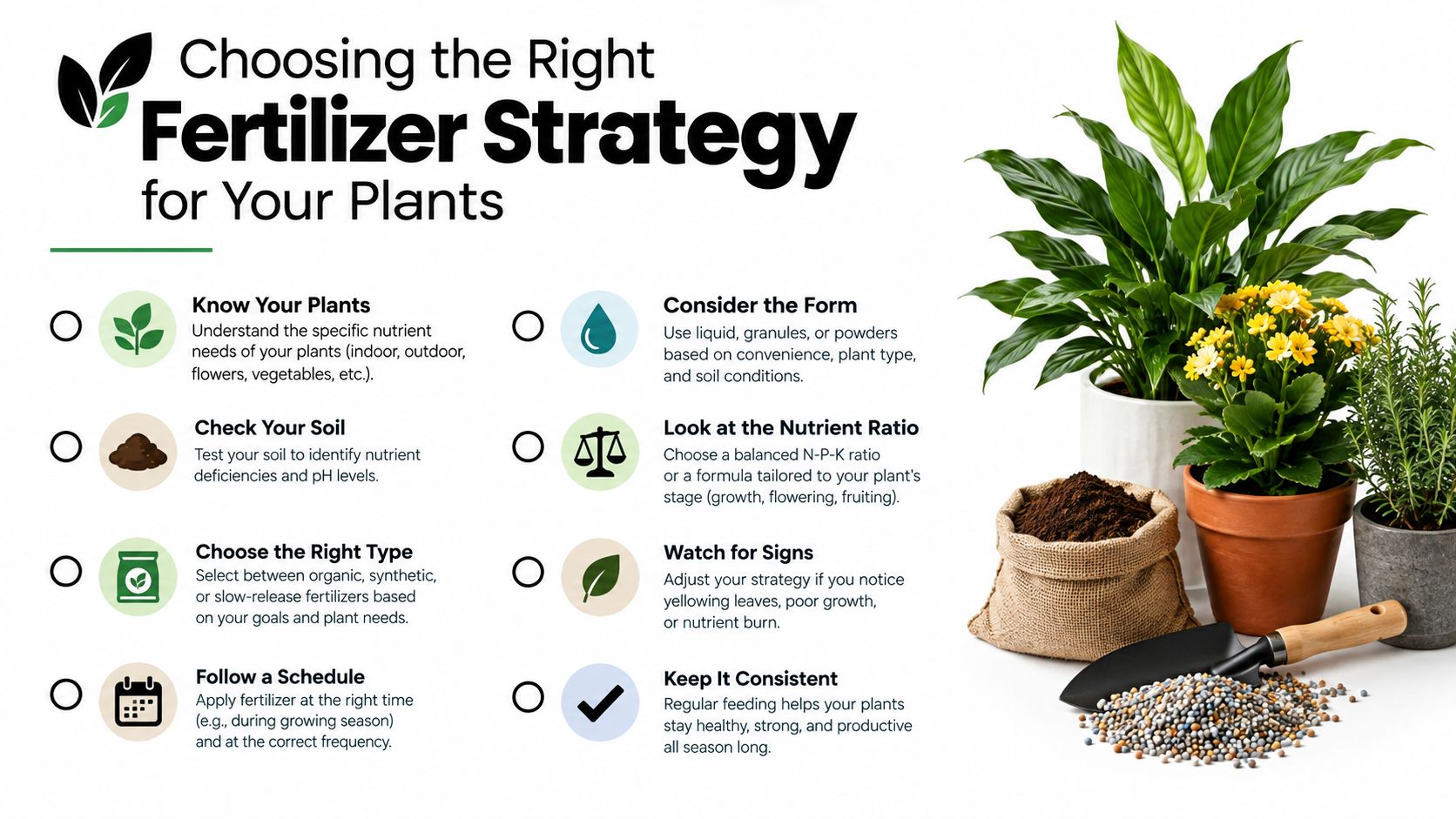
The best answer isn't slow release or liquid. It's often a base strategy plus a correction tool.
Match the tool to the moment
Choose slow release when the plant is established, actively growing, and living in a potting mix that stays evenly functional between waterings. That's a strong fit for many foliage houseplants, a lot of bonsai seasonal feeding, and growers who want fewer feeding chores.
Choose liquid when temperatures are cool, the substrate is mostly bark or mineral, deficiency symptoms are already visible, or you want to control growth more closely. Orchids especially benefit from this kind of precision.
A hybrid approach works well for many growers:
- Base feed with slow release: Use it for steady background nutrition.
- Supplement with liquid only when needed: Add it during peak vegetative push or recovery.
- Stop guessing and observe the plant: Leaf color, extension growth, and watering rhythm tell you whether the base feed is keeping up.
Practical rhythms that make sense
Bonsai often respond well to a seasonal pellet base with liquid support only when the tree is pushing hard or needs correction. Fiddle leaf figs and other broadleaf houseplants usually do well with steady feeding during active growth and a lighter hand when growth slows.
Succulents and cacti should stay on the lean side. Orchids usually do better with regular, modest liquid feeding rather than relying on a long-release top-dress in bark.
For a broader plant-care framework, this guide on how to fertilize indoor plants is a helpful reference point when you're building a routine by plant group rather than by product category.
Track one season before you commit. The same pellet behaves differently in a warm bright room than it does in a cool corner with sporadic watering.
The most useful mindset is this: ask what the plant needs now. If the answer is stable maintenance, slow release is often better. If the answer is correction, precision, or speed, liquid or quick-release usually wins.
Leaves & Soul carries purpose-built fertilizers, soils, and bonsai supplies for the exact plant types discussed here, including pellets for bonsai, fiddle leaf figs, orchids, and general houseplants. If you want to compare slow-release options against liquids and choose a feeding setup that matches your plants and potting mix, visit Leaves & Soul.