


A lot of orchid owners end up in the same loop. The plant looks alive, the leaves stay green, maybe it even pushes a new leaf now and then, but it never really seems to gain momentum or bloom well again. In many cases, the problem isn't the fertilizer brand. It's the lack of a steady orchid fertilizer schedule.
The opposite mistake is just as common. Someone remembers to fertilize after skipping it for weeks, mixes it too strong, pours it into a dry pot, and damages the roots they're trying to help. Orchids tolerate neglect better than they tolerate heavy-handed feeding.
Introduction Why Your Orchid Needs a Consistent Feeding Rhythm
You water a Phalaenopsis every week, the leaves stay decent, and the plant does little else. Then you tip the pot and find the reason. The bark is dry again, the roots have had almost no nutrition between waterings, and the plant has been coasting.
Most house orchids are not growing in soil that holds nutrients for long. They are growing in bark, sphagnum, cork, or a loose mix designed to keep air around the roots. That setup is good for root health, but it also means fertilizer washes out fast. A consistent feeding rhythm matters because the pot and the media do not buffer mistakes very well. Light feeding repeated at the right times usually gives better results than occasional heavy doses, a point the American Orchid Society explains in its weakly weekly guidance.
I see the same pattern often. Orchids in coarse bark usually need more frequent, lighter feeding because each watering strips the pot a little cleaner. Orchids in moss hold moisture and fertilizer longer, so the same mix applied on the same calendar can be too much. The schedule has to match the media first, then the plant.
Why schedule matters more than product hype
A workable orchid fertilizer schedule starts with cues you can observe.
Fresh green root tips, a new leaf, or a new pseudobulb tell you the plant can use nutrients. Shriveled roots, stalled growth, black root tips, or a sour pot tell you to slow down, flush, or stop feeding until the plant recovers. If the pot dries in two or three days, nutrients do not stay available long. If it stays damp for ten days in moss, leftover salts can sit on the roots.
The product matters less than the pattern. Orchids respond well to restraint, repeatability, and a potting mix that is not loaded with fertilizer residue.
Practical rule: Feed to support active growth in the media you use, not because the calendar says it is time.
What a workable routine looks like
Good orchid feeding follows the plant, not a date.
- New roots and leaves: keep feeding lightly and consistently.
- Fast-drying bark or mounted orchids: expect nutrients to wash out faster, so regular low-dose feeding makes sense.
- Compact moss, cool conditions, or slow winter growth: reduce feeding and flush more carefully.
- Stressed, rootless, or dehydrated orchids: pause fertilizer and fix watering and root health first.
That is the rhythm growers learn after a few mistakes. Feed while the orchid is building something. Flush when the pot starts collecting residue. Pause when the plant is resting or the roots are compromised.
The Weakly Weekly Method That Prevents Burn and Buildup
You water on Sunday, feed a full dose because the label says monthly, and by midweek the roots look dull and the pot rim starts collecting crust. I see that pattern far more often than true underfeeding. Orchids usually decline from concentration and residue before they decline from getting too little fertilizer.
A weakly weekly routine solves that by matching small doses to the way orchid roots take up nutrients in pots. The goal is steady access to food without leaving fertilizer salts behind in the mix.
The basic routine
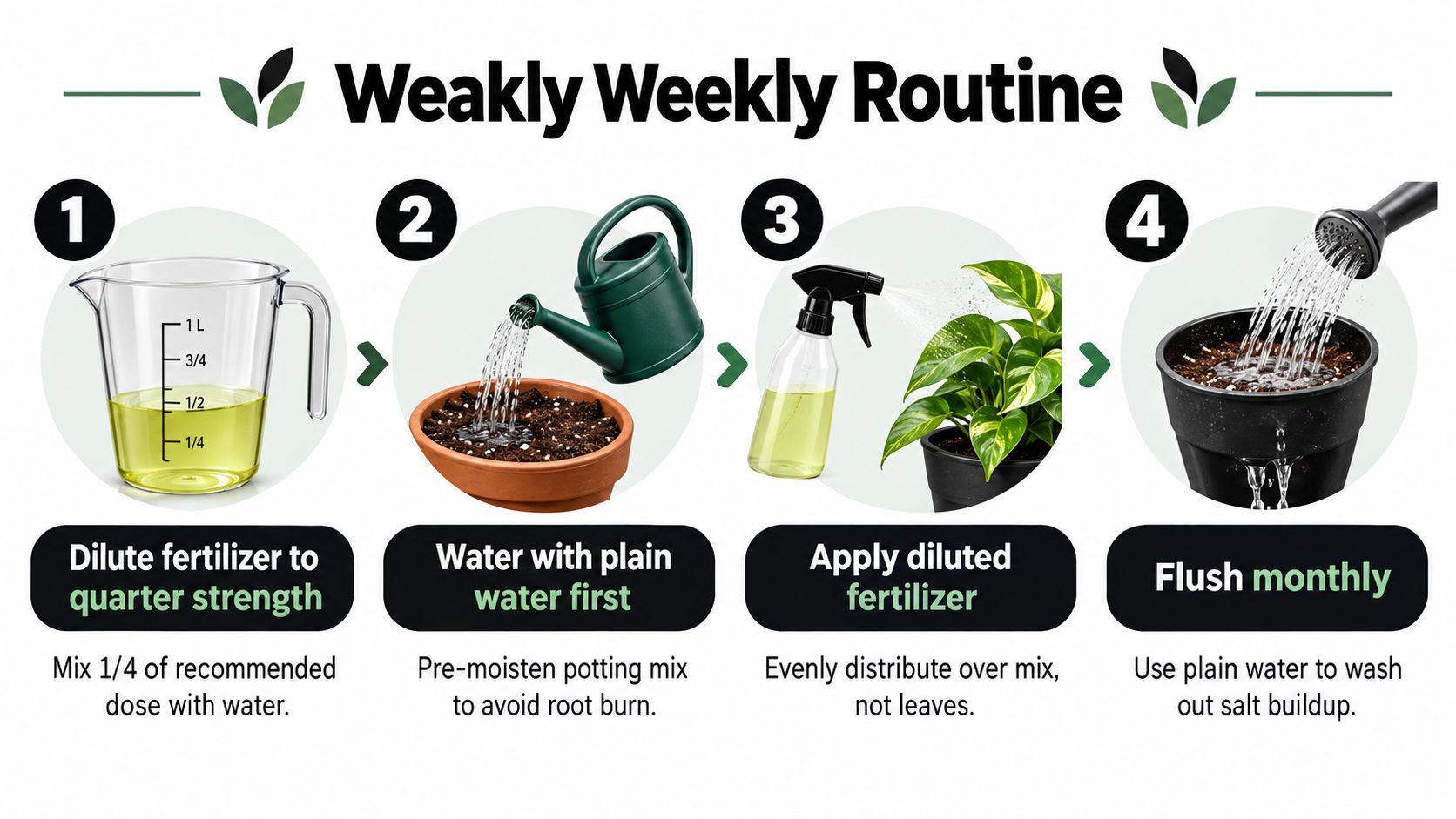
Use this sequence:
-
Mix fertilizer at quarter strength.
For many orchids, that means using about one-quarter of the label rate for regular feeding instead of giving a heavy dose all at once. -
Pre-wet the pot with plain water.
Roots that are already moist handle fertilizer far better than dry roots do, especially in bark or after the plant has gone a bit too dry. -
Apply the diluted fertilizer until it runs through the pot.
Wet the whole root zone. Do not let fertilizer solution sit in a cachepot or saucer. -
Use plain water for the next flush.
After several light feedings, run enough plain water through the pot to clear leftover salts. In bark, many growers do this about every fourth watering. In moss, I base it more on the pot condition. If the mix stays wet a long time or the pot has any white residue, flush sooner.
If you use a liquid product, an orchid-specific option like this liquid fertilizer for orchids fits the method because it is designed to dilute into watering, not coat the pot with a strong dose. The product matters less than the habit. Light mix, full runoff, regular flush.
Why this method works in real homes
Orchid media does not hold nutrients the way dense potting soil does. Coarse bark dries faster, sheds fertilizer faster, and usually forgives small frequent feedings. Sphagnum holds moisture and dissolved minerals longer, so the same fertilizer concentration can linger around the roots for days.
That is the trade-off.
A plant in chunky bark under bright conditions may do well with a feed, feed, feed, flush rhythm. A plant in tight moss by a cooler window may need feed, plain water, flush, then feed again. The schedule stays weak and regular, but the potting media decides how quickly you repeat it.
I do not treat the fourth watering as a law. I treat it as a checkpoint. If the roots are active, the plant is drying on time, and the pot stays clean, continue the routine. If the mix smells stale, stays wet too long, or shows salt at the rim, switch the next watering to a full flush.
The mistakes that cause burn and buildup
Three errors show up again and again:
-
Feeding dry roots
This is one of the fastest ways to damage root tips. -
Mixing too strong
More fertilizer does not produce faster growth. It usually produces stressed roots and residue in the pot. -
Following a calendar after the plant has changed
A recovering orchid with weak roots should get water and stability first. A plant pushing new roots in fresh bark can use light, repeated feeding. A plant sitting still in old moss may need a flush and a pause instead.
Visible cues keep this method safe. Green root tips and firm new growth support continued light feeding. Blackened tips, limp roots, white crust, or a pot that stays heavy for too long call for plain water and a reset.
How Often to Feed by Orchid Type and Potting Media
You can water two orchids on the same day, use the same fertilizer, and still need two different feeding intervals by the next watering. The difference is usually in the pot. A Phalaenopsis in airy bark may be ready again soon. The same plant in packed sphagnum may still be holding moisture and dissolved salts around the roots.
That is why orchid type matters, but potting media usually decides the pace.
Phalaenopsis handle light, regular feeding well when they are pushing roots and drying predictably. Cattleyas can use the same weak approach, but I tighten or loosen the schedule based on new roots and swelling pseudobulbs. Terrestrial orchids need more restraint because their mixes often stay moist longer and hold nutrients longer.
A practical reference for moth orchids is this orchid fertilizer for Phalaenopsis guide, but even with Phalaenopsis, I would rather trust the root zone than the label.
Orchid Fertilizer Frequency by Type and Media
| Orchid / Media | Feeding Frequency | Flush Timing |
|---|---|---|
| Phalaenopsis in bark | Feed at low strength when the pot is drying on time and root tips are active. This often works out to about every 7 to 10 days in active growth | Plain-water flush every fourth watering, or sooner if you see crust at the rim |
| Phalaenopsis in sphagnum | Feed less often because moss holds moisture and fertilizer longer. About every 12 to 14 days is a common starting point | Flush with plain water regularly, especially if the center of the pot stays damp for several days |
| Cattleya in bark | Feed lightly during active root growth and while new pseudobulbs are filling out. Back off when growth hardens and water use slows | Flush on a repeating plain-water cycle and any time the mix starts to smell stale |
| Terrestrial orchid in moisture-retentive mix | Use weaker doses and wider gaps. Only feed when the plant is growing and the mix is not staying wet too long | Flush when residue appears, the surface stays sour, or growth stalls after feeding |
Match the schedule to what the pot is doing
Chunky bark drains fast, dries fast, and leaves less fertilizer behind after each watering. That supports smaller doses on a closer rhythm. Sphagnum does the opposite. It stretches the life of every feeding, which is useful for steady moisture but risky if you keep adding fertilizer before the old salts have washed out.
Mixed media sits in the middle. A bark and moss blend can behave more like bark in summer and more like moss in winter, especially indoors.
Use a simple check before each feeding:
- Feed if the plant has active root tips, the pot is drying on schedule, and the roots look firm.
- Flush if you see white residue, darkened root tips, or a pot that feels heavier than it should for too many days.
- Pause fertilizer entirely if roots are damaged, the mix is breaking down, or the plant is sitting still after stress, repotting, or rot cleanup.
This approach keeps you from forcing a fixed calendar onto a changing root zone. The orchid type tells you how the plant grows. The media tells you how long fertilizer stays in contact with the roots.
Seasonal Adjustments for Active Growth and Rest Periods
A Phalaenopsis in July can dry in four days, push fresh root tips, and use a light feed without complaint. The same plant in January may sit damp for more than a week and do better with plain water. That is why seasonal feeding works best when you follow growth and drying speed, not the calendar by itself.
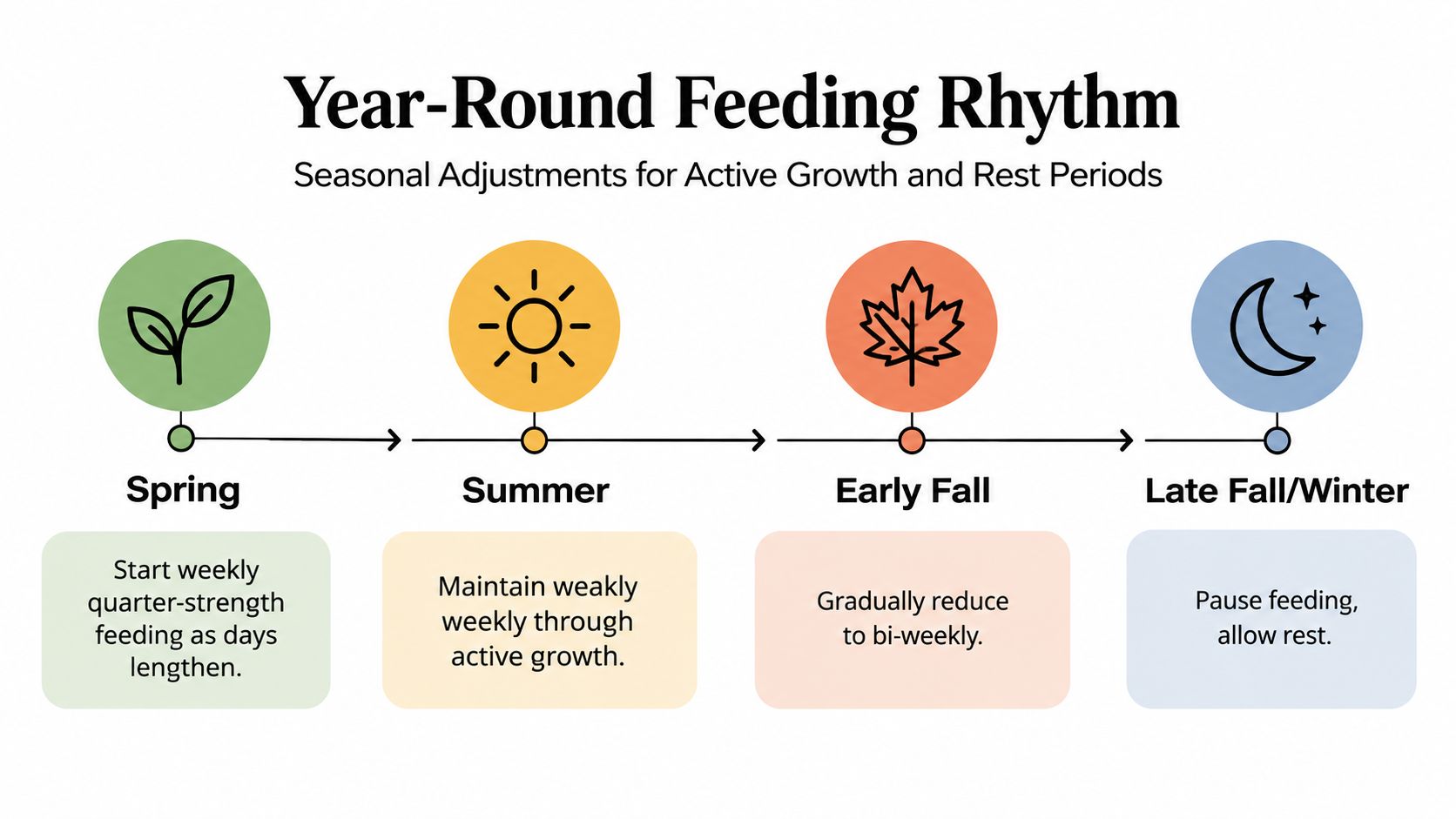
General greenhouse guidance still gives a useful starting point: feed more regularly through the brighter growing months, then cut back in late fall and winter, or stop for orchids that enter a real rest period, as described in this seasonal orchid feeding guide. The mistake is treating that pattern as automatic. Light, room temperature, and potting mix decide how much of that schedule your plant can use.
What active growth actually looks like
Feed more when the plant is spending nutrients. You can see that happening.
Look for:
- Bright green or silver roots with fresh green tips
- A new leaf that is still expanding
- New canes or swelling pseudobulbs on sympodial orchids
- A pot that dries in its normal window instead of staying heavy for days
If those signs are present, keep the fertilizer light and steady. If they are absent, reduce the dose or skip that round. A bark-grown orchid under strong spring light usually returns to feeding sooner than the same orchid in moss on a cool windowsill.
A simple seasonal reference such as this guide on when to fertilize orchids helps if you tend to keep feeding through winter at the same rate you used in summer.
How to taper feeding without stressing the roots
For many home-grown orchids, winter is a reduction phase, not a dramatic shutdown. Phalaenopsis often keep some slow root or leaf activity indoors, while many cattleyas and some dendrobiums show a clearer slowdown. The feeding schedule should reflect that difference.
A practical pattern looks like this:
-
Spring through early fall
Use your normal weak-feed rhythm while growth is visible and the pot is drying on time. -
As days shorten or growth finishes
Drop the concentration first, or add more plain-water irrigations between feedings. -
Late fall and winter
Feed sparingly if the plant is still growing. Pause entirely if growth has stopped, the mix stays wet, or the plant is in a true rest.
Potting media matters. Bark usually lets you keep a lighter ongoing rhythm because old fertilizer washes out faster. Moss and finer mixes hold both water and salts longer, so the safer move in winter is often less feed and more flushing.
Why seasonal changes prevent fertilizer problems
Overfeeding in cool, dim conditions rarely gives better growth. It usually gives dull root tips, residue on the pot, and a medium that turns sour faster. I see this most often with orchids in sphagnum, where the plant slows down but the grower keeps feeding out of habit.
Seasonal adjustment is simple in practice. When growth starts and the pot is drying predictably, resume weak fertilizer. When growth hardens, drying slows, or the roots stop advancing, widen the interval. When the plant is resting or recovering from stress, use plain water and let the roots catch up.
Reading Your Orchid and Knowing When to Change the Schedule
You water on schedule, feed on schedule, and the orchid still stalls. That is usually the point where growers make the problem worse by adding more fertilizer.
Feed by what the plant is doing, not by loyalty to the last routine that worked. An orchid that is making fresh root tips and pushing a new leaf can use regular weak feed. An orchid sitting in tired moss with blunt root tips and a pot that stays wet cannot.
Match the feed to the plant and the mix
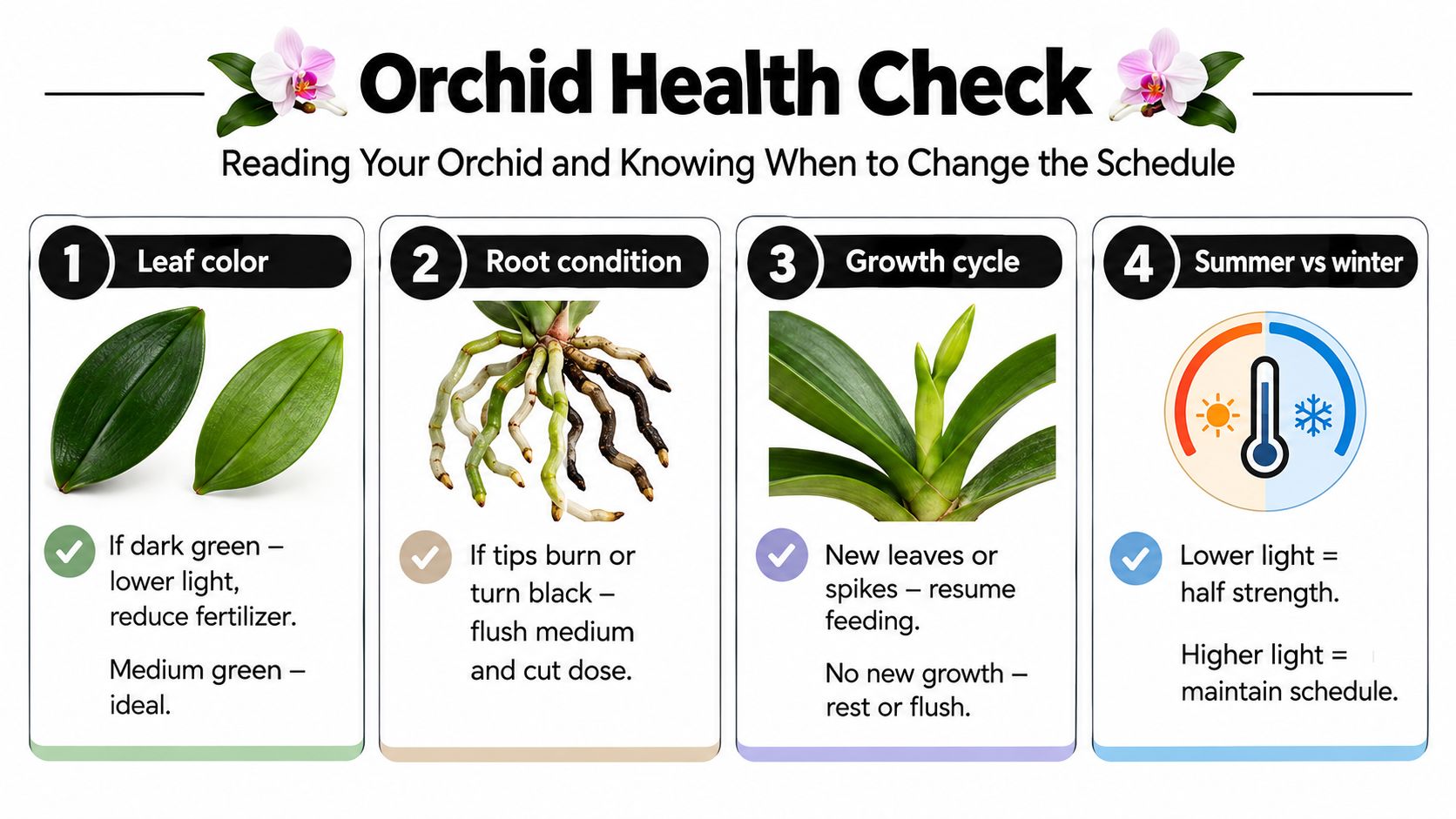
I change fertilizer strength only after I check three things. Root activity, drying speed, and the condition of the potting media.
Bright green or silver roots with clean green tips usually mean the plant is ready to use light feeding. In that case, quarter-strength fertilizer is a safe working rate for most home setups. If the pot is bark and it dries on time, I am comfortable keeping that rhythm. If the same orchid is in sphagnum or a fine mix that stays damp for days longer than expected, I cut back first and ask questions later.
Light matters, but media often decides the risk. Lower light slows growth. Wet, decomposing media slows it even more and holds fertilizer salts around the roots longer.
If roots are inactive and the mix is staying wet, fertilizer is rarely the fix.
What the orchid is telling you
The plant usually gives a clear answer if you know where to look.
-
White crust on the pot, rim, or medium
Salts are building up. Flush with plain water until it runs freely from the pot, then reduce the next feeding to half of your usual dilution. -
Brown or black root tips after feeding
The roots were too dry, too weak, or exposed to too much fertilizer in a salty mix. Pre-water next time, and pause feeding if new root tips are not advancing. -
Dark leaves with no new roots or leaf extension
The orchid is not using much fertilizer. Hold the concentration low, or skip a feeding and use plain water. -
New roots that stop at the edge of old moss
The media is part of the problem. Flushing may help for a short time, but old compacted mix often needs repotting more than it needs nutrients. -
Wrinkling leaves with a wet pot
Do not answer that with fertilizer. That combination points to root trouble, not hunger.
This is a good point to watch a visual walk-through if you learn better by seeing root and leaf cues in context.
When to flush, reduce, or stop
Use plain water when the orchid needs a reset. I do this after visible salt residue, after a stretch of heavy feeding, or anytime the potting mix has started to smell stale.
Reduce fertilizer when the orchid is still growing, but more slowly than before. That often means switching from every watering at quarter strength to every second watering, especially in moss or in a cooler room.
Stop feeding completely when the plant cannot use it well:
- Freshly repotted orchids with damaged roots
- Plants recovering from rot
- Orchids under heat stress or cold stress
- Resting orchids with no active root tips
- Any plant in old, soggy media until the root situation is clear
I would rather miss two feedings than burn a weak root system once. Healthy orchids recover from light feeding. Stressed orchids often slide backward fast when fertilizer keeps coming out of habit.
Putting Your Orchid Fertilizer Schedule Into Practice
You water on Saturday, add fertilizer because it feels like the right thing to do, and by Tuesday the pot still feels heavy. That is how a decent schedule turns into root stress. A usable orchid fertilizer routine starts with the pot and the plant in front of you, not a date on the calendar.
My default is simple. Feed lightly only while the orchid is producing something new that can use it, usually fresh root tips, a new leaf, or active pseudobulb growth. In bark that dries on time, that may mean weak fertilizer at two or three waterings, then a plain-water flush. In moss or a cooler room, the same orchid may need longer gaps because the roots stay wet longer and salts clear more slowly.
A simple four-week habit
Use this as a starting pattern, then adjust by what you see:
-
First watering
Pre-water first. Then apply fertilizer at one-quarter strength. -
Second watering
Repeat that feeding only if the mix dried at a normal pace and the roots still look active. -
Third watering
Feed again at one-quarter strength if the plant is still pushing growth and the pot is not staying wet too long. -
Fourth watering
Use plain water and flush the pot thoroughly.
That rhythm works because it builds in a reset. It also keeps you from stacking fertilizer into media that is already holding too much moisture.
What to track so you know it's working
Flowers are a bonus. The better test is whether the plant handles the routine cleanly for several weeks.
- Roots should stay firm, with green or silvery surfaces and fresh tips when the plant is in growth.
- Leaves should hold their texture and color without softening, yellowing from the base, or showing blackened tips.
- New growth should continue at a steady pace instead of stalling after each feeding.
- Potting media should smell clean and dry predictably for that orchid, whether it is bark, moss, or a mixed setup.
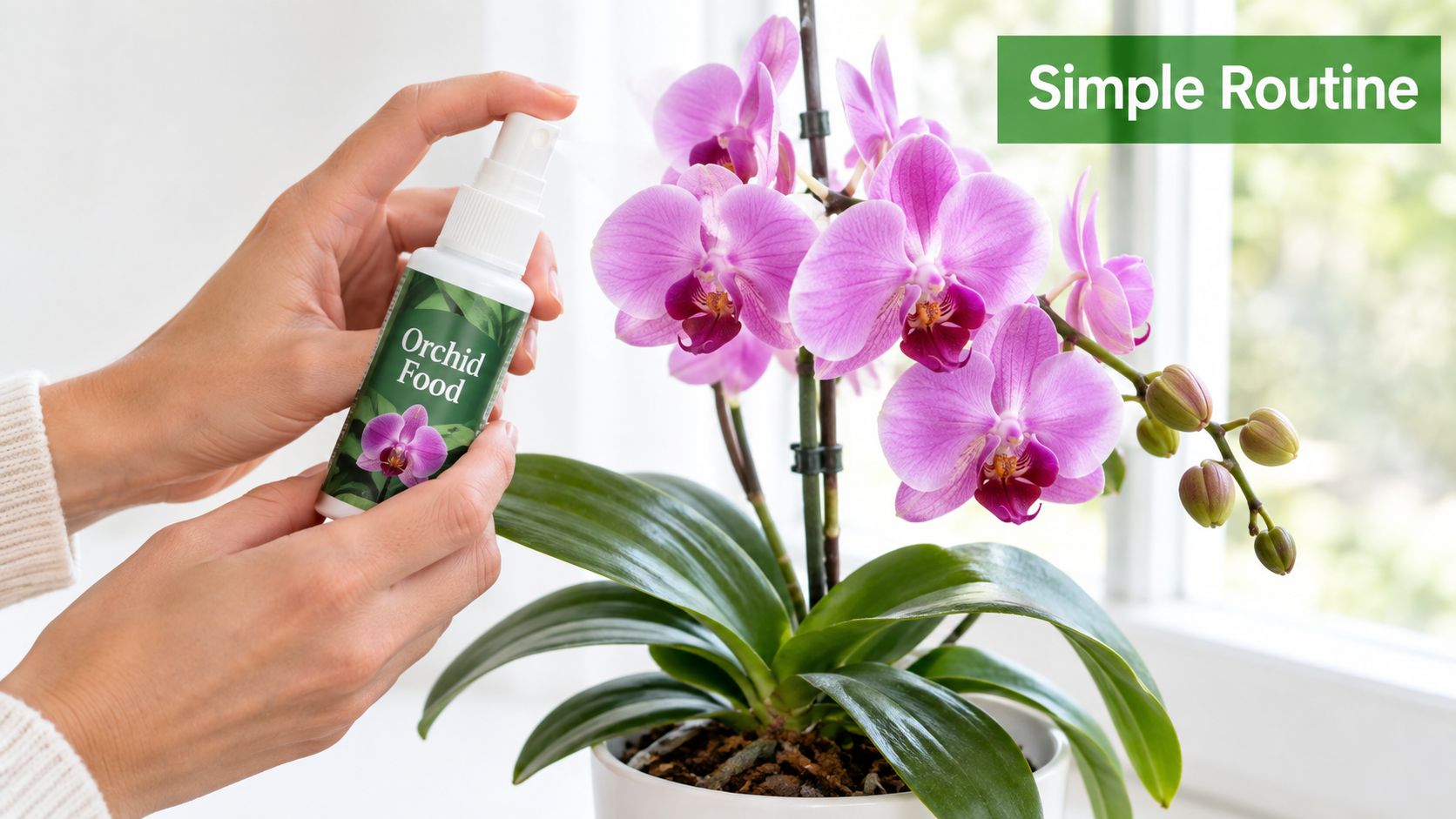
Keep the routine visible. Write the dilution on the bottle. Mark the last flush date. After repotting, return at the low end of feeding and wait for signs that roots have resumed work before increasing frequency.
A steady, low-dose habit beats enthusiastic catch-up feeding every time.
Leaves & Soul offers orchid-focused fertilizers, potting solutions, and practical care guidance that fit the kind of low-dose, cue-based feeding routine described here. If you want supplies that support a steadier orchid fertilizer schedule without overcomplicating the process, visit Leaves & Soul.