


You buy a fertilizer because the label promises greener leaves, stronger growth, and a fuller plant. A few weeks later, your pothos is pushing soft new shoots, your bonsai is stretching fast, and your pepper plant looks leafy but slow to flower. That's the moment many gardeners realize that feeding a plant isn't just about feeding it more. It's about feeding the right thing at the right time.
A plant fertilizer high in nitrogen can be highly useful. Nitrogen is the nutrient most closely tied to leafy, green growth, so it often gives the fastest visible response. That's why lawns green up after feeding, leafy greens bulk up quickly, and houseplants often look perkier after a nitrogen-rich fertilizer program.
But nitrogen is also the easiest nutrient to waste. It moves, washes out, and can push plants into making more leaves than you want. For container growers, especially bonsai keepers and houseplant owners, that matters even more because every watering changes the root zone.
The Secret to Lush Green Growth
You water your houseplant, give it fertilizer, and a week later the leaves look greener. Then you try the same approach on a flowering plant and get lots of foliage but fewer blooms. That split result is the first clue that nitrogen needs context, not just a big number on the label.
Nitrogen works like building material for fresh stems and leaves. Plants use it to make chlorophyll, amino acids, and the soft new growth you notice first. If a plant is in an active leafy phase, extra nitrogen can be useful. If that same plant is supposed to stay compact, flower, or fruit, too much nitrogen can send it in the wrong direction.
Container growers see this faster than in-ground gardeners. In a pot, the root zone is small, watering is frequent, and unused nutrients can wash through quickly. Bonsai, herbs, and houseplants often respond within days, which sounds helpful until fast growth turns leggy, oversized, or out of balance.
Practical rule: Match nitrogen to the plant's current job. Feed for leaves and stems during active growth. Ease off when you want tighter form, stronger roots, flowers, or fruit.
The better question is rarely “Which fertilizer has the highest nitrogen?” A more useful set of questions looks like this: Is the plant actively growing right now? Is it in a container that gets watered often? Do you want lush foliage, or are you trying to hold shape and encourage blooms? Those answers point you toward the right type of nitrogen, the right strength, and the right timing.
If fertilizer labels still feel a little abstract, this guide to understanding plant fertilizer numbers makes the next step much easier.
What Makes a Fertilizer High in Nitrogen
Most confusion starts with the fertilizer label. Once you understand that label, the shelf at the garden center gets much less intimidating.
Reading the NPK numbers
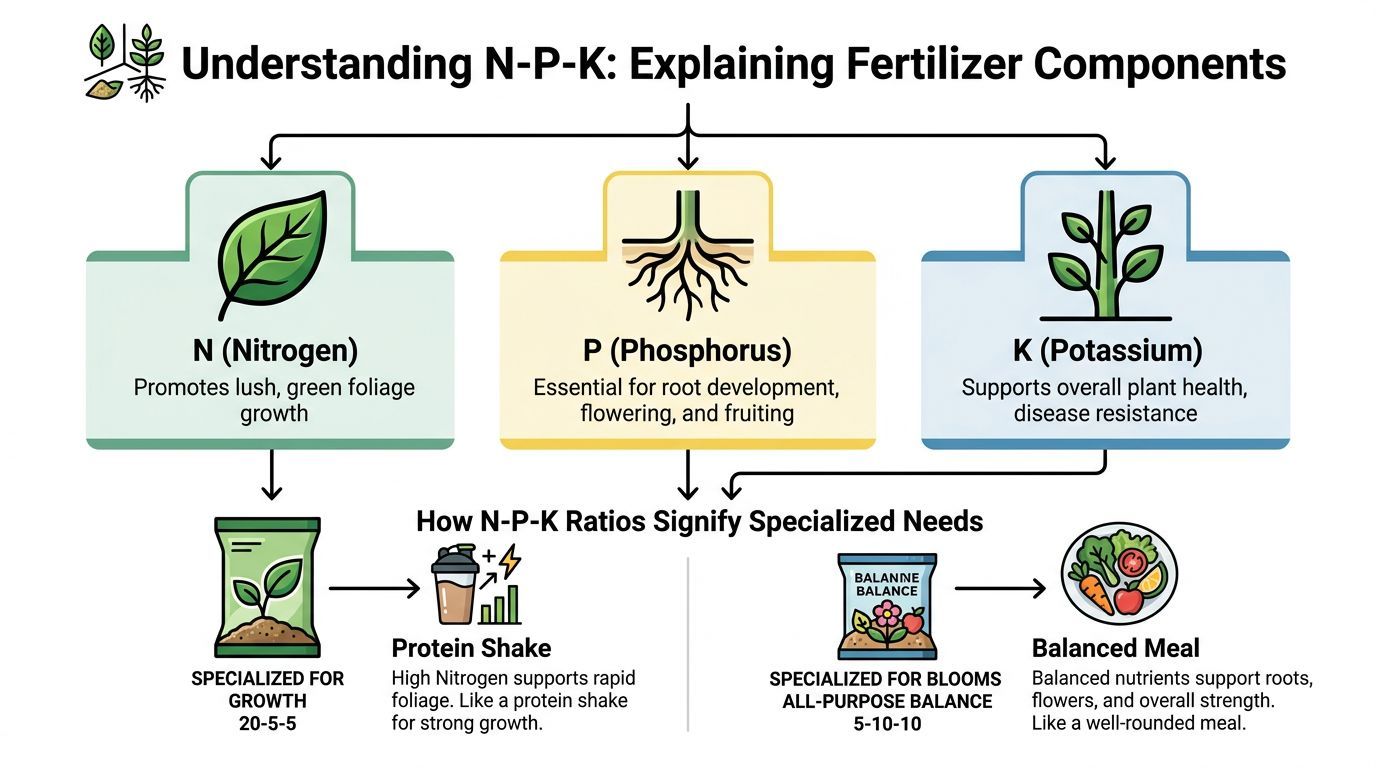
The three numbers on a fertilizer package are the N-P-K ratio. They stand for nitrogen, phosphorus, and potassium. This serves as a plant's meal plan.
A balanced formula is like an all-around dinner. A high-nitrogen formula is more like a protein shake. It's designed for a specific job, not every job.
- Nitrogen first helps leafy growth and green color
- Phosphorus second supports roots, flowering, and fruiting
- Potassium third supports overall plant health and stress tolerance
If the first number is much higher than the others, you're looking at a fertilizer that emphasizes nitrogen. A ratio such as 20-5-5 signals a different purpose than 5-10-10. The first one pushes vegetative growth. The second is less leaf-focused.
For a deeper label breakdown, this guide to understanding plant fertilizer numbers is a useful companion when you're comparing products.
The nitrogen form matters as much as the number
Two fertilizers can both look “high N” on the label and still behave differently in the pot. That's because nitrogen comes in different forms, mainly nitrate, ammonium, and urea.
Here's the simple version:
- Nitrate is immediately available to plants. It acts fast, but it also moves with water.
- Ammonium can stay put a bit more before changing in the root zone, but too much can be hard on sensitive plants.
- Urea needs conversion before the plant fully uses it, so its behavior depends more on growing conditions.
Michigan State Extension notes that high-nitrogen fertilizers technically supply nitrogen in these forms, and the form changes how quickly plants respond and how the root zone shifts over time. Their guidance also notes that ammoniacal nitrogen above about 30% can increase toxicity risk in sensitive crops, especially from late fall through early spring, as explained in this Michigan State Extension article on nitrogen forms.
Why this matters for home growers
If you grow in containers, the form of nitrogen matters a lot because the root zone is small and watering is frequent. A fast, nitrate-heavy fertilizer may give quick color. It can also flush through the pot quickly. A formula with a different balance of nitrogen forms may feed more gradually and cause fewer swings.
A high nitrogen number tells you the strength focus. The nitrogen form tells you how that strength behaves.
That's the piece many gardeners miss.
Common Types of High-Nitrogen Fertilizers
Once you know what “high nitrogen” means, the next question is practical. What kind should you buy?
You'll usually see two broad groups on the shelf. Synthetic fertilizers tend to be more precise and fast-acting. Organic fertilizers tend to feed more gently and also support soil texture and biology over time. Neither category is automatically right or wrong. The better choice depends on your plant, your potting setup, and how often you water.
Healthy plants commonly contain about 3% to 4% nitrogen in their above-ground tissues and absorb nitrogen mainly as NO₃⁻ and NH₄⁺, according to Purdue Extension's nitrogen management guidance. That same guidance explains why form matters in practice. Nitrate moves with water, so it's more prone to leaching losses.
Synthetic versus organic in everyday use
Synthetic high-nitrogen fertilizers are often chosen when a grower wants a predictable, measurable response. They're common in soluble feeds, pellets, and specialty plant fertilizers. Some are quick-release. Others are coated or formulated to release more slowly.
Organic options are usually chosen when gentler feeding or gradual release is the goal. They can be especially useful in garden beds and for growers who want a softer nutrient push. In containers, they can work well too, but they may be less predictable if temperature and moisture fluctuate a lot.
High-Nitrogen Fertilizer Comparison
| Fertilizer Type | Typical N-P-K | Release Speed | Best For |
|---|---|---|---|
| Water-soluble synthetic high-N fertilizer | High first number, lower P and K | Fast | Quick green-up in active growth |
| Slow-release synthetic pellets | High or moderately high first number | Gradual | Containers, bonsai, houseplants, steady feeding |
| Urea-based fertilizer | Nitrogen-focused | Usually fast after conversion | Strong vegetative push where careful dosing is possible |
| Ammonium-based fertilizer | Nitrogen-focused | Moderate to fast | Situations where nitrate loss is a concern |
| Fish emulsion or similar organic liquid | Nitrogen-forward | Moderate | Gentle feeding for actively growing plants |
| Blood meal or other dry organic nitrogen source | Nitrogen-forward | Moderate | Garden beds and outdoor growing |
| Composted manure blends | Usually lower and gentler | Slow | Soil-building with mild nitrogen support |
How gardeners usually decide
A few simple patterns help:
- Choose fast-release when a plant is clearly nitrogen-hungry and actively growing now.
- Choose slow-release when you want even feeding and fewer sharp swings.
- Choose gentler organic sources when you want a softer response or you're building garden soil over time.
- Choose caution over speed for bonsai, seedlings, and small pots where overfeeding shows up quickly.
If you've ever scorched a plant with fertilizer, you already know the downside of the “more is better” mindset. High nitrogen is powerful. Power is useful when it's controlled.
Which Plants Need a High-Nitrogen Boost
You fertilize a plant, and a week later the leaves are bigger, greener, and softer. That can be a good sign. It can also be a clue that you fed for the wrong job.
High-nitrogen fertilizer is most useful when a plant is building stems and leaves. Nitrogen is the part of the meal that fuels green growth. If the plant is trying to make a canopy, recover from pruning, or push a fresh spring flush, extra nitrogen often helps. If the plant is trying to bloom, fruit, stay tight, or harden off, the same fertilizer can push it off course.
Plants that often benefit
Leaf-focused plants are the clearest match.
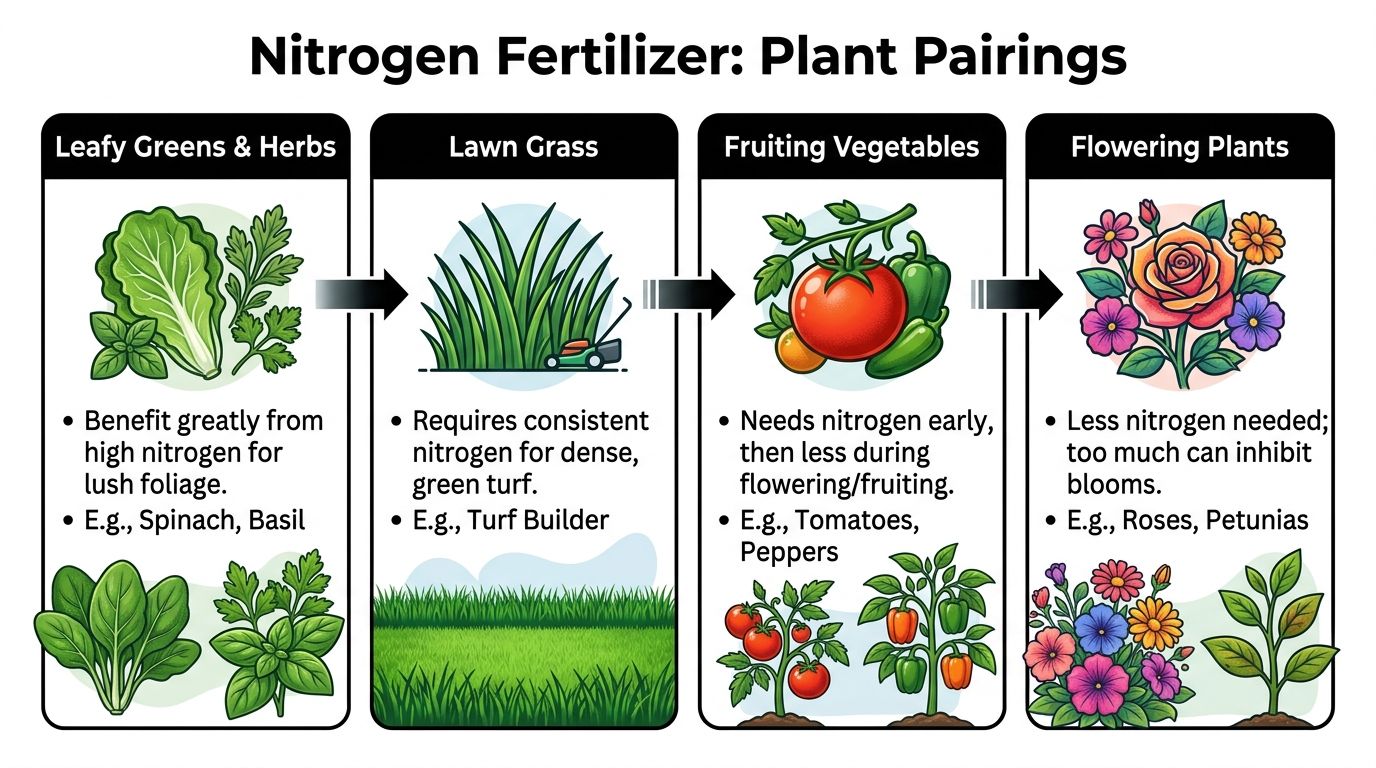
- Leafy greens such as lettuce, spinach, and many herbs usually respond well during active growth
- Lawns and grassy ornamentals often use nitrogen to keep blades dense and green
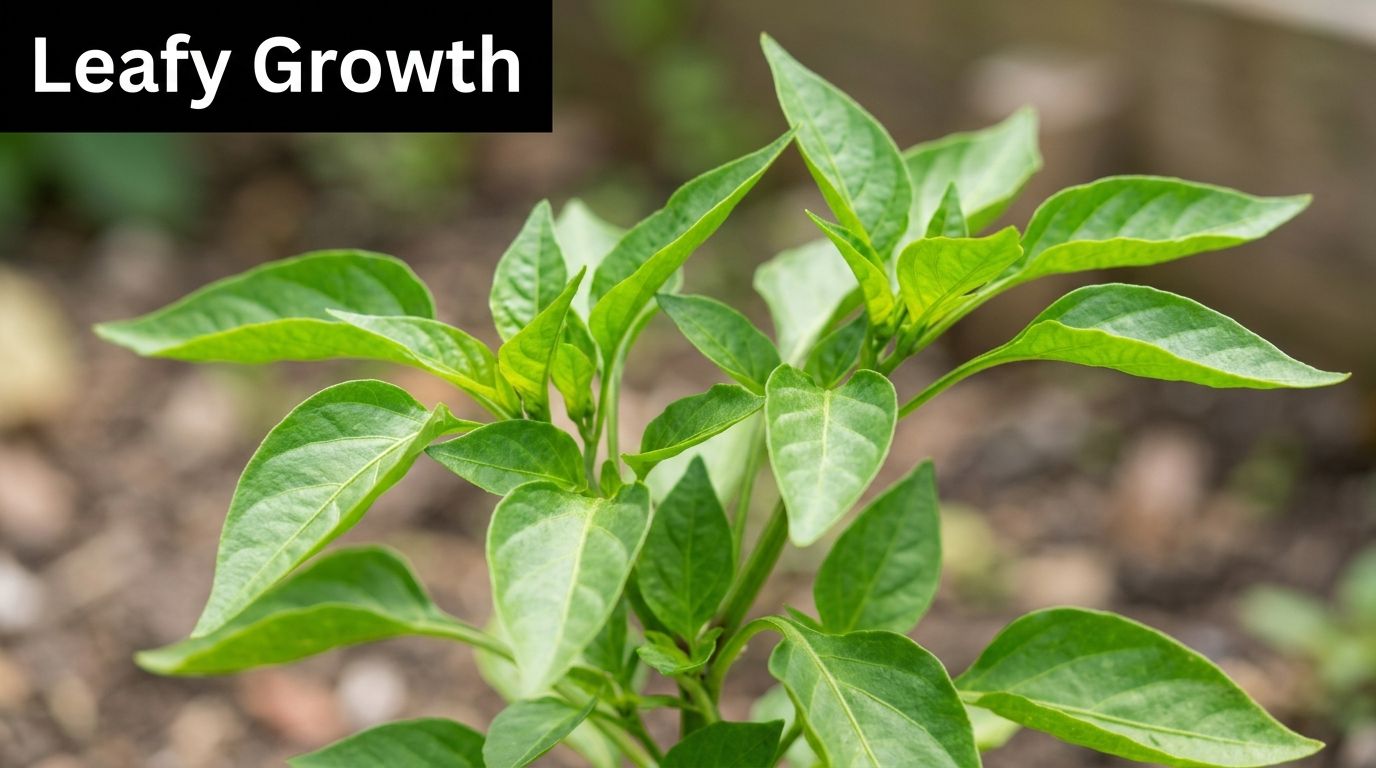
- Foliage houseplants such as pothos, philodendrons, monsteras, and fiddle leaf figs often appreciate more nitrogen when they are actively producing new leaves
- Bonsai in a spring growth flush may benefit from steady, measured nitrogen while rebuilding canopy after dormancy or pruning
- Young plants often need more nitrogen early, while they are still building roots, stems, and leaf area
The part gardeners often miss
The same plant may want different feeding at different times.
Tomatoes, peppers, and cucumbers are good examples. Early on, they need enough nitrogen to build the leafy framework that will support later fruit. Keep pushing high nitrogen after that point, and the plant may keep spending energy on leaves instead of flowers and fruit. Flowering ornamentals can react the same way. You get lush foliage, but fewer blooms.
Container plants need even more judgment. In a garden bed, roots can spread out and soil can buffer mistakes. In a small pot, every feeding is concentrated. Bonsai, herbs on a windowsill, and houseplants in nursery pots can swing from hungry to overfed fast. For those plants, the right type and timing matter as much as the N number on the label.
Plants and situations that need restraint
Some plants usually need a lighter hand with nitrogen.
- Succulents and cacti can grow too fast and become weak or stretched
- Flowering plants near bud set or bloom may produce more leaves than flowers if fed too heavily
- Fruiting plants after flowering starts often need a more balanced approach than a strong nitrogen push
- Slow-growing houseplants in winter usually do little with extra nitrogen because growth has already slowed
- Small containers and shallow bonsai pots can build up excess fertilizer salts quickly
A simple question helps: what is the plant trying to do right now?
If the answer is “make leaves,” high nitrogen may fit. If the answer is “flower,” “fruit,” or “stay compact,” use a milder or more balanced fertilizer and feed less aggressively. If you suspect you already pushed too far, this guide on how to rescue an overfertilized plant can help you read the symptoms and respond before more damage shows up.
How to Apply High-Nitrogen Fertilizer Safely
Applying nitrogen safely is less about luck and more about timing. Plants use nitrogen best when they're actively growing. If you apply too early, too heavily, or into a root zone that can't hold it well, some of that fertilizer won't help the plant at all.
Professional crop timing shows the same principle. U.S. farmers vary timing by crop so plants can use nitrogen closer to periods of demand. USDA data show that cotton farmers applied 59% of their nitrogen after planting, while corn farmers applied 22% after planting, according to this USDA chart on nitrogen application timing. Home growers don't need to farm on that scale to use the lesson. Feed when the plant is ready to grow.
A simple safety checklist
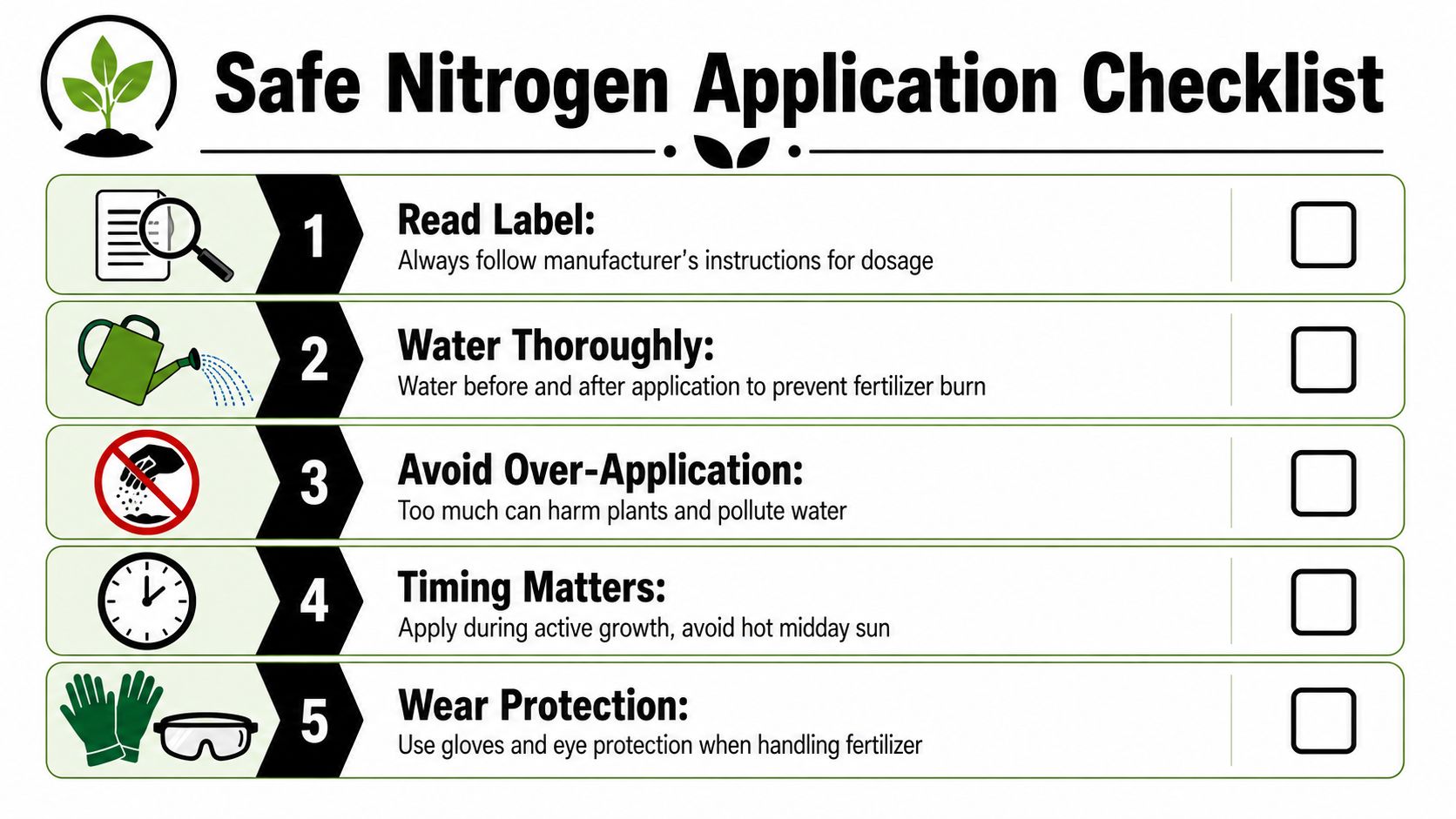
- Read the product label carefully because different nitrogen forms and delivery systems behave differently
- Apply during active growth rather than when the plant is resting or struggling from heat, cold, or stress
- Water the root zone properly so dry roots don't get hit with a concentrated fertilizer shock
- Use the smallest effective dose especially in bonsai pots, cachepots, and small nursery containers
- Keep granules off leaves and stems unless the product is specifically designed for foliar use
A lot of overfertilizing happens because gardeners mistake pale leaves or slow growth for “not enough fertilizer,” when the actual issue may be poor light, root stress, or inconsistent watering.
Timing matters more than people think
Nitrogen is mobile. In practical terms, that means water moves it. So if you add a big dose to a pot that gets frequent watering, some of that feed may leave before the plant can use much of it.
That's why many indoor growers do better with either slow-release feeding or smaller, repeated doses. Both approaches lower the chance of root burn and reduce the “feast then flush” cycle that happens in containers.
For a visual walkthrough of careful feeding technique, this video is helpful:
If you already used too much
Leaf tip burn, crusty soil residue, sudden wilting after feeding, and unusually limp growth can all point to overfertilizing. If that sounds familiar, this guide on how to rescue a plant after overfertilizing walks through the cleanup process.
Watch for this: A plant can look greener right after a heavy nitrogen feeding and still suffer later from root stress or imbalance.
Choosing the Right Nitrogen Fertilizer for Your Plants
The smartest way to choose a plant fertilizer high in nitrogen is to stop asking, “Which one has the biggest N number?” and start asking, “Which one fits this plant, in this container, with this watering pattern?”
That shift is especially important for bonsai and houseplants. In a garden bed, the soil gives you some margin for error. In a pot, the margin is much smaller. Water moves through quickly. Salts can build up. Roots sit close to the fertilizer source. So the type of nitrogen delivery matters just as much as the label ratio.
Oregon State Extension notes that in sandy soils or containers watered frequently, slow-release fertilizers or more frequent, lower-dose applications are often better than a single large dose of a quick-release product, as explained in this garden fertilizer selection guide from Oregon State Extension.
For houseplants and bonsai
Most container growers do best with steady, moderate feeding instead of dramatic feeding. Slow-release pellets are often a practical fit because they reduce washout and smooth out the growth pattern.
For example, a product such as Leaves & Soul 18-6-8 slow-release Bonsai Fertilizer Pellets or a houseplant-focused slow-release pellet such as 16-5-11 can make sense for growers who want a sustained nitrogen supply in pots rather than a sharp quick-release spike. That's especially useful for plants that are watered on a regular schedule and for growers who don't want to mix liquid feed every time.
If you prefer organic options, this guide to the best organic fertilizer for plants can help you compare gentler choices.
For edible gardens
Vegetable beds need a more nuanced decision.
- Leafy greens and herbs usually benefit from stronger nitrogen support while they're making harvestable foliage
- Tomatoes, peppers, and other fruiting plants often need nitrogen earlier, then a lighter hand once flowering and fruit set become the priority
- Root crops usually don't need the same leafy push as lettuce or basil
The mistake here is common. Gardeners see a thriving, green tomato and assume the fertilizer worked perfectly. If fruiting is slow, though, the plant may be getting more leaf encouragement than reproductive encouragement.
For succulents, cacti, and orchids
These groups usually call for restraint rather than a high-nitrogen push.
Succulents and cacti can become weak and stretched if fed too heavily with nitrogen-rich products. Orchids also tend to need more careful, specialized feeding than a generic high-N approach. These aren't plants you usually improve by choosing the highest first number on the label.
A simple decision filter
When you're standing in front of fertilizer options, use this checklist:
- What is the plant trying to do right now. Make leaves, bloom, fruit, or rest?
- Is it in a container or the ground. Containers usually favor more controlled delivery.
- How often do you water. Frequent watering usually favors slow-release or lighter repeated feeding.
- How sensitive is the plant. Bonsai, succulents, and small pots need more caution.
- Do you want speed or stability. Quick green-up and steady long-term feeding are not the same thing.
That's how you stop buying by label hype and start buying with purpose.
Avoiding Nutrient Imbalance and When to Test Your Soil
A plant can look underfed and still not need more nitrogen.
That is the point where many gardeners waste fertilizer, especially with houseplants and bonsai in small pots. Pale leaves, slow growth, and weak color can come from tired potting mix, compacted roots, poor light, salt buildup from past feedings, or a pH problem that keeps nutrients out of reach. Adding more nitrogen in that situation is like pressing the gas pedal when the parking brake is still on.
For garden beds, a soil test makes the next decision much clearer. It shows whether nitrogen is low or whether phosphorus, potassium, pH, or organic matter is the bottleneck. That matters because the fix changes with the cause. A lawn or vegetable bed with low nitrogen may benefit from feeding. A bed with acceptable nitrogen but poor pH needs correction before fertilizer can do much good.
Containers need a different kind of check.
You usually learn more from the plant's setup than from the label on the fertilizer bag. Ask a few plain questions. Has the plant been in the same mix for a long time? Does water run straight through, or does it stay soggy? Are white crusts collecting on the rim or soil surface? Is the plant actively growing, or is it in a resting period? Those clues often tell you whether the next step is feeding, flushing the pot, repotting, or waiting for stronger growth conditions.
Timing matters here too. Fast-acting nitrogen suits a plant that is clearly in active growth and ready to use it. Slow-release nitrogen fits growers who water often and want smaller, steadier doses. For bonsai and houseplants, that steady approach often wastes less and lowers the chance of nutrient swings in a limited root zone.
The best fertilizer choice is often a diagnosis, not a stronger formula.
If growth seems off and you are unsure why, test the soil outdoors or review the container conditions indoors before feeding again. That small pause helps you choose the right type, rate, and timing of nitrogen instead of repeating the same guess.
If you want purpose-built fertilizers, soils, and bonsai supplies for indoor and outdoor growing, Leaves & Soul offers targeted options for houseplants, bonsai, succulents, orchids, and edible gardens so you can match the product to the plant instead of guessing.