


You're probably standing in the garden center with a cart half full already. Potting mix on the bottom, maybe a new hose nozzle, and then you hit the fertilizer aisle and stall out.
Rows of bright boxes and bottles all promise greener leaves, more flowers, faster growth, stronger roots. Some say all-purpose. Some say bloom booster. Some come as crystals, some as pellets, some as spikes. If you've ever searched for plant fertilizer at Home Depot and felt like every label was trying to outsell the next one, that reaction is normal.
The good news is that most of the confusion disappears once you know how to read the bag, match the form to your routine, and recognize when a big-box option is good enough versus when a specialty formula makes more sense.
Navigating the Fertilizer Aisle at Home Depot
Home Depot is built for broad gardening needs. That's why the fertilizer section usually mixes lawn products, flowering plant foods, vegetable formulas, and indoor plant fertilizers in one stretch of shelving. For a new gardener, that can make a basic question feel harder than it should be. “What do my plants need?”
A lot of people start with a familiar product because the branding feels safe. One example is Miracle-Gro Water Soluble All Purpose Plant Food, which Home Depot lists in a 1.5 lb package for indoor and outdoor plants and says has a non-burning formula that lasts for up to 2 weeks. That kind of product became common because it removes friction. One container, broad use, easy instructions.
What the aisle gets right
Big-box fertilizer shopping works well when your needs are general.
- You need convenience. You can grab fertilizer while buying soil, gloves, and mulch.
- You're feeding common plants. Basic foliage plants, annual flowers, and patio containers often do fine with a general-purpose formula.
- You want familiar brands. Household names became household names because they made plant feeding feel less specialized.
That last point matters more than people realize. Big-box retail helped turn fertilizer from a niche horticulture input into an ordinary part of home maintenance.
A practical way to shop that aisle is to ignore the marketing claims first and look for plant type, fertilizer form, and the three nutrient numbers.
What the aisle gets wrong
The weak point is precision. A broad-use fertilizer is often a compromise. It may be acceptable for many plants without being ideal for any one prized plant on your shelf.
That's why gardeners with bonsai, orchids, succulents, or fussy houseplants often outgrow the all-purpose section. The fertilizer didn't fail. It just wasn't specific enough.
How to Read Fertilizer Labels and Understand NPK
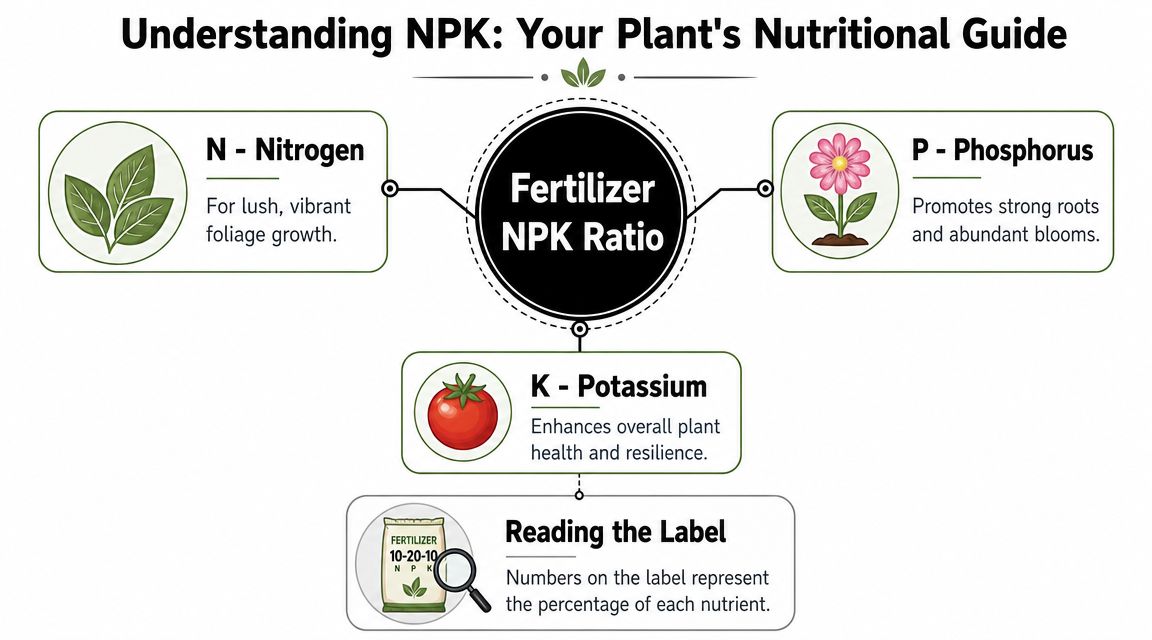
The most useful skill in the fertilizer aisle is reading NPK. Those three numbers are the core of almost every package.
Think of them this way:
- Nitrogen helps with leafy, green growth.
- Phosphorus supports roots and flower development.
- Potassium supports overall vigor and resilience.
That's the simple version. The technical point that matters most is this. Home Depot's fertilizer guide says the N-P-K analysis is expressed by weight, so a formula such as 22-23-4 contains 22% nitrogen, 23% phosphorus, and 4% potassium by weight in the product, as explained in Home Depot's fertilizer guidance.
What the numbers actually tell you
A fertilizer label is not grading quality. It's describing composition.
If you pick up two containers of different sizes with the same ratio, the ratio still means the same thing. The package size changes how much total product you have. It doesn't change the nutrient balance.
That's where many gardeners get tripped up. They assume a larger box means a stronger feed. Sometimes it only means more product.
For a deeper breakdown of how those three numbers affect different plant goals, this guide to plant fertilizer numbers is useful reading before you buy.
A quick way to use NPK in the store
When I help someone choose fertilizer, I usually reduce it to three questions:
-
Is the plant grown for leaves?
Foliage plants usually respond best to formulas that don't skimp on nitrogen. -
Is the plant grown for flowers or fruit?
Blooming and fruiting plants often need a formula that doesn't treat leaf growth as the only priority. -
Is the plant sensitive to overfeeding?
Many specialty plants need a gentler hand more than they need a stronger formula.
Practical rule: First match the fertilizer to the plant's job. Then match the application rate to the pot size and growth stage.
Why one formula doesn't fit everything
Home Depot's own guidance points out that a hanging basket of petunias, a vegetable garden, and a shrub like azalea need different formulas at different rates. That's a useful reminder. Even if two products both say “plant food,” they may be built for very different outcomes.
A label starts the decision. It doesn't finish it.
Comparing Liquid Granular and Spike Fertilizers
Once you understand the label, the next question is form. Most Home Depot shoppers end up choosing between liquid, granular, and spike fertilizers.
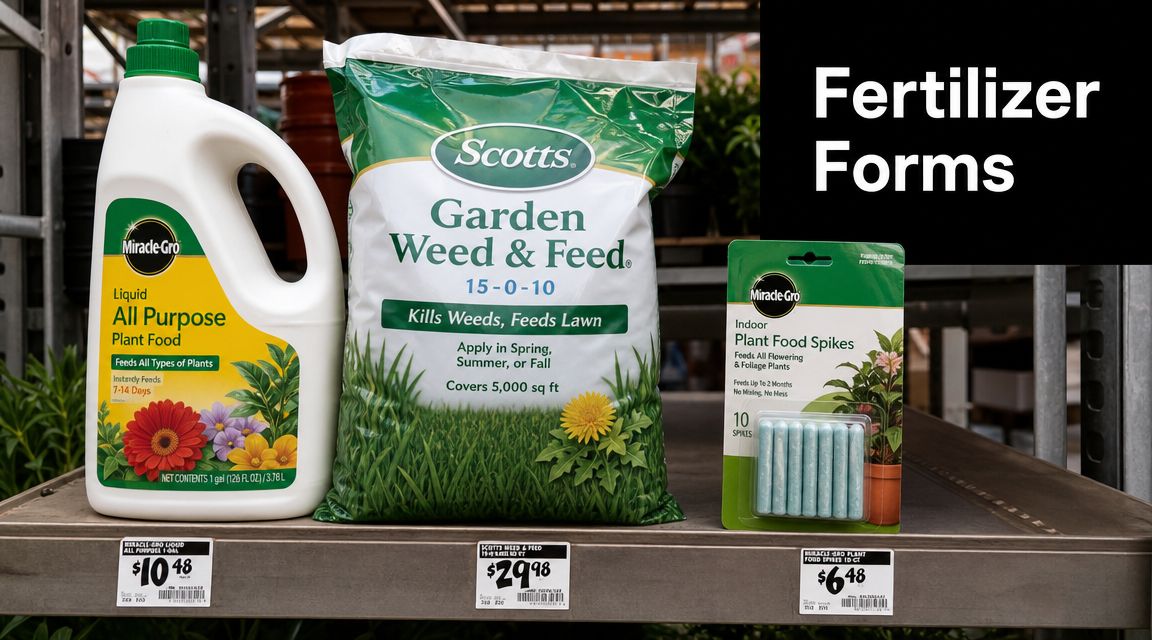
Liquid fertilizer
Liquid products are the fastest to work into a routine because they pair with watering. For indoor gardeners, that's often the easiest habit to maintain.
They're especially practical when:
- You need quick correction. A plant that looks pale or stalled may respond faster to a liquid feed.
- You like control. You can usually dilute with precision and adjust as needed.
- You're feeding containers. Potted plants often benefit from more regular, lighter feeding.
The downside is consistency. Liquid feeding works well only if you remember to do it. Miss applications and results get uneven.
Granular and slow-release fertilizer
Granular fertilizers cover a wide range. Some feed relatively quickly. Others are coated or designed to release nutrients slowly over time.
For busy gardeners, granules are often the most forgiving middle ground. You apply them less often, and the plant gets a steadier nutrient supply rather than feast-and-famine cycles.
If you want a solid primer on this category, this article on what slow-release fertilizer is explains why pellets and coated granules are often easier to manage for potted plants.
Slow-release products usually win on convenience. They don't always win on speed.
This video gives a useful visual sense of how common consumer fertilizers are presented and used:
Fertilizer spikes
Spikes appeal to people who want the least measuring possible. Push them into the soil and you're done.
That convenience comes with trade-offs:
| Form | What works well | What doesn't |
|---|---|---|
| Liquid | Fast response, easy for regular feeders | Needs repeated application |
| Granular | Good coverage, flexible use | Easy to overapply if you guess |
| Slow-release pellets | Steadier feeding, less frequent work | Not ideal when you need a quick correction |
| Spikes | Simple and tidy | Nutrients stay concentrated in limited zones |
Spikes can be fine for larger containers or woody plants where root systems spread through more of the pot. I'm less enthusiastic about them for delicate indoor plants in small pots. The nutrient placement is less even, and that matters when the root zone is tight.
Best Fertilizer Ratios for Your Specific Plants
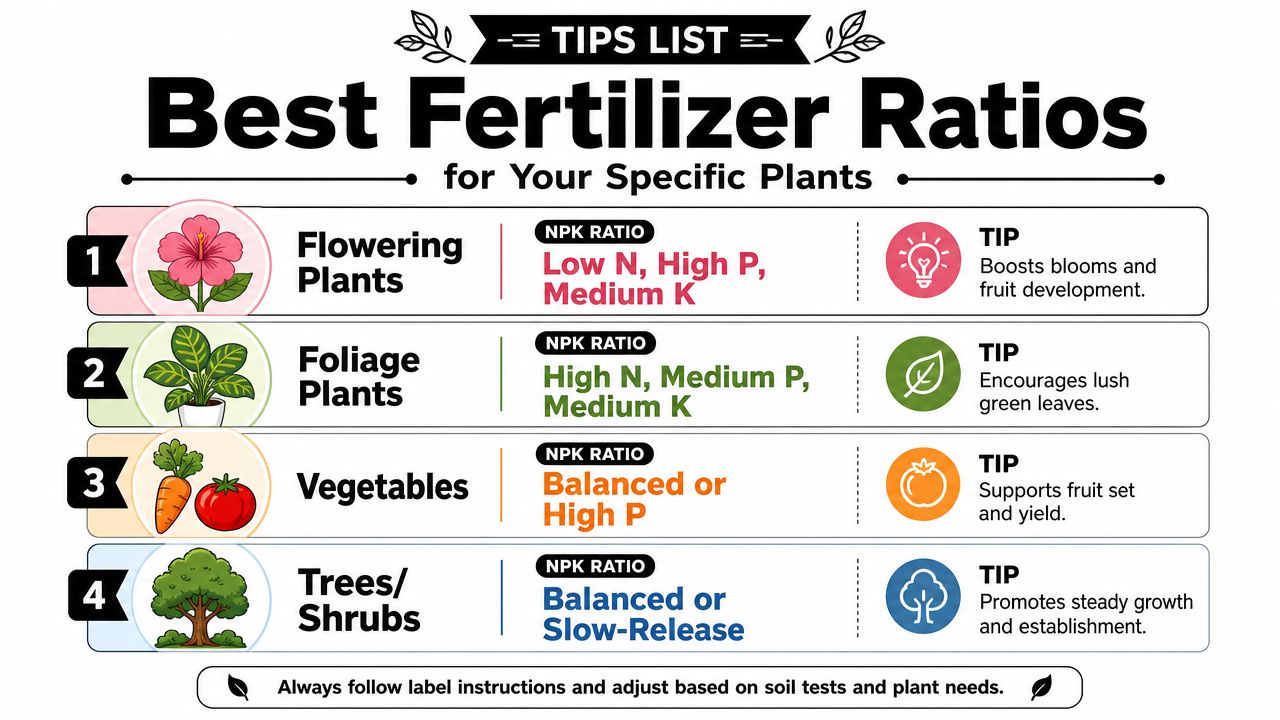
General-purpose fertilizer is fine for general-purpose gardening. Specialty plants are different. They're often slower, more sensitive, or grown for a very specific form such as compact growth, bloom quality, or leaf structure.
Bonsai and woody container plants
Bonsai growers usually aren't trying to push soft, fast growth. They want controlled vigor, healthy roots, and compact structure.
That's why a wildly unbalanced fertilizer can create problems. Too much emphasis on quick top growth can leave you pruning correction after correction. For bonsai, balanced feeding or a measured slow-release approach usually makes more sense than a generic “bigger blooms” or “rapid green-up” product from the shelf.
Houseplants and foliage growers
Fiddle leaf figs, monsteras, philodendrons, and similar houseplants are usually grown for leaf mass and appearance. They typically benefit from formulas that support foliage without forcing weak, stretched growth.
A broad all-purpose fertilizer from Home Depot can work here, especially if the plant is healthy and the grower is careful with dosage. But if your plant is expensive, mature, or temperamental, a formula targeted to foliage plants usually gives you tighter control over results.
If a plant lives indoors year-round, I'd rather underfeed slightly and stay consistent than swing between heavy feeding and neglect.
Succulents and cacti
This is one of the most common mismatch categories in the big-box aisle. Succulents and cacti don't want the same feeding style as a fast-growing tropical houseplant.
They usually respond better to lighter feeding and more restraint. A rich, high-nitrogen product can encourage growth that looks lush at first but becomes soft or poorly shaped. For these plants, a gentler formula and a less aggressive schedule usually work better than an all-purpose feed mixed for broad use.
Orchids and bloom-focused plants
Orchids make people overcomplicate fertilizer, but the primary issue is usually consistency and concentration. They don't need random product switching. They need an appropriate formula used lightly and regularly.
Blooming plants in general often need something different from foliage plants. If your main goal is flowers, flower spikes, or bloom longevity, don't shop by brand first. Shop by intended plant use.
A practical shortcut
If you're comparing products and feel stuck, use this filter:
- Leaf-first plants usually need a foliage-oriented formula.
- Bloom-first plants need a bloom-aware formula.
- Slow, sculpted, or collectible plants usually deserve a more specialized product.
- Drought-adapted plants need restraint more than force.
That's where the “good, better, best” idea becomes useful. Home Depot gives you the good option for broad care. A more targeted formula is often better for plant groups. A dedicated specialty fertilizer is often best when the plant is valuable to you and the margin for error is smaller.
Buying at Home Depot vs a Specialty Plant Shop
Home Depot is excellent at one thing: availability. If you need fertilizer today, there's real value in walking into one store and leaving with what you need.
That scale is part of a bigger retail reality. The global fertilizer market was valued at about $192 billion in 2023, and some projections put it at roughly $283 billion by 2032, while Home Depot reported about $159.5 billion in fiscal 2024 revenue and approximately 470,100 associates, according to the Home Depot company overview. For shoppers, that means fertilizer sits inside a huge retail system built to move broad-use products efficiently.
Good, better, best
The easiest way to think about it is this:
- Good means you need a dependable general fertilizer quickly.
- Better means you've identified your plant category and want a closer fit.
- Best means the plant is specialized enough that precision matters.
Here's the side-by-side view.
| Attribute | Home Depot | Specialty Shop (e.g., Leaves & Soul) |
|---|---|---|
| Product range | Broad, general gardening assortment | Narrower, more plant-specific selection |
| Shopping experience | One-stop purchase with soil, pots, and tools | More focused on matching plant type to formula |
| Best use case | Common houseplants, outdoor containers, basic seasonal feeding | Bonsai, orchids, succulents, fiddle leaf figs, collector plants |
| Trade-off | Convenience over precision | Precision over instant access |
| Label complexity | Many choices mixed together on the shelf | Usually easier to shop by plant category |
| Advice style | General retail guidance | More specialized product intent |
When Home Depot is enough
If you're feeding pothos, petunias, herbs, and a few porch planters, Home Depot is often enough. A broad-use fertilizer can get the job done if you apply it correctly and don't overdo it.
When a specialty shop makes more sense
A specialty shop earns its place when the plant itself justifies more precise nutrition. Bonsai is the clearest example. Orchids are close behind. Succulents, cacti, and premium indoor foliage plants also fit this category because poor fertilizer matching shows up quickly in shape, color, or root health.
The mistake isn't buying from a big-box store. The mistake is assuming every plant should be treated like a generic patio annual.
Upgrading Your Plant Care with Leaves & Soul
Once you know the difference between general feeding and plant-specific feeding, your buying decision gets simpler. You stop asking, “Which package looks strongest?” and start asking, “Which formula fits this plant and my care routine?”
For a lot of gardeners, Home Depot remains the practical stop for everyday needs. But if you're caring for bonsai, fiddle leaf figs, succulents, cacti, or orchids, a specialty catalog is often easier to shop because the products are already sorted around those plant types rather than blended into a mass-market shelf.
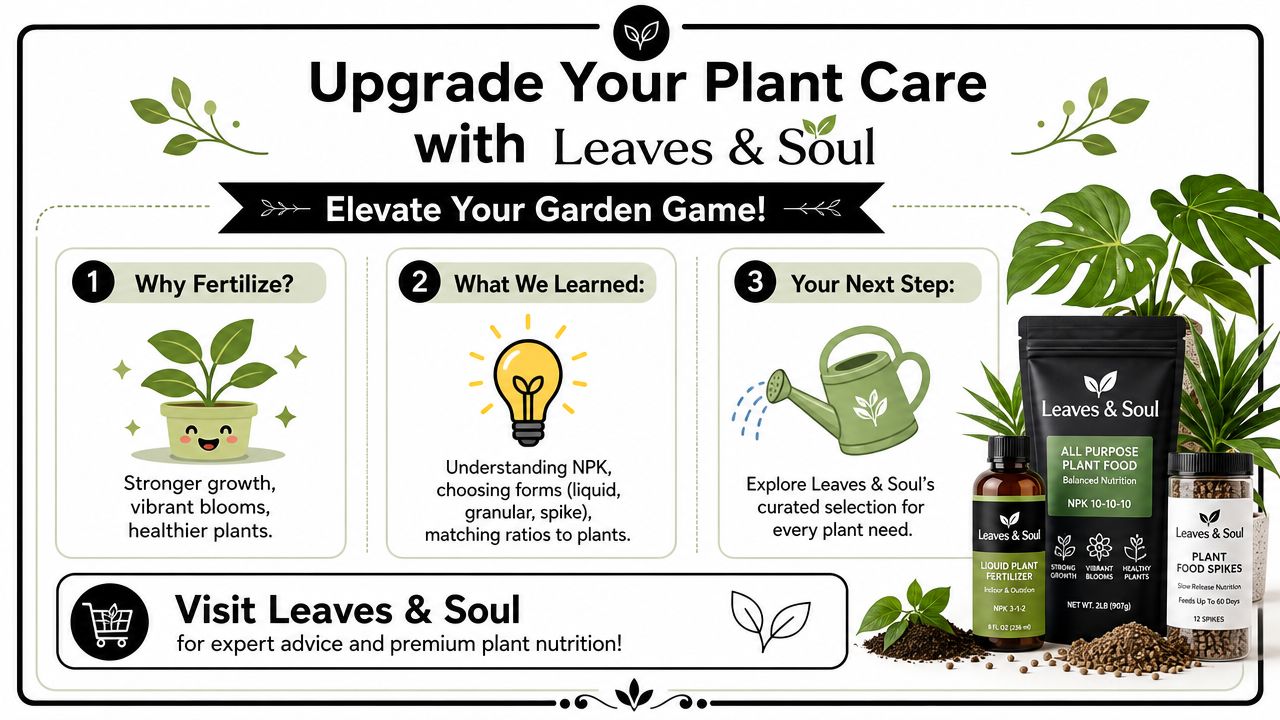
Leaves & Soul carries targeted options that line up with that approach, including bonsai pellets, houseplant pellets, and a Professional Indoor Plant Fertilizer for growers who prefer liquid feeding. That doesn't make big-box fertilizer wrong. It means the specialty route can reduce guesswork when your plant collection gets more specific.
Buy broad-use fertilizer for broad-use plants. Buy specific fertilizer for plants that punish vague care.
That's the cleanest way to approach plant fertilizer at Home Depot versus a specialty provider. Start with convenience when convenience is enough. Move to precision when the plant calls for it.
If you want more plant-specific nutrition, curated soils, and fertilizers matched to bonsai, houseplants, succulents, cacti, orchids, and edible growers, browse Leaves & Soul for targeted options that fit the way you garden.