


You bought a succulent because it looked easy. Then a few weeks later, the leaves turned soft, the stem stretched toward the window, or the whole plant seemed to stall out for no obvious reason.
That’s a normal place to start.
Succulents get labeled as “low maintenance,” but that phrase causes a lot of confusion. They aren’t hard to grow. They just follow a different set of rules than most houseplants. Once you understand those rules, succulent plant care tips stop feeling like random instructions and start making sense.
Understanding Your Succulent's Basic Needs
Succulents are built for survival in dry places. Their thick leaves, stems, and roots store water, which is why people often call them the camels of the plant world. That one comparison explains almost everything about how to care for them indoors.
A peace lily wants steady moisture. A fern likes humidity and regular drinks. A succulent does not. It’s carrying its own water supply, so it can wait much longer between waterings.
Why succulents act differently from other houseplants
In their native habitats, succulents evolved to handle long dry stretches followed by generous but occasional moisture. Their roots are usually shallow and efficient at grabbing water quickly. Indoors, that same design becomes a weakness if the pot stays wet too long.
When soil stays soggy, roots can’t get enough air. That’s when rot starts. The plant may still look fine for a little while, which is why beginners often keep watering and accidentally make the problem worse.
Practical rule: Treat a succulent like a plant that stores water, not a plant that needs water on a schedule.
This is the mental model to keep in your head. Succulents don’t want constant care. They want the right care at the right moment.
What your plant is trying to tell you
The leaves are your best clue.
- Firm, plump leaves usually mean the plant is well hydrated.
- Soft, limp, or wrinkled leaves often mean it’s thirsty.
- Yellowing or curling leaves can point to excess moisture.
Those signs matter more than habit. If you water every Saturday no matter what, you’ll miss what the plant is saying.
The three basics that matter most
Most indoor succulent success comes down to three conditions working together:
- Strong light so the plant can grow compactly.
- Fast-draining soil so roots don’t sit in moisture.
- Careful watering with a full dry-out between drinks.
If one of those is off, the others get harder to manage. Good soil won’t fully rescue a succulent in dim light. Bright light won’t save a plant in a pot with no drainage hole.
That’s why beginners often feel confused. They’re usually not making one huge mistake. They’re dealing with a small mismatch between the plant’s natural design and the indoor setup around it.
Once you see that, the rest gets much easier.
Mastering Light and Placement for Healthy Growth
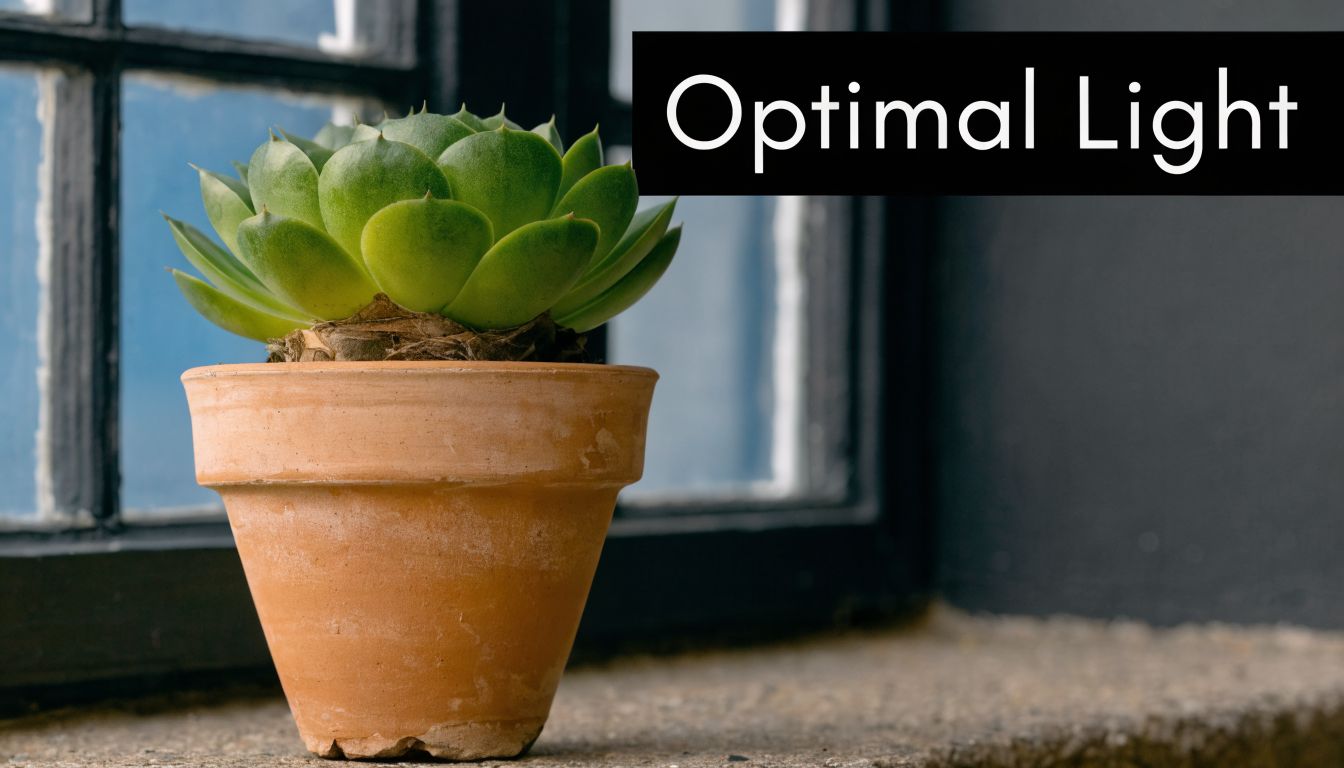
You set a succulent on a sunny-looking windowsill, check on it two weeks later, and it has started leaning like it is trying to escape the pot. That reaction usually comes down to one thing. The plant is not getting enough usable light to hold its shape.
Etiolation is the name for that stretched growth. Succulents grow this way for the same reason a camel stores water. They are built to survive harsh conditions, but they still need the right resources. With too little light, a succulent spends its stored energy reaching upward instead of building the tight, compact form people want indoors.
What good light actually means
“Bright light” is one of those plant phrases that sounds useful until you try to measure it in a real room. A better way to judge succulent light is by intensity and duration.
The University of Minnesota Extension explains that indoor light drops fast as you move away from a window, which is why a plant that seems close to daylight can still receive much less light than expected. You can read their guidance on lighting houseplants indoors. For many common succulents, a practical target is bright direct or very bright indirect light for much of the day, usually from a south or west window in the Northern Hemisphere.
If your home feels dim even in daytime, the room may need broader solutions for more natural daylight rather than constant plant shuffling from sill to sill.
A light meter app can help remove guesswork. As a working benchmark, many indoor growers aim for roughly 2,000 to 5,000 lux for several hours a day for common jade, echeveria, haworthia, and similar succulents. Lower-light tolerant types can manage with less, but rosette-forming succulents usually lose their shape first when light falls short.
How to choose the best spot
Start with the window before you buy equipment.
A south-facing window is usually the strongest option. West-facing windows often work well too, especially for sun-loving varieties. East-facing windows can support gentler growers, while north-facing windows are often too weak for compact growth unless you add supplemental light.
Two details confuse beginners all the time. First, glass filters and softens light. Second, distance matters more than many people expect. A succulent six inches from a window can receive far more light than one sitting three or four feet back on a shelf.
If you are also adjusting care by season, this succulent summer watering schedule pairs well with light changes, because stronger light and warmer temperatures usually change how fast the soil dries.
Signs your succulent needs more light
Succulents rarely hide light problems. They show them in their shape.
Watch for:
- Longer gaps between leaves
- Rosettes that flatten or open up
- Stems bending toward the window
- Smaller, weaker new growth
- Faded color in varieties that are normally richer green, blue, purple, or pink
Those changes are a diagnosis, not a failure. The plant is telling you its current spot does not match how it is built to grow.
When a grow light makes sense
Grow lights are useful when your windows cannot supply consistent intensity, especially in winter or in apartments with limited sun exposure. The Royal Horticultural Society recommends LED grow lights for indoor plants because they are efficient and practical for home use. Their guide on growing plants under lights is a solid reference.
For succulents, look for:
- Full-spectrum LED lights
- A color temperature around 4000K to 6500K
- Placement close enough to be effective, usually 6 to 12 inches above the plant unless the manufacturer says otherwise
- A timer set for about 12 to 14 hours daily for light-hungry types
The easiest sign that your setup is working is tighter new growth. Old stretched sections usually stay stretched. What improves is the growth that comes after the change.
How to fix a leggy succulent
Mild etiolation can improve just by moving the plant into stronger light and waiting for healthier new growth. Severe stretching often looks better after pruning and restarting the top.
Use this method:
- Move the plant into better light first. Give it a week or two to adjust.
- Cut the stem above a leaf node with a clean blade.
- Let the cutting dry for several days until the cut end forms a callus.
- Replant it in a gritty, fast-draining mix and keep it in bright light.
- Leave the base in its pot. Many succulents push out new offsets below the cut.
That may sound harsh the first time you do it. It helps to remember that succulents are naturally good at starting over from stems and leaves. A stretched plant is often fixable, and sometimes one leggy plant turns into two or three healthier ones.
The Art of Watering Without Drowning Your Plants
You bring home a plump, healthy succulent, set it on a sunny shelf, and water it a little every few days because you do not want it to dry out. Two weeks later, the leaves turn soft, yellow, or translucent. It feels backwards, but that kind of decline usually starts with too much care, not too little.
Succulents store water like camels store reserves for a long trip. Their leaves and stems are built to handle a thorough drink followed by a dry spell. Once that clicks, watering stops feeling mysterious.
Use the soak and dry method
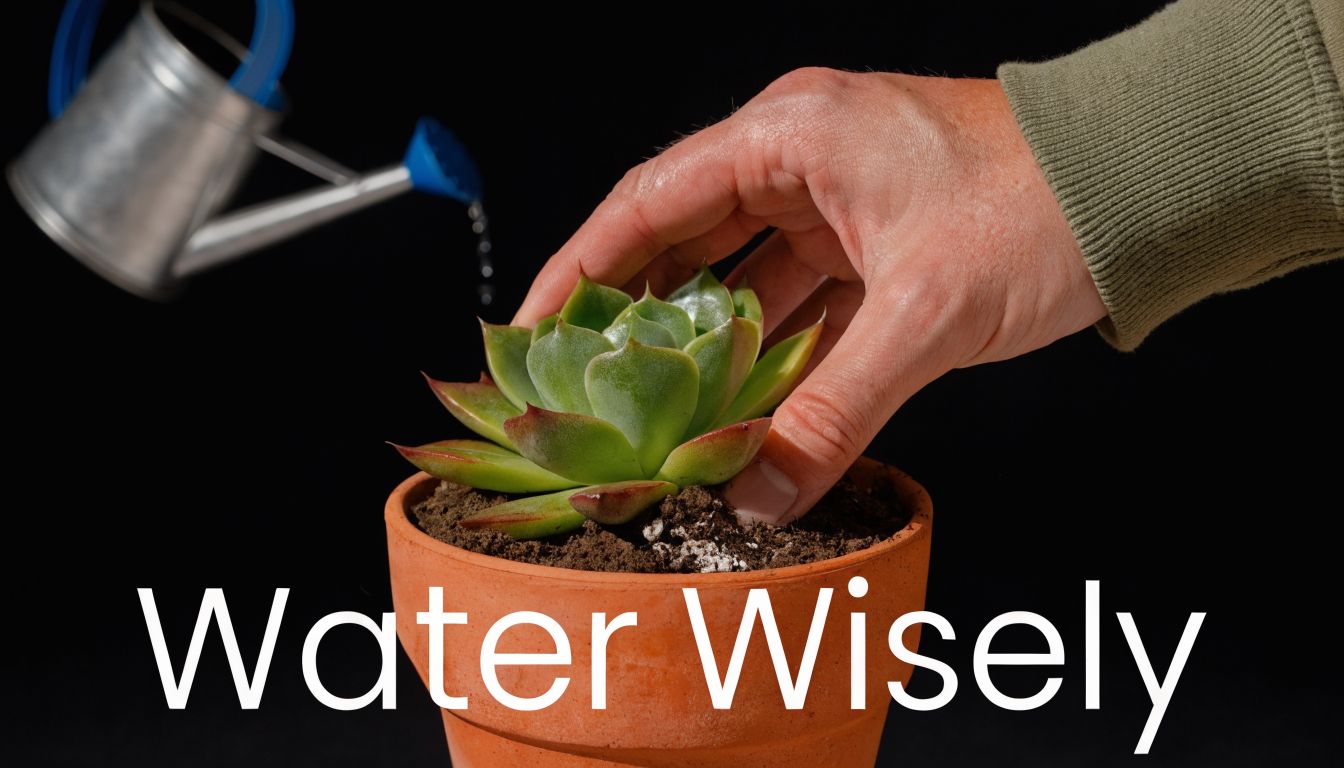
The goal is to wet the entire root ball, then let the soil dry before you water again. Succulent roots need both moisture and oxygen. If the mix stays damp all the time, roots struggle to breathe and rot can follow.
Use this cycle:
- Water thoroughly until water runs out of the drainage hole.
- Let excess water drain away fully.
- Wait until the soil is dry through the pot before watering again.
This simple cycle is the core of effective succulent watering. It matches how these plants grow in nature, where rain arrives in occasional bursts instead of constant light sprinkles.
Skip misting, ice cubes, and tiny top-offs. Those habits often moisten only the surface and train roots to stay shallow, while the lower part of the pot stays unevenly damp.
How often should you water
There is no single perfect schedule, because watering speed depends on light, temperature, airflow, pot size, and soil mix. A succulent in strong light and a small terracotta pot can dry far faster than one in a larger glazed pot across the room.
For many indoor growers, spring and summer may mean watering about once a week or every 10 days. In winter, some plants need water only every 3 to 4 weeks. Treat those numbers as a starting range, not a rulebook.
If you want a season-specific baseline, this summer succulent watering schedule for hot-weather care helps you compare your setup with your plant’s growth pattern.
How to tell when the soil is actually dry
This is the part that trips people up most. The top half-inch can feel bone dry while the center of the pot is still wet.
Check more than one signal:
- Touch below the surface if you can, not just the crust on top.
- Lift the pot right after watering, then again a few days later. Dry soil feels much lighter.
- Use a wooden skewer or chopstick and insert it near the edge of the pot. If it comes out cool or damp with soil sticking to it, wait.
- Look at the leaves. Slight softness or gentle wrinkling often means the plant is ready for water.
- Watch for warning signs of excess moisture, such as yellowing, mushiness, or translucent leaves.
If you are torn between watering today or waiting two more days, waiting is usually the safer call.
A larger plant may also need a longer soak so water reaches the full root zone. Some growers water big specimens until runoff appears, wait a minute, then water once more before letting the pot drain completely.
A short visual demo can help if you’re still unsure what a deep soak should look like:
Watering mistakes that look like care
The pattern matters more than the exact day on the calendar.
| Habit | What it does |
|---|---|
| Frequent shallow watering | Keeps the upper roots lightly wet and encourages unstable moisture levels |
| Deep soak with full dry-out | Reaches the full root system, then gives roots air as the mix dries |
| Pot with no drainage | Holds water at the bottom of the pot where rot often begins |
| Watering on a fixed calendar only | Ignores changes in season, growth rate, room temperature, and light |
One more point causes confusion. Wrinkled leaves do not always mean thirst, and yellow leaves do not always mean age. If the soil is still damp, adding more water usually makes the problem worse.
A good watering routine is simple, but it is not casual. Water thoroughly. Let the soil dry fully. Repeat based on the plant’s signals, not your worry.
Building the Ideal Home with Proper Soil and Pots
You bring home a healthy succulent, water it carefully, set it in a bright spot, and two weeks later the base turns soft. That problem often starts below the surface.
Succulents store water like camels. Their roots need the opposite environment from thirsty tropical plants. Instead of sitting in a damp sponge of soil, they do best in a gritty mix with fast drainage and plenty of air.
Why regular potting soil often fails
Standard houseplant mix is designed to stay evenly moist. That helps pothos or peace lilies. It works against most succulents.
The main issue is oxygen. Roots need tiny air pockets between soil particles. In a dense mix, those spaces fill with water and stay filled too long. Fine roots begin to suffocate, then rot follows. If your plant seems to decline even though you are not watering often, the soil may be holding moisture longer than the roots can tolerate.
What a better succulent mix looks like
A good succulent mix drains quickly, dries evenly, and still gives roots enough contact to anchor the plant. The University of Illinois Extension recommends a loose cactus and succulent medium and notes that these plants prefer a slightly acidic to neutral pH, around 6.0 to 6.5, which helps explain why ordinary heavy potting soil can create problems for long-term root health (University of Illinois Extension succulent care guidance).
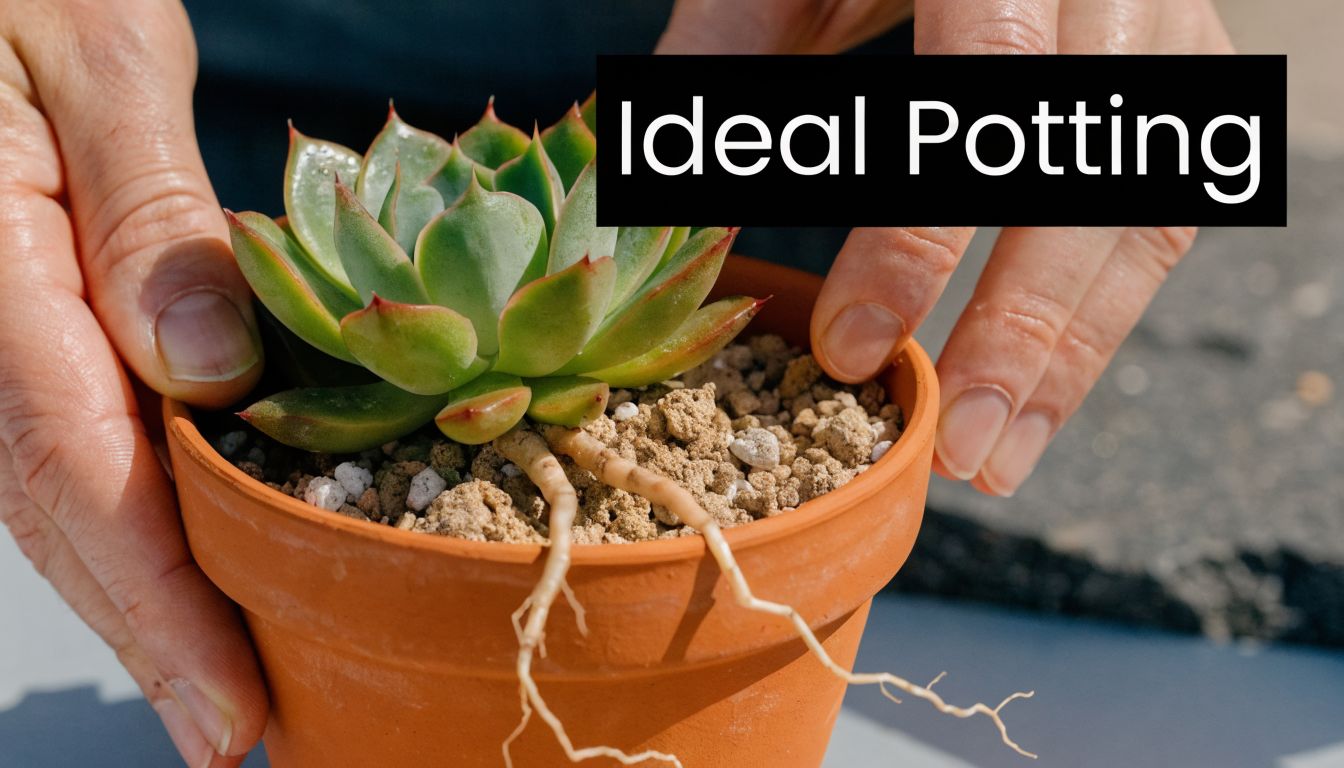
A practical home mix often includes these parts:
- A base material, such as potting soil or loam, for structure
- A coarse mineral ingredient, such as coarse sand, pumice, or grit, to speed drainage
- An aeration ingredient, such as perlite, to keep air spaces open
- A modest moisture-balancing ingredient, such as coco coir, if your climate is very dry
A simple way to judge your mix is with your hands. Dry succulent soil should feel crumbly and gritty, not fluffy like seed-starting mix and not heavy like wet garden mud.
If you want a more detailed breakdown of ingredients and ratios, this guide to the best soil mix for succulents that won’t rot their roots gives useful examples.
A quick drainage test you can actually use
Garden advice often stops at "use well-draining soil," which leaves a big question unanswered. How do you know if your mix is draining well enough?
Try a simple pot test. Water the pot thoroughly, then watch what happens. In a suitable mix, water should begin exiting the drainage hole within seconds, not sit on top for a long stretch or pool in the pot. After a full soak, the container should feel noticeably lighter within a day or two in active growing conditions, depending on pot size, light, and room temperature.
That gives you something concrete to observe instead of guessing from the top inch of soil.
Signs the soil is the real problem
Poor drainage often shows up as symptoms people blame on watering frequency alone:
- Soft or translucent lower leaves
- Yellowing that starts near the base
- A stem that looks blackened or mushy at soil level
- Roots that appear brown, slimy, or hollow during repotting
- A plant that stays loose in the pot because roots have died back
These symptoms can confuse beginners because thirsty succulents and rotting succulents can both look stressed. The difference is in the tissue. Dehydrated leaves usually wrinkle and feel thinner. Rotting leaves often feel soft, swollen, or wet.
Choosing a pot that helps instead of hurts
Pots change how fast the mix dries. Terracotta works like a breathable clay canteen. It releases moisture through the walls, which helps the root zone dry more evenly. Glazed ceramic and plastic hold moisture longer, so they can still work, but only if the soil is extra fast-draining and the pot has a drainage hole.
Keep the pot close to the size of the root ball. An oversized container leaves too much damp soil around a small root system, and that extra wet space raises the risk of rot.
Use this quick checklist:
- Drainage hole: required
- Pot size: about 1 to 2 inches wider than the root mass
- Material: terracotta if you tend to overwater, glazed ceramic or plastic if your home is very dry
- Depth: shallow pots often suit rosette and small-rooted succulents better than deep pots
The goal is simple. After a deep watering, the mix should wet thoroughly, then return to a dry, airy state before the plant needs water again. When the soil and pot are set up well, succulent care gets much easier because the container is working with you, not against you.
A Guide to Fertilizing and Repotting Succulents
You repot a succulent, give it a splash of fertilizer, and expect a growth spurt. A week later, the leaves look stressed and the plant seems to stall. That usually does not mean you failed. It means succulents follow a slower rhythm than many houseplants, and their roots prefer restraint.
Succulents store water and nutrients the way camels store reserves for lean conditions. In a pot, though, those reserves are not endless. Fresh soil helps for a while, but container plants eventually use up what is available. Light feeding can support steady growth, stronger color, and healthier new leaves without pushing the plant into weak, soft growth.
Why light feeding works better than heavy feeding
A succulent in active growth benefits from small doses of nutrients, not rich meals. Too much fertilizer can act like overfeeding a person who has been fasting. The system gets overwhelmed.
A good starting point is a balanced houseplant fertilizer such as 10-10-10 or 20-20-20, diluted to one-quarter strength and applied about once a month during the growing season. Clemson Cooperative Extension also notes that cacti and succulents should be fertilized sparingly and only during periods of active growth, not during winter rest periods.
That gives you a useful rule: feed only when the plant is growing.
A simple schedule looks like this:
- Spring and summer: feed once a month at quarter-strength if you see active growth
- Fall and winter: pause feeding or reduce it sharply
- Right after repotting: wait 2 to 4 weeks before fertilizing, especially if roots were trimmed or damaged
If you want help comparing liquid fertilizers, slow-release options, and NPK ratios, this guide to the best fertilizer for succulents gives useful product-level detail.
What fertilizer problems look like
Overfertilized succulents often send mixed signals. A beginner may read them as thirst, poor light, or transplant shock.
Watch for these clues:
- Yellowing or translucent leaves soon after feeding
- Unusually fast, soft growth that bends easily
- White crust on the soil surface or pot rim from salt buildup
- Brown root tips or a sudden decline after fertilizer application
If you are unsure, use less. Succulents recover from mild underfeeding far more easily than from fertilizer burn.
Aim for compact, steady growth rather than fast growth.
When repotting helps
Repotting is less about giving the plant more room and more about resetting the root environment. Soil breaks down over time. Fine particles fill the air pockets that roots need, and watering becomes harder to judge.
Repot when you notice one or more of these signs:
- Roots circling heavily or growing through the drainage hole
- Water rushing straight through because roots have filled most of the pot
- A top-heavy plant that tips easily
- Soil that has turned dense, crusty, or slow to dry
- A plant that has outgrown its container by about 1 to 2 inches
If the pot still fits but the mix has degraded, you can refresh the soil without jumping to a much larger container.
How to repot with less stress
Repotting works best during active growth, usually spring or early summer. The plant can rebuild roots faster then.
Use this process:
- Choose a pot only slightly larger than the current root ball. About 1 inch wider is enough for most small succulents.
- Fill it partly with fresh gritty mix. A practical target is soil that contains 50 to 70 percent mineral material such as pumice, perlite, or coarse sand.
- Slide the plant out gently and brush away loose old soil.
- Check the roots carefully. Healthy roots are usually pale and firm. Dead or rotting roots look brown, hollow, or mushy.
- Trim damaged roots with clean scissors and let cuts dry if you removed a significant amount.
- Replant at the same height as before. Burying the stem deeper can trap moisture where it should not sit.
- Wait before watering if roots were cut. For minor disturbance, wait a few days. For heavier pruning, many growers wait close to a week so wounds can callus.
That pause confuses people, but it has a clear purpose. Fresh root wounds are like small scrapes. Watering immediately can expose them to rot before they seal.
A final tip: do not combine every stress at once. If a succulent was just moved to brighter light, lost roots, or arrived in the mail, let it settle before feeding. Repotting and fertilizing are both useful tools, but succulents respond best when you use them with a light hand.
Troubleshooting Common Succulent Pests and Problems
Most succulent problems look dramatic before they become complicated. That’s good news. If you catch the symptoms early, you can usually respond with a simple correction.
The biggest challenge is diagnosis. Yellow leaves can mean too much water, too much fertilizer, or old leaves naturally aging. Pale stretched growth points toward light problems. White fuzz often means pests, not dust.
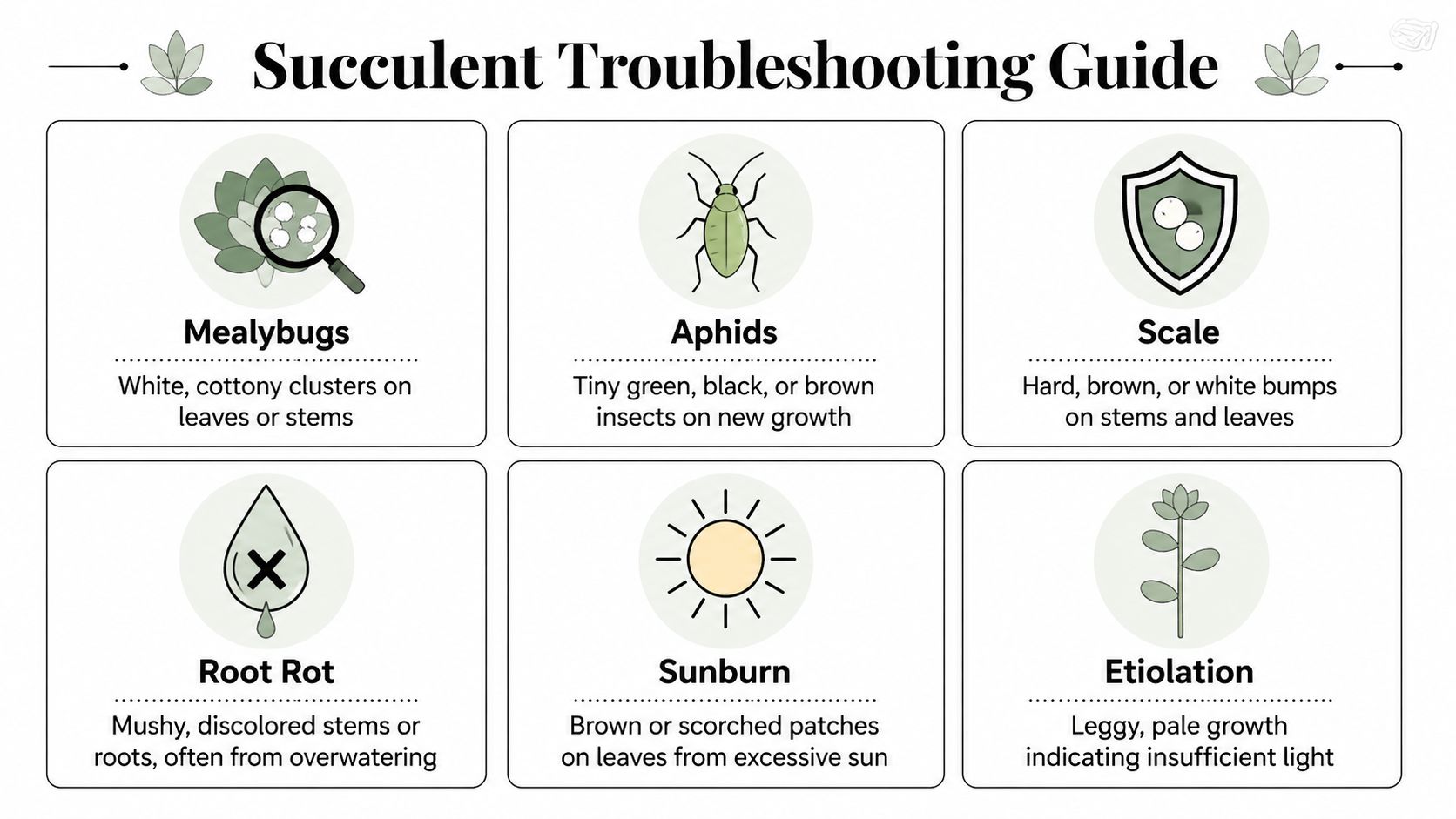
Symptom cause and fix
Here’s a practical way to sort the common issues.
| Symptom | Likely cause | What to do |
|---|---|---|
| White cottony clusters on leaves or stems | Mealybugs | Isolate the plant and dab pests with isopropyl alcohol on a cotton swab |
| Tiny insects on tender new growth | Aphids | Rinse gently, remove badly affected growth, and monitor nearby plants |
| Hard brown or white bumps on stems | Scale | Scrape or wipe off individual pests and keep the plant isolated |
| Mushy stem base or blackened roots | Root rot | Unpot the plant, cut away rotted tissue, and replant healthy parts in dry fast-draining mix |
| Brown scorched patches | Sunburn | Move to bright but gentler light and avoid sudden exposure changes |
| Pale stretched growth | Etiolation | Improve light and reshape or propagate if needed |
The difference between rot and thirst
This is the confusion point that catches many beginners.
A thirsty succulent often looks wrinkled, slightly deflated, or less firm than usual. A rotting succulent usually looks soft, translucent, mushy, or dark near the base. If the stem feels like wet paper, don’t water it. Check the roots.
That distinction saves plants.
Pest problems usually spread by proximity
Succulent pests rarely stay polite and contained. If one plant has mealybugs or aphids, inspect the plants around it too.
Use this quick response routine:
- Isolate first so pests don’t move to neighboring pots.
- Remove what you can see before reaching for any treatment.
- Check hidden spots under leaves, in rosettes, and at stem joints.
- Repeat inspections over the next couple of weeks, because one cleaning often isn’t the end.
Healthy-looking neighbors can still be harboring pests in tight leaf folds.
Problems that come from sudden change
Not every issue is a pest or disease. Some are stress responses.
A succulent moved from a dim shelf to strong direct sun can burn. A recently repotted plant can pause its growth while it re-establishes roots. A plant that spent months in weak light won’t become compact overnight.
That’s why gradual change works best:
- Move brighter in stages
- Water according to soil dryness, not panic
- Avoid fertilizing a stressed plant immediately
- Give a recent fix time to show results
A simple diagnosis order
When something looks wrong, don’t guess randomly. Check in this order:
- Look for pests
- Check the stem base and roots for rot
- Assess light exposure
- Think about your last watering
- Remember any recent fertilizer or location change
That order helps because visible pests and rot need immediate action. Light and feeding issues usually allow a little more time to correct.
Your Year-Round Succulent Care Checklist
A succulent can look easy for months, then suddenly stretch in late winter, stall in summer heat, or split after the first deep spring watering. That pattern confuses many indoor growers because the plant is not being dramatic. It is responding to changes in day length, temperature, and growth speed.
Succulents work a lot like camels. They store reserves, use them slowly, and react fastest when the season shifts. A year-round checklist helps you catch those shifts early, before a compact plant turns leggy or a resting plant sits too wet.
Spring and summer habits
Spring is the season to look for new growth points, fresh leaf color, and roots that start using water faster. If your plant has been quiet all winter, this is also the best time to test whether it is waking up. Water once thoroughly, then watch how quickly the pot dries compared with cold months. Faster drying usually means the roots are active again.
Summer needs a different kind of attention. Many succulents grow steadily in warmth, but some slow down in intense heat, especially if indoor windows amplify afternoon sun. If a plant stops taking up water, do not assume it needs more. Check for a pause in growth paired with firm leaves. That often signals heat stress or seasonal slowdown, not thirst.
Use this spring and summer checklist:
-
Watch for growth shape, not just growth speed
Tight new leaves and short gaps between leaves mean the plant is getting enough light. Longer gaps, a tilted rosette, or pale new growth point to etiolation starting early. - Use spring for propagation Offsets, healthy leaf cuttings, and stem cuttings usually root more readily once days are longer and the plant is actively growing. Let cut surfaces dry and callus before setting them on dry mix.
-
Refresh your light setup as the sun angle changes
A bright winter windowsill can become much stronger by late spring. If leaves develop tan, corky, or bleached patches on the sun-facing side, increase exposure gradually instead of shifting a shaded plant into harsh midday sun at once. - Check whether the pot is now too small Spring is the easiest season to notice roots circling tightly, water racing straight through exhausted mix, or a top-heavy rosette tipping the container. Those signs suggest repotting will help more than extra watering.
- Skip fertilizer on newly rooted cuttings Fresh roots are still establishing. Wait for visible new growth before feeding, so you do not push a weak plant to grow before it has the root system to support that growth.
Fall and winter habits
Fall is your warning season. Growth often slows before the plant looks different, so this is the time to adjust expectations. A succulent that needed water every couple of weeks in bright summer conditions may sit much longer in cooler months because the soil is drying more slowly and the plant is using less.
Winter is also when low light problems tend to sneak in. The plant may stay alive, but the new growth can become stretched, softer, and farther apart. If spring growth looked compact and winter growth looks loose, compare the two sections of the stem. You are reading the plant’s light history in real time.
Use this fall and winter checklist:
- Look for dormancy signs Slower water use, little to no new growth, and older leaves being absorbed gradually are common resting behaviors. Those signs call for patience more than intervention.
- Check for hidden etiolation Measure the newest growth against the older, tighter part of the plant. If the winter section is thinner, paler, or leaning toward the glass, increase usable light before spring stretch becomes hard to correct.
- Protect roots from cold, wet mix A pot against icy glass can keep soil cool for too long after watering. Even a bright window can become a poor root zone if the pot stays chilly and damp.
- Delay major shaping work Beheading, heavy pruning, and aggressive root work are better saved for active growth periods unless you are removing rot. Winter recovery is slower because the plant is not building tissue as quickly.
- Use the season for planning Note which plants stretched, which dried too slowly, and which window gave the best compact growth. Those notes are surprisingly useful when spring arrives and everything starts changing fast.
A better weekly check than “water or don’t water”
A quick scan works best when it helps you predict the next problem, not just react to the current one.
| Check | What you’re looking for |
|---|---|
| Newest growth | Compact and symmetrical, or stretched and pale |
| Old leaves | Naturally drying from the bottom, or turning mushy in the wrong places |
| Soil surface and pot weight | Drying at a normal pace, or staying wet much longer than the season suggests |
| Plant posture | Upright growth, or leaning toward one light source |
| Root space | Stable in the pot, or lifting upward because roots and stem have outgrown the container |
The simplest way to build confidence
Good succulent care gets easier once you stop treating every season like the same season.
A healthy routine is closer to reading a thermometer than following a script. In spring, you look for signs of restart. In summer, you watch for heat stress and fast growth. In fall, you prepare for slower drying. In winter, you protect the plant from weak light and cold roots.
That is how growers get better results. They notice patterns, make smaller corrections, and learn what “normal” looks like in each part of the year.
If your succulent looks off, use that as information. One careful adjustment, made at the right season, usually helps more than five rushed fixes.
If you want professional-grade succulent soil, targeted fertilizers, and beginner-friendly plant care tools in one place, Leaves & Soul is worth a look. Their focus is simple: make it easier for home growers to get healthy roots, steady growth, and better results without guesswork.