


You're holding a succulent above a new pot, roots exposed, wondering whether you're helping or accidentally creating a problem. The calendar says spring, but your plant may be a winter grower, your home may stay cool, or the soil may already be holding water too long. When to repot succulents depends on more than a month on the calendar.
The safest decision combines three clues: the plant's growth season, its visible condition, and the timing of your local climate. Once you learn to read those clues together, repotting becomes a calm maintenance task instead of a guess.
Why Timing Matters More Than You Think
A succulent that has outgrown its container often looks deceptively fine. Its leaves may still be firm, yet roots can be circling tightly below the surface, the soil can be compacted, and water can remain around the root ball longer than it should. Repotting refreshes that environment, but disturbing roots while the plant is resting can make recovery slower.
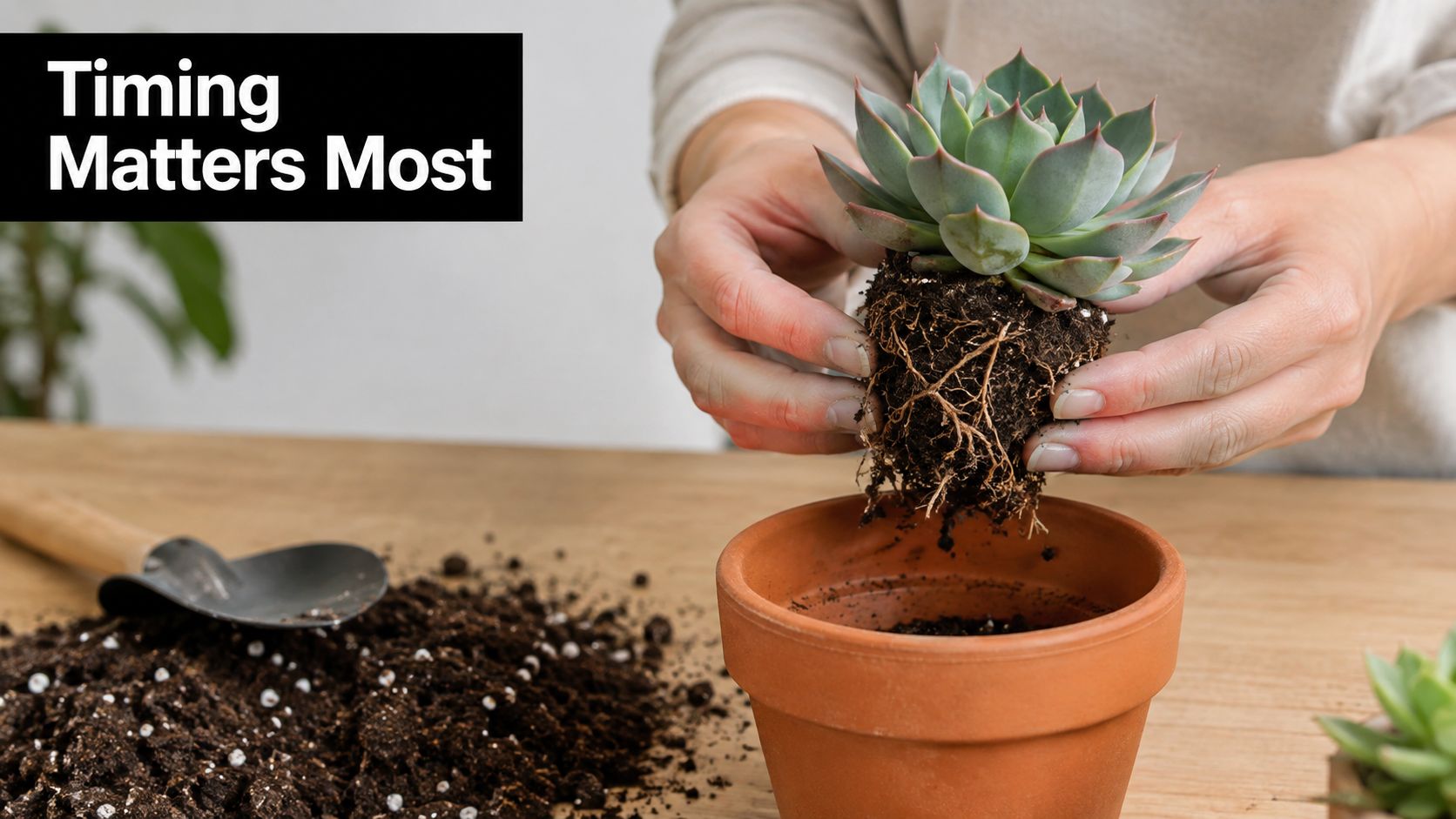
Think of the root system as a person moving house. A move is easier when that person is rested, has energy, and can immediately arrange the new space. A succulent responds similarly when it's entering active growth. Fresh roots can explore the new mix, small injuries can heal, and the plant can adjust to its container without spending as long in a vulnerable pause.
The three clues that matter
For many succulents, early spring is the most widely recommended repotting window, just before active growth resumes, because roots recover fastest then. Guidance also warns against repotting during dormancy, which often falls from late fall through winter for temperate succulents. See the published timing guidance for succulent repotting for that seasonal distinction.
But “spring” is only the starting point. A plant in a cool climate may still be dormant when the calendar says spring, while a winter-growing plant may be preparing for growth as summer ends. The right question is not, “What month is it?” Ask instead:
- Is the plant beginning active growth?
- Does the root and soil condition require action?
- Does this succulent grow mainly in warm or cool seasons?
Practical rule: Repot when the plant needs more room or fresher soil, and choose the moment just before its natural growth period begins.
That approach prevents two common mistakes. You won't repot a healthy, resting plant merely because the season sounds appropriate, and you won't ignore serious drainage or root restriction while waiting for a perfect date.
How to Tell Your Succulent Is Asking for a New Pot
Your succulent can't tell you its pot is cramped, but its roots and soil leave useful evidence. Start with the container rather than the leaves. A wrinkled leaf may reflect thirst, light exposure, or a normal adjustment, so it shouldn't automatically trigger repotting.
Inspect the roots and container
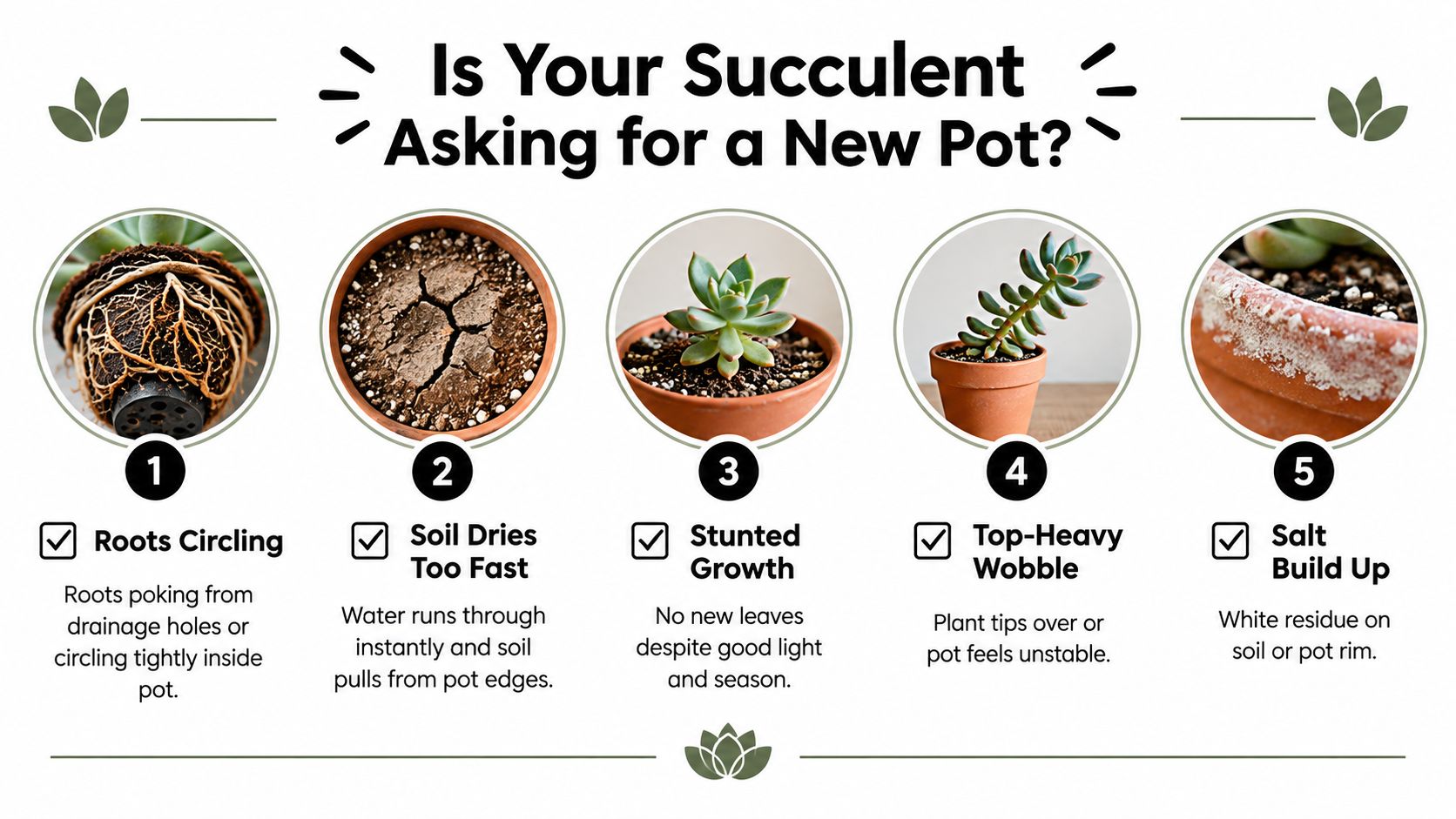
Roots that circle tightly around the base of the pot have run out of useful space. Roots emerging from drainage holes give an even clearer signal. They're not always an emergency, but they show that the root system is pressing against the container and deserves inspection. You can also compare your plant with this guide to understanding what rootbound means.
A pot that feels unstable may also need attention. A tall or top-heavy succulent can lean because the container is too small, the root ball has filled the pot, or the plant has stretched toward light. Check the roots before assuming a larger pot will solve every problem. Poor light can cause leaning, and repotting won't correct that by itself.
Read what the soil is doing
Water behavior often reveals more than surface appearance. If the mix stays soggy for more than 7 days after watering, the drainage system may be declining, according to succulent repotting guidance on soil and root signals. Fresh, airy media can restore space for water and air, while an oversized replacement pot can create the same moisture problem if it contains too much unused soil.
A visible salt crust on the soil surface or pot rim is another reason to investigate. That pale residue can point to salts accumulating as water evaporates. It may indicate that the existing mix has lost some of its usefulness and that nutrient availability and drainage need attention.
Use this quick decision check:
- Roots: Are they circling tightly or coming through drainage holes?
- Moisture: Does the mix remain wet beyond its normal drying pattern?
- Surface: Is there a crusty residue on the soil or rim?
- Growth: Has growth stalled even though light and season are suitable?
- Plant position: Does the plant wobble because the root ball no longer anchors it well?
If none of these signs appears, leave the succulent alone and continue observing. Repotting creates disturbance, so a calendar alone isn't a strong reason to intervene.
The strongest signal is a combination of symptoms. Tight roots plus slow drainage deserves faster action than a single wrinkled leaf. When the evidence points to restriction or declining soil, plan the move around the plant's growth cycle.
The Best Season to Repot and When to Wait
A succulent may look ready for a new pot on the first warm day of spring, yet its roots can still be inactive. For many summer-growing succulents, the safer window is spring to early summer, when growth is beginning. Fresh roots establish more readily in new media during active growth than during dormancy. The spring repotting guide from Leaves & Soul explains why this season is commonly recommended.
Temperature provides a better cue than the calendar. In a cool room or outdoor setting, the plant may remain quiet even after daytime temperatures rise. Guidance for succulent growth uses soil temperatures consistently above 12°C, or 54°F, measured at 5 cm depth as a practical sign that roots are more prepared to recover. See the active-growth timing guidance for succulents for that temperature cue.
Use the plant's readiness, not the calendar alone
Cool, wet media can leave freshly disturbed roots waiting too long to resume growth. That delay increases stress, especially if roots were damaged during the move. Wait for fresh growth suited to the plant's type when possible. Growth readiness works like a green light, while the calendar is only a rough map.
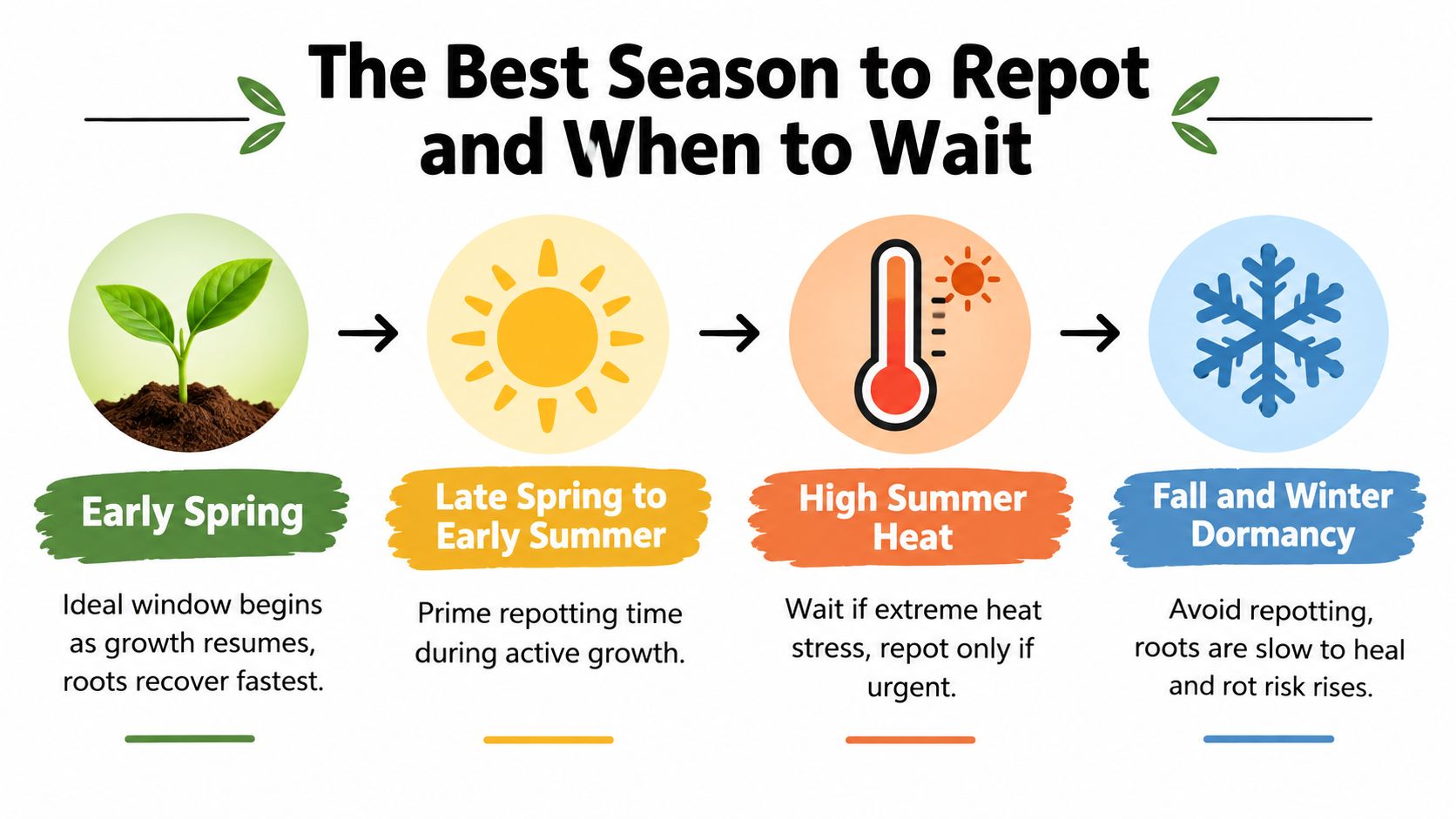
For temperate succulents, fall and winter often bring slower activity. A stable plant with good drainage and adequate root space can remain in its current pot until growth resumes. An old-looking mix alone does not require immediate disturbance.
Newly purchased plants also benefit from a pause. Allow at least a 4-week acclimation period before repotting unless there is an urgent problem. This gives the plant time to adjust to your light, temperature, and watering conditions. Follow the new-purchase acclimation recommendation before moving a recently acquired succulent.
A healthy succulent can wait for a better season. Failing drainage or damaged roots may require earlier action.
If repotting cannot wait, use dry, fast-draining media, handle roots gently, and shield the plant from temperature extremes while it settles.
When to Repot by Succulent Type and Climate
Generic spring advice works reasonably well for many summer-growing succulents, but it can mislead plants whose active season arrives during cooler months. The plant's growth type should guide your timing, while climate tells you when that growth phase begins.
Summer-growers, such as many Echeveria and Sedum, generally respond best when winter dormancy is ending and warm-season growth is starting. Winter-growers, including examples such as Lithops and Copiapoa, may follow a different rhythm. Repotting them during their rest period can interrupt the phase when their roots are least prepared to recover.
| Growth Type | Best Repotting Window | Example Genera | Why This Timing Works |
|---|---|---|---|
| Summer-growers | Spring into early summer, as active growth begins | Echeveria, Sedum | Warmer conditions support root recovery and new growth |
| Winter-growers | Early fall into late fall, as cooler-season growth begins | Lithops, Copiapoa | The plant is approaching its active phase after warm-season rest |
| Unclear or mixed behavior | Repot just as the plant exits dormancy and begins visible growth | Depends on species and climate | Growth readiness is more reliable than a fixed month |
Independent guidance distinguishes summer-growers as suitable for repotting from mid-May to mid-August, while winter-growers are placed in an early September to late October window. Those windows are summarized in type-based succulent repotting guidance. Treat them as seasonal examples rather than universal dates, because local temperature, light, and indoor conditions can shift the plant's active period.
Adjust for your climate
A grower in a warm, bright indoor environment may see growth begin earlier than someone keeping plants near a cool window. Outdoor plants may remain dormant after the calendar changes if nights and soil are still cold. Watch for the point when the plant is just leaving dormancy and preparing to grow, then schedule the move.
For beginners: Identify whether your plant grows mainly in warm or cool seasons before choosing a repotting date.
If you're still learning plant rhythms, a resource on succulent care for beginners can help you build a broader care routine. For a specific plant, combine that general knowledge with observation of new growth and local conditions.
Simple Repotting Checklist That Protects Roots
Once the timing is right, keep the actual move orderly. The aim isn't to strip every particle from the root ball or create a dramatic transformation. You're giving the roots a breathable home with enough room to function.
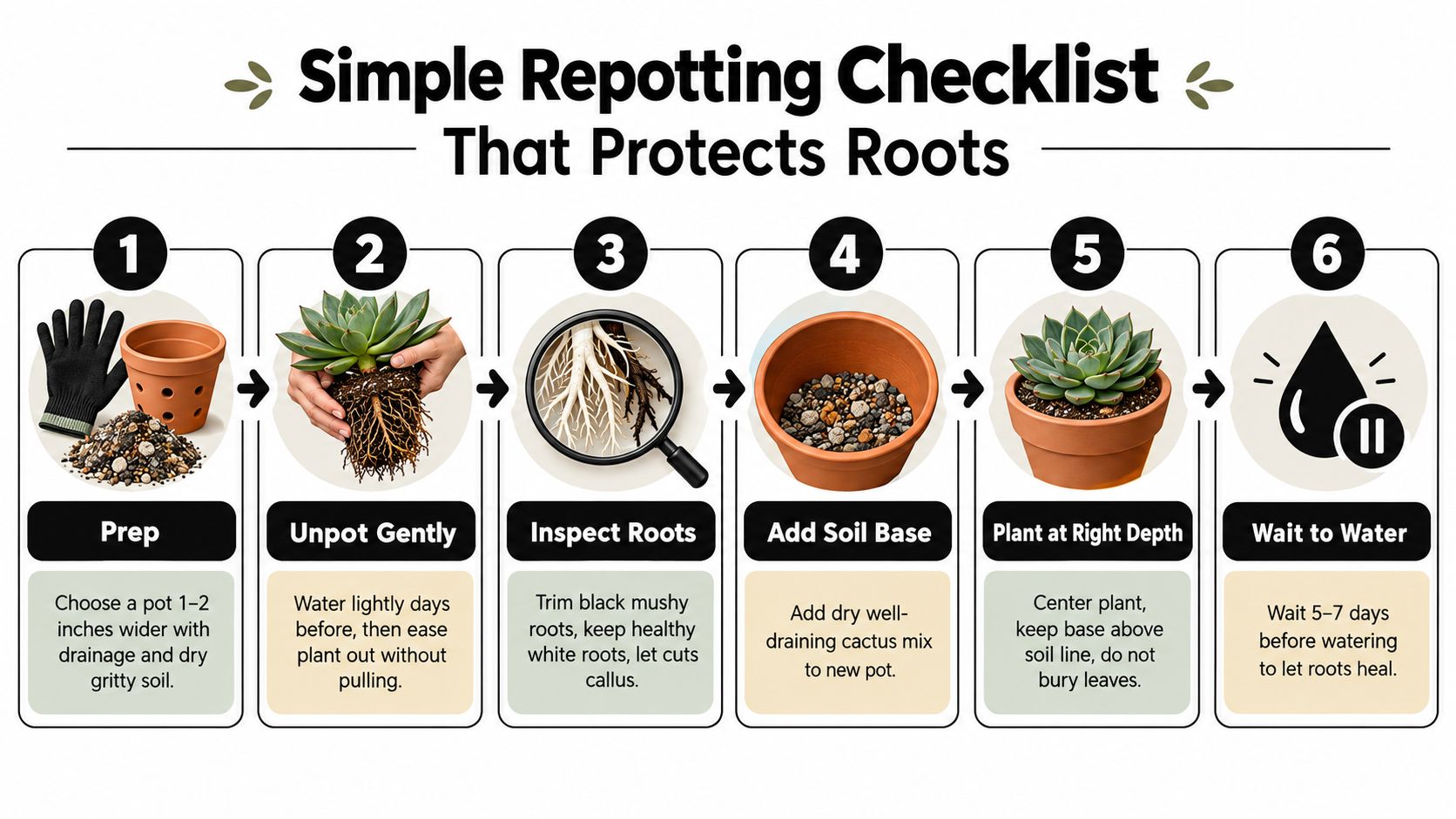
- Prepare the pot and mix. Choose a container with a drainage hole and only slightly more room than the current root ball. Use a dry, gritty succulent or cactus mix. A purpose-built blend such as the one described in this succulent soil guide is one option, alongside other fast-draining mixes.
- Ease the plant out. Support the plant near its base and loosen the container edges. Don't pull on leaves or the stem. If the root ball is tight, tap the pot gently and let the plant release gradually.
- Inspect before trimming. Healthy roots are generally firm, while black, soft, or collapsing roots indicate damage. Remove only clearly compromised sections with clean scissors. Avoid cutting healthy roots just to make the root ball look tidy.
- Build the soil base. Add enough dry mix to support the plant at its former depth. This prevents the stem or lower leaves from sitting too in damp soil.
- Set the depth carefully. Center the succulent and keep its base at or slightly above the soil line. Never bury leaves, because trapped moisture around them can encourage decay.
- Leave watering for later. After root disturbance, wait 5 to 7 days before watering, as recommended in the repotting checklist guidance. This pause lets small injuries begin healing before moisture reaches them.
A pot that's only slightly larger helps the mix dry in a predictable way. Large containers can hold excess soil around a small root system, so choosing more space isn't automatically kinder.
Aftercare and How Often to Repot Again
The first days after repotting should be quiet and predictable. Keep the pot steady, avoid lifting the plant to check its roots, and provide bright light without intense exposure. Stable conditions make it easier to distinguish normal settling from a real problem.
Wait through the initial healing pause before watering. Then water only when the mix has dried enough for that succulent and its growing conditions. Slightly less-plump leaves can be normal during recovery. Softening tissue, a lingering unpleasant smell, or visible collapse calls for a closer inspection. Wrinkles alone do not mean the recovering roots need more water.
Build a repeatable repotting rhythm
A healthy succulent often stays in the same pot for 2 to 3 years. Faster-growing types may need attention sooner, sometimes annually. Treat this as a planning guide rather than a fixed appointment. Crowded roots, mix that remains wet, or salt crust on the soil can justify earlier repotting. Open, well-draining soil and steady growth support waiting longer.
Newly purchased plants also need the acclimation pause described earlier. Once the plant has adjusted, inspect its roots and mix, then choose a suitable growth window. Automatic repotting can add stress when the existing pot is still working well.
Record the repotting date on a label or in your gardening notes. Pair that reminder with seasonal observation and the plant's growth pattern. Summer-growers may be checked as they enter active growth, while winter-growers such as Lithops and Copiapoa should be judged against their own active season. The calendar is a reminder. The plant's roots, soil, and climate provide the final decision.
Leaves & Soul offers soils, fertilizers, and plant-care supplies for succulents and other indoor plants. Visit Leaves & Soul to prepare the growing environment for a careful, well-timed reset.