


You've got a small bonsai on a bright windowsill, and its leaves are beginning to look pale or its new growth has slowed. The fertilizer bottle suggests a routine made for ordinary houseplants, but your tree lives in a shallow pot with very little soil, limited light, and a watering pattern that changes with indoor heat and airflow. A full dose can do more harm than a missed feeding.
The most reliable approach to bonsai tree fertilizer indoors isn't finding a magical bonsai-only formula. It's matching the fertilizer's strength and timing to the tree's actual growth, then watching how the soil and foliage respond. Indoor bonsai need regular nutrition, but they have very little room for dosing mistakes.
Why Indoor Bonsai Feeding Is Different
An indoor bonsai lives in an artificial container ecosystem. Its roots can't search through a broad garden bed for moisture or minerals, and the shallow pot gives the soil little capacity to buffer either neglect or excess. Every watering flushes through a confined root zone, while every fertilizer application lands much closer to the roots than it would in the ground.
That makes feeding both important and risky. Bonsai care guidance commonly recommends reduced-strength fertilizer applied at steady intervals, because concentrated feeding in a small soil volume can damage roots. One widely used indoor schedule is fertilizer at half strength, with monthly feeding for indoor bonsai and optional foliar feeding at a less frequent interval, as described in indoor bonsai care guidance from Bonsai Boy.
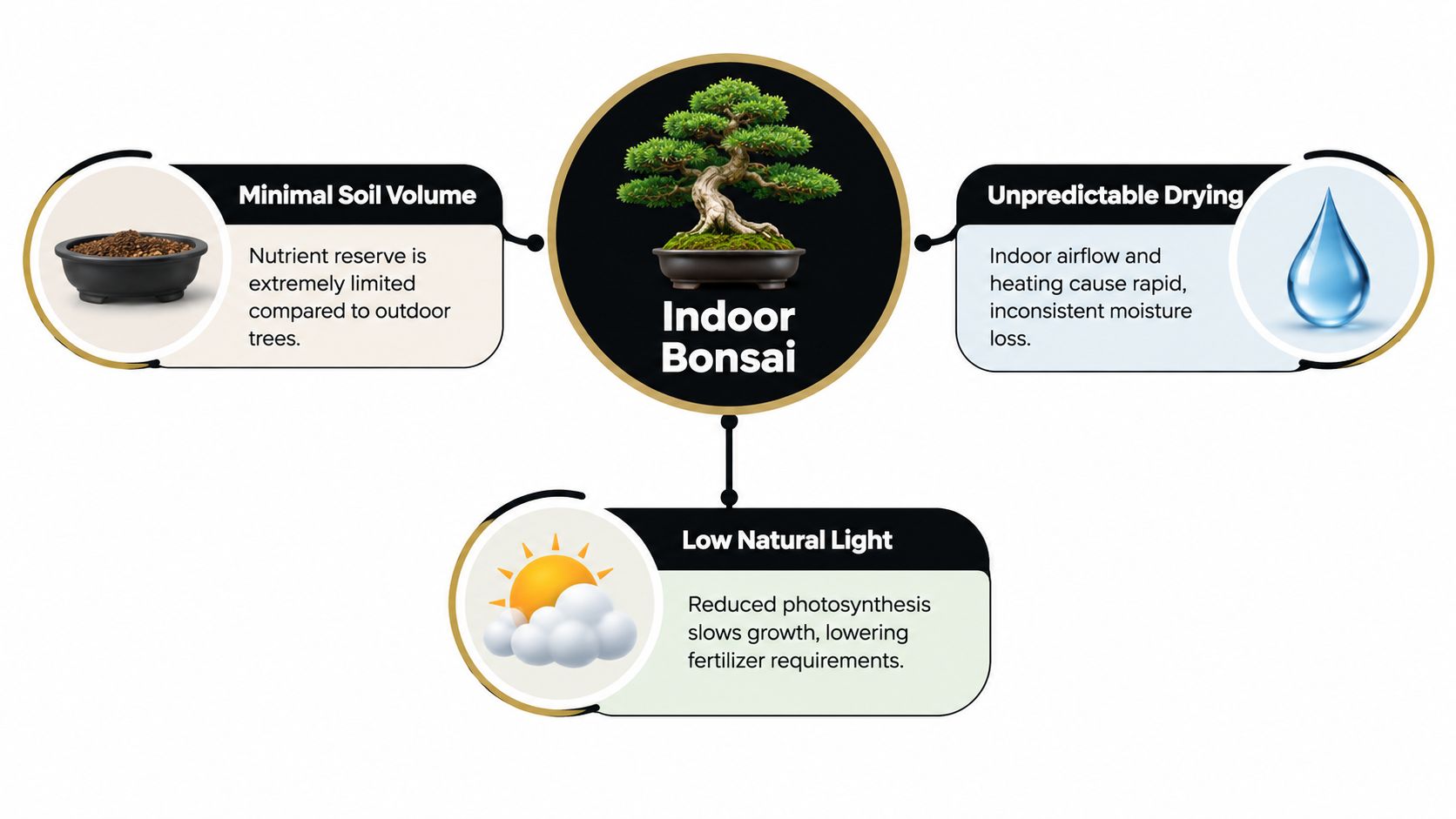
The three constraints that matter most
Light controls demand. A bonsai near a dim window may stay alive while producing little new growth. If the tree isn't photosynthesizing actively, it won't use nutrients at the same rate as a vigorously growing tree under strong light. Feeding on a standard houseplant schedule in low light can leave unused salts in the soil.
Soil volume limits the margin for error. A mature tree may occupy a pot that holds only a small amount of growing medium. That compact root environment offers limited nutrient reserve, but it also concentrates fertilizer around fine roots. The same dose that seems mild in a large container can be excessive in a bonsai pot.
Moisture changes from room to room. Heating, air conditioning, window exposure, and indoor airflow all affect drying. A pot beside a radiator may dry quickly at the surface, while a bonsai in a cool corner can remain wet for much longer. Fertilizer should follow the tree's growth and root conditions, not an automatic calendar reminder.
Controlled indoor conditions can support more frequent but milder feeding for tropical bonsai. Guidance summarized by Bonsai Boy describes weekly, weak feeding for tropical trees that remain warm and active, while slow-release and organic products may be reapplied every 4 to 6 weeks and chemical products every 10 to 14 days. Those ranges aren't a command to feed every tree that often. They show why product type, concentration, light, and growth must be considered together.
Practical rule: If light and growth have slowed, reduce both fertilizer strength and frequency. Don't compensate for weak light by feeding harder.
I also treat the display area as part of the growing environment. A carefully arranged bonsai, a stable tray, and complementary botanical prints for your walls can make a bright, consistent plant space easier to maintain. The decoration isn't the care, but a dedicated location makes it less likely that watering and observation will become an afterthought.
Choosing Between Liquid and Slow Release Bonsai Fertilizer
Liquid and slow-release fertilizers can both work indoors, but they suit different habits. Liquid feed gives you control at every application. Pellets give you continuity between applications. The right choice depends less on the label and more on whether you can inspect the tree and respond when indoor conditions change.
| Format | Best For | Frequency | Burn Risk | Adjustability |
|---|---|---|---|---|
| Liquid fertilizer | Growers who inspect the tree frequently and adjust feeding to growth | Applied according to the product label, with reduced indoor dosing when growth slows | Higher if mixed too strongly or applied to dry soil | High, because you control each dose |
| Slow-release pellets | Busy growers, stable environments, and trees with predictable growth | Reapplied according to the product label and the product's release pattern | Lower day to day, but excess pellets can't be removed as easily | Limited after application |
| Organic solid fertilizer | Growers who prefer gradual release and can monitor moisture and soil condition | Commonly refreshed at longer intervals than liquid feed | Usually gradual, though overapplication can still create problems | Moderate |
Liquid feed rewards observation
A liquid fertilizer is useful when your bonsai moves between different conditions. You might feed more carefully after a bright growth flush, then reduce input when winter light falls or the tree spends time recovering from pruning. You can also pause immediately if the soil stays wet, the tree is stressed, or the pot develops a visible salt crust.
The trade-off is consistency. Liquid products require you to measure accurately and remember each application. They also make careless habits obvious. A strong concentrate poured onto dry soil can shock roots, and repeated feeding without enough plain-water irrigation can leave fertilizer residue behind.
Pellets suit stable routines
Slow-release pellets are practical when you want nutrition to arrive gradually rather than in a series of concentrated liquid applications. They can work well for a healthy bonsai in a reliable location, especially when the grower travels or doesn't want to mix feed on every watering day. The product still needs to be distributed carefully, and the label's release schedule matters.
Once pellets are placed, you lose the fine control that liquid fertilizer provides. If the tree enters a low-light period, suffers root stress, or is moved to a cooler room, you can't instantly reverse the release pattern. That's why I'm cautious with slow-release feeding around a recent repot or a bonsai whose moisture behavior hasn't settled.
The practical differences between these formats are explained clearly in this guide to slow-release fertilizer. For a product example, Leaves & Soul offers 18-6-8 Bonsai Fertilizer Pellets alongside liquid bonsai feeds, giving growers a choice between gradual release and adjustable applications.
Choose liquid if your tree's conditions change often. Choose pellets if the environment is steady and you're more likely to forget a feeding than to overreact to a changing tree. Neither format fixes inadequate light, poor drainage, or roots that are already stressed.
How to Mix and Apply Indoor Bonsai Fertilizer Correctly
Application technique matters as much as the fertilizer itself. Indoor bonsai roots are concentrated in a small container, so a mistake reaches the entire root system quickly. The safest routine is measured, diluted, and applied only when the tree is hydrated and actively able to use the nutrients.
Start with the tree, not the bottle
Before mixing anything, inspect the soil surface, leaves, and recent growth. Don't fertilize a tree that has just wilted, is sitting in saturated soil, or has recently undergone significant root work. A stressed bonsai needs stable water, light, and temperature before it needs extra nutrition.
Read the product label and use a clean measuring tool. For a liquid concentrate, mix the recommended amount into water, then reduce the label strength for indoor use when the tree is growing slowly or receiving limited light. A balanced houseplant fertilizer can also be suitable when diluted appropriately. Bonsai guidance commonly emphasizes half-strength feeding rather than full-strength applications, as noted in this guide to using liquid fertilizer for indoor plants.
Use this sequence:
- Check moisture first. The soil should already be slightly moist. If the root ball is dry, water with plain water and allow it to absorb before applying fertilizer.
- Measure the concentrate. Don't estimate by eye. Small pots need small doses, and a seemingly minor measuring error can change the concentration substantially.
- Mix fresh solution. Stir or shake the mixture thoroughly so nutrients don't settle at the bottom of the watering can.
- Apply to the soil. Pour slowly over the growing medium and distribute the solution around the pot rather than concentrating it beside the trunk.
- Keep foliage mostly dry. Avoid splashing leaves unless the product is specifically intended for foliar use. Wet foliage can also remain damp in still indoor air.
- Let excess water drain. Never leave the pot standing in fertilizer runoff. Empty the saucer after drainage finishes.
Place pellets with restraint
Slow-release pellets should sit across the soil surface rather than in one dense pile. Keep them away from the trunk and spread them over the area where fine roots are likely to be active. Pressing them deeply into compacted soil can create a concentrated pocket that's difficult to inspect or remove.
Follow the product's application instructions for quantity and replacement timing. Don't add fresh pellets just because the old ones aren't visible. Some release gradually and may remain effective even when the surface looks clear.
Adjust the routine as conditions change
A bonsai beside strong natural light or a grow light may continue producing new leaves while another tree in the same room slows down. The first tree may tolerate a steadier feeding rhythm, while the second needs longer intervals and a weaker solution. Watch for the combination of active buds, firm foliage, and soil that dries at a healthy pace.
Feed moist roots, dilute more than you think you need, and let active growth justify the next application.
Avoid using fertilizer to correct every visual problem. Yellow leaves can result from poor light, excess moisture, root damage, or environmental stress. Fertilizer is useful when nutrients are genuinely limited, but it won't repair roots that can't breathe or leaves that aren't receiving enough light.
Seasonal Feeding Schedules by Bonsai Type
Indoor feeding follows growth more closely than the calendar. A tropical bonsai that stays warm under strong light may continue growing when a deciduous tree has slowed or dropped foliage. An evergreen may remain visually active while its roots use nutrients more cautiously in a cool, dim room.
A practical benchmark is balanced liquid fertilizer every 1 to 2 weeks during active growth, with indoor feeding often reduced to approximately monthly during cooler or off-season conditions, according to Bonsai Outlet's fertilizer guidance. The same guidance notes that a warm, actively growing tropical indoor bonsai may continue with very light feeding every 4 to 6 weeks at quarter strength. These are reference points, not instructions to ignore the tree.
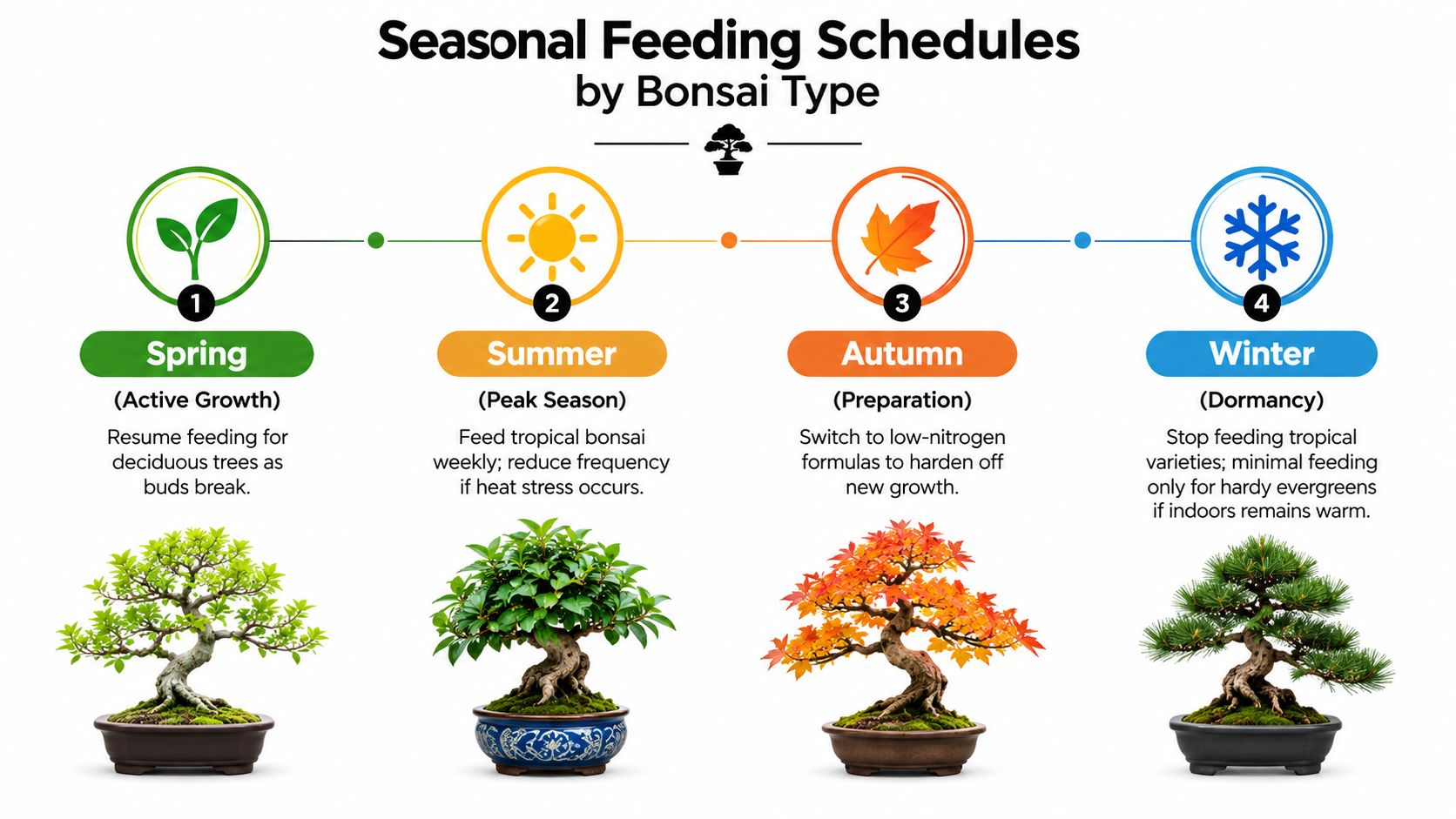
Spring and renewed growth
For deciduous bonsai, resume feeding when buds open and new growth is clearly developing. Don't apply a strong dose merely because the days are getting longer. The tree needs functioning roots and visible activity first.
Tropical bonsai can begin feeding as new leaves and shoots appear, particularly if warmth and light remain stable. If you've repotted, give the roots time to settle before returning to a normal routine. Fresh growing medium may also contain available nutrients, so immediate heavy feeding is rarely justified.
Summer and active development
Summer is usually the easiest period to feed an indoor tropical bonsai because warmth and light support active growth. A balanced fertilizer can support foliage and shoots, but the concentration should still remain restrained in a shallow pot. Fast drying doesn't automatically mean the tree needs stronger fertilizer. It may just need more careful watering.
Deciduous trees can receive regular nutrition while they're producing leaves and branches. Mature trees that you're maintaining may need less encouragement than young trees being developed, even when both are growing at the same time.
Autumn and declining light
As light weakens and growth slows, reduce feeding rather than continuing a full summer routine. A lower-nitrogen formulation can be useful when the aim is to avoid pushing soft, excessive foliage, but changing the product doesn't remove the need to reduce the dose and observe the tree.
A useful historical shift in bonsai care has been the move away from fixed, year-round dosing toward seasonal feeding. Current guidance commonly places the main feeding period from roughly March to September or April to September, with winter pauses or reduced input, as summarized in this overview of indoor bonsai care practices.
Winter and low-light conditions
A deciduous bonsai resting indoors generally doesn't need the same input as it did during leaf production. Tropical trees are different. If one remains warm and actively growing under good light, a very mild winter application may be appropriate. If it has stopped growing in a cool, dim room, feeding should be reduced sharply or paused.
Evergreens need individual judgment. Green foliage doesn't prove that the tree is growing vigorously. Check for new buds, fresh leaves, and the rate at which the soil dries before deciding whether to feed.
Common Mistakes and How to Fix Them
Most fertilizer problems come from a mismatch between product strength and indoor conditions. A bottle may be perfectly suitable, yet the tree can still decline if the soil is dry, the light is weak, or the roots have recently been disturbed.
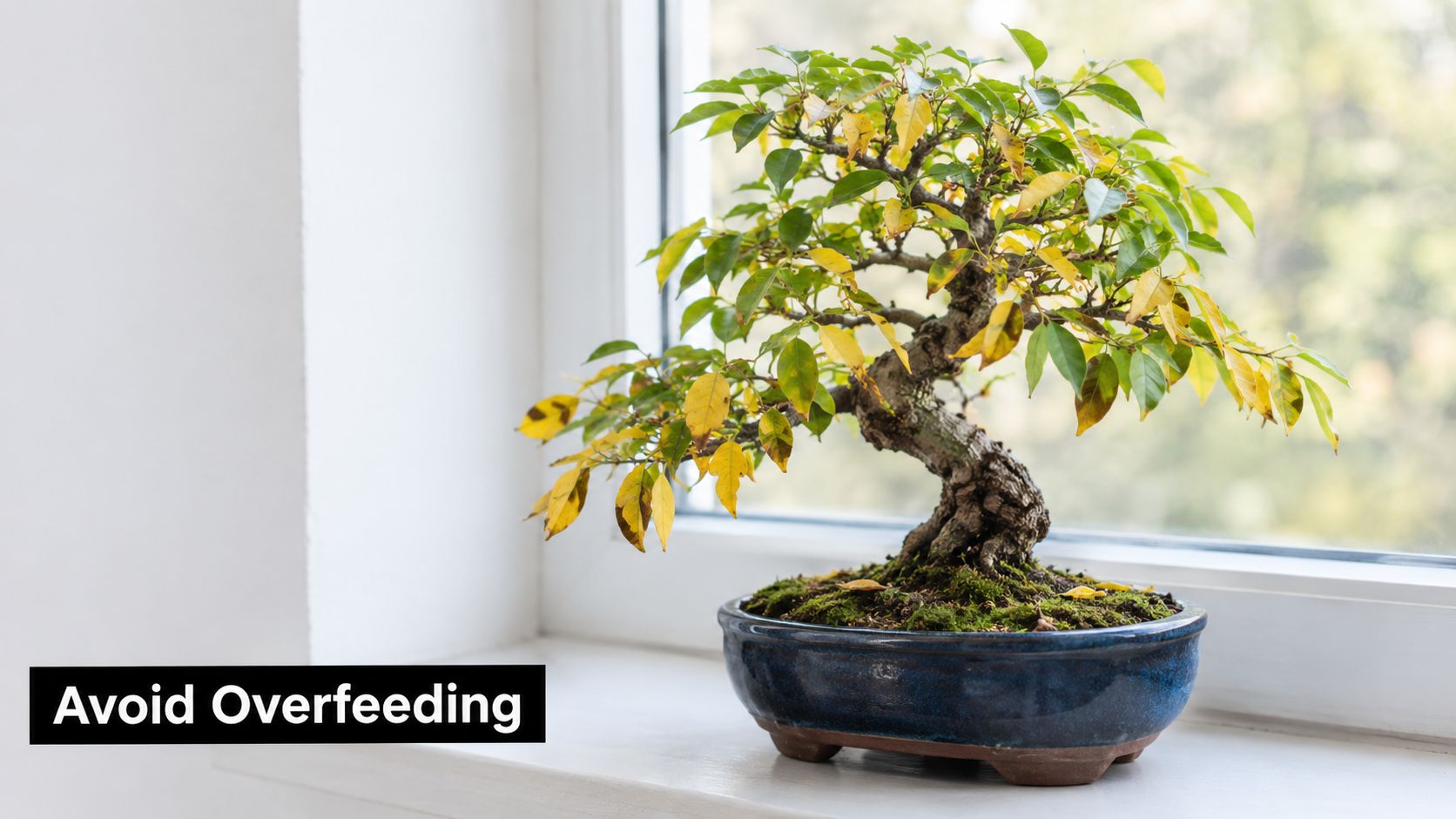
Feeding a dry root ball
Applying fertilizer to bone-dry soil creates a concentrated solution around dehydrated roots. Water the tree thoroughly with plain water first, allow the medium to absorb moisture, and only then apply diluted fertilizer if the tree is otherwise healthy.
Fertilizing after repotting
Freshly cut roots are vulnerable, and a newly repotted bonsai is already adapting to a changed root environment. Hold fertilizer until the tree shows recovery and renewed growth. If leaves continue to wilt or the tree remains still, more fertilizer won't solve the underlying problem.
Ignoring weak light
Pale foliage, stretched shoots, and sparse interior growth can tempt growers to add nutrients. First inspect the light. A tree that can't produce enough energy won't necessarily improve when you add fertilizer. Move it closer to a suitable window or provide supplemental growing light, then reassess its growth before increasing feeding.
Trusting the label without reading the soil
A label gives application instructions for a broad range of conditions. It can't account for a cool room, slow drainage, a recently repotted tree, or a pot that stays wet. Watch for leaf-tip browning, crusty deposits on the soil, sudden yellowing, or stalled growth. These symptoms need diagnosis rather than an automatic increase in fertilizer.
A balanced houseplant fertilizer can work for indoor bonsai when its N-P-K balance, dilution, and frequency are appropriate. Bonsai-specific products aren't magic, as discussed in this explanation of feeding bonsai throughout the year. The useful distinction is whether the product helps you deliver a controlled dose that fits the tree's conditions.
Give the soil a thorough plain-water rinse when you suspect salt buildup, provided the pot drains freely. Then allow the medium to return to a healthy moisture cycle before feeding again.
A tree that remains weak after feeding adjustments may have a root or soil problem. Look at drainage, compaction, and light before reaching for a stronger formula.
When to Repot or Amend Soil Instead of Adding More Fertilizer
Fertilizer can supply nutrients, but it can't restore collapsed soil structure or remove damaged roots. If water sits on the surface, drains slowly, or runs down the sides without wetting the root ball, the medium may no longer be functioning properly. Adding more fertilizer to that pot only increases the burden on roots that are already struggling.
Repotting becomes the better answer when the soil has broken down, drainage has become unreliable, or roots have filled the container to the point that water and air can't move evenly. Choose a fresh, free-draining bonsai mix suited to the species and its indoor moisture pattern. A tropical tree that dries rapidly needs a different balance from a bonsai kept in a cool room where the pot stays wet.
Check before reaching for nutrients
Lift the pot and inspect its behavior over time. If the surface stays wet long after watering, the tree wilts despite damp soil, or the root ball has become dense and difficult to penetrate, investigate the root environment. Persistent yellowing or weak growth after a careful feeding routine also points toward light, drainage, pests, or root health rather than a simple nutrient shortage.
Repot a healthy tree when it's entering an appropriate growth phase, not when it's already severely stressed. The guide to knowing when to repot a bonsai can help you distinguish depleted or compacted medium from a tree that only requires a gentler feeding schedule.
Amendments may help when the soil structure is basically sound but a specific need has been identified. They shouldn't become a substitute for proper drainage or a reason to keep adding products. Once fresh soil and healthy roots restore the tree's ability to take up water, return to diluted feeding only when new growth confirms that the bonsai is ready.
Leaves & Soul offers professional-grade bonsai soils, liquid plant foods, spray formulas, slow-release pellets, and bonsai accessories for growers managing plants indoors and out. Visit Leaves & Soul to choose a feeding and soil setup that matches your bonsai's pot, light, and growth rhythm.