


You bring a bonsai home, set it on a windowsill, and then the questions start. How much water? How much sun? Should you prune it now, or leave it alone? Most beginners aren't lacking enthusiasm. They're lacking a rhythm.
Good bonsai care isn't a pile of tricks. It's a seasonal practice. The tree changes, so your care changes with it. Once you understand that, the work becomes calmer and far more predictable. You stop reacting late and start noticing early.
That shift matters because a bonsai isn't a houseplant in a decorative pot. It's a tree living in a very small root zone. Every choice gets amplified. Watering, soil, feeding, pruning, light, and timing all matter more than they do with larger container plants.
The Art and Science of Bonsai Care
You buy a bonsai on a Saturday, water it on Sunday, and by Wednesday you are already second-guessing every choice. That uneasy stage is normal. Bonsai asks for more attention than guesswork, and less fuss than many beginners fear.
What separates a healthy tree from a declining one is rarely a secret technique. It is timing. A grower who notices faster drying soil in spring, slower water use in winter, and the first push of new growth will make better decisions than someone following the same routine every week of the year.
That is why bonsai care works best as a seasonal calendar, not a fixed checklist. Spring is for root activity, feeding, and planned structural work on strong trees. Summer is for water management, heat protection, and controlled growth. Autumn is for hardening growth and preparing for dormancy. Winter is for restraint, observation, and species-specific protection. Once you work in that rhythm, the tree becomes far easier to read.
Bonsai also carries a long tradition, but the history only helps if it teaches patience. These trees are developed over years, often decades. Good branch structure, believable taper, and fine ramification do not come from rushing. They come from repeating the right work in the right season, then letting the tree respond.
Bonsai isn't about forcing a tree to look old. It's about caring for it well enough that age starts to show honestly.
The science sits under the art. Roots need oxygen as much as water. Fertilizer helps only when the tree is healthy enough to use it. Pruning can strengthen one tree and weaken another, depending on species, season, and vigor. I have seen beginners blame themselves for lack of progress when the actual problem was simple: heavy organic soil staying wet too long, or feeding at the wrong point in the growth cycle.
That is where dependable inputs make a difference. Leaves & Soul bonsai soil and fertilizer products help remove some of the guesswork, especially for growers who want a cleaner seasonal routine instead of improvising from one week to the next. If you want a broader grounding before you start refining that routine, this guide to understanding the art of growing bonsai trees is a useful place to start.
Read the tree in front of you. Then match your care to the season it is living through.
Choosing the Right Home for Your Tree
You set a bonsai on a tidy shelf by the window, water it faithfully, and a month later the leaves pale, internodes stretch, or the tips begin to crisp. That usually starts with placement, not pruning. Get the tree's home right first, and the rest of the care calendar becomes far more predictable.
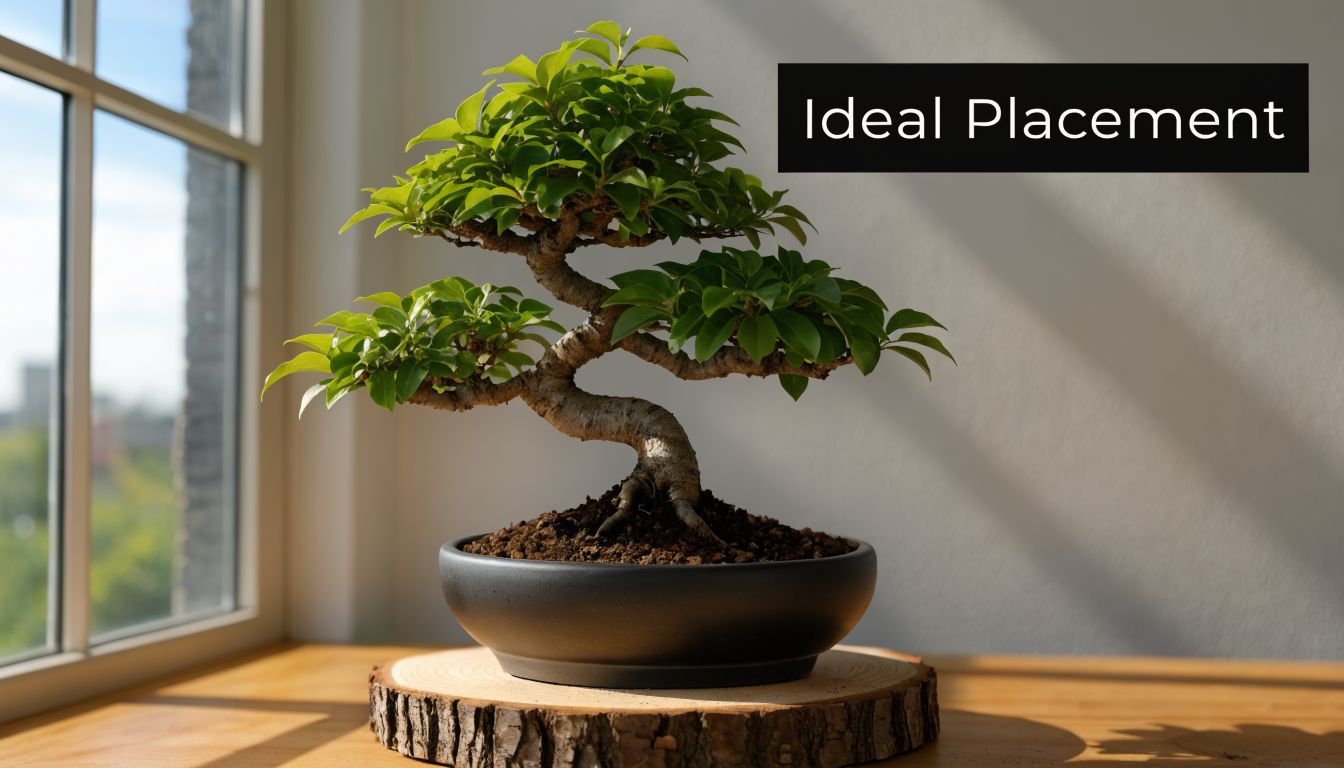
Read the actual light in your space
Plant tags and online listings often reduce light to vague labels. Your room does not care what the label says.
A south-facing window usually gives the strongest indoor exposure. East light is gentler and often easier for tropical bonsai that can scorch behind hot afternoon glass. North light is commonly too weak unless the tree is unusually tolerant, the window is large, and nothing outside blocks the sky. West light can work, but summer heat through glass needs watching.
Check the spot three ways before you commit:
- Look at the floor or wall in the morning. A strong patch of sun for several hours is useful for many indoor tropical species.
- Check the shadow at midday. A crisp hand shadow means stronger light. A soft shadow means weaker light.
- Test the same place again in winter. A window that works in June may be marginal by December.
I tell beginners to watch the tree for two weeks, not two days. New growth will tell you the truth faster than any care label.
Match the species to the setting
This is the mistake that causes slow, stubborn decline. Bonsai is a method of growing a tree in a shallow container. It is not a separate kind of plant with special indoor rules.
Tropical and subtropical species usually handle indoor life better because they can keep growing in warm conditions. Temperate trees such as many maples, elms, and pines need outdoor seasonal change. If they stay in constant indoor warmth year-round, vigor drops, growth weakens, and long-term health suffers.
Use this rule of thumb:
| Tree type | Best placement | Main risk if misplaced |
|---|---|---|
| Tropical bonsai | Bright indoor window, or outdoors in warm weather | Leggy, weak growth in low light |
| Temperate bonsai | Outdoors through the seasons | Decline from lack of dormancy and poor light |
That seasonal difference matters later in the year as well. A ficus may stay in active growth indoors through winter, while a juniper should be outside experiencing the cold cycle it evolved to expect.
Placement changes with the season
A good bonsai setup in spring may be a poor one in midsummer or winter. Serious growers adjust placement as the year shifts.
In spring, increase light gradually as growth starts. In summer, protect tender tropicals from harsh afternoon burn behind hot glass, and keep outdoor trees where air moves freely. In autumn, use the stronger angles of available sun to maintain vigor before winter. In winter, indoor tropicals often need the brightest window you have, while outdoor temperate trees need cold protection from severe freeze and drying wind, not a spot in the living room.
That is one reason I prefer a seasonal routine over generic care tips. The tree's home is part of the calendar.
Watering follows placement
A bonsai in a small pot can go from evenly moist to dry much faster than a larger houseplant, especially in strong light, moving air, or summer heat. Check every day during active growth. Water when the root zone is approaching dryness, not by habit and not by the calendar.
A simple method works well:
- Check below the surface. Use a finger or chopstick to see whether the soil beneath the top layer is still damp.
- Wait for slight dryness. Surface color alone can mislead you.
- Water thoroughly. Keep watering until it runs freely from the drainage holes.
- Empty any standing water. Roots need air after watering, not a stagnant tray.
The pot and soil mix decide how forgiving that routine will be. If you want help choosing a mix that suits your species, climate, and watering habits, this guide on how to find the best bonsai soil is worth reading before you repot.
Pot choice affects daily care
The container is not just part of the design. It changes how fast the root ball dries and how often you will need to water.
Shallow pots dry faster than deeper ones. Unglazed and more porous containers usually lose moisture faster than glazed ceramic. A handsome pot that stays wet too long can weaken roots just as surely as one that dries out by noon. I have seen many beginners blame themselves for watering mistakes when the underlying problem was a poor match between pot depth, window exposure, and soil structure.
Leaves & Soul pots and bonsai care supplies are useful here because they make it easier to build a setup you can manage consistently through the seasons.
Choose the home with the same care you give the styling. Light, airflow, seasonal exposure, pot behavior, and your own watering habits all meet here. Get those right, and the tree has a fair chance to thrive.
The Foundation Beneath the Roots Soil and Feeding
Healthy bonsai start below the trunk line. If the soil structure is wrong, everything above it becomes harder.
Standard potting mix is usually too dense for bonsai. In a deep nursery container, that may be manageable for a while. In a shallow bonsai pot, it often stays wet too long, compacts too fast, and starves the roots of oxygen.
Why bonsai soil looks strange to new growers
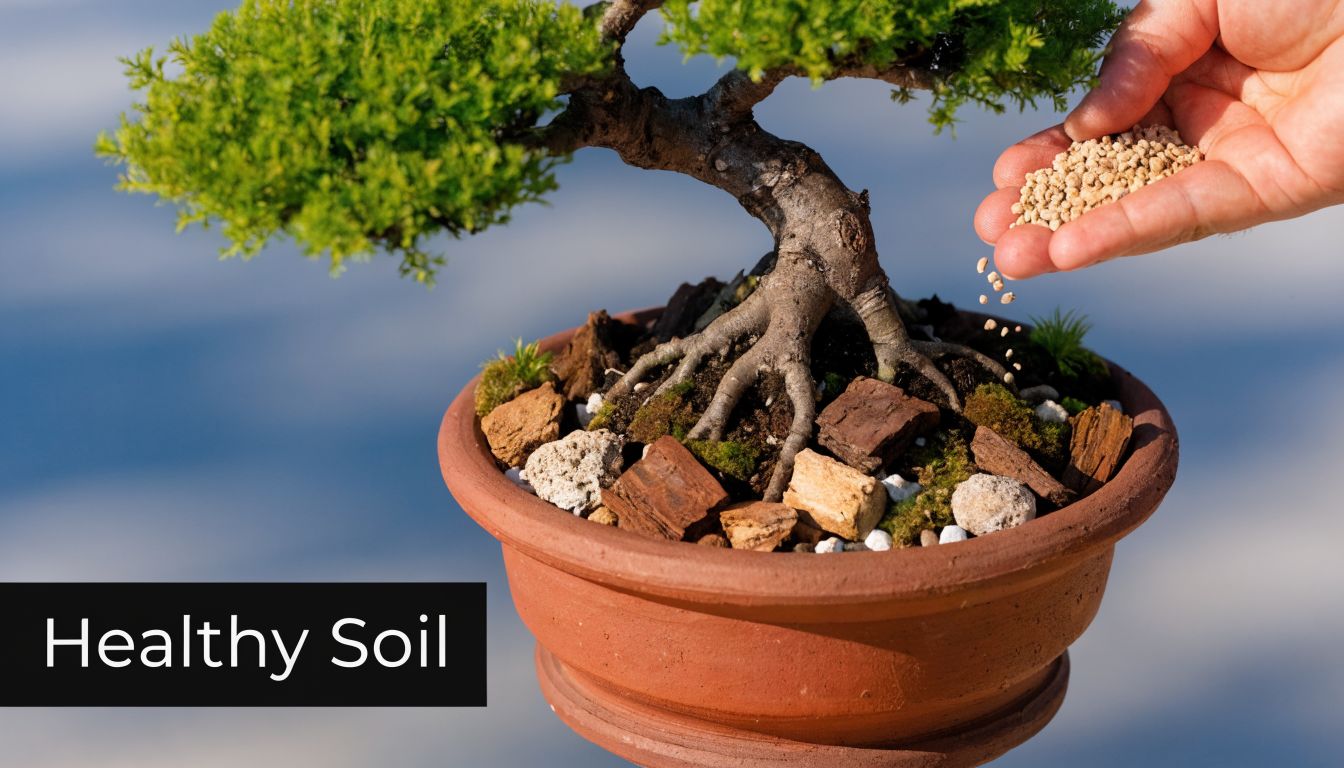
Good bonsai soil often looks coarse compared with regular houseplant mix. That's deliberate. The roots need a balance of moisture, air, and structural stability.
The broad roles are straightforward:
- Akadama helps with water retention.
- Pumice improves aeration and helps roots breathe.
- Lava rock adds structure and helps the mix resist collapse.
The exact recipe changes by species, climate, and your watering habits. A pine in a wet climate wants a different balance than a tropical ficus in a heated apartment.
What matters most is particle quality and consistency. According to an analysis of 10,000 successful bonsai cultivators, appropriate soil particle distribution increased survival rates by 84%, and an optimal pot-to-root ratio improved growth success by 76%. The same source reports a 91% plant health maintenance rate when these parameters are implemented in this bonsai soil and success-rate discussion.
That tracks with practical experience. Trees in airy, purpose-built mixes recover faster, root more evenly, and give you a wider safety margin when watering.
If you want a detailed breakdown of substrate choices, this guide on how to find the best bonsai soil covers the fundamentals clearly.
Soil and pot have to work together
People often talk about soil and pots as separate choices. They aren't.
A coarse mix in a shallow pot dries fast. The same mix in a slightly deeper container behaves differently. A glazed ceramic pot changes evaporation again. If your tree dries too quickly, don't just water more often without asking why. Sometimes the better correction is a better-matched soil and container pairing.
Here's a practical comparison:
| Situation | What usually works | What usually fails |
|---|---|---|
| Dry indoor air | Slightly more moisture-retentive bonsai mix, careful drainage | Dense potting soil that stays soggy below the surface |
| Humid conditions | More open, airy particle blend | Fine-textured soil that compacts quickly |
| Fast-growing material | Regular root checks and timely repotting | Leaving roots circling in exhausted soil |
Feed for steady health, not sudden bursts
A bonsai doesn't have access to the natural nutrient cycles of open ground. In a shallow pot, nutrients wash out or get used up quickly. Feeding isn't optional if you want sustained growth and recovery.
N-P-K numbers tell you the proportion of major nutrients. You don't need to turn that into chemistry homework. The practical point is that a balanced fertilizer supports foliage, root health, and general vigor through the growing season.
Slow-release pellets suit many growers because they reduce the feast-or-famine cycle that happens with irregular liquid feeding. They also make the routine easier to maintain, which matters more than people admit.
One practical option is Leaves & Soul 18-6-8 slow-release Bonsai Fertilizer Pellets. Used with a well-draining bonsai soil, they provide a steady nutrient supply without requiring constant mixing or frequent reapplication. That's often a cleaner fit for beginners and busy growers than a liquid program they won't keep up with.
Feed strong trees to support growth. Don't try to rescue a stressed tree by piling on fertilizer.
Timing matters as much as the product
Trees use nutrients differently across the year. During active growth, regular feeding supports extension, root activity, and recovery from trimming. During periods of stress or rest, heavy feeding can do more harm than good.
A few reliable principles help:
- Feed active trees when they are growing with energy.
- Reduce or pause feeding on weak, freshly disturbed, or dormant trees.
- Resume steadily once you see healthy growth returning.
The grower who succeeds long term isn't the one buying the most products. It's the one matching the soil structure and feeding pattern to the actual condition of the tree.
A Year of Growth Pruning Wiring and Repotting
A bonsai can look fine in March, then struggle by June because the wrong job was done at the wrong time. I see this often with eager growers who prune hard, repot late, wire tightly, and then wonder why the tree stalls. The calendar matters because the tree's tolerance changes across the year.
Start by reading the tree in season, then choose the work that matches its strength, species, and stage of development.
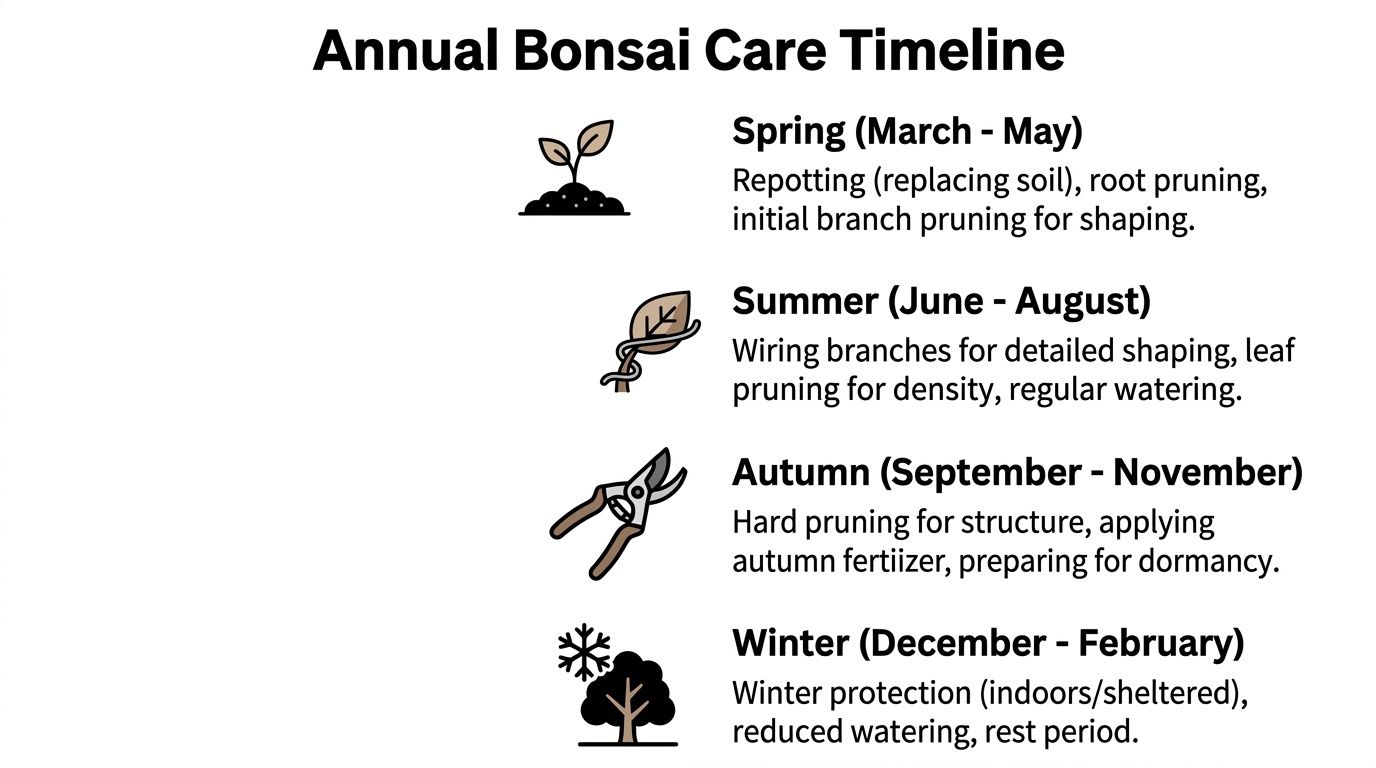
Spring work
Spring is the main engine room. Buds swell, roots wake up, and recovery is usually faster than it will be later in the year. For many bonsai, this is the best time for repotting and root work.
Repot because the root system needs fresh structure, not because the pot looks tired. If water starts running through channels, if the soil mass has broken down into fine sludge, or if the roots are circling heavily, the tree is asking for attention below the surface.
A practical spring setup is simple. Repot into a fast-draining bonsai mix, then wait until active growth resumes before feeding heavily. Once the tree is growing with confidence again, a steady product like Leaves & Soul 18-6-8 slow-release Bonsai Fertilizer Pellets fits the season well because it supports spring extension without forcing you into a complicated feeding schedule.
What to do in spring
- Repot trees that need it. Young, vigorous trees need it more often than older, slower specimens.
- Reduce roots with judgment. Deciduous trees often accept stronger root pruning than pines and junipers.
- Keep top pruning modest after root work unless the species and the tree's vigor clearly allow more.
- Set primary structure early while branches are still easy to position.
A strong tree can handle a demanding spring. A weak tree needs a narrower plan.
Later in spring, once shoots begin extending, shift from root work to shoot control. Pinch or prune to preserve shape and direct energy where you want it. If you want a clearer visual for branch selection, this practical bonsai pruning guide is worth keeping nearby at the bench.
A useful demonstration of seasonal work is below.
Summer work
Summer rewards restraint.
The tree is spending energy fast, especially in small pots and shallow trays. That makes summer the right season for maintenance pruning, careful wiring, and close observation. It is rarely the time for heavy repotting or major redesign unless you know the species well and have a clear reason.
Maintenance pruning in summer keeps the silhouette compact and prevents strong outer growth from shading weak inner shoots. On vigorous deciduous trees, this may mean repeated trimming. On conifers, it usually means more selective work. The trade-off is simple. Prune enough to preserve structure, but leave enough foliage to support the roots through heat.
Wiring without bark damage
Wire is one of the fastest ways to improve a bonsai and one of the fastest ways to scar it.
- Use the right gauge so the wire holds the branch without crushing it.
- Apply even coils and avoid trapping leaves, buds, or tender shoots.
- Check wire often during warm weather because branches can thicken quickly.
- Remove and rewire if needed instead of letting the wire bite in.
Good wiring is quiet work. The branch moves, the bark stays clean, and the tree keeps growing.
Summer is also when minor pest problems turn into infestations. If you monitor benches outdoors, keeping sticky stakes for pest control nearby can help you spot flying insect activity early while you're already checking wire and new growth.
Autumn work
Autumn is for correction and preparation.
Growth slows. The tree starts storing energy instead of spending it freely. This is the season to clean up, remove obvious excess, and prepare the structure you want to refine next year. It is also a good time to remove old wire before swelling and winter set make scars harder to avoid.
Autumn feeding should match that slower pace. If the tree is still healthy and active, continue a measured fertilizer program rather than pushing lush late growth. Slow, steady support works better than trying to force one last burst before cold weather arrives.
Autumn priorities
- Thin congested areas so light reaches interior buds and short shoots.
- Remove wire that is starting to mark even if the branch is not fully set.
- Clean up extension growth that spoils the outline or weakens balance.
- Prepare outdoor bonsai for seasonal exposure based on species, not guesswork.
Many growers overwork bonsai in autumn because the weather feels forgiving. The tree is less forgiving than the weather.
Winter work
Winter care is quieter, but it still shapes the next growing season. Dormant deciduous trees and many conifers benefit more from protection and observation than from ambitious styling.
Use winter to inspect branch lines, study scars, and plan the next repot or structural cut. Light pruning on suitable dormant material can make sense. Heavy intervention on a tree that is weak, recently repotted, or poorly rooted usually does not. Advanced work should wait until the tree has shown stable health over time. A bonsai that grows strongly in season gives you options. A bonsai that only survives gives you warnings.
A simple seasonal checklist
| Season | Main tasks | Main caution |
|---|---|---|
| Spring | Repotting, root pruning, early structural work | Do not combine every major job on a tree with weak vigor |
| Summer | Maintenance pruning, wiring, close monitoring | Watch for heat stress, wire bite, and fast drying |
| Autumn | Cleanup, wire removal, preparation for dormancy | Avoid forcing soft late growth |
| Winter | Protection, planning, light corrective work | Do not mistake dormancy for readiness for major stress |
Reliable bonsai progress comes from rhythm. Match pruning, wiring, repotting, soil condition, and feeding to the season in front of you, and the tree will respond with far fewer surprises.
Keeping Your Bonsai Healthy and Pest-Free
A healthy bonsai usually warns you before it collapses. Leaves lose sheen. Growth shortens. Soil stays wet too long, or dries in odd patches. Pests appear on weak growth first, not by accident but because the tree's defenses are already compromised.
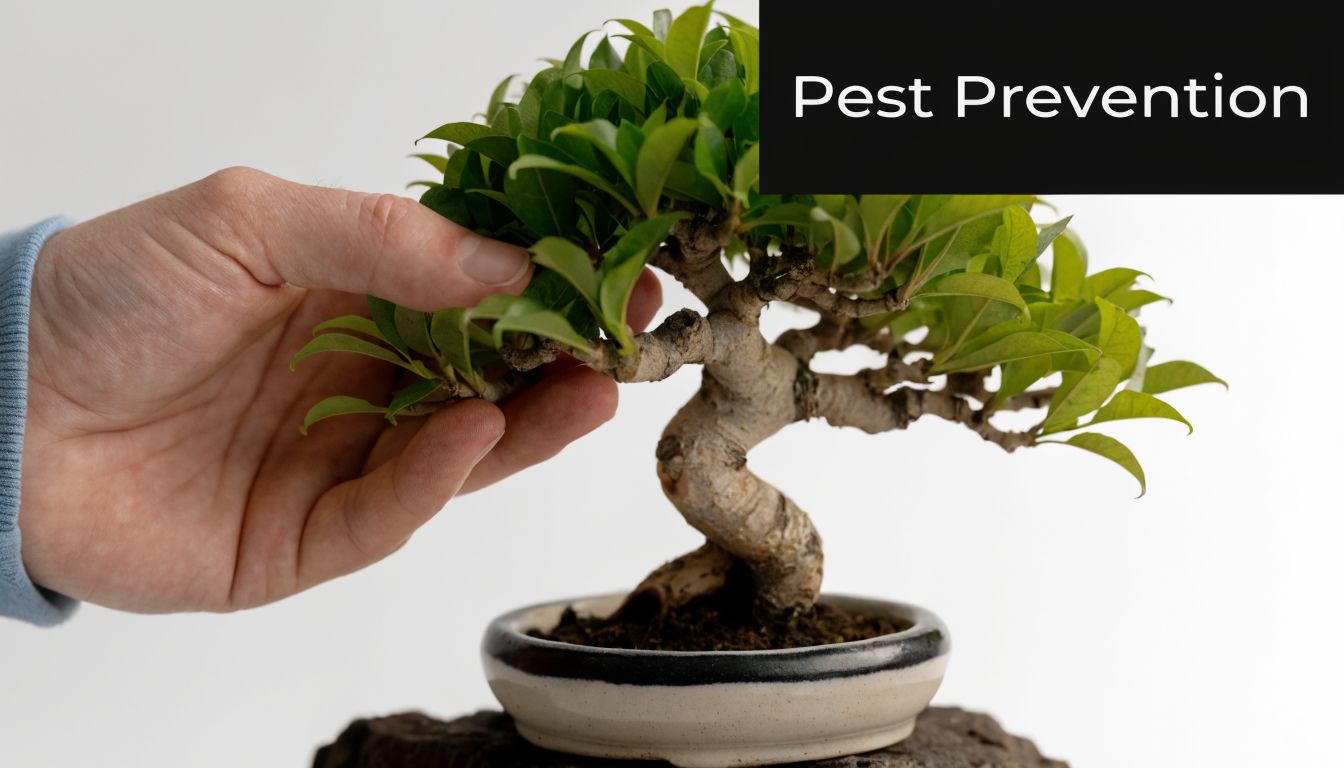
Learn to diagnose before you treat
Yellowing leaves don't always mean the same thing. On one tree, they're a sign of overwatering. On another, they're the result of drought, poor light, or roots that can no longer use the water in the pot effectively.
Start with observations, not products.
- Check the soil smell. Sour, stagnant odor points toward trouble below the surface.
- Look under leaves. Spider mites, aphids, and scale often show up where you aren't looking.
- Study the pattern. Uniform decline across the tree suggests root or environment issues. Isolated trouble may point to pests or localized damage.
Powdery mildew and similar fungal issues often follow stale air and crowded growth. Root rot usually begins with excess moisture held around oxygen-starved roots.
Salt buildup is a quiet problem
Many growers repot on schedule but ignore what happens between repottings. Fertilizer salts and mineral residues can accumulate, especially in shallow containers and hard-water conditions.
Long-term soil degradation from salt buildup causes 40% of advanced users' root rot issues, according to the Bonsai Empire FAQ page on general bonsai care problems here. That's one reason a bonsai can weaken even when the owner believes they're feeding and watering correctly.
Watch for these signs:
| Symptom | Possible meaning |
|---|---|
| White crust on soil or pot rim | Salt or mineral accumulation |
| Water running unevenly through the pot | Soil breakdown or compacted zones |
| Weak growth despite regular feeding | Roots may be stressed rather than underfed |
A periodic flush helps. Water thoroughly enough to wash accumulated residues through the drainage holes, then let the soil return to its normal moisture cycle. This won't fix exhausted soil forever, but it can buy time between repottings.
Healthy roots need both nutrients and relief from excess residue.
Prevention beats rescue
Most pest and disease issues become manageable if you catch them early.
A weekly inspection routine works better than occasional panic. Look closely at branch junctions, the undersides of leaves, and the soil surface. If flying pests are part of the problem around your growing area, simple monitoring tools such as sticky stakes for pest control can help you spot activity early and reduce nuisance insects around indoor setups.
Use this prevention routine:
- Keep airflow moving around the tree.
- Remove dead leaves and debris from the soil surface.
- Isolate troubled trees before pests spread.
- Avoid chronic overwatering because weak, soggy roots invite bigger problems.
The strongest defense is still sound culture. Trees in proper light, open soil, and a steady seasonal routine resist trouble better than trees kept in constant stress.
Your Simple Bonsai Care Routine
A good routine should fit on a page and still keep your tree on track. If it gets too complicated, it becomes hard to follow.
Daily
- Check soil moisture with a finger or chopstick.
- Look at the foliage for drooping, discoloration, or sudden drying.
- Notice the room and weather. Heat, drafts, and brighter days change water demand quickly.
Weekly
- Rotate the tree if it's indoors so one side doesn't weaken toward the window.
- Inspect for pests under leaves, along stems, and around the soil line.
- Clean the surface by removing fallen leaves, weeds, or old debris.
Monthly
- Review the tree's pace of growth. Strong extension means the current balance may be working. Stalled growth means something needs attention.
- Check wire if you've applied it. Branches thicken gradually.
- Assess fertilizer presence if you're using slow-release pellets, and avoid adding more just because it's easy.
Seasonal
- Spring is for repotting when needed and beginning the year clean.
- Summer is for watering discipline, maintenance pruning, and close observation.
- Autumn is for tidying structure and preparing outdoor species for rest.
- Winter is for protection and patience.
Miss a shaping opportunity if you must. Don't miss the signs of stress.
If you want to care for a bonsai tree well, think less about dramatic styling and more about repeatable habits. Check, observe, respond. A bonsai rewards consistency far more than intensity.
Frequently Asked Bonsai Questions
Can I keep a maple or pine bonsai indoors all year
Usually, no.
Temperate species such as maples and pines need a real winter dormancy period. Kept indoors year-round, they often decline because the seasonal cycle never arrives. One cited estimate says up to 70-80% of temperate bonsai fail when kept indoors continuously for that reason in this YouTube discussion on indoor dormancy issues.
If you live in an apartment, the practical answer is to plan for dormancy before winter arrives. An unheated garage, sheltered balcony, cold frame, or another protected but cold space is often more suitable than a living room. What matters is cool seasonal rest, not cozy indoor comfort.
Why did my bonsai weaken after repotting
Repotting stress usually comes from one of four mistakes.
- Too much root removed for the species and the tree's strength.
- Pruning and repotting stacked together too aggressively.
- Poor aftercare, especially watering errors right after root work.
- Weak soil structure, where the fresh mix doesn't match the species or environment.
After repotting, the tree needs stability. Protect it from extra stress, water carefully, and don't rush into styling work just because the repot is finished.
How do I tell overwatering from underwatering
This confuses nearly everyone at first because both can lead to wilt and yellowing.
Overwatered trees often sit in soil that stays wet too long. Growth softens, leaves may yellow and drop, and the pot can feel heavy for days. Underwatered trees usually dry quickly, leaves may crisp or curl, and the soil can pull away from the pot edge.
The deciding test is the root zone, not the leaf alone. Check the soil below the surface. If it's wet and the tree still looks weak, excess moisture may be the problem. If the root ball is dry and water runs through instantly, thirst is more likely.
The skill that matters most isn't memorizing symptoms. It's learning to compare foliage, soil, pot weight, and recent weather at the same time.
If you want dependable tools for bonsai care, from purpose-built soils and fertilizer to pots and accessories, browse Leaves & Soul. A well-matched setup won't replace observation, but it does remove a lot of avoidable guesswork.