


The most popular succulent-watering advice is often the least reliable: water once a week. That calendar rule ignores the pot, the soil, the light, the season, and the plant itself. A succulent in bright light and a gritty terracotta pot may dry far sooner than the same plant in a humid room inside a glazed container.
Learning how to water succulents properly starts with a different question. Don't ask, “Is it watering day?” Ask, “Is the root zone completely dry, and can this pot drain quickly?” Once you make that shift, watering becomes a practical observation rather than a guessing game.
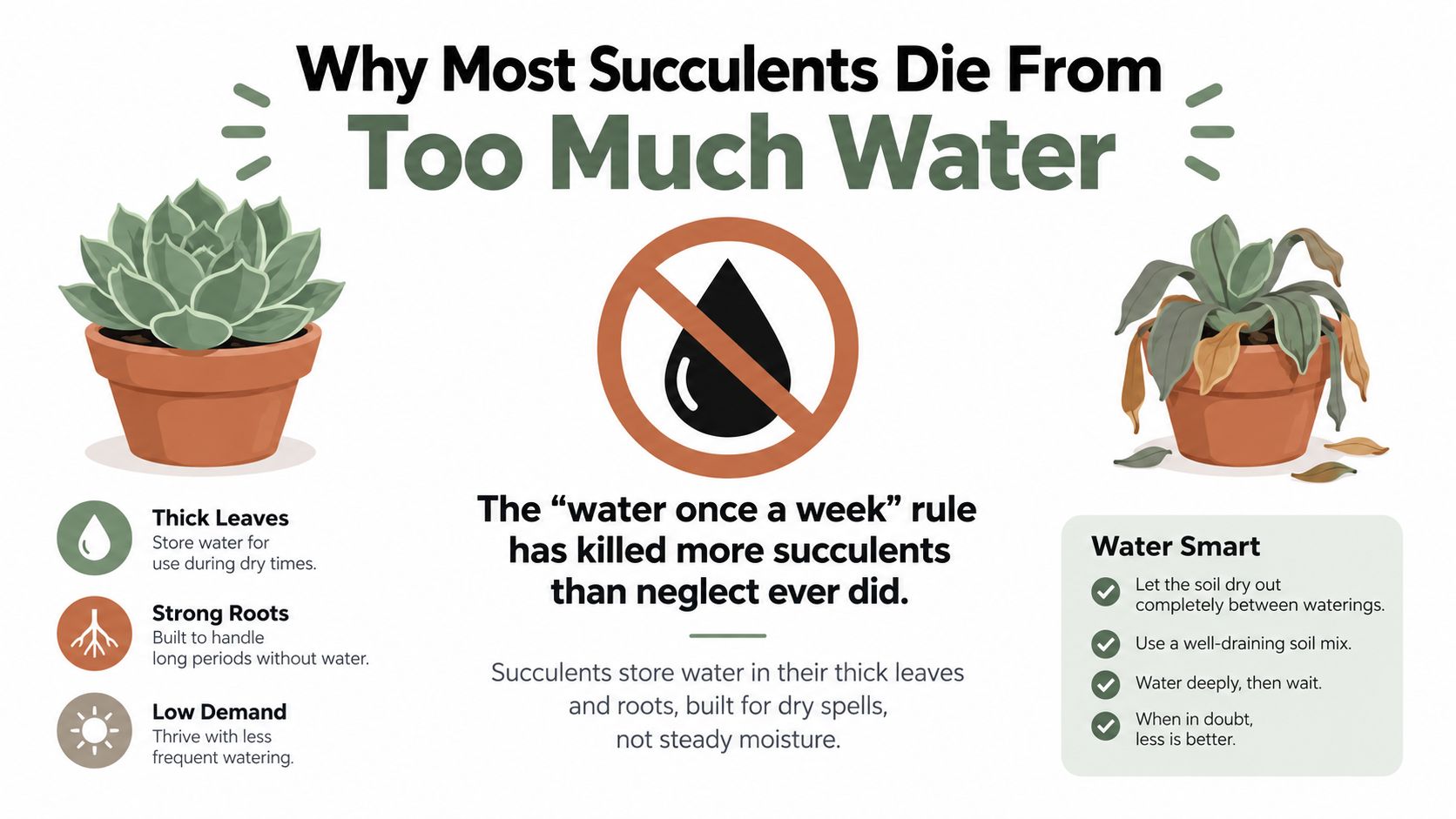
Why Most Succulents Die From Too Much Water
Succulents store moisture in their leaves, stems, and roots, which is why they tolerate dry spells far better than soggy soil. The roots can handle a dry interval. They fail fast when the mix stays wet and airless too long. Overwatering usually is not one big flood, it is watering again before the root zone has fully dried.
The weekly rule breaks down indoors because conditions change from room to room. Iowa State University Extension notes that indoor succulents often fall into a rhythm of once every 2 to 3 weeks, but light, humidity, soil texture, and container size all shift that timing. West Virginia University Extension gives a seasonal benchmark of about once a week in spring and summer, then once every 2 to 3 weeks in winter, while warning that small, frequent waterings can cause distorted, weak growth. (Iowa State University Extension guidance)
Why wet soil causes trouble
Roots need water and oxygen at the same time. In a saturated mix, the air spaces fill with water, and the roots cannot work normally. A plant may then look thirsty because the damaged roots are not pulling moisture the way they should, which is how many beginners end up watering an already stressed plant again.
The first signs are easy to misread:
- Soft leaves: A dry leaf often wrinkles but stays firm. A waterlogged leaf usually feels swollen, limp, or translucent.
- Yellowing at the base: Lower leaves can yellow as the root system struggles.
- A collapsing stem: Rot often starts at the soil line and moves upward, so the top may still look fine while the base is already failing.
- Persistent dampness: If the mix stays wet long after watering, the issue is usually the setup or the room conditions, not a need for more water.
Practical rule: A succulent needs a full wet-dry cycle, not a string of small drinks.
The reliable pattern is simple. Water thoroughly, let the excess drain away, then wait until the soil is completely dry before watering again. An infographic explaining why overwatering kills succulents, featuring healthy and unhealthy plant examples with watering tips. Extension guidance supports this approach, with winter watering reduced to only what keeps plants from shrinking or withering in many indoor setups. Kindness becomes a mistake when it keeps the roots damp every few days.
Set Up Soil and Pot for Healthy Watering
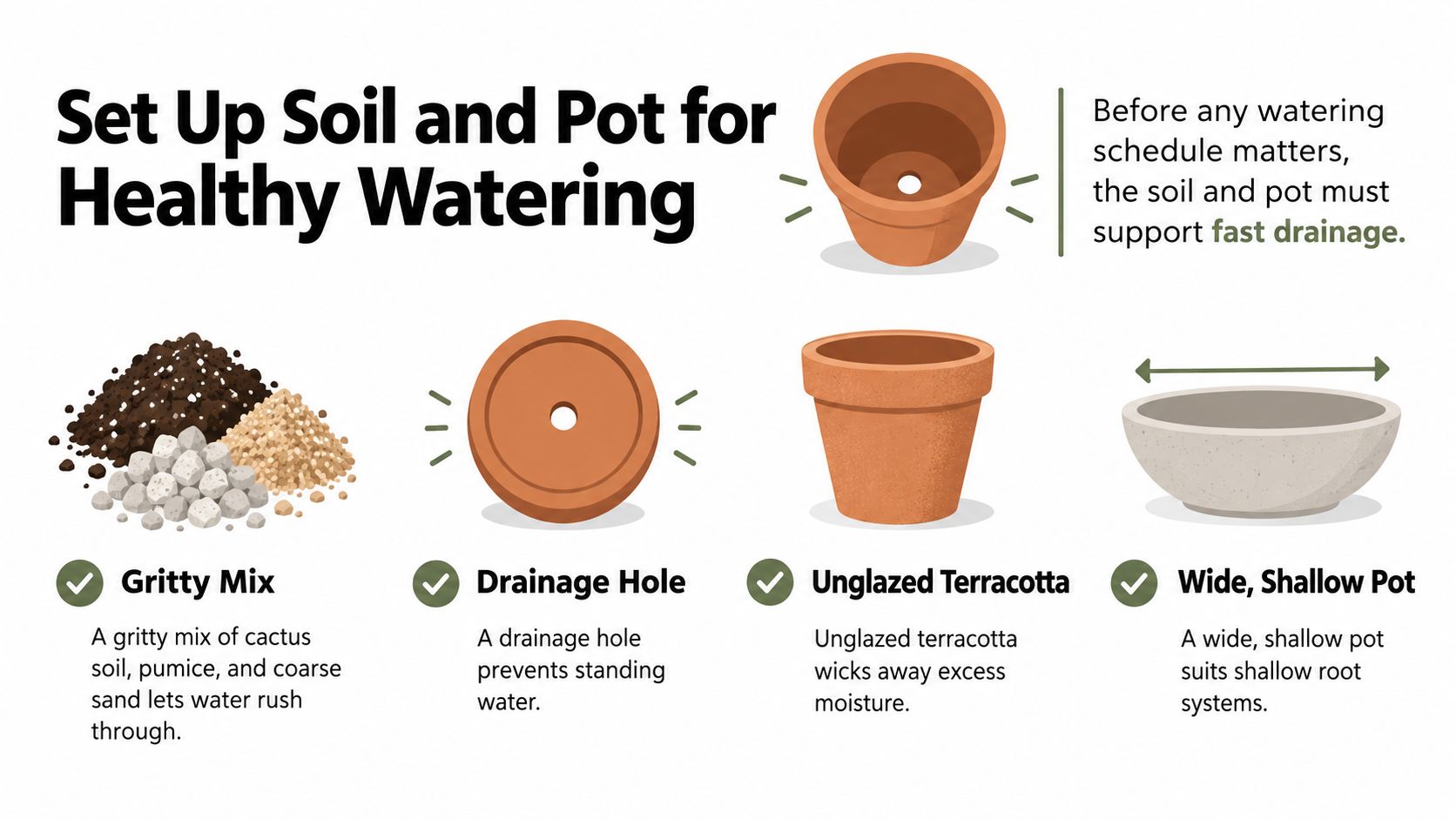
Watering technique can't compensate for a pot that traps moisture. Before you adjust frequency, inspect the container and the mix. A succulent needs a medium that becomes fully wet during watering but releases excess moisture quickly afterward.
A practical mix starts with cactus soil amended with mineral material such as pumice and coarse sand. The aim isn't to follow one perfect recipe. The aim is to create open spaces that let water move through and air return to the roots. Dense, organic-heavy potting soil behaves more like a sponge, especially indoors, and can stay damp well after the surface looks dry.
For a deeper look at choosing an appropriate indoor mix, use this guide to the best soil for indoor succulents.
Choose the container before the schedule
A drainage hole is essential for container-grown succulents. After watering, excess water needs an exit route. Empty the saucer rather than letting the pot sit in runoff.
Unglazed terracotta can help because the porous material allows moisture to leave through the sides. Plastic and glazed containers can still work, but they generally require closer monitoring because the mix may dry more slowly. A shallow pot is often easier to manage than a deep one, provided it gives the roots enough room and includes drainage.
Avoid oversized containers. A pot that holds far more mix than the root ball can keep a large reserve of moisture around a small root system. Choose a container only modestly wider than the roots, then reassess after the plant establishes.
Drainage principles also apply outside the pot. If you're planning a patio or courtyard where containers sit on paving, a resource on drainage solutions for luxury homes can help you think about runoff, standing water, and surface grading at a larger scale.
Check the root zone, not just the surface
A dry crust on top doesn't prove the center of the pot is dry. Push a wooden chopstick into the mix and inspect what comes out. Dark, damp particles indicate remaining moisture. A clean, dry stick suggests the probe reached a dry area, although dense roots can make the test less clear.
A moisture meter can help with larger pots, but it's not a substitute for learning the pot's weight. Lift the container immediately after a thorough watering, then lift it again as it dries. Over time, the difference becomes one of the most useful signals in your routine.
The Soak-and-Dry Watering Method
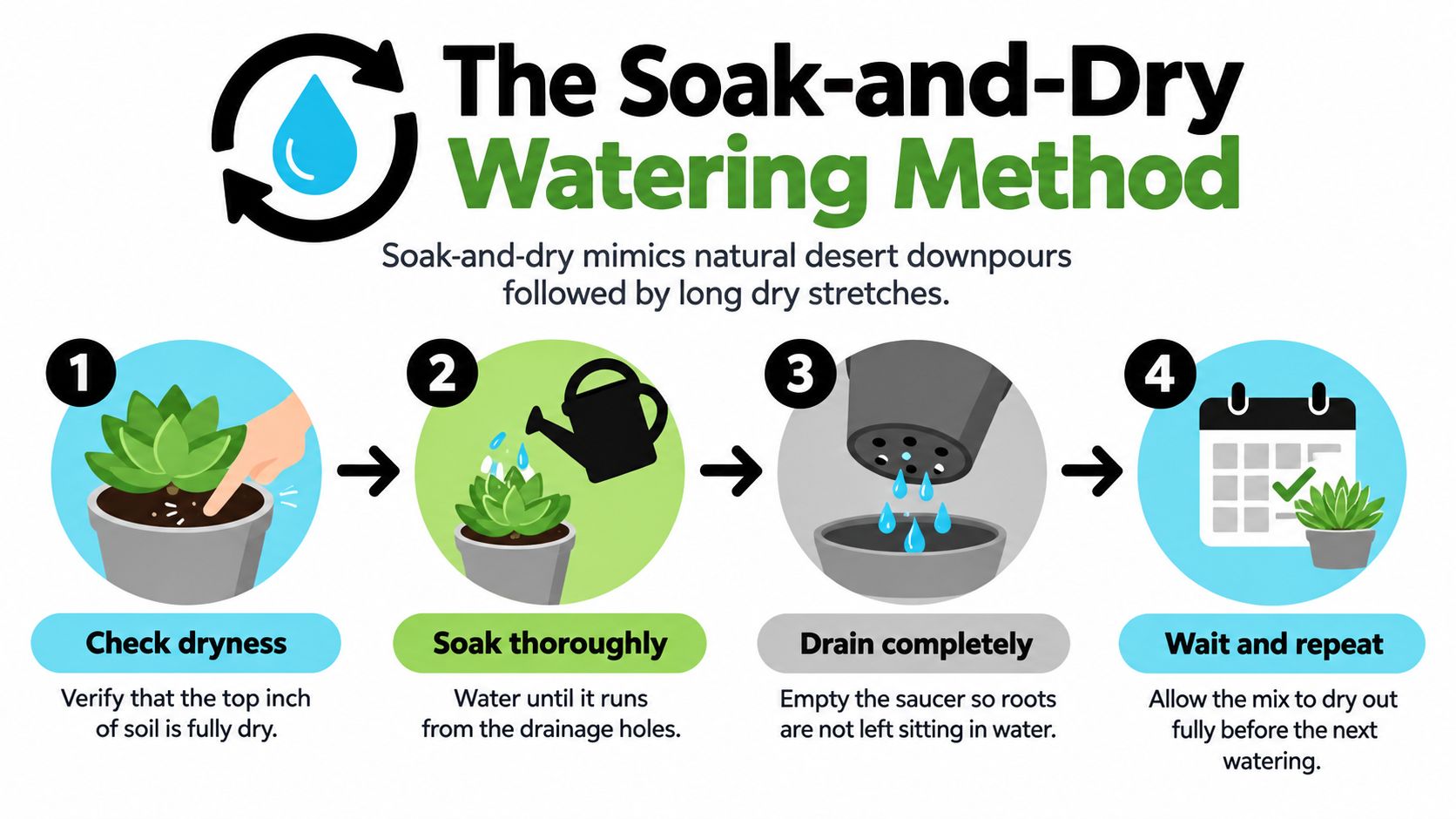
The soak-and-dry method works because it gives the entire root ball a proper drink, then provides the dry interval roots need afterward. It's more dependable than sprinkling a small amount over the surface, which can leave the lower mix dry while keeping the upper layer inconsistently moist.
Start by checking the pot. The mix should be dry through the root zone, not merely dry at the surface. Insert a finger or chopstick into the soil, inspect the drainage area if accessible, and compare the pot's weight with its usual freshly watered weight.
Follow the four-part cycle
- Check dryness. Confirm that the mix has dried out completely. For a small pot, the whole container should feel light and the mix should be dry rather than cool and clumped.
- Soak thoroughly. Pour slowly over the soil at the base of the plant. Continue until water runs freely from the drainage hole. This saturates the root ball instead of wetting only the top layer.
- Drain completely. Let the container finish draining, then empty the saucer or tray. Roots shouldn't sit in standing water.
- Wait and repeat. Put the plant back in its growing position and wait until the root zone dries fully again.
Montana State University Extension describes this soak-and-dry approach as a core method for container succulents, including thorough watering through the drainage holes and removing excess water from the saucer. (Montana State University Extension guidance)
Pouring from the top is suitable for many plants, especially when you direct the stream at the soil and keep water out of the crown. Rosette-shaped plants can be more vulnerable when water collects between leaves, so bottom watering can be useful when the mix has become compacted or when the foliage sits close to the soil.
For bottom watering, place the draining pot in a shallow tray of water and let the mix draw moisture upward. Remove the pot once the root zone is evenly damp, allow it to drain fully, and empty the tray. The method is helpful, but it still requires a complete dry-down afterward. Bottom watering isn't permission to leave the container standing in water.
For broader guidance on indoor plant watering habits, see how to water indoor plants.
Misting doesn't replace this process. It may dampen the foliage or surface without hydrating the deeper root zone, and repeated light applications can keep the top layer inconsistently moist. A full soak followed by a genuine dry period is easier to assess and kinder to the roots.
Watering Frequency by Season and Environment
A calendar can remind you to check a succulent, but it cannot tell you when to water. Root-zone dryness is the deciding signal. Light, temperature, humidity, airflow, pot size, and the plant's growth rate can make two identical pots dry at very different speeds.
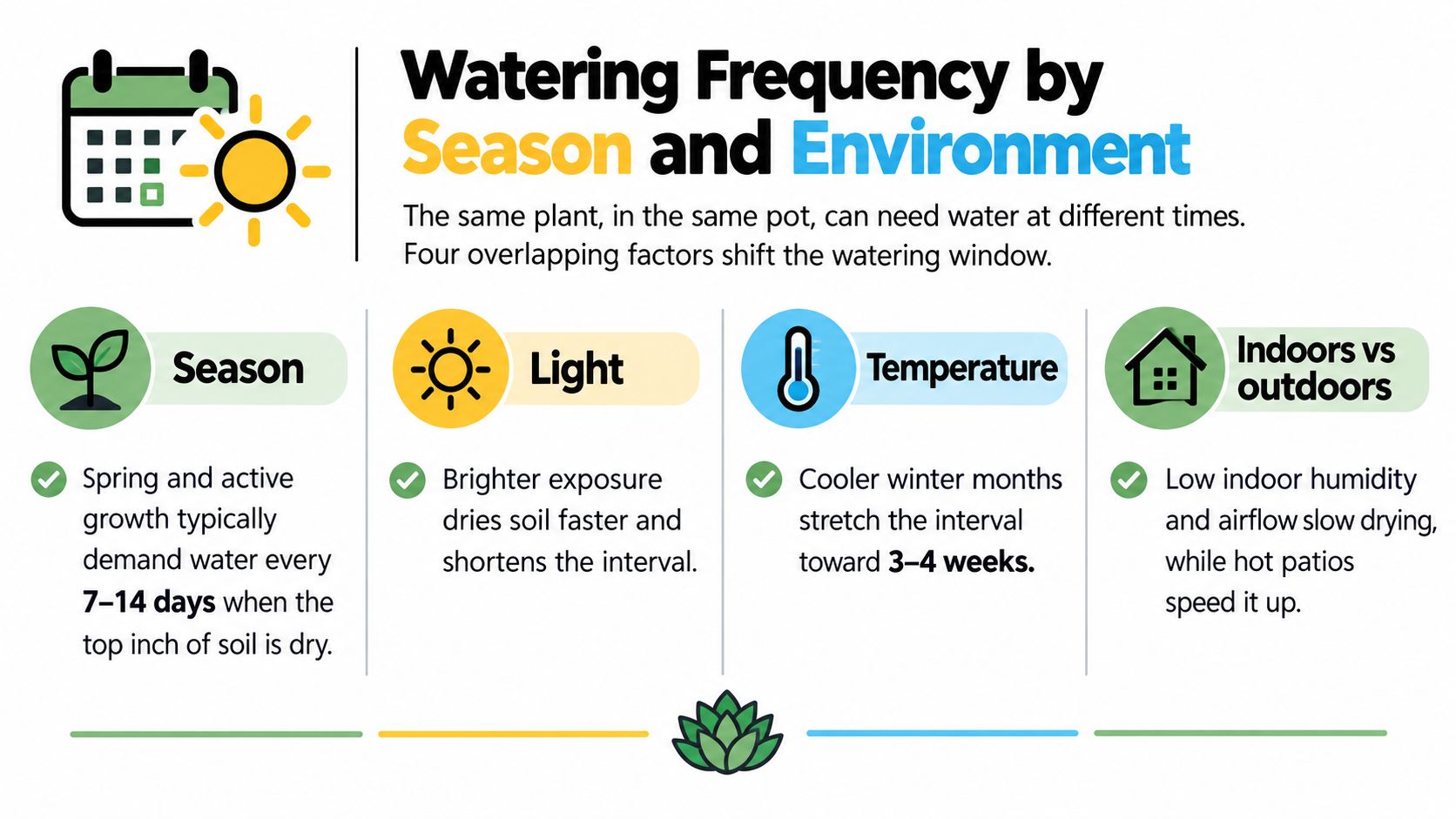
For indoor succulents growing actively, every 7 to 14 days in spring and summer is a reasonable starting point, only after the root zone has dried. In winter, the interval may extend to 2 to 3 weeks or longer as light levels drop and growth slows. Treat these ranges as checkpoints, not instructions. A plant in bright light may dry sooner, while one in a cool, dim room can remain damp well beyond the expected date. Check the mix before adding water.
Read the room around the plant
Light changes demand. A succulent beside a bright window usually uses moisture faster than one several feet away in a dim room. Strong light can support active growth, while low light often leaves the mix wet longer.
Airflow affects dry-down. Gentle moving air helps the pot dry more evenly. A crowded shelf, stagnant corner, or humid bathroom can slow evaporation. Keep the plant away from direct heating or cooling vents, since rapid temperature changes can stress it even when the container dries quickly.
Container size matters. A small terracotta pot may become light soon after watering. A large plastic pot can hold moisture in its center for much longer. A dry surface does not prove that the root zone is dry, so check below the top layer and compare the container's weight.
Season changes plant behavior. Spring and summer often bring active growth. Winter can reduce water use, even in a heated home, because available light is lower. Some established succulents in dry climates may need irrigation only every 21 to 45 days, while bright indoor conditions can shorten the interval. Arizona Extension watering guidance also shows why local conditions matter more than a universal calendar.
Keep a simple dry-down log
Choose one day for inspection, not automatic watering. Record the pot's weight, the probe or chopstick result, the plant's location, and whether growth is active.
A useful entry might say, “Pot still heavy, mix cool below the surface, no water.” Later, a lighter container and a clean, dry probe confirm that the dry-down is progressing. After a few checks, the record reveals how that particular plant behaves in your home.
Weather, light, and airflow set the schedule. The calendar only tells you when to check.
Different Succulent Types Need Different Schedules
“Succulent” covers plants with very different water demands. Leaf thickness, root structure, growth pattern, temperature, airflow, and light exposure all affect how quickly the root zone dries. Two plants on the same shelf may need separate checks, even when they were watered on the same day.
Echeveria and Graptopetalum often show thirst through less-plump leaves and a lighter container. Their tight rosettes also make it easy for water to collect in the center, so direct water at the soil instead. Haworthia and Aloe store substantial moisture and often tolerate a longer dry period. Still, a shaded Haworthia in a glazed pot can remain wet far longer than an Aloe in bright light and terracotta.
Sedum may use water quickly during strong-light growth. Crassula, including jade plants, develops woody stems but can suffer when roots stay cold and wet. Cacti generally need the longest dry-down among these types. Aeonium and some Sempervivum follow different seasonal rhythms, with growth that may become more active during cooler periods rather than summer.
| Succulent Type | Active Season Check | Dormant Check | Root-Zone Cue |
|---|---|---|---|
| Echeveria and Graptopetalum | Check once the mix dries out completely | Extend checks in low light | Leaves lose firmness before severe stress |
| Haworthia and Aloe | Wait for the root zone to dry fully | Water sparingly as growth slows | A shaded pot may stay heavy for a long time |
| Sedum | Check more often during visible growth | Reduce watering in cool, dim conditions | Fast new growth can use moisture quickly |
| Crassula and jade | Water after the mix has dried well | Keep roots drier in cold conditions | Soft lower leaves may indicate wet roots |
| Cacti | Allow a long dry period between thorough soaks | Provide very little moisture | Wrinkling can signal thirst, while softness suggests trouble |
| Aeonium and Sempervivum | Follow the plant's active growth period | Check based on actual seasonal slowdown | Their growth season may differ from other succulents |
Use the table as a set of inspection prompts, not a calendar. Push a finger or wooden stick below the surface, compare the pot's weight, and check whether the root zone is dry before watering. Light, temperature, pot material, and airflow can change the interval more than the plant label does.
Outdoor growers choosing low-water companions can also consult regional Austin drought-tolerant garden picks to match plants with local conditions, rather than assuming every drought-tolerant species has identical watering needs.
Spotting Overwatering and Underwatering Early
Diagnosis starts with touch, not panic. A lower leaf that feels wrinkled but firm may be responding to dryness. A lower leaf that feels swollen, translucent, or mushy points toward excess moisture or tissue damage.
A common overwatering pattern appears in a Haworthia kept in a glazed pot. The mix remains damp, the lower leaves turn yellow, and the base becomes soft. If there's a sour smell, a collapsing stem, or dark tissue near the soil line, stop watering and inspect the roots rather than trying to correct the problem with another drink.
When the plant is too wet
Remove the plant gently and inspect the roots. Healthy roots should feel firm rather than slimy. Trim away black or mushy material with clean scissors, allow the remaining healthy portions to dry as appropriate for the damage, and repot into fresh, fast-draining mix. Don't return a compromised plant to the same saturated soil and expect the schedule alone to solve it.
A string-of-pearls presents the opposite problem when it has been forgotten for a long period. The beads become wrinkled and the stems may look thin, but the plant can still recover if the tissue remains firm and the roots are viable. Give the mix a thorough soak, let it drain, and observe the response instead of repeating the watering immediately.
Use a short tactile checklist
- Squeeze a lower leaf: Firm and wrinkled often suggests dryness. Soft and translucent is more concerning.
- Inspect the stem at the soil line: Look for darkening, collapse, or a wet-looking texture.
- Check the mix below the surface: Surface dryness means little if the center remains damp.
- Smell the root area: A foul odor supports the suspicion of decay.
- Inspect roots when necessary: Firm, light-colored roots are more reassuring than black, slimy tissue.
Crispy, papery leaves indicate more advanced dehydration than mild wrinkling. Rehydrate gradually through a proper soak, then improve the dry-down routine and light conditions. Don't compensate for a dry month by keeping the plant permanently wet afterward.
If you find soft roots or a collapsing base, use this guide to identify root rot signs and fixes.
Change one variable at a time. After adjusting watering, give the plant 48 hours before making another major change, unless rot is actively spreading and requires immediate removal. That pause makes it easier to tell whether the plant is responding to water, drainage, light, or a damaged root system.
Build a Confident Watering Routine
Pick a regular dry-check day, then inspect rather than automatically watering. Push a finger or wooden chopstick about two inches into the mix where the pot allows it, lift the container, and water only when both the root-zone check and the pot weight indicate a genuine dry-down. (Arizona Extension moisture-check guidance)
Keep this short checklist beside your plants:
- Drainage: Confirm every container has a clear drainage hole.
- Potting mix: Use a loose, fast-draining medium rather than dense garden soil.
- Watering method: Soak the root ball thoroughly, then let the container drain completely.
- Timing: Morning watering gives the plant and pot time to dry during the day.
- Tracking: Note the last watering in a calendar or phone app, but don't let the date override the dryness check.
- Adjustment: Account for light, airflow, humidity, season, pot material, and plant type.
Confidence comes from observing patterns, not following a rigid weekly rule. A recovering succulent needs stable light, a suitable pot, and consistent dry checks. Sudden swings between drought and saturation create more confusion than a measured routine.
Leaves & Soul offers purpose-built soils, fertilizers, and plant-care supplies for succulents, cacti, and other indoor plants, giving you practical setup options before you start a soak-and-dry routine. Visit Leaves & Soul to choose the soil and care tools that fit your plants, then use the root-zone checks in this guide to water with confidence.