


You water on schedule, choose a bright window, and still find yellow leaves, soft stems, or a plant that seems to collapse after every drink. The instinct is to blame watering technique, but the hidden problem may be the material around the roots. Soil amendments for houseplants change how much water, air, and structure the potting mix can provide.
A good amendment isn't a magic ingredient added automatically to every pot. It solves a specific problem. Perlite can open a dense mix, coco coir can slow moisture loss, and bark can preserve larger air spaces. The right choice depends on the plant, the existing mix, and the symptom you're trying to correct.
Why Your Houseplant Soil Might Be Failing
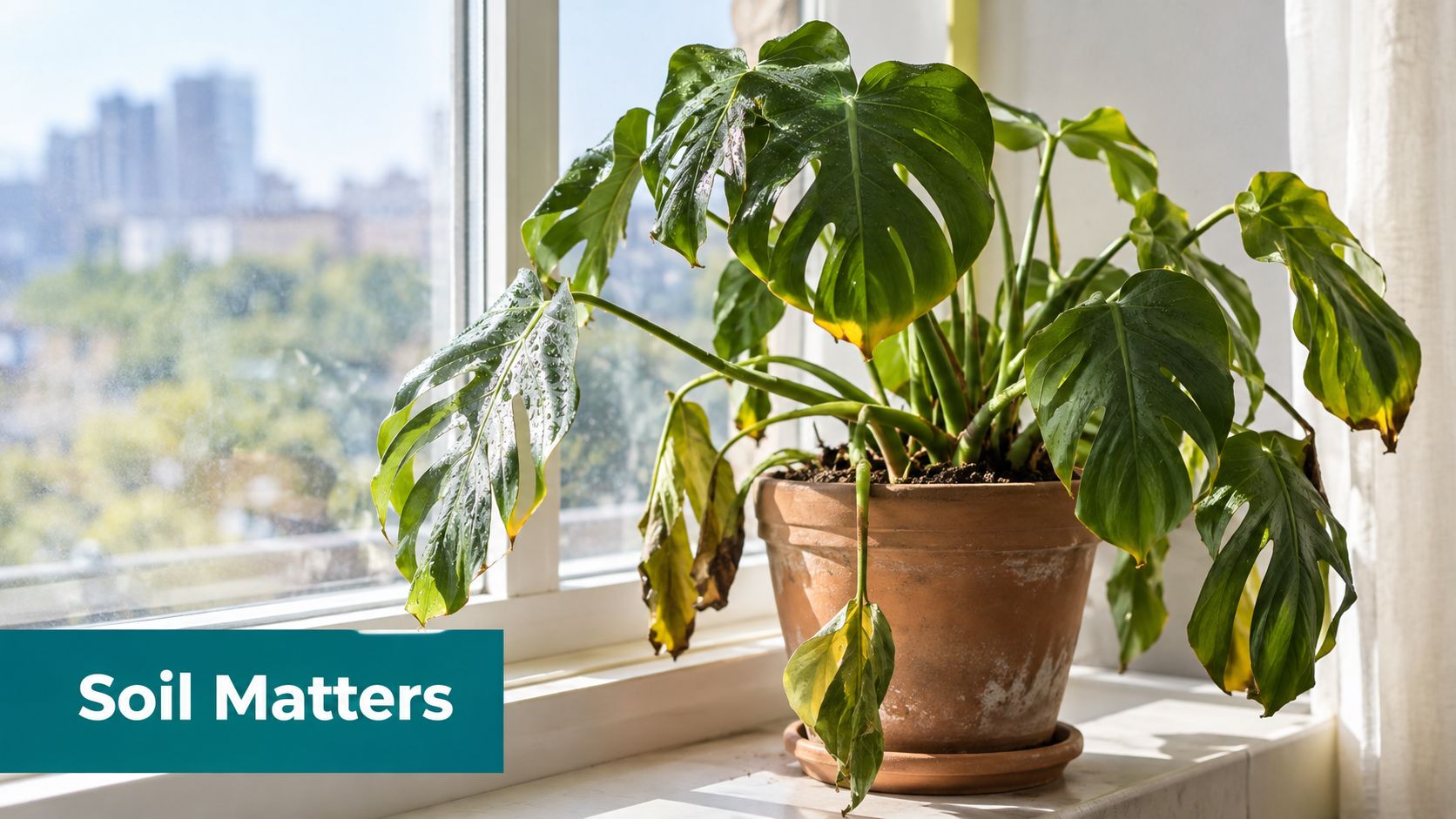
A Monstera on a sunny windowsill may receive careful watering and still develop yellow leaves. You check the pot, find that the surface looks dry, and water again. Beneath that surface, however, the lower mix may remain wet and compacted, leaving roots with little oxygen. Yellowing then becomes easy to misread as thirst or hunger when the core issue is poor root-zone structure.
Roots need more than moisture
Roots need water, but they also need air-filled spaces between particles. Dense garden soil or a fine potting medium can collapse around roots, slowing drainage and reducing oxygen diffusion. A container has no surrounding ground to dilute that problem, so the physical texture of its mix matters enormously.
That's why modern indoor growing has moved toward light, porous media rather than ordinary garden soil. Clemson Extension describes “peat-lite” mixtures built from peat moss with perlite or vermiculite, along with foliage-plant recipes that combine peat, perlite, coarse sand, or pine bark. The Clemson Extension guide to indoor plant soil mixes also reflects a longer history of container growers improving soil with amendments. Soil amendments were recognized as useful for plant growth by the early 1800s, while indoor culture later standardized around media designed for drainage and root oxygen.
Practical rule: Amend the mix to correct a physical or chemical problem, not because every plant needs the same recipe.
Read the pot before changing the recipe
Look for clues rather than immediately adding ingredients:
- Water pooling: The mix may contain too many fine particles or may have become hydrophobic after drying.
- A sour smell or soft roots: Prolonged saturation is more likely than simple underwatering.
- A pot that dries almost immediately: The medium may lack water-holding material, or the plant may be heavily root-bound.
- Soil pulling from the pot wall: The mix may have shrunk and become difficult to re-wet evenly.
- A dense root ball: Roots may have filled the container, leaving little usable mix.
Amendments help when they restore balance. They create a mismatch when you add fast-draining minerals to a plant that already dries too quickly, or moisture-retentive material to a pot that stays wet. The best diagnosis starts with the plant's symptoms and the behavior of the mix, not with a shopping list.
The Three Jobs Every Soil Mix Must Perform
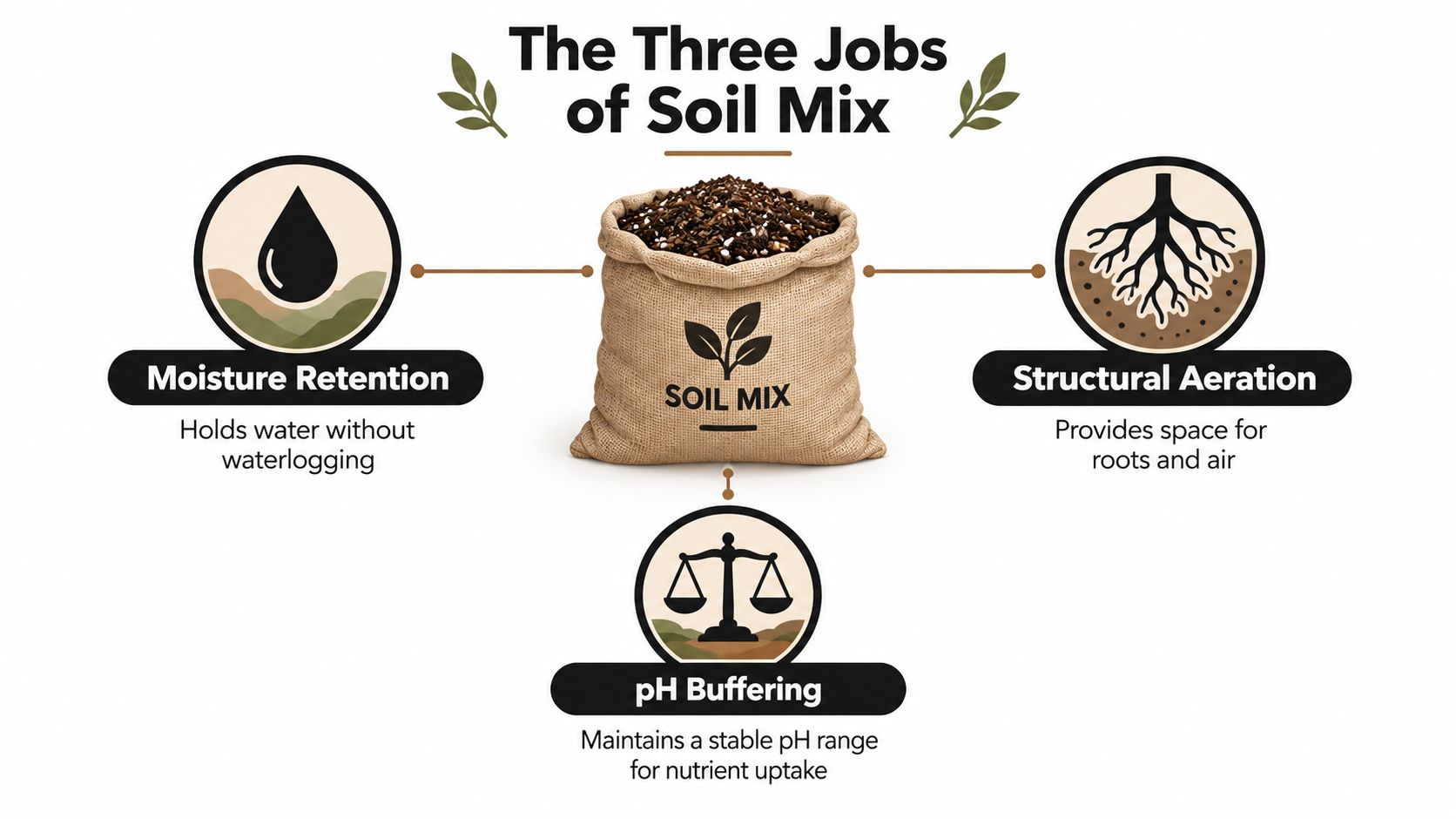
A useful potting mix works like a well-designed apartment building. One part stores water for later, another keeps the structure open, and a third helps maintain the chemical conditions roots need to access nutrients. If one function dominates, the whole building becomes uncomfortable. A waterlogged mix is like an apartment with no ventilation, while an excessively mineral mix is like a building with no water storage.
Moisture retention
The base of a mix needs to hold enough water for roots to use between irrigations. Coco coir, peat moss, aged compost, and some fine organic materials perform this job. Coco coir is generally described as near-neutral, typically around pH 5.5 to 6.8, according to guidance on coco coir and perlite.
Moisture retention doesn't mean permanent wetness. A mix that holds every drop can leave roots saturated, especially in a dim room or an oversized pot. The useful question is whether the medium stores water while still releasing excess moisture through the drainage holes.
Structural aeration
Perlite, pumice, coarse bark, and other chunky materials create larger spaces around roots. Those spaces allow air to move through the mix and give excess water somewhere to go. Pennsylvania State Extension explains that heated perlite expands from four to 20 times its original volume, producing a lightweight, porous amendment used to improve drainage. You can read the Penn State overview of perlite in potting media for the material's physical background.
Roots don't need a pot full of air, either. Too much coarse, inert material can make the mix dry quickly and reduce the time nutrients remain available. Aeration is valuable only when it works alongside appropriate moisture storage.
pH buffering
A mix also needs a chemically suitable root environment. Many broad houseplant recommendations target a root-zone pH near 6.0 to 7.0, a moderate range that supports nutrient uptake for many indoor plants. Houseplant mix guidance from Yardique describes a starting structure that combines organic water-holding material, an aerator such as perlite or pumice, and additional structural ingredients.
Lime can help offset acidity, while sulfur can lower pH, but neither belongs in a recipe by default. Test first when possible, especially if you're combining unusual materials. Changing pH without understanding the existing mix can create a new problem instead of solving the original one.
Common Soil Amendments and What Each One Does
Choose an amendment by matching it to the plant's water use and the symptom you see. A mix that dries too slowly needs more air space or larger particles. A mix that dries before roots can use its stored water needs better moisture retention. Perlite and bark change structure, coco coir stores moisture, and lime or sulfur changes pH. Fertilizer supplies nutrients, but it cannot correct compacted soil.
Structural ingredients
Perlite is the lightweight white material found in many commercial mixes. Its irregular particles create air spaces and help excess water leave the root zone without adding much weight. A general indoor mix may use it at roughly 15% to 30% by volume, while aroid mixes may use 20% to 40%. Treat those figures as starting points, not fixed rules. A moisture-sensitive plant in a warm, dry room may dry too quickly if the proportion is high.
Vermiculite holds more water than perlite. It can suit seedlings or plants that struggle when the surface dries rapidly. In a pot that already remains wet for days, however, it adds moisture to the wrong side of the balance.
Bark provides durable chunks that keep decomposing organic material from forming a fine, compressed mass. Fine bark supports smaller roots and containers, while coarse orchid bark creates larger cavities for plants with thicker roots. Oversized pieces can leave young or fine-rooted plants with gaps their roots cannot use well.
Pumice, coarse sand, and clay pebbles add mineral structure, weight, and larger channels. They can help succulents, cacti, bonsai, and aroids when the current mix feels dense. Sand must be coarse. Fine sand settles between larger particles, much like flour filling the spaces between gravel, and may reduce drainage instead of improving it.
Moisture and biological ingredients
Coco coir stores water while keeping more open space than many fine organic materials. Use it when a plant dries too quickly, but reduce it when the pot stays heavy and wet. The right amount depends on the plant, pot size, light, temperature, and watering interval, so the same coir-rich mix will not behave identically in every home.
Compost and worm castings add organic matter and nutrients. They also contain fine particles, which can make a container mix heavy and slow to drain when used excessively. Measure them as supporting ingredients rather than filling the pot with them.
Biochar may change pore structure, moisture storage, nutrient behavior, and microbial activity. Its effect depends on the material and the rest of the recipe. Blend it thoughtfully, and avoid treating it as a cure for poor drainage or inconsistent watering.
A fuller explanation of how these materials function appears in this guide to common potting mix ingredients.
Chemical adjustments and nutrition
Lime raises pH and can provide calcium. Sulfur lowers pH after soil biology converts it. Use either only when the existing mix and the plant's needs justify the change. Yellow leaves can also result from root damage, excess moisture, weak light, or inadequate nutrition, so inspect those causes before adding a pH amendment.
Fertilizer feeds the plant but does not create air space or improve drainage. Mycorrhizae and other biological products may support root-zone biology, yet they cannot compensate for a pot that holds water because its structure is too fine.
| Amendment | Primary Function | Ideal Volume % | Best For |
|---|---|---|---|
| Perlite | Aeration and drainage | 15% to 30% | General houseplants and dense mixes |
| Coco coir | Moisture retention with open structure | 30% to 40% as a base component | Tropical foliage and moisture-sensitive plants |
| Bark | Long-term structure | Recipe dependent | Aroids, orchids, and woody plants |
| Vermiculite | Moisture retention | Recipe dependent | Plants needing slower drying |
| Pumice or coarse sand | Mineral drainage and weight | Higher mineral content where needed | Succulents, cacti, bonsai |
| Compost or worm castings | Organic matter and nutrition | Moderate, not the whole mix | Established plants needing organic support |
| Lime or sulfur | pH adjustment | Only after assessment | Mixes requiring chemical correction |
Custom Soil Recipes for Popular Houseplants
A plant that dries out in two days needs a different mix from one that stays wet for two weeks. Choose amendments by matching the plant's root needs with the symptom you observe, then measure every ingredient by volume using the same cup or scoop.
Fiddle leaf figs
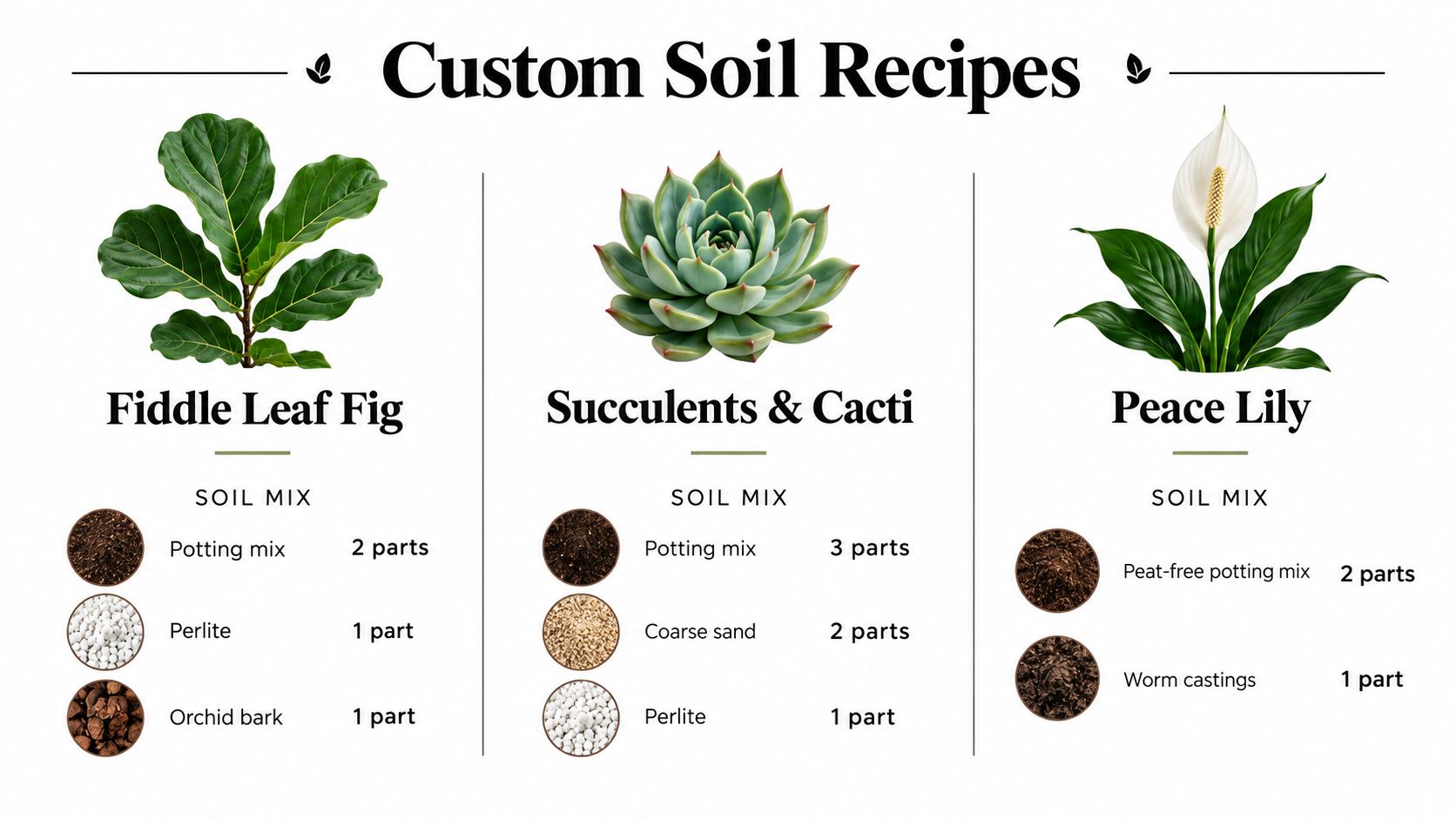
Begin with two parts quality potting mix, one part perlite, and one part orchid bark. The potting mix stores moisture, while perlite and bark create air spaces so roots are not surrounded by a dense, wet mass. If the pot dries very quickly in a dry room, add slightly more base mix. If water lingers near the bottom, increase the bark or perlite instead.
Fiddle leaf figs need a middle ground. Dense garden soil can restrict air and drainage, while an overly mineral mix can dry before the roots absorb enough moisture. For more plant-specific guidance, see this houseplant soil mix guide.
Succulents and cacti
Start with three parts potting mix, two parts coarse sand, and one part perlite. The mineral portion opens drainage routes through the organic material, reducing the time fine particles remain wet around shallow roots. If the mix is still damp well after watering, increase the mineral component. Keep some organic material because roots still require moisture and nutrient support.
Orchids
Use a chunky orchid medium built around coarse bark. Add a smaller amount of perlite or another open mineral ingredient if the bark dries too rapidly. Orchid roots need air, so fine, peat-heavy material can behave more like a sealed sponge than an open root zone. Match the bark size to the orchid's roots and the ventilation of its container.
Bonsai
Bonsai mixes must hold the plant steady while balancing drainage with water storage. A mineral-forward blend of pumice, clay-based particles, and a smaller organic fraction can provide that structure. A moisture-loving species may need more organic material than a drought-tolerant species. “Bonsai soil” describes a purpose, not one universal texture.
Calatheas and ferns
These plants generally need moisture that lasts without eliminating air pockets. Try two parts coco coir, one part fine bark, and one part perlite, then watch the drying pattern. Coir slows moisture loss, bark keeps the mix from becoming uniformly fine, and perlite maintains spaces for air. Add more coir if the pot dries too quickly. Add more structure if it remains saturated.
Monsteras and philodendrons
Use two parts potting mix, one part orchid bark, and one part perlite or pumice. Aroids prefer free drainage with enough organic material to prevent immediate drying. In a warm, bright room, a slightly higher organic fraction may suit the faster water use. In a cool, dim room, more structure and less frequent watering can reduce the risk of a persistently wet root zone.
When and How to Apply Soil Amendments
Amendments work best during repotting, when you can inspect the roots and distribute the ingredients through the entire root zone. Start by comparing the old mix with the plant's needs. If it still drains evenly, supports the plant, and doesn't remain saturated, changing it may create more disturbance than benefit.
A practical repotting process
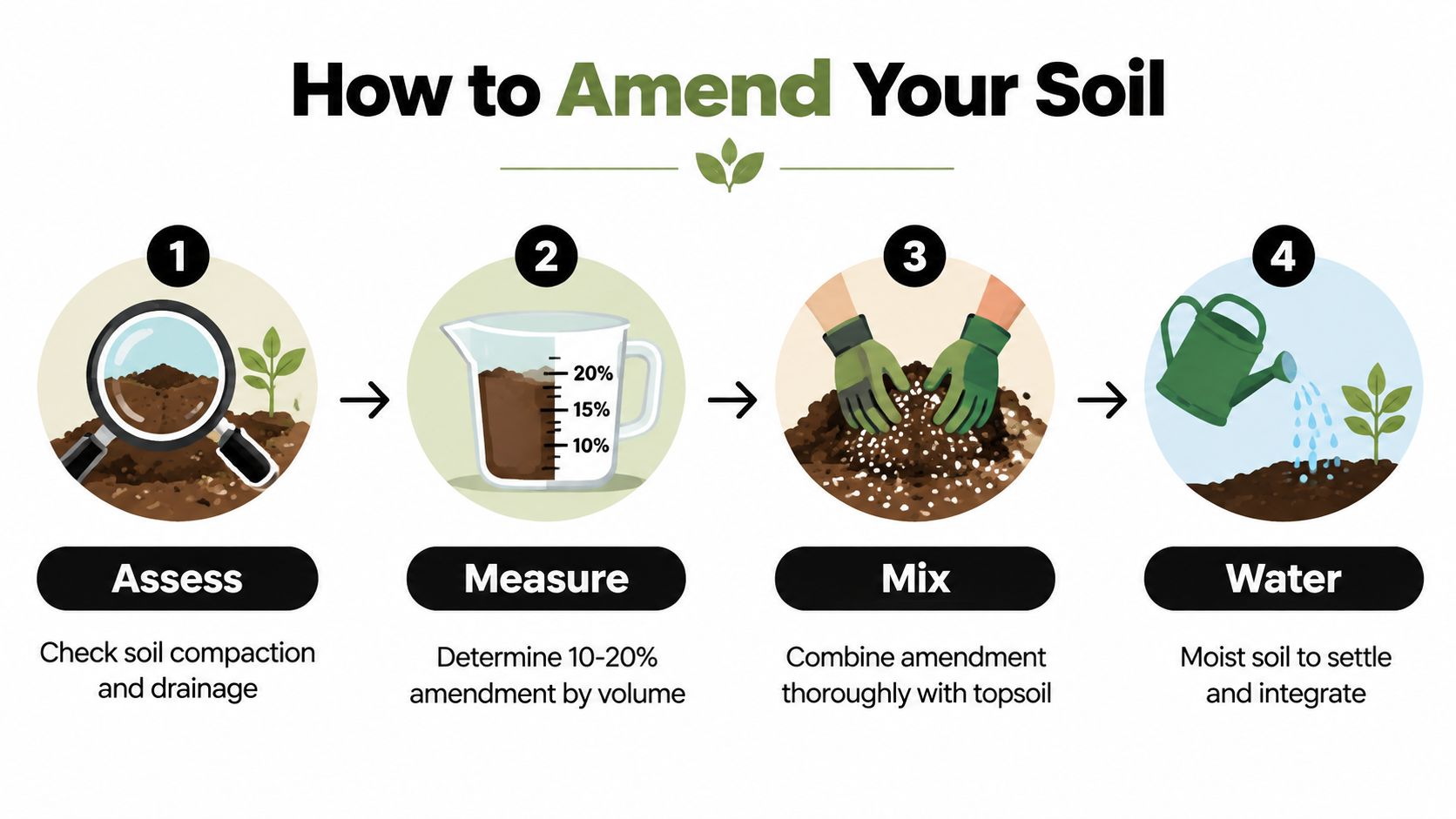
- Assess the existing medium. Squeeze a handful when it's slightly moist. If it forms a dense lump, sheds water from the sides, or stays wet for an unreasonable period, identify whether you need more structure or better re-wetting capacity.
- Choose one main correction. Add perlite, pumice, or bark for compaction. Add coco coir for excessive dryness. Don't add every available amendment at once.
- Measure by volume. Ratios are easier to reproduce with a scoop or measuring cup. A small structural adjustment can be enough when the existing medium is mostly sound.
- Blend thoroughly. Mix amendments evenly before placing the plant into the pot. Pockets of pure coir or pure perlite behave differently from the surrounding mix and can leave roots in uneven moisture conditions.
- Test before planting. Wet a sample in a separate container. Water should enter the surface rather than run down a gap at the pot wall, and excess water should exit freely through the drainage holes.
- Settle gently. After repotting, water thoroughly so the mix contacts the roots. Don't compress it aggressively, because pressing removes the air spaces you just created.
Top-dressing is less disruptive but has limited reach. You can remove a shallow layer of tired material and replace it with fresh mix, compost, or a small amount of worm castings. This approach won't correct compaction deep inside the pot, so use it for mild surface issues rather than serious drainage failure.
Plants that dislike root disturbance deserve a slower transition. Mix some of the new medium into the old medium during a future repot instead of stripping every particle from the roots. For a plant in immediate trouble, prioritize removing rotten roots and restoring drainage over preserving the original mix.
Use this video as a visual companion for the assessment and mixing process:
Troubleshooting and Sustainable Alternatives
More amendment doesn't automatically mean more health. A pot filled with perlite may drain rapidly but leave a thirsty plant struggling to maintain moisture and nutrients. A large compost fraction can hold water well while breaking down into fine particles that compact and reduce oxygen around roots.
The most useful correction is symptom-led:
- The mix stays wet: Increase coarse structure, improve light and airflow, and check that the container isn't oversized.
- The mix dries too fast: Add a measured amount of coco coir or another moisture-retentive base.
- Water runs down the sides: Re-wet the mix gradually or replace hydrophobic, shrunken material.
- Leaves decline after feeding: Investigate root health and salt buildup before adding more fertilizer.
- The plant grows slowly in wet soil: Improve the root environment first. Nutrients can't help roots function in stagnant conditions.
Sustainability adds another decision rather than a simple replacement. Peat alternatives include wood fiber and biochar, but each material changes the mix differently. The International Society for Horticultural Science discussion of wood fiber highlights wood fiber as a peat replacement up to 50% by volume, while biochar can influence pore structure and water-holding capacity.
Choose substitutions by function: ask how the material changes aeration, pH, moisture, and fertilization before treating it as a direct swap.
Wood fiber may require attention to how quickly the mix settles and how nutrients behave. Biochar can affect nutrient availability and microbial activity. A sustainable amendment still needs to match the plant and the container. For a closer look at using biochar thoughtfully, explore this biochar soil amendment guide.
Recommended Products for Every Plant Type
Choose products according to the recipe and the plant's feeding needs, not according to the word “fertilizer.” Leaves & Soul offers structural materials such as professional perlite and coco coir for adjusting container mixes, alongside targeted nutrients for different plant groups.
For fiddle leaf figs and foliage plants, the 16-5-11 Fiddle Leaf Fig and House Plant Pellets provide a slow-release feeding option to pair with an airy, bark-and-perlite mix. Bonsai growers can use 18-6-8 slow-release Bonsai Fertilizer Pellets with an appropriate mineral-forward medium. Orchids and succulent growers should first solve texture and drainage, then add nutrition carefully. Ready-to-use Liquid Fruit & Vegetable Fertilizers offer another format for gardeners who prefer measured liquid feeding.
If presentation matters as much as plant health, a guide to choosing a vintage brass plant pot buyer's guide can help you select a decorative container while keeping the plant in a properly draining inner pot. Leaves & Soul also carries complete bonsai sets that combine soil, fertilizer, and a color-matched container for a coordinated starting point. The company backs its range with a 100% satisfaction guarantee.
Leaves & Soul offers purpose-built soils, perlite, coco coir, fertilizers, and bonsai accessories to help you match the root environment to each plant. Visit Leaves & Soul to choose the amendments and nutrients that fit your houseplant recipe, then repot with a mix designed for the way your plant uses water.