


A single compost application rarely improves soil structure, and measurable soil-health gains typically require 3 to 5 years of consistent practice. For indoor containers, the most reliable improvement usually comes from correcting drainage, compaction, salts, and plant-specific media rather than adding more organic matter.
You notice the problem when a familiar plant starts looking wrong. A fiddle leaf fig's leaves turn yellow even though you're watering on schedule. An orchid's roots stay damp for days. A bonsai looks thirsty, yet its pot remains heavy and wet. The instinct is to buy fertilizer or pour in compost, but indoor soil health improvement starts with a better question: Can the root zone hold water and air in the right balance for this plant?
Outdoor soil has space, weather, roots, worms, and rainfall to redistribute water and organic material. A container has none of that room. Its structure can collapse against the pot wall, salts can accumulate from fertilizer and tap water, and a dense mix can leave roots short of oxygen long before the surface looks obviously wet.
Why Indoor Soil Fails Even When You Water Correctly
A customer once brought in a fiddle leaf fig with yellowing lower leaves and a compact root ball. The owner had followed a careful watering routine, but the pot stayed heavy long after each watering. The surface dried first, so the plant looked thirsty from above, while the lower root zone remained saturated. More water seemed logical, yet it pushed the plant further into decline.
The issue wasn't just watering frequency. Compacted indoor soil loses the large pores that carry air through the container. Roots need moisture, but they also need oxygen. When fine particles settle tightly around them, water moves slowly, the center of the pot stays wet, and roots can't function normally. Yellow leaves, weak growth, fungus gnats, and a sour smell can all point toward a root-zone problem rather than a lack of fertilizer.
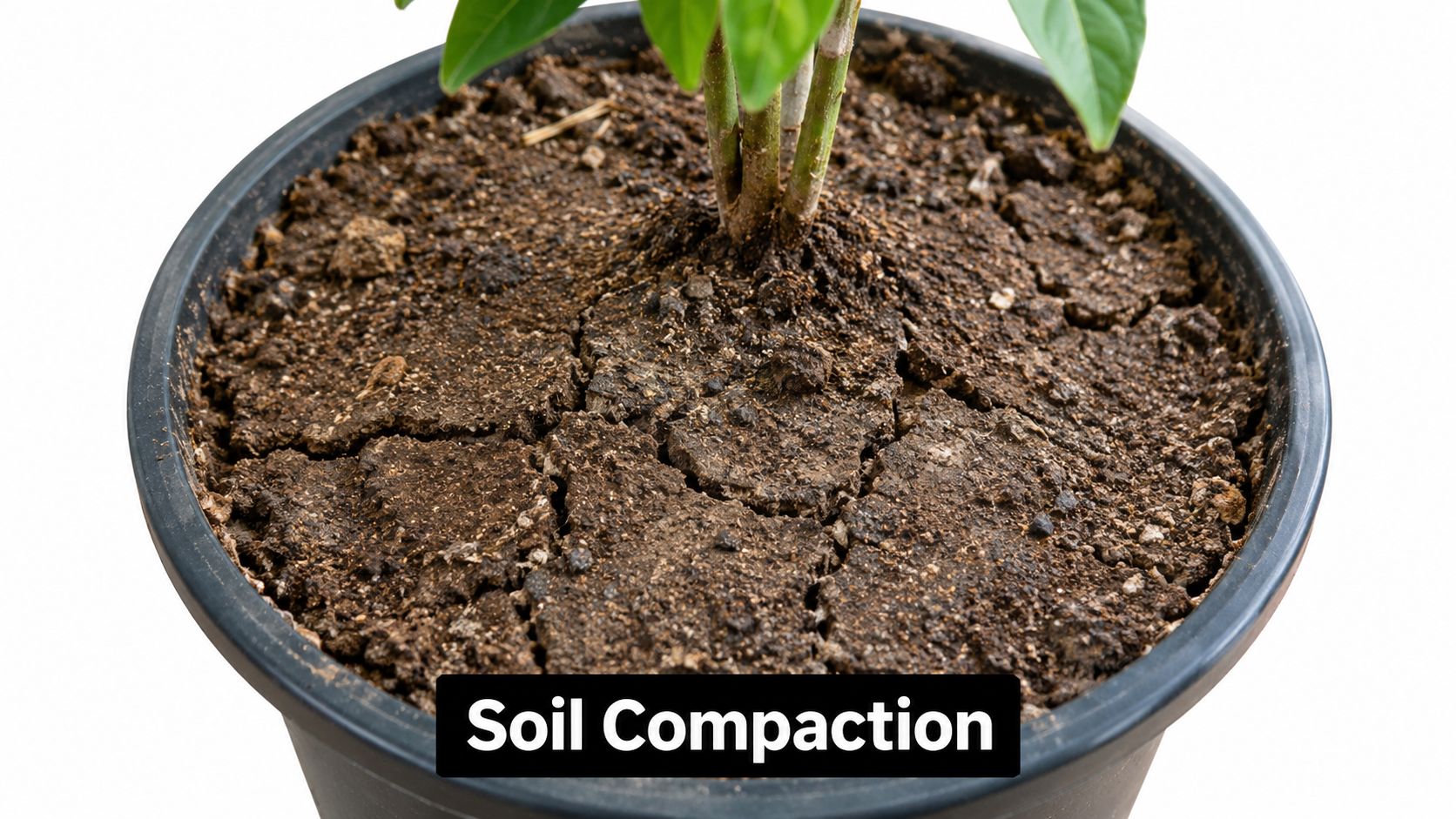
Containers magnify small mistakes
Indoor pots don't receive rain that can gradually wash away accumulated salts, and they don't benefit from the broad biological activity of an open soil profile. Heating, air conditioning, low light, and a decorative cachepot can also change how quickly moisture leaves the root zone. A plant near a bright window may dry at the surface while the lower half remains saturated.
The global context matters, even for a houseplant collection. The Food and Agriculture Organization's soil assessment estimates that approximately 33 percent of the world's soils are degraded and places the organic carbon stock in the topsoil layer at 682 petagrams. That scale explains why soil health is a long-term management priority, not a quick fix from one bag of compost.
For indoor plants, the practical translation is simple:
- Structure matters: A mix should hold its shape without becoming a solid block.
- Airflow matters: Water must drain while oxygen returns to the root zone.
- Biological activity needs balance: Organic matter can support microbes, but excess moisture and salts can harm roots.
- The pot changes the diagnosis: A glazed bonsai pot, plastic nursery pot, and cachepot each dry differently.
Practical rule: If a plant stays wet for too long, improve the root-zone structure before increasing fertilizer.
Start by removing the plant from its decorative cover and checking the drainage hole. If water pools beneath the nursery pot, correct that setup first. For a deeper walkthrough, use this guide to improve drainage in soil. A healthier mix won't compensate for a blocked hole or a pot that has nowhere to release excess water.
Testing Soil Health Before Buying Any Amendments
Buying amendments before testing creates confusion. If you add compost, fertilizer, lime, and a moisture product together, you won't know which change helped or which one created a new problem. Indoor growers need a small, repeatable diagnostic routine that looks at physical condition, chemical balance, and biological clues.
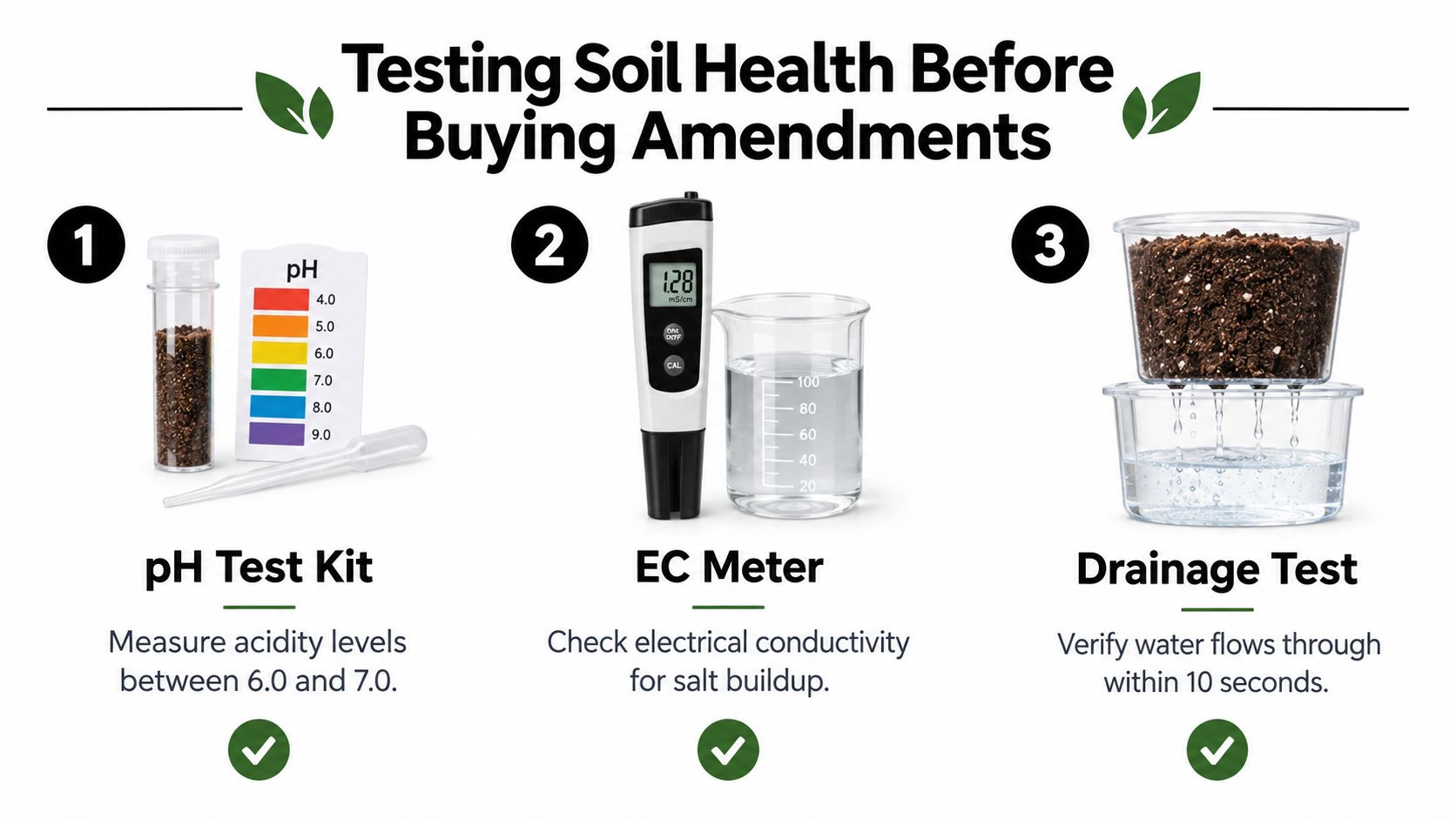
Begin with the physical test
Take a handful of slightly moist mix and squeeze it. A good container mix should hold together briefly, then break apart with light pressure. If it forms a hard lump, feels greasy, or repels water when dry, the structure needs attention. If water runs straight through while the root ball remains dry inside, the mix may be hydrophobic or too coarse for that plant.
Test drainage with a measured volume of water and observe how quickly it exits the pot. The result isn't a universal pass or fail. A cactus, orchid, and fiddle leaf fig have different moisture requirements, so compare the result with the plant's natural growing pattern and the time the root zone remains damp.
Bulk density and water retention are especially useful concepts indoors. You don't need a laboratory calculation to use them. A heavy, settled pot that stays wet points toward excessive density, while a light mix that dries immediately may need more water-holding material or a better watering technique.
Then check chemistry
A pH kit can show whether the root zone is becoming too acidic or alkaline, but don't chase an ideal number without considering the species and fertilizer. Electrical conductivity, or EC, is useful for identifying soluble salt buildup. Crusty deposits on the pot rim, browning leaf edges, and stalled roots can support that diagnosis, but symptoms alone aren't proof.
Nutrient tests can help when growth is weak despite good light and drainage. Test before feeding, record the result, and avoid correcting every reading at once. The practical relationship between acidity and nutrient availability is explained in this guide to soil pH and nutrient availability.
Watch the roots as well. White or firm tan roots usually indicate a different situation from dark, soft, easily broken roots. For plants with sensitive roots, a repot into clean, correctly sized media is often safer than trying to amend a failing root ball in place.
The same logic appears in larger agricultural systems. In a USDA Natural Resources Conservation Service assessment, participating farms reported no-till on an average of 85 percent of planted acres and cover crops on 53 percent of cropland, compared with national averages of 37 percent and 5 percent. The comparison isn't a controlled causal experiment, but it illustrates a useful principle: intentional systems track conditions and practices instead of relying on one visual impression.
For a home baseline, record:
- Mix condition: Note whether it is compacted, dusty, hydrophobic, or loose.
- Drainage behavior: Record how quickly water exits and how long the pot stays heavy.
- Chemistry: Test pH and EC when salt buildup or nutrient imbalance seems possible.
- Plant response: Photograph new growth and note leaf color, root condition, and watering intervals.
A baseline turns soil health improvement into a process you can evaluate rather than a series of guesses.
Choosing the Right Organic Matter and Drainage Media
Organic matter and drainage media perform different jobs. Finished compost, leaf mold, coco coir, and bark influence moisture holding, decomposition, and biological activity. Perlite, pumice, and clay-based particles create air spaces and improve physical stability. Combining them can work well, but treating every amendment as interchangeable is how containers become either waterlogged or unable to support roots.
A sound program begins with a baseline test and a defined goal. The technical amendment guidance from Frontiers recommends applying organic inputs conservatively while monitoring benefits and unintended effects such as raised salinity or phosphorus losses. That caution is especially important indoors, where a small pot receives repeated applications in a confined root zone.
Match the material to the problem
Use finished compost when you need a modest source of organic matter and biological activity in a plant that can tolerate richer media. It isn't a substitute for aeration, and it shouldn't dominate a container blend. Excess compost can retain too much water or add nutrients that the plant doesn't need.
Coco coir holds moisture while maintaining more physical resilience than many fine, decomposing materials. It works well for tropical houseplants when combined with an aerating component. Pre-moisten it thoroughly, because dry coir can resist water at first.
Leaf mold can improve moisture balance and microbial diversity when it is fully decomposed and clean. Use it sparingly in containers, particularly for plants with delicate roots or low nutrient demand.
Perlite is lightweight and creates air space, but it can float during watering and may rise to the surface. Pumice is heavier and more durable, making it useful where you want lasting porosity and pot stability. Neither material supplies meaningful fertility, so don't use grit to solve a nutrient deficiency.
Bark provides structure and air pockets as it slowly breaks down. It suits orchids and chunky tropical mixes, but the grade matters. Fine bark holds more moisture, while coarse bark dries faster and leaves more space around roots.
Build by plant habit, not by recipe
For bonsai, use stable mineral particles and only a limited amount of organic material. The roots need reliable drainage, and the shallow pot offers little forgiveness when fine material collapses.
For orchids, use an orchid-specific bark blend rather than ordinary potting soil. Their roots need air and rapid movement of water, especially in clear pots where you can observe moisture and root color.
For succulents and cacti, increase coarse mineral content and avoid a high proportion of compost or fine coir. The mix should accept water quickly and then release excess moisture before roots remain saturated.
For tropical foliage, combine moisture-retentive material with perlite, pumice, or bark. The exact balance depends on light, pot size, humidity, and how often you can monitor the plant.
Choose structure first, fertility second. A plant with healthy roots can use fertilizer. A plant in airless media can't.
You can compare these materials and application approaches in this guide to soil amendments for houseplants. Add one material at a time when possible, label the blend, and keep part of the original mix as a comparison rather than rebuilding every pot at once.
Soil and Fertilizer Choices by Plant Type
The right soil depends on how a plant uses water, where its roots grow, and how much nutrient storage its container can safely hold. A rich, moisture-retentive mix may suit a vigorous tropical plant, but it can suffocate a bonsai or keep succulent roots wet. Fertilizer choice follows the same logic. Liquid feed, slow-release pellets, and targeted amendments aren't interchangeable.
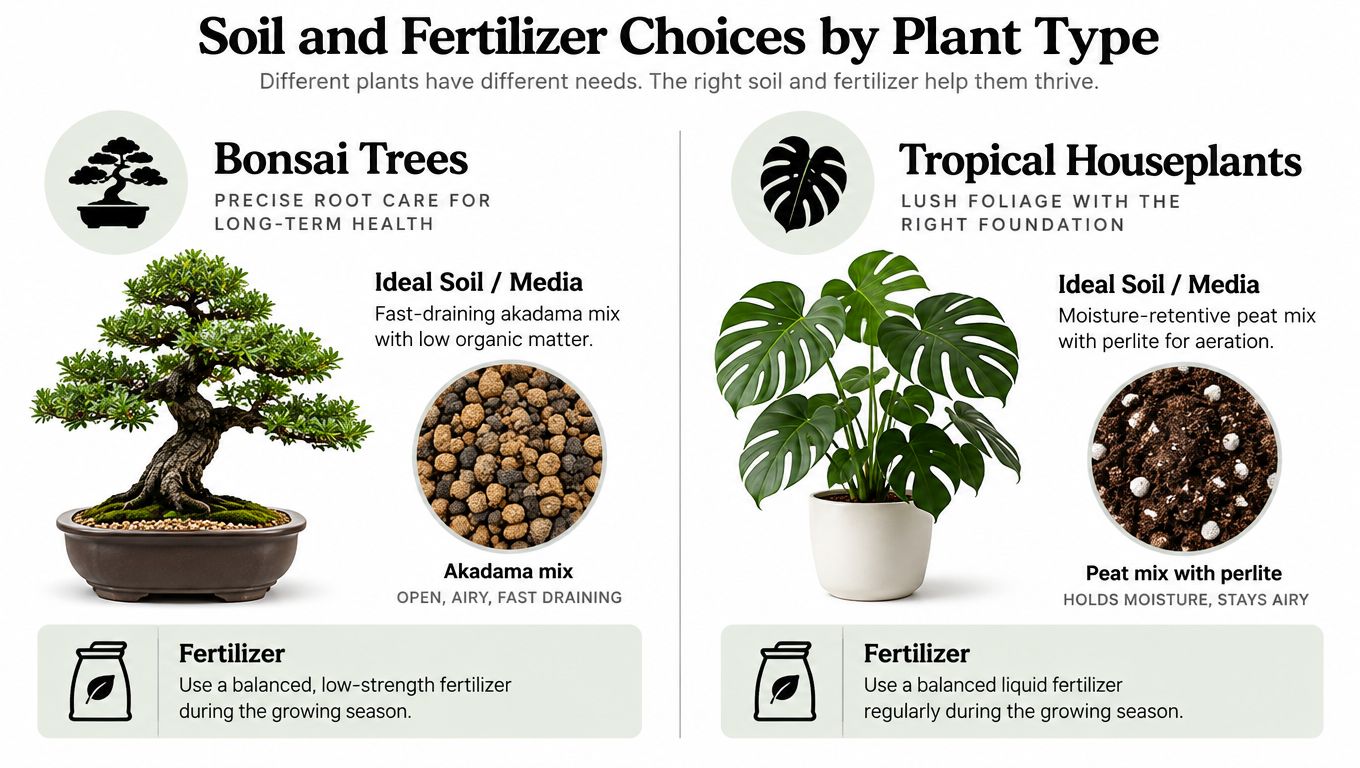
A practical comparison
| Plant group | Media priority | Fertilizer approach | Warning sign |
|---|---|---|---|
| Bonsai | Fast drainage and stable mineral structure | Conservative feeding during active growth | Dense, sour, slow-drying mix |
| Tropical houseplants | Moisture retention balanced with aeration | Liquid feed or slow-release nutrition suited to active growth | Wet center with dry surface |
| Succulents and cacti | Coarse mineral content and rapid drainage | Light feeding when actively growing | Soft tissue or prolonged dampness |
| Orchids | Chunky bark and abundant air around roots | Dilute, regular nutrition when roots and leaves are active | Bark breaking down into fine sludge |
Bonsai media often rely on akadama or comparable mineral components with limited organic matter. The shallow container makes stable pore space more important than a rich compost reserve. Fertilizer should support growth without creating a concentrated salt load around restrained roots.
Tropical houseplants, including fiddle leaf figs, generally tolerate more moisture-holding material, but that doesn't mean they should sit wet. A mix based on peat or coco coir needs perlite, pumice, or bark to preserve airflow. Slow-release pellets can provide steady nutrition, while liquid fertilizer lets you adjust feeding when light, growth, or root health changes.
Succulents and cacti need the sharpest separation between watering and drying. Fine organic material can make a blend look fertile while reducing the air spaces their roots need. If the pot remains damp, changing the watering interval alone may not solve the structural problem.
Orchids are a clear example of why ordinary potting soil fails. Bark-based media support the open root environment these plants require, and repotting becomes necessary when bark decomposes into fine particles. Fertilize only when the plant is actively producing roots, leaves, or flowers, and avoid treating pale roots or limp leaves as an automatic request for more feed.
Container advice requires a safety check
Urban and container soil deserves separate attention. Washington State University's urban-soil guidance identifies contamination, salinity, bulk density, infiltration, drainage, aeration, pH, nutrients, and microbial activity as distinct dimensions. That matters for balcony growers, renters, and anyone reusing soil from an older property. If edible plants grow in unknown urban soil, testing and clean replacement media can be more appropriate than adding compost.
Leaves & Soul offers purpose-built soils, fertilizers, and amendments for plant categories including bonsai, fiddle leaf figs, succulents, cacti, and orchids. Treat any branded blend as a starting point, then adjust watering and pot choice to the actual conditions in your home.
Building a Realistic Soil Maintenance Schedule
Soil health improvement in an indoor collection works best as a maintenance rhythm, not a rescue event. The schedule should follow plant growth, root-zone behavior, and the condition of the media. Plants growing strongly in bright light may use water and nutrients quickly, while plants in dim rooms or winter dormancy may remain wet and require far less input.
At each watering
Check the pot weight before adding water. Feel the surface, but don't stop there. Use a wooden skewer or your finger to assess moisture lower in the pot, and lift the container when possible. Water thoroughly when the plant needs it, then empty the cachepot so the roots aren't left standing in runoff.
Look for changes in drainage. A pot that once drained freely but now takes much longer to release water may have a collapsed mix. A plant that dries unusually fast may have pulled away from the pot wall or developed a compact, water-repellent root ball.
During active growth
Feed only when the plant has adequate light and functioning roots. Choose either a diluted liquid fertilizer or a correctly measured slow-release product, not a pile of overlapping products. If you use a fertilizer containing organic material, watch the mix for odor, insects, and prolonged wetness.
Top-dressing can be useful for replacing a small amount of surface material, but it won't repair a compacted root ball below. Repot when roots circle densely, water runs around the edge instead of entering the center, or the media has broken down into fine particles.
During dormancy or low light
Reduce feeding when growth slows. Don't use fertilizer to compensate for inadequate light, cold roots, or poor drainage. A plant that isn't actively growing has less demand for nutrients, while salts can remain in the container and become more concentrated as water evaporates.
Retest pH or EC when symptoms persist after correcting watering and light. Use the same method and record the result rather than comparing unrelated kits. If salt buildup is suspected and the plant tolerates it, flush the container with clean water through the drainage holes, then allow the pot to drain completely.
Think in seasons, not miracles
USDA guidance notes that soil-health indicators are proxies and that meaningful changes commonly require 3 to 5 years, with up to 10 years in dry regions according to the Tennessee soil-health guidance. Indoor pots aren't field plots, but the lesson still applies. A single repot can correct a physical problem immediately, while stable biological and structural improvement depends on consistent moisture, appropriate feeding, healthy roots, and minimal disturbance.
Keep a simple record of repotting dates, media components, fertilizer applications, drainage observations, and new growth. That record will reveal patterns that a single yellow leaf can't.
Common Soil Mistakes That Slow Indoor Plant Growth
The most damaging habit I see in plant shops is remedy stacking. A grower notices yellow leaves, adds compost, sprinkles fertilizer, mixes in perlite, increases watering, and then repots a few weeks later. The plant experiences several changes before the owner has learned whether the original problem was compaction, root damage, low light, salts, or an unsuitable pot.
More organic matter isn't automatically better. Compost can support nutrient cycling, but it can also increase moisture retention and soluble nutrients in a small container. Fertilizer can correct a genuine deficiency, yet excess salts may injure roots even when the soil looks dark, crumbly, and biologically active.
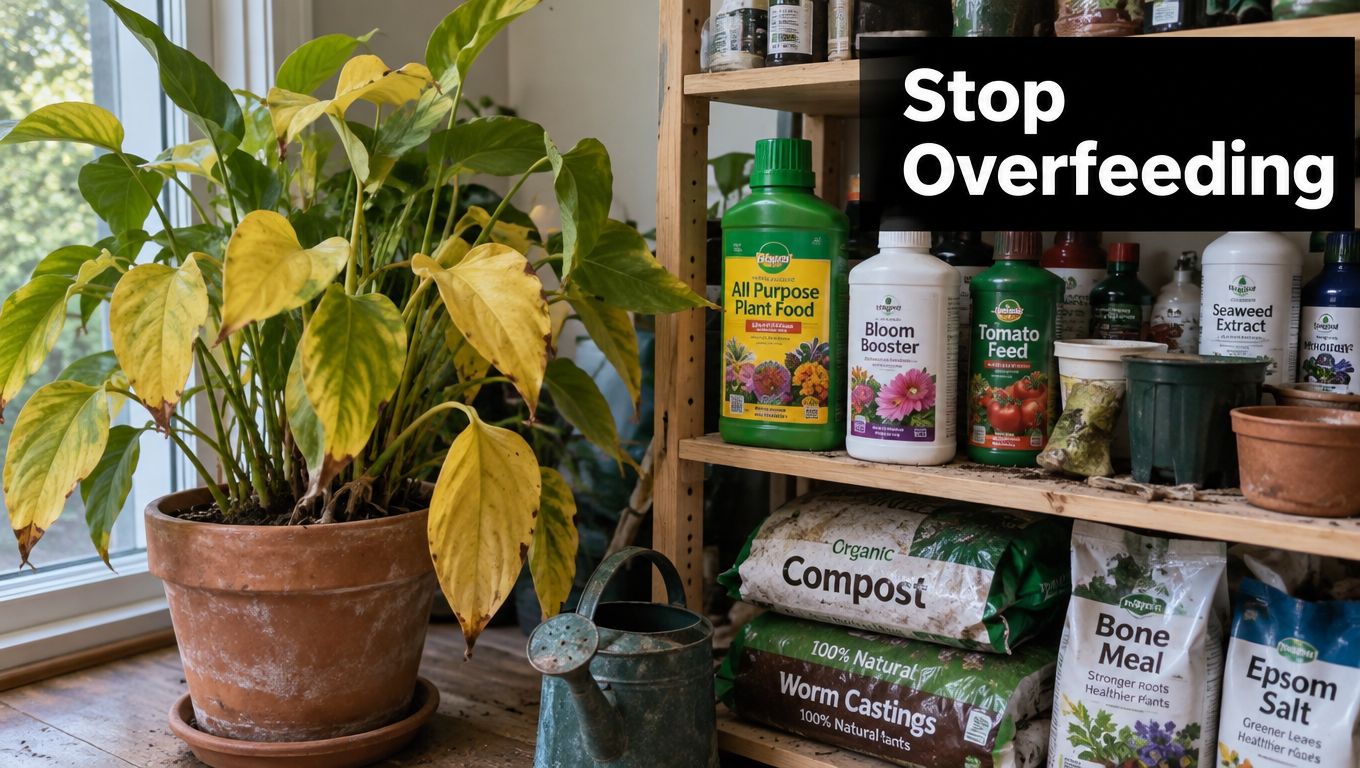
Why improvement has limits
Soil-health practices can produce measurable progress without reaching the full potential of a site. A 2025 study of reduced tillage, multiyear bedding, and cover crops found statistically significant improvements of 11 to 22 percent, while those gains represented only 11 to 39 percent of estimated potential, depending on the indicator and site. The finding reinforces a point that applies indoors: starting condition, material properties, climate, moisture, and management all constrain outcomes.
A container doesn't need the richest possible mix. It needs the right physical and chemical conditions for the roots inside it. A bonsai may decline in a blend that would help a tropical foliage plant, and an orchid may suffer after an owner adds compost to solve weak growth.
Use a one-change protocol:
- Name the likely problem: For example, slow drainage, salt buildup, or root-bound media.
- Choose one intervention: Repot, flush, adjust the pot, or change the fertilizer, but don't do everything together.
- Record the baseline: Note pot weight, drainage, root condition, pH or EC if relevant, and new growth.
- Allow observation: Give the plant enough time to show whether the change helped.
- Repeat the test: Compare the same indicator under similar conditions.
A greener leaf isn't proof of healthier soil. Check root condition, drainage, and sustained new growth before declaring success.
Don't add lime because a leaf is yellow, compost because growth is slow, or fertilizer because the surface looks pale. First check light, roots, moisture, pot size, and salt accumulation. Soil health improvement becomes reliable when each change has a reason and each result can be observed.
Leaves & Soul offers purpose-built soils, fertilizers, and bonsai accessories for indoor growers working with houseplants, bonsai, succulents, cacti, and orchids. Visit Leaves & Soul to match your plant with appropriate media and nutrition, then use the testing and one-change approach above to build healthier roots over time.