


You glance at the bench, or the windowsill, and see a ring of leaves around your bonsai pot. Some are yellow. Some are still green. A few look dry and crisp. Your first thought is usually the same.
“I’ve killed it.”
Most of the time, you haven’t.
A bonsai drops leaves for the same reason a person changes expression. It’s reacting. Sometimes the reaction is mild and normal. Sometimes it’s a warning. The skill is learning which kind of message your tree is sending.
If you’ve been asking why is my bonsai losing leaves, don't start by hunting for one universal answer. Start by observing the pattern. A tree that was moved into a darker room behaves differently from a tree sitting in soggy soil. A Dwarf Jade that sheds after repotting is telling a different story from a ficus whose roots have been wet for too long.
That’s why a simple list of causes often leaves beginners more confused than helped. Leaf drop isn't one problem. It’s a symptom with several possible roots.
What helps is a calm diagnostic method. Look at the leaves. Look at the soil. Look at recent changes. Then compare those clues side by side, the way an old grower studies bark, roots, and branch tips before making a cut.
A Single Falling Leaf Is Not a Crisis
A bonsai is not a plastic ornament. It’s a living tree under pressure to balance water, light, temperature, and stored energy in a very small pot.
That means some leaf loss is ordinary.
A beginner will often notice one or two fallen leaves and rush to water, fertilize, move the tree, and mist it all in the same afternoon. That panic causes more trouble than the original leaf drop. Trees prefer thoughtful correction over frantic rescue.
What a leaf drop can mean
Sometimes a bonsai is replacing older interior leaves. Those leaves did their work and are no longer worth the energy cost of keeping them.
Sometimes the tree is adjusting to a change in conditions. A move from shop to home, from outdoors to indoors, or from one window to another can trigger shedding.
And sometimes the tree is saying, clearly, that something in its care is off.
Leaves are not just decoration. They are the tree’s working parts, and when the tree starts dropping them, it’s managing stress the best way it can.
Stay calm and gather clues
Before you do anything, pause and check a few basics:
- Where are the leaves dropping from. Mostly inner leaves, lower leaves, or all over?
- What do they look like. Yellow and soft, brown and crisp, spotted, or still green?
- What changed recently. New home, new room, repotting, pruning, wiring, or a shift in season?
- How does the soil feel. Wet and heavy, or dry and pulling from the pot edges?
This slower approach matters because the same symptom can come from different causes. Green leaf drop often points in one direction. Yellowing from the bottom can point in another. Crispy edges tell a different story again.
A bonsai is like a small, disciplined athlete. It doesn't complain loudly at first. It gives hints. If you learn to read those hints early, recovery is often simple.
Decoding Your Bonsai Symptoms A Diagnostic Chart
The fastest way to answer why is my bonsai losing leaves is to stop asking only “what went wrong?” and ask “how are the leaves falling?”
The pattern matters. Color matters. Texture matters. Even where the leaves fall from the canopy matters.
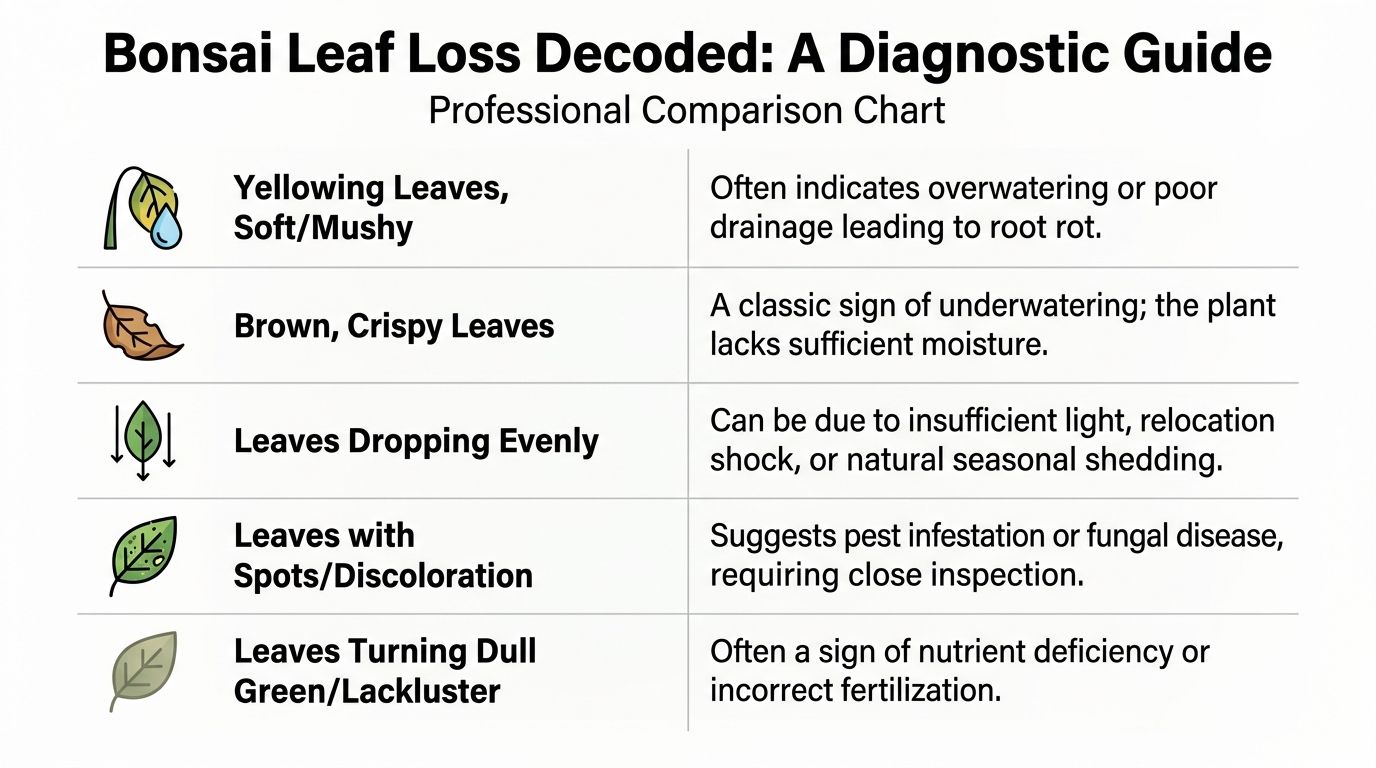
Bonsai leaf drop symptom checker
| Leaf Symptom | Potential Cause(s) | Next Step |
|---|---|---|
| Yellowing leaves from the bottom, soft feel | Overwatering, compacted soil, weak roots | Check soil moisture below the surface and inspect drainage |
| Brown, crispy leaves or edges | Underwatering, hot dry air, missed watering | Water thoroughly, then review your watering rhythm |
| Green leaves dropping suddenly and evenly | Relocation shock, lower light, temperature shift | Review recent moves and improve placement |
| Spotted or distorted leaves | Pests or disease pressure | Inspect leaf undersides, stems, and debris on soil |
| Dull, pale, lackluster foliage | Nutrient imbalance or roots not taking up nutrients well | Check root health before adding fertilizer |
| Interior older leaves dropping after recent repotting or pruning | Normal stress response in some species | Watch for new growth and avoid overcorrecting |
How to read the clues correctly
A yellow leaf and a brown leaf aren't saying the same thing.
Yellow and soft often suggests a root problem. The tree may have water available in the pot, but damaged roots can't use it well.
Brown and crisp usually points to dehydration. The tissue dried out faster than the roots could replace moisture.
Green leaf drop confuses many people. They assume green means healthy, so dropping green leaves must be sudden death. Often it means the tree changed environments and is abandoning leaves that no longer fit the new conditions.
Don’t diagnose from one leaf alone
One leaf can mislead you. A handful of matching clues reveals the full story.
Use this short routine:
- Pick up the pot and notice whether it feels unusually heavy or light.
- Check the soil surface and below it with a chopstick or finger.
- Look at the newest growth because new leaves often reveal whether the tree is still functioning well.
- Review recent changes before blaming fertilizer or pests.
If you want to sharpen that observation habit, this guide on how to read your plant’s leaves like a pro is useful because it trains your eye to notice patterns instead of reacting to a single symptom.
Good bonsai care starts with accurate observation. The wrong fix, applied quickly, is worse than a slow, correct one.
The Most Common Culprit Water and Soil Issues
If I had to check one thing first on a struggling indoor bonsai, I’d check the roots by way of the soil.
Watering mistakes are common because beginners think only in terms of “wet” and “dry.” Bonsai roots think in terms of water and air. A root ball that stays soaked is like a foot kept in a wet boot. It doesn't breathe well, and soon it starts to rot.
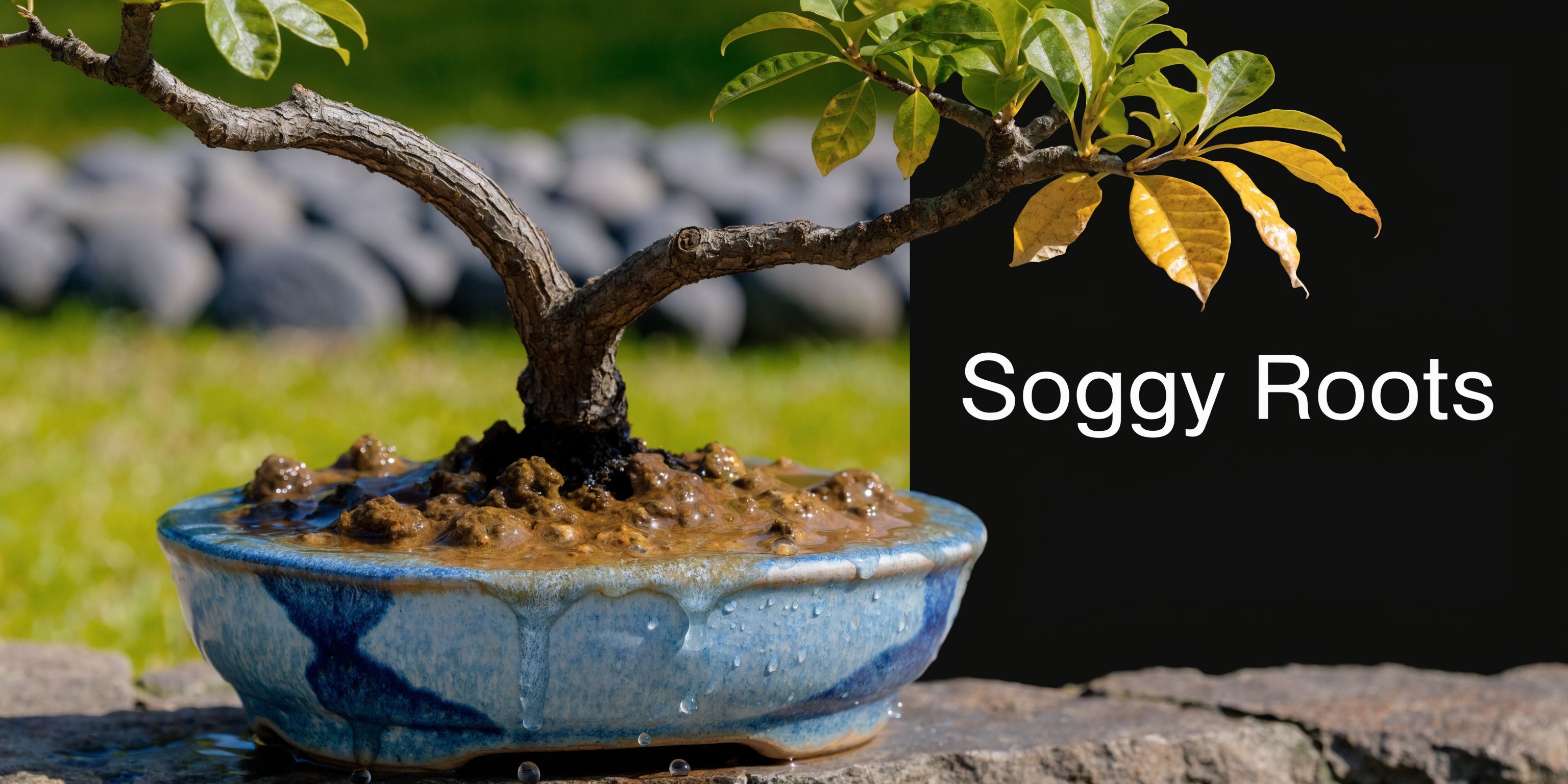
According to Bonsai Empire, overwatering stands as the leading cause of leaf loss in indoor bonsai, and root rot can affect up to 70% of troubled trees in poor-draining soils. They note that soils retaining over 40% water content post-watering can create anaerobic conditions, killing 50-80% of fine feeder roots, while early intervention can bring recovery rates to 85% if you repot into a free-draining mix and wait until the top 2-3 cm dries before watering again (Bonsai Empire on bonsai losing leaves).
What overwatering really looks like
Overwatering doesn’t always mean watering too often by the calendar. It can also mean using soil that stays wet too long.
A tree in dense, generic potting mix may suffer even if you water “carefully.” The problem is not just the amount of water. The problem is how long that water lingers around the roots.
Look for these signs:
- Yellow leaves that drop easily. Especially older leaves lower in the canopy.
- A heavy pot long after watering. The soil stays wet instead of cycling toward dryness.
- A sour or swampy smell. Healthy bonsai soil should smell earthy, not foul.
- Weak response after watering. If leaves stay limp despite moisture, roots may already be damaged.
Underwatering looks different
An underwatered bonsai usually gives a drier signal. Leaves crisp up, edges brown, and the pot becomes very light.
The confusion comes when a rotten root system and a dry root system can both leave the top of the tree thirsty. In both cases, the leaves may wilt. That’s why you test the soil instead of guessing from the canopy alone.
Practical rule: Never water because the clock says so. Water because the soil says so.
Two simple tests that work
You don’t need fancy gear.
- Use the chopstick test. Insert a plain wooden chopstick into the root ball. Leave it briefly, then pull it out. If it comes out cool and damp with dark soil stuck to it, wait. If it comes out mostly dry, it’s time to water.
- Learn the pot weight. Lift the pot right after a full watering. Then lift it again a day later, and again later still. Your hands will start to recognize the difference between safely moist and overdue dry.
If your watering habits need tightening, this article on bonsai watering secrets from Japanese masters offers a helpful practical routine.
When to repot for rescue
If the soil stays soggy, drains poorly, or smells bad, correction usually means changing the soil, not adding more products on top of the problem.
A rescue repot aims to do three things:
- Remove suffocating soil
- Restore air spaces around roots
- Stop the cycle of rot before more feeder roots die
Later in the recovery process, seeing the root zone in action can help:
Move carefully after repotting. A recently stressed bonsai doesn't need heavy feeding, repeated pruning, or constant relocation. It needs stable conditions and time.
Finding the Right Light and Environment
Many indoor bonsai don't decline because their owner is careless. They decline because the tree was raised in one world and asked to live in another.
In the shop or greenhouse, the tree enjoyed strong light for much of the day. In a home, especially in autumn and winter, the same bonsai may sit several feet from a window in conditions that look bright to human eyes but feel dim to a tree.

Bonsai Shop notes that relocation shock is one of the primary reasons bonsai lose leaves. They report that home light levels can drop below 1,000 lux compared with over 10,000 lux in greenhouses, that this affects over 80% of novice bonsai enthusiasts, and that placing trees directly in south-facing windows with 4-6 hours of direct sunlight daily reduced leaf drop incidence by 75% in controlled studies (Bonsai Shop on bonsai losing leaves).
Leaves are solar panels
A simple analogy helps here. Leaves are the tree’s solar panels.
If the tree can’t gather enough light, it can’t make enough energy. When that happens, it sheds some leaves to reduce its own energy costs. That’s not stubbornness. It’s survival.
Green leaf drop after bringing a bonsai home often fits this pattern. The tree may not be diseased. It may adjusting to a lower-energy environment.
Placement matters more than many realize
A bonsai near a window is not the same as a bonsai in a bright window.
Small changes in placement can matter. Move the tree closer to the brightest window you have, ideally with direct sun if the species tolerates it. Rotate only when necessary, not as a nervous daily habit.
For many indoor tropical bonsai, the strongest position in the home is the right starting point. If natural light is limited, a grow light can help bridge the gap.
You can get a clearer sense of species needs in this guide to bonsai sunlight needs.
Temperature and humidity can add stress
Light is only part of the environment. Dry heated air, drafts, and sudden temperature swings can amplify leaf drop.
If your home is very dry, it’s worth understanding the best humidity level for your home so you can judge whether the room itself may be adding pressure to the tree.
Use common sense here:
- Avoid hot vents and radiators because they dry foliage fast.
- Keep distance from cold drafts near doors or poorly sealed windows.
- Don’t shuffle the tree around every few days in search of perfection.
A bonsai placed in one stable, bright spot usually fares better than one moved repeatedly by an anxious owner.
When the environment improves, leaf drop often slows first. New growth comes later. That delay fools people into thinking the fix didn’t work. It probably did. Trees respond on their own timetable.
Is It Normal Shedding or Time to Worry
Not every falling leaf is bad news.
This is the part many beginners never hear clearly enough. A bonsai can shed leaves because it is failing, but it can also shed leaves because it is adapting. Those are not the same event, and treating them as the same leads to bad decisions.
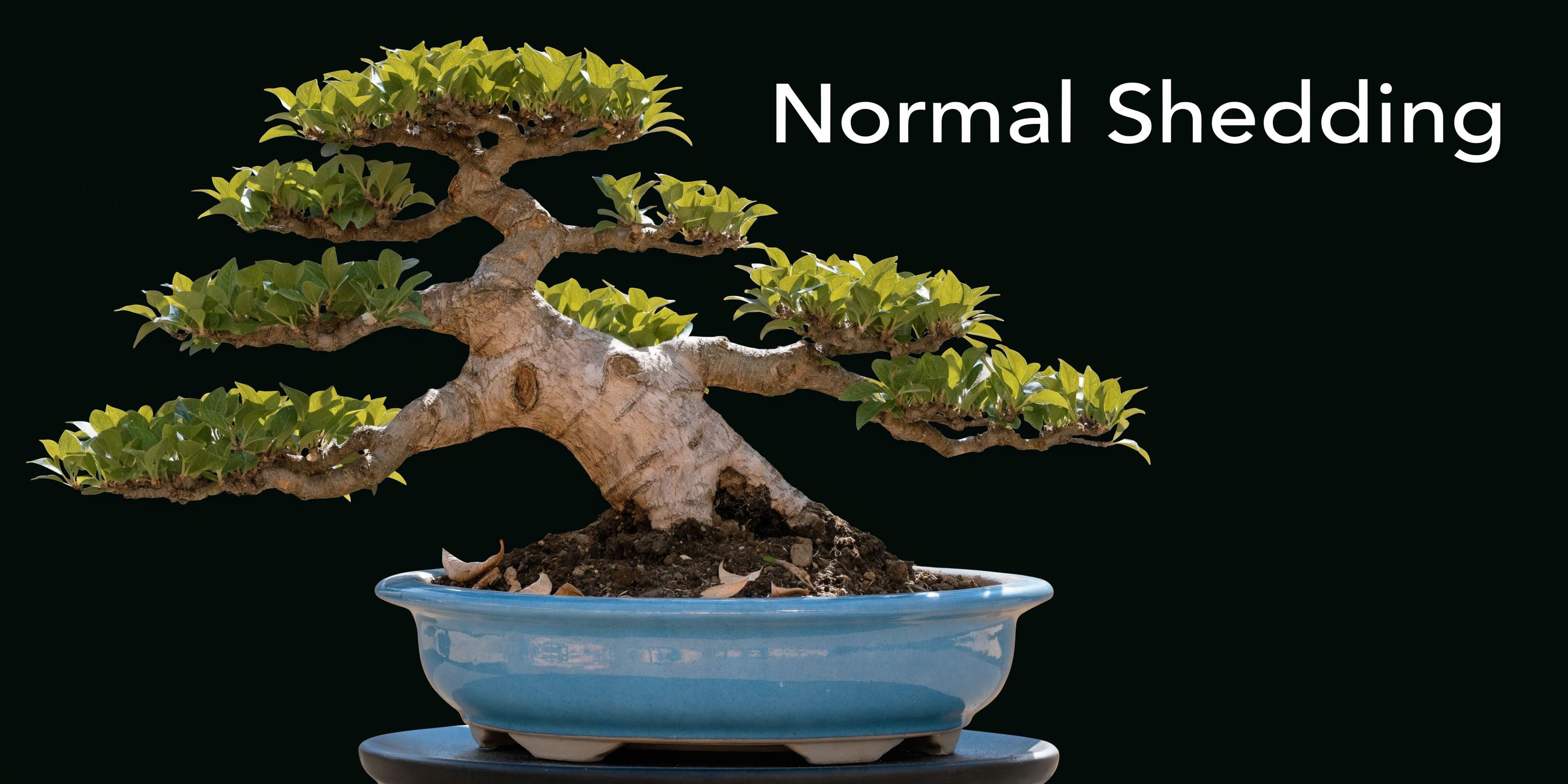
One area where beginners often get mixed signals is after repotting or pruning. Bonsai Bar notes that existing content gives minimal guidance on species-specific responses after repotting. They explain that Dwarf Jade (Portulacaria afra) commonly drops older interior leaves after repotting to support root recovery, that users report 30-50% leaf loss after wiring or repotting kits, and that shedding up to 40% of leaves can be normal if new roots establish within 4-6 weeks (Bonsai Bar on Dwarf Jade leaf drop).
When normal shedding makes sense
Think about what repotting does. You disturb roots. Even with care, the tree loses part of its old root system and must rebuild.
A tree may answer by reducing the number of leaves it has to support. That is a sensible trade. Fewer leaves mean lower demand while roots recover.
This shows up especially in species like Dwarf Jade, which often sacrifice older interior leaves first.
Normal post-work shedding often looks like this:
- It happens after a clear event such as repotting, pruning, or wiring.
- Older or interior leaves fall first rather than every leaf collapsing at once.
- The branches remain firm and the trunk still looks sound.
- New buds or fresh growth appear later once recovery gets underway.
When it’s time to worry
A stressed but recovering bonsai still has a certain steadiness to it. A declining bonsai loses that steadiness.
Pay closer attention if you see the following together:
| Likely normal adjustment | More concerning pattern |
|---|---|
| Leaf drop follows repotting or pruning | Leaf drop starts with no obvious trigger |
| Older interior leaves fall | New tips fail and outer canopy weakens |
| Branches stay flexible or healthy-looking | Twigs die back and tissue looks weak |
| Soil and roots otherwise seem sound | Soil smells bad or stays wet too long |
After root work, the question isn't “Did some leaves fall?” The better question is “Is the tree stabilizing and preparing new growth?”
A species matters more than many guides admit
A species matters more than many guides admit. Generic advice often fails here.
A ficus, a jade, and an elm don't all react the same way. Some hold foliage stubbornly. Some reset faster. Some show stress through older leaves first. Others sulk after heavy work and then push new growth once they settle.
That’s why beginners get trapped by rigid rules. They expect the tree to behave by schedule instead of by species and condition.
After repotting or pruning, support matters. Keep conditions steady. Don’t pile on more stress. If the tree resumes growth, then a gentle feeding approach can help root and foliage recovery. Slow-release pellets such as 18-6-8 Bonsai Fertilizer are often used once the tree is actively growing again.
Your Leaves and Soul Bonsai Recovery Plan
When a bonsai starts dropping leaves, the best response is not dramatic. It’s deliberate.
You don’t need ten products and five emergency treatments. You need a clean sequence. Diagnose first. Correct the root cause. Then support recovery without smothering the tree with attention.
Step one, stop changing everything at once
A worried owner often waters more, moves the tree, adds fertilizer, trims dead leaves, and mists daily. That pile of actions hides the original problem.
Instead, choose one line of investigation and follow it through.
Start with these questions:
- Is the soil staying wet too long
- Did the tree recently move into a darker space
- Was it recently repotted, pruned, or wired
- Are the leaves soft, crisp, or dropping green
Write the answers down if you need to. That simple habit prevents guesswork.
Step two, stabilize the root zone
If the soil is soggy, heavy, or foul-smelling, address that first.
Plants for All Seasons gives a practical protocol for overwatering-induced root rot. They recommend watering only when the top 2-3 cm of soil dries, repotting into a professional-grade bonsai soil blend if the mix is soggy, using a diluted 3% hydrogen peroxide drench after rot detection, and resuming feeding at half dose with a product like 18-6-8 slow-release pellets once new growth appears. They also note that this hydrogen peroxide technique helps recover 75% of affected trees within 4 weeks (Plants for All Seasons on bonsai leaf drop recovery).
That protocol is useful because it puts recovery in the right order.
- Restore air to the roots
- Let the soil approach proper dryness
- Wait for signs of renewed growth
- Feed lightly only after the tree is ready
Step three, improve the environment
If the roots seem sound, check placement and consistency.
Move the bonsai to its brightest appropriate location and leave it there. Protect it from drafts, heating vents, and constant rearranging. If the issue began after a move from nursery to home, patience is part of the treatment.
The tree doesn’t need motivational speeches. It needs a stable routine.
Step four, judge recovery by the right signs
Beginners often watch the fallen leaves on the table. Experienced growers watch what the tree does next.
Better signs include:
- Leaf drop slowing down
- Branch tips staying firm
- Buds swelling or opening
- New leaves emerging smaller but healthy
- Soil drying at a normal pace between waterings
A recovering bonsai may still look sparse for a while. Sparse is not the same as doomed.
Recovery is rarely instant. First the tree stops declining. Then it stabilizes. Only after that does it begin to look good again.
Step five, keep your hands quieter
This is the hard part.
Once you’ve corrected the likely cause, don't keep intervening unless the tree gives you a new reason. Most bonsai recover best when the grower becomes less busy, not more.
If your bonsai is losing leaves, think like a careful apprentice in a workshop. Observe first. Diagnose accurately. Correct the basics. Then let the tree do what trees have always done. Rebalance, rebuild, and grow.
If you want the right supplies for that recovery process, Leaves & Soul offers professional-grade bonsai soils, slow-release fertilizers, ceramic pots, and starter-friendly accessories that make it easier to correct root problems, support steady growth, and care for your tree with confidence.