


You bring a bonsai home, set it on the table, and stare at it longer than you meant to. It looks calm, finished, almost wise. Then the worry starts. Should you water it now? Does it need sun all day? Is that little pot too small, or is that the whole point?
That feeling is normal. A bonsai doesn’t ask for magic. It asks for attention. If you can learn to observe, pause, and respond, you can care for one well.
A good bonsai care guide should do more than hand you a checklist. It should teach you how to read the tree in front of you. Bonsai care is part gardening and part conversation. The tree speaks in leaf color, soil moisture, new buds, and branch vigor. Your job is to notice.
Beginners often think success comes from having a natural gift. It doesn’t. It comes from building a few sound habits and understanding why each one matters. Light keeps energy flowing. Water keeps roots alive. Soil decides whether those roots can breathe. Feeding supports growth. Pruning and wiring shape the story the tree tells.
If that sounds like a lot, take heart. You don’t need to master everything in a weekend. You only need to start with the basics and treat the tree like a living thing rather than a decoration. That’s when bonsai becomes less intimidating and far more rewarding.
Your First Bonsai A Journey Begins
The first bonsai I ever handed to a student was met with the same look I’ve seen many times since. Delight first. Panic second. The tree was small enough to cradle in two hands, but it felt like a serious responsibility.

That’s because a bonsai creates a strange illusion. It looks miniature, but it isn’t a toy. It’s a real tree living under tighter conditions than a tree in the ground. Its roots live in a shallow pot. Its water supply runs out quickly. Its shape asks for human guidance. Beauty and responsibility arrive together.
Learning to observe before acting
New owners often rush into care. They water on a fixed schedule, move the tree from room to room, trim branches just to “tidy it up,” and then wonder why the plant seems unsettled. Bonsai rewards a slower hand.
Start by noticing a few simple things:
- Leaf type: Broad leaves and soft growth usually suggest different needs than needles and scale foliage.
- Light pattern: Watch where the brightest window or outdoor morning sun falls in your space.
- Soil behavior: Does the top dry quickly, or does moisture linger?
- Tree response: New buds, firm leaves, and steady color tell you the tree is adapting.
Bonsai care becomes easier the moment you stop asking, “What do bonsai need?” and start asking, “What does this tree need today?”
A relationship, not a test
You don’t have to get every decision perfect. You do need to pay attention. A tree forgives many beginner mistakes when they’re small and corrected quickly.
Think of your bonsai as a living sketch that changes with the seasons. Some days your role is caretaker. Some days you’re a student. Later, you become an artist too. That arc is part of the appeal.
The tree on your shelf isn’t asking whether you’re an expert. It’s asking whether you’ll notice when the soil dries, when the light shifts, and when a branch wants direction. That is where the journey begins.
The Three Pillars of Bonsai Health
A bonsai often declines for ordinary reasons, not mysterious ones. The roots cannot breathe well. The leaves do not get enough light to make food. The soil holds either too much water or too little. Once you learn to read those three conditions, bonsai care stops feeling like guesswork and starts feeling like craft.
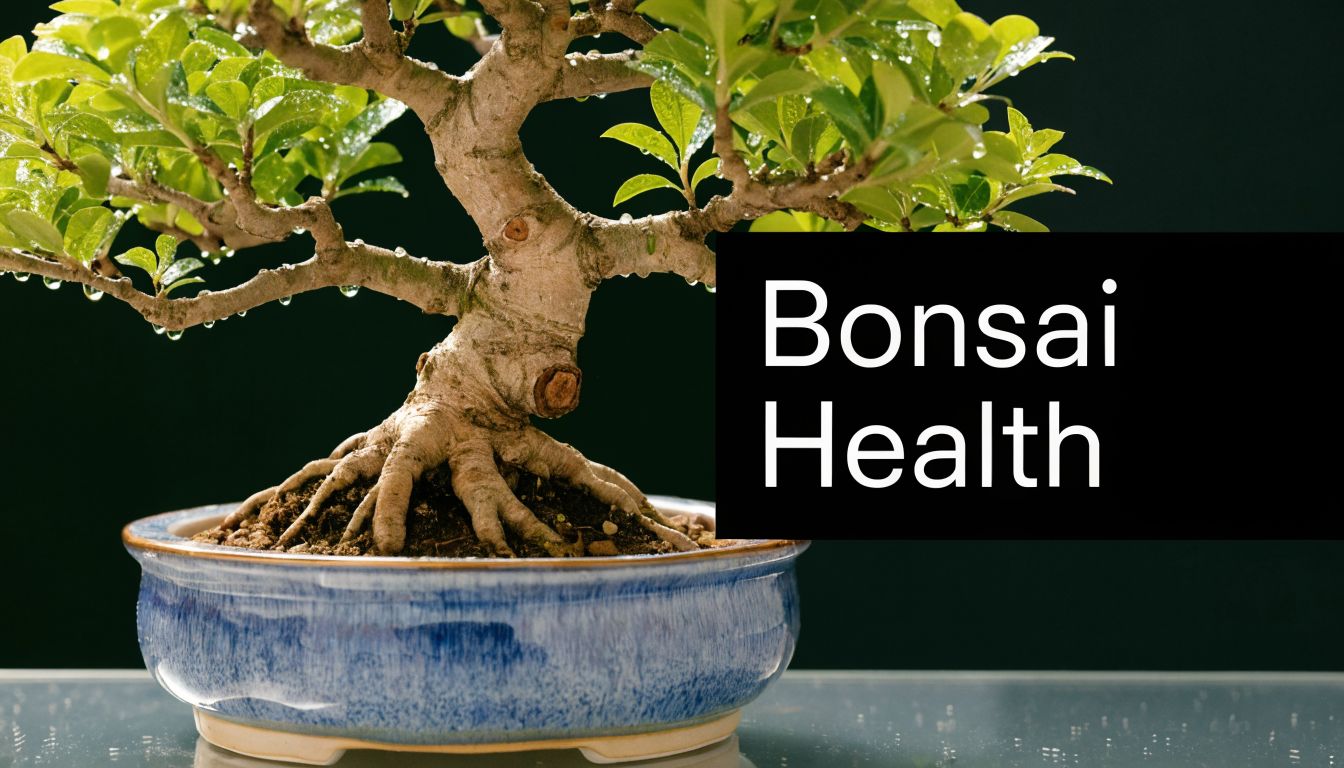
Light, water, and soil support every other skill you will practice later. A tree with weak roots or poor light exposure cannot respond well to pruning, wiring, or feeding, no matter how careful you are.
Light teaches the tree where it lives
Light is the tree’s kitchen. Leaves use it to make the sugars that fuel new roots, buds, and branches. When light is too weak, the tree usually declines slowly. That slow pace tricks beginners because the bonsai may stay green while imperceptibly losing strength.
Watch new growth more than old foliage. New shoots reveal whether placement is working.
A simple placement test helps:
- Tight, compact growth usually means the tree is receiving suitable light.
- A strong lean toward one side means the tree is reaching for a brighter source.
- Scorched leaves suggest the light is too harsh for that species or that the tree was moved too quickly into stronger sun.
- Long, thin internodes often point to insufficient light.
Species matters here. A juniper wants outdoor sun and moving air. A tropical ficus can adapt to bright indoor conditions, especially near a sunny window or with supplemental grow lights. That is where product choices become practical, not decorative. The right grow light, the right window, and the right placement strategy depend on the kind of tree you own.
Water is like breathing for the tree
Watering feels simple until you meet a bonsai in a shallow pot. Then the margin for error becomes small.
Roots need moisture, but they also need oxygen. If the soil stays soaked, roots suffocate and weaken. If the root ball dries too far, the leaves close their pores to conserve water, and growth slows or stops. One mistake denies the roots air. The other denies the canopy water.
That is why experienced growers do not water by habit alone. They check first.
How to check before you water
Put a finger about half an inch into the soil. If the surface is dry but there is still slight moisture below, many bonsai are approaching the right moment to water. If the soil is wet below the surface, wait. If it feels dry through the top layer and the pot feels light, water thoroughly.
A beginner routine that works well looks like this:
- Check in the morning when the tree is cool and easier to assess.
- Water until it runs from the drainage holes so the full root mass is moistened.
- Let excess water drain fully and never leave the pot standing in a tray of stagnant water.
- Check again in hot or windy weather, especially for small outdoor bonsai in fast-draining soil.
Practical rule: Good watering means fully wetting the root zone, then allowing enough air back into the soil for the roots to function well.
Soil type changes the rhythm. A gritty mix with akadama, pumice, or lava rock dries differently from organic potting soil. Akadama is especially beginner-friendly because it darkens when wet and turns lighter as it dries. That visual cue helps train your judgment.
Soil is a root environment you build on purpose
Bonsai soil is not ordinary potting mix poured into a smaller pot. It is a controlled blend designed to manage water, air, and root stability in a very limited space. In a deep nursery container, a tree has more room to recover from a poor mix. In a shallow bonsai pot, the soil has to do its job well every day.
Purpose-built bonsai mixes usually combine particles that drain freely with ingredients that still hold some moisture and nutrients. The balance shifts by species and climate. Pines and junipers often do better in a more open, fast-draining mix. Ficus and many tropical species usually appreciate a bit more moisture retention. That is why buying “bonsai soil” without checking the ingredient profile can still lead to trouble.
Use the soil as a tool, not a label.
Here is what common components contribute:
| Component | What it contributes |
|---|---|
| Akadama or calcined clay | Holds moisture and nutrients while keeping structure better than standard potting soil |
| Pumice or expanded shale | Improves aeration and helps roots stay oxygenated |
| Lava rock | Adds drainage and creates durable pore space |
| Pine bark or aged organic matter | Increases water retention for species that dry out quickly |
This is also why product choices matter so much for beginners. A moisture-retentive mix may help a ficus on a bright indoor shelf. The same mix may cause root trouble for a juniper kept outdoors after summer rain. Slow-release fertilizer pellets, mesh drainage screens, and the particle size of your soil all work together. Theory becomes useful only when it guides what you put in the pot.
If you want a stronger foundation before styling, study how root health and branch work connect in this guide to pruning a bonsai properly and this comprehensive tree pruning guide.
The Art of Shaping Pruning and Wiring
A healthy bonsai can grow. A shaped bonsai can speak.
Pruning and wiring are where care becomes art. This is the part that scares many beginners because every cut feels permanent. That fear eases when you understand the difference between maintaining a shape and creating one.
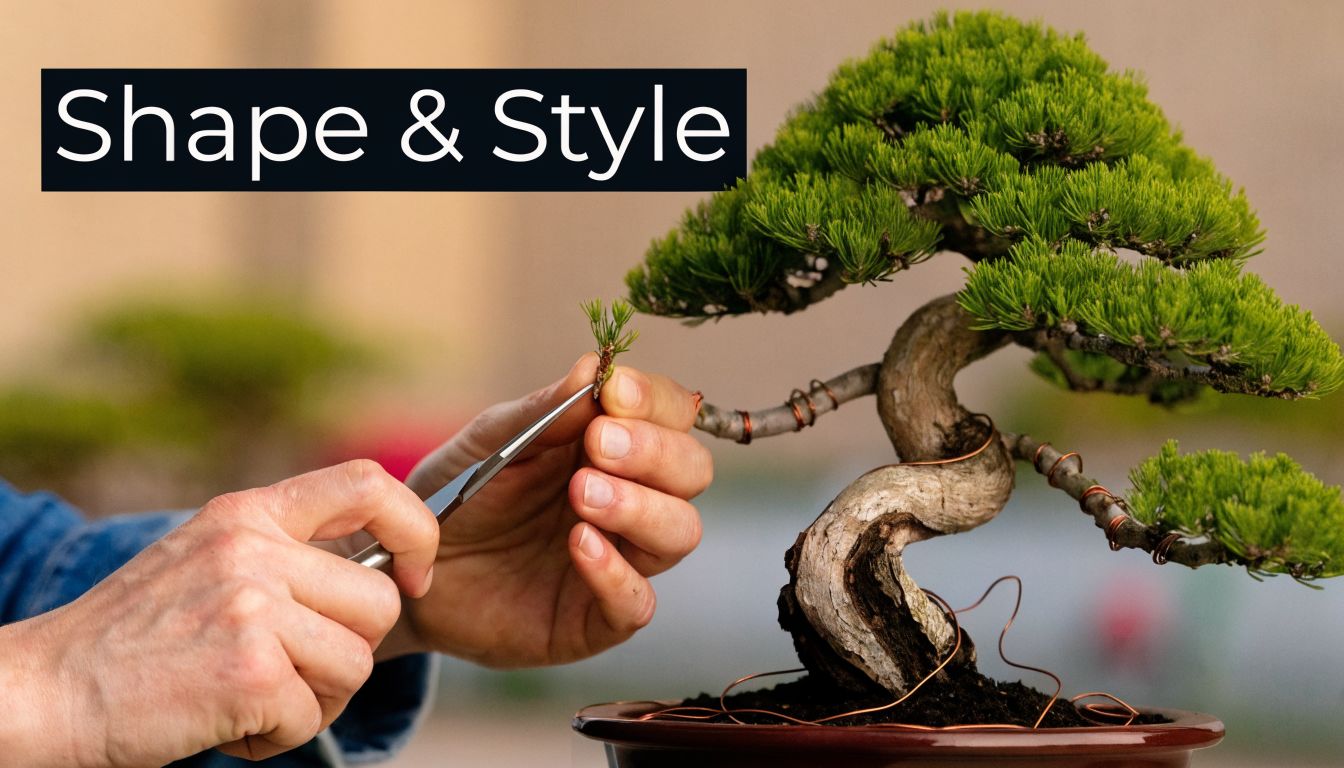
Pruning for control and pruning for design
Not all pruning has the same purpose. Some cuts are small, frequent, and gentle. Others define the future structure of the tree.
Think of it this way:
- Maintenance pruning keeps the outline tidy. You shorten fresh shoots, remove distracting growth, and preserve the silhouette.
- Structural pruning changes the architecture. You remove a branch that crowds the front, competes with the apex, or breaks the visual balance.
A good first rule is simple. Don’t cut because a branch annoys you. Cut because you know what the tree will look like without it.
Look for these common candidates:
- Crossing branches that create clutter
- Straight vertical shoots that disrupt an aged look
- Downward growth that looks weak or awkward
- Congested areas where light and air can’t enter
If you’d like a broader foundation in cutting principles, this comprehensive tree pruning guide is useful because many core ideas carry over from large trees to miniature ones. The scale changes. The logic doesn’t.
How to make your first pruning decisions
Stand the tree at eye level. Turn it slowly. Choose the front, then ask three questions.
- Can I see the trunk clearly from this angle?
- Does each major branch have space to be seen?
- Does the tree feel stable, or crowded and confused?
If you answer no to any of those, pruning will help.
Beginners tend to trim evenly across the whole canopy, as if giving a haircut. Bonsai usually asks for selective editing instead. One well-chosen cut often improves the design more than ten small nervous snips.
For a practical walkthrough focused on bonsai specifically, this guide on how to prune a bonsai shows the process in a beginner-friendly format.
Remove what hides the tree’s structure. Keep what helps the trunk and branch line tell a clear story.
Wiring is like braces for branches
Wire doesn’t force a branch forever. It guides it until the wood sets into a new position. That’s why I compare it to braces for teeth. The support is temporary. The change can last.
Use wire to lower a branch, add movement, open space, or improve the silhouette. Move slowly. A branch can bend farther than a beginner expects, then snap the moment confidence outruns caution.
Watch this process in action before trying your first full styling session:
A safe wiring routine
Follow a calm sequence:
- Anchor the wire well so it holds its position.
- Wrap at a steady angle rather than crossing over itself.
- Bend in small increments instead of making one dramatic movement.
- Check the branch regularly so the wire doesn’t bite into swelling bark.
If you’re uncertain, wire one branch and live with it for a few days before doing more. That pause teaches a lot. You’ll notice whether the branch line now feels natural, whether the spacing improves, and whether the movement suits the species.
Pruning asks, “What should remain?” Wiring asks, “Where should it go?” Together, they turn a plant in a pot into a bonsai with intention.
A Bonsai's Yearly Rhythm Your Seasonal Care Schedule
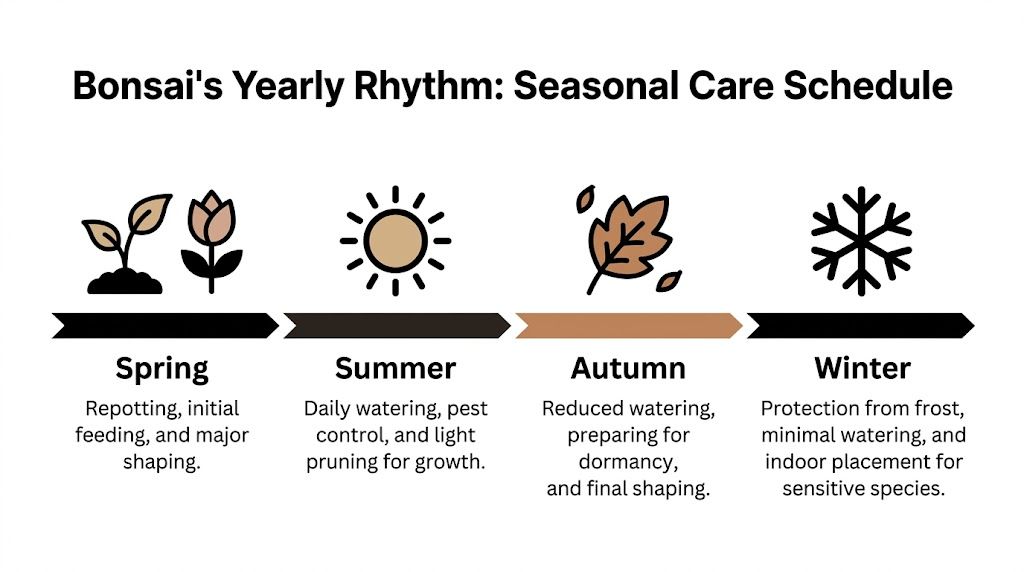
A bonsai doesn’t want the same thing every month. Trees live by rhythm, not routine. When you understand the year as a cycle of waking, growing, slowing, and resting, care becomes more intuitive.
Spring brings momentum
Spring is the season of visible change. Buds swell, roots wake up, and the tree begins spending stored energy. This is the time many growers inspect roots, refresh placement, and make major shaping decisions while the structure is easy to read.
Use spring to focus on:
- Repotting when needed and checking root health
- Resuming feeding as active growth returns
- Doing major shaping work before the canopy becomes dense
Summer demands attention
Summer asks for vigilance. Heat speeds evaporation, and strong light drives growth. Your bonsai may look lush, but it’s also using water quickly and responding fast to stress.
This is often the season for:
- Frequent moisture checks
- Watching for scorching or heat stress
- Light maintenance pruning to keep shape and airflow
If you’re caring for a tree in intense heat, afternoon protection can matter as much as morning sun.
Autumn teaches restraint
Autumn has a quiet beauty. Growth slows, and the tree begins preparing for rest. This is the season to reduce intensity rather than keep pushing.
I think of autumn as housekeeping for the bonsai bench. Clean fallen debris, watch changing moisture needs, and avoid the temptation to force fresh, soft growth late in the season.
A simple seasonal snapshot helps:
| Season | Main focus |
|---|---|
| Spring | Repotting, feeding, major shaping |
| Summer | Moisture management, pest watch, light trimming |
| Autumn | Reduced watering, cleanup, preparation for dormancy |
| Winter | Protection, rest, minimal watering for many trees |
Winter is rest, not neglect
Winter confuses beginners because less visible activity can feel like decline. Often, the tree is just conserving itself. That doesn’t mean you ignore it. It means you care differently.
Sensitive species may need shelter or indoor placement, while cold-hardy species may need protection from harsh conditions around the pot and roots rather than from cool air itself. Watering usually slows because evaporation slows.
For a practical companion piece that helps translate seasonal ideas into everyday habits, this article on care for a bonsai tree is a helpful reference.
A strong bonsai keeper learns to anticipate. By the time the tree shows stress, the season has already been shaping that result for weeks.
Feeding Your Bonsai for Vigorous Growth
Many bonsai owners either overfeed from enthusiasm or underfeed from fear. Both create problems. Trees in shallow pots don’t have access to the broad reserves of a garden bed, so nutrition matters. The trick is matching the feed to the tree and delivering it in a steady way.
What NPK means in plain language
Fertilizer labels use three numbers. Those numbers refer to nitrogen, phosphorus, and potassium.
Think of them like this:
- Nitrogen supports leafy, green growth
- Phosphorus supports roots and foundational development
- Potassium supports overall strength and resilience
That doesn’t mean every species wants the same ratio at the same time. Many generic bonsai articles fall short in this aspect. They tell people to “use bonsai fertilizer” but never explain that a juniper and a maple may respond better to different feeding emphasis.
Why species-specific feeding matters
A useful example is the contrast between junipers and maples. The verified guidance for this article notes that junipers often benefit from a higher-nitrogen approach for spring vigor, while maples may prefer a more potassium-forward formula after dormancy to support healthy leaf performance. That kind of distinction helps you avoid feeding every tree by habit alone.
The same verified source reports that a 2025 study by the American Bonsai Society found 42% of bonsai failures were linked to mismatched fertilizers, and that slow-release pellets such as an 18-6-8 formula reduced this failure rate by 67% by providing consistent nutrient delivery over 3 to 6 months without root burn risk, as summarized by Bonsai West’s bonsai care resource.
Those numbers are striking because they point to a familiar beginner pattern. People don’t usually ignore fertilizer. They use the wrong one, or use it at the wrong time.
Why slow-release pellets are often the wiser choice
Liquid feeds can work well in experienced hands. But they’re easy to overapply, easy to forget, and easy to use inconsistently. Slow-release pellets create a steadier rhythm.
That steadiness matters because bonsai roots live in a confined space. A harsh surge of fertilizer can stress them. A controlled release is gentler and easier to manage, especially for people building confidence.
Here’s a simple comparison:
| Fertilizer type | Best suited for |
|---|---|
| Liquid fertilizer | Growers who want tight control and can monitor frequently |
| Slow-release pellets | Beginners and busy owners who need consistency |
If you want a deeper look at choosing formulas and schedules, this guide to the best fertilizer for bonsai trees is a practical next read.
A calm feeding mindset
Don’t treat fertilizer like a rescue tool. It isn’t a cure for poor light, poor soil, or poor watering. Feed a tree that is healthy enough to use that nutrition well.
A stronger habit is to ask:
- Is the tree actively growing?
- Does this species want stronger leaf growth or steadier support?
- Am I using a method I can apply consistently?
That last question matters more than people think. The best plan is often the one you can follow without guesswork.
A Beginner's Guide to Common Bonsai Species
You bring home your first bonsai full of good intentions. It sits in the brightest spot you have, you water it carefully, and still it struggles. In many cases, the problem is not effort. It is a mismatch between the tree and the home you asked it to live in.
Species shape the rules. A ficus forgives indoor life that would weaken a juniper. A dwarf jade stores water in its leaves, while a Chinese elm reacts more quickly to changes in growth, light, and pruning. If bonsai care is the craft, species is the dialect. You can learn the basics once, but each tree speaks with its own accent.
A simple way to read a species is to ask three questions. Where does it want to live? How does it use water? What kind of growth habit does it reward?
Side by side comparison
| Species | Best setting | Watering tendency | Styling character |
|---|---|---|---|
| Ficus | Bright indoor spot or warm outdoor season | Likes even moisture, with slight drying near the surface | Forgiving, heals quickly, responds well to pruning |
| Juniper | Outdoor setting with strong sun and seasonal change | Wants good drainage and some drying between waterings | Excellent for movement, jin, and shari work |
| Chinese Elm | Adaptable, often happiest with plenty of light and airflow | Moderate, with closer checks during active growth | Vigorous, cooperative, strong ramification potential |
| Dwarf Jade | Bright light, indoors or outdoors in warm climates | Prefers more drying than many leafy species | Good for trunk character and compact structure |
Ficus
Ficus is often the best first teacher for indoor growers. It tolerates the lower humidity and steadier temperatures of a home better than many classic bonsai species, and it usually responds clearly when conditions improve. That clarity helps beginners connect cause and effect.
Its care style is steady and forgiving. Bright light matters. Warmth matters. Watering matters too, but ficus usually gives you a wider margin for small mistakes than a conifer would. Pairing it with a free-draining tropical bonsai soil and a mild slow-release fertilizer gives new growers a setup that matches how the tree grows, instead of forcing indoor conditions onto a species that resents them.
Juniper
Juniper teaches one of the first hard lessons in bonsai. Outdoor trees need outdoor life.
Many beginners buy a juniper because it looks like the bonsai in old photographs, then place it indoors where the tree cannot get enough sun, airflow, or seasonal cues. The decline that follows often looks mysterious, but the cause is usually plain. Habitat came first, and the tree never got the one it needed.
Junipers prefer strong light, excellent drainage, and roots that can breathe between waterings. Watering works like breathing for the tree. If the soil stays heavy and wet, the roots struggle for air. For that reason, product choice matters here more than new growers expect. A granular bonsai mix built for fast drainage suits juniper far better than a dense potting soil. If you are choosing between species for a patio, balcony, or garden bench, juniper makes sense. For a permanent indoor bonsai, it usually does not.
Chinese Elm
Chinese elm sits in a useful middle ground. It is adaptable enough for beginners to learn on, but active enough to teach timing, especially around pruning and shape control.
You will often see growth extend quickly, then harden off, then push again. That pattern helps you learn when to trim and when to wait. Chinese elm also shows why species-specific care beats generic care. In a shallow pot, an elm may need closer observation during strong spring growth than a dwarf jade sitting beside it in the same light. The trees share a bench, but not the same thirst.
A balanced bonsai soil with good drainage and some moisture retention usually suits Chinese elm well. That is the bridge between theory and practice. You are not just learning that elm likes moderation. You are choosing a soil blend that creates it.
Dwarf Jade
Dwarf jade feels calm in the hands. Its fleshy leaves hold reserves, so a missed watering is less dramatic than it would be with many deciduous species. That reserve is helpful, but it can fool people into treating the tree like a cactus. It is still a bonsai with active roots, branch structure, and light needs.
Give it strong light and let the soil dry more between waterings than you would for ficus or Chinese elm. A sharper-draining succulent-friendly bonsai mix often works better than a more moisture-retentive blend. Styling usually centers on trunk line, taper, and compact pads, not fine deciduous ramification. If your home is bright and your schedule is busy, dwarf jade is often a sensible first choice.
Matching species to your setup
A beginner usually chooses a bonsai by appearance first. A stronger approach is to choose by environment. Start with the place you can offer every day, then match the species to that place.
If you have a bright indoor room and want a forgiving tree, ficus or dwarf jade often fit. If you have true outdoor space with sun and airflow, juniper opens the door to classic conifer styling. If you want a tree that teaches pruning rhythm and branch development, Chinese elm is a patient instructor.
This is also where many new growers repeat the same common tree care mistakes. They buy the tree first and ask questions later. Bonsai rewards the opposite order. Choose the species for your conditions, then support it with the right soil, fertilizer style, and placement.
One principle stays constant across all four species. Roots need a soil environment matched to the tree’s natural habits. Fast-draining conifer mixes, balanced blends for deciduous trees, and grittier options for succulent species are not marketing details. They are practical tools that turn bonsai theory into daily success.
Troubleshooting Common Bonsai Problems
A struggling bonsai can make a calm person anxious in minutes. Leaves yellow. Growth droops. Tiny pests appear. The best response is not panic. It’s diagnosis.
Many bonsai problems look dramatic before they become irreversible. If you read the symptom carefully, you can often trace it back to a basic care issue.
Symptom, likely cause, response
-
Yellowing leaves
- Likely cause: Water imbalance, poor light, feeding issues, or normal seasonal change in some species
- Response: Check soil moisture first. Then review placement and your recent feeding pattern.
-
Wilting or limp foliage
- Likely cause: Roots are too dry, or roots are stressed and unable to take up water properly
- Response: Inspect the root zone condition and recent watering habits before doing anything else.
-
Leaf drop after moving the tree
- Likely cause: Environmental shock from a sudden shift in light, temperature, or airflow
- Response: Stabilize the location and avoid repeated moving.
-
Sticky residue or visible bumps on stems
- Likely cause: Scale or other sap-feeding pests
- Response: Isolate the plant, inspect carefully, and begin gentle treatment.
-
Fine webbing and tired-looking foliage
- Likely cause: Spider mites, especially in dry indoor air
- Response: Increase humidity around the plant appropriately and treat early.
Check the root cause before the symptom
A beginner often sees yellow leaves and immediately reaches for fertilizer. Another sees droop and adds more water without checking whether the soil is already saturated. Those reactions can worsen the underlying issue.
Use this order instead:
- Check moisture
- Check light
- Check for pests
- Review recent changes such as repotting, moving, or heavy pruning
- Review feeding and soil condition
This diagnostic mindset applies beyond bonsai too. The broader arborist world sees similar patterns of avoidable stress in woody plants, and this article on common tree care mistakes is a useful reminder that many plant problems begin with human habits rather than mysterious disease.
Most bonsai distress is not random. The tree is reacting to conditions you can observe and adjust.
When to wait and when to act
If the issue follows a recent change, sometimes the kindest move is to stop changing things. Give the tree stable conditions and close observation. If the issue is active pest pressure or obviously failing roots, respond sooner.
Good troubleshooting is calm, specific, and humble. You don’t need to know everything at once. You only need to ask the next right question.
Your Bonsai Journey From Soil to Leaf
A bonsai teaches patience in a very practical way. You water, then wait. You prune, then watch. You wire a branch, then let time do part of the work your hands began.
That’s why this practice stays with people. It isn’t only about keeping a tree alive in a pot. It’s about learning to notice small changes and value slow progress. A bud swelling where there was none. A branch line improving month by month. A once-confusing tree becoming familiar in your care.
You’ll make mistakes. Every grower does. What matters is that each mistake makes you more observant rather than more hesitant. Bonsai rewards steady attention far more than bold guessing.
If you remember only one idea from this bonsai care guide, let it be this. Your greatest tool is not a shear, a wire cutter, or a fertilizer scoop. It’s your attention. The tree keeps showing you what it needs. Over time, you learn to see it sooner.
That is how confidence grows. Not all at once, but leaf by leaf, season by season.
If you’re ready to put these lessons into practice, Leaves & Soul offers purpose-built bonsai soils, slow-release fertilizers, pots, and accessories designed to make expert-level care feel approachable. It’s a practical place to find the essentials for a healthier tree and a more confident start.